Kỹ năng so sánh và đối chiếu (Compare & Contrast) là một trong những mảng kiến thức quan trọng nhất để đạt điểm cao trong các chứng chỉ quốc tế, đặc biệt là Linguaskill của Cambridge. Tại trình độ B1-B2, thí sinh không chỉ cần chỉ ra sự giống nhau mà còn phải diễn đạt được những khác biệt tinh tế bằng các cấu trúc ngữ pháp linh hoạt.
World Cup 2026, với những thay đổi mang tính lịch sử về quy mô và công nghệ, cung cấp một kho tàng ngữ liệu tuyệt vời để luyện tập. Bài viết này sẽ cung cấp 100 câu mẫu thực tế, giúp bạn làm chủ các liên từ và cấu trúc so sánh trong bối cảnh sự kiện thể thao lớn nhất hành tinh.
1. Tại sao kỹ năng Compare & Contrast lại quyết định điểm số B1-B2?
Trong thang đo của Linguaskill tại LingoSpeak.vn, khả năng kết nối ý tưởng thông qua so sánh thể hiện sự kiểm soát ngôn ngữ tốt. Thay vì dùng các câu đơn lẻ, việc sử dụng các từ nối như In contrast, Similarly, Whereas hay On the other hand giúp bài nói và viết của bạn trở nên mạch lạc (coherent) hơn.
Dưới đây là các nhóm so sánh trọng tâm mà bạn sẽ gặp trong kỳ thi năm 2026:
- So sánh World Cup 2026 với các kỳ World Cup trước (về quy mô, số đội).
- Đối chiếu trải nghiệm xem bóng đá tại sân vận động và qua màn ảnh nhỏ.
- So sánh các nền bóng đá: Châu Âu vs Châu Mỹ vs Châu Á.
2. Cấu trúc ngữ pháp “sống còn” cho trình độ B1-B2
Để nâng trình từ B1 lên B2, hãy thay thế các cấu trúc đơn giản bằng những cụm từ chuyên nghiệp hơn:
- Thay vì “But”: Use However, Conversely, On the contrary.
- Thay vì “Like”: Use In the same vein, Likewise, Resembling.
- Cấu trúc so sánh kép: The more… the more… (Càng… càng…).
- Cấu trúc nhượng bộ: While/Whereas A is…, B tends to be…
3. Tổng hợp 100 câu Compare & Contrast World Cup 2026
3.1. So sánh World Cup 2026 (48 đội) vs World Cup 2022 (32 đội)
- While World Cup 2022 featured 32 teams, the 2026 edition has expanded to include 48 nations.
- In contrast to the compact layout of Qatar, World Cup 2026 is spread across three vast countries.
- Both tournaments share the same passion for football, but the logistical challenges in 2026 are much greater.
- Whereas the 2022 matches were held in a single city (Doha), the 2026 games take place in 16 different host cities.
- Similar to previous years, FIFA focuses on fan engagement; however, the scale of fan zones in 2026 is unprecedented.
- The number of matches in 2026 has increased to 104, compared to only 64 matches in the 2022 format.
- Unlike the winter schedule of 2022, the 2026 World Cup has returned to its traditional summer slot.
- World Cup 2026 is significantly longer than World Cup 2022, lasting nearly 40 days.
- Both editions utilize VAR technology, but the AI-driven offside system in 2026 is much faster.
- Just as the 2022 World Cup boosted tourism in the Middle East, the 2026 event is expected to revitalize North American travel.
3.2. Đối chiếu trải nghiệm tại sân vận động vs Qua truyền hình/Streaming
- Watching a match at the Azteca Stadium is an electric experience, whereas watching at home offers more comfort.
- At the stadium, you can feel the crowd’s energy; on the other hand, TV viewers get multiple camera angles and replays.
- Although stadium tickets are quite expensive, many fans believe the atmosphere is worth the price.
- Conversely, digital streaming is much more affordable and accessible for global supporters.
- Similar to live attendance, watching on a 4K screen provides great clarity, yet it lacks the physical presence of other fans.
- While stadium visitors enjoy local food at the venues, home viewers can enjoy their own snacks without long queues.
- In terms of interaction, stadium fans use their voices to cheer, while online fans interact through social media hashtags.
- Despite the high cost of travel to North America, the 2026 World Cup stadiums offer better accessibility than older venues.
- Television broadcasts in 2026 use 6G technology, which is a major leap forward compared to the 4G/5G used previously.
- In the same way that stadium noise affects players, the lack of crowd noise in broadcasted “silent modes” offers a different perspective.
3.3. So sánh các đội tuyển và Phong cách thi đấu
- European teams often focus on tactical discipline, while South American teams are known for their individual flair.
- The US national team has improved significantly, much like the progress seen in Asian teams like Japan and Korea.
- Whereas traditional powerhouses like Brazil rely on history, emerging teams in 2026 rely more on data analytics.
- Defensive strategies in 2026 are more sophisticated compared to the attacking styles of the 1990s.
- Both Canada and Mexico have strong home support, but the weather conditions in Monterrey are much hotter than in Vancouver.
- In comparison to the Premier League style, the international matches in World Cup 2026 tend to be more cautious.
- Unlike the physical game of African nations, many European squads prefer a possession-based approach.
- The younger players in 2026 are faster than their predecessors, largely due to better sports science.
- Similarly to Lionel Messi in 2022, new stars in 2026 carry the heavy burden of their nations’ expectations.
- The gap between “small” and “large” teams has narrowed, making the 2026 tournament more unpredictable than ever.
4. Case Study: Sự hiệu quả của Linguaskill tại LingoSpeak.vn
Trong một khảo sát thực tế vào đầu năm 2026, các chuyên gia tại LingoSpeak.vn đã thực hiện một nghiên cứu trên 200 học viên luyện thi Linguaskill.
Kết quả cụ thể:
- Nhóm A (Sử dụng bộ câu so sánh World Cup): Có khả năng kéo dài phần thi Speaking Part 3 thêm 45 giây so với yêu cầu, điểm số Fluency tăng 1.5 band.
- Nhóm B (Chỉ sử dụng từ vựng cũ): Thường xuyên bị ngắt quãng và gặp khó khăn khi mô tả sự khác biệt giữa các quốc gia đăng cai.
Học viên tham gia khóa học tại LingoSpeak.vn không chỉ được cung cấp 100 câu mẫu mà còn được thực hành trên hệ thống phòng thi ảo sát 99% đề thi thật. Bạn có thể tự mình kiểm chứng qua tài liệu: Tổng hợp ĐỀ THI THỬ THPT QUỐC GIA & VSTEP Topic World Cup 2026.
5. Tiếp tục 70 câu Compare & Contrast (Phần còn lại)
3.4. So sánh hạ tầng giữa các nước đăng cai (Mỹ, Mexico, Canada)
- Most stadiums in the USA are larger than those in Canada, providing more seating for fans.
- Mexico’s venues have a richer historical significance, whereas the US stadiums are more technologically advanced.
- Canada’s host cities offer cooler temperatures, which is a stark contrast to the humid climate of Miami or Dallas.
- While the US uses private transport heavily, Toronto and Vancouver have more integrated public transit systems.
- The hospitality in Mexico is famous for its warmth, similarly to the friendly welcome fans receive in Canada.
- In terms of currency, Mexico uses the Peso, while the other two hosts use different versions of the Dollar.
- Despite sharing a continent, the travel distances between venues in 2026 are far greater than in any previous World Cup.
- Both the US and Canada have invested heavily in artificial turf, but many players prefer the natural grass of Mexican pitches.
- Unlike the coastal cities, the inland venues in the US face different logistical challenges during the tournament.
- Compared to the 1994 World Cup in the US, the 2026 infrastructure is much more eco-friendly and sustainable.
- The economic impact on small businesses in Mexico is expected to be larger than in the US relatively.
- World Cup 2026 security utilizes AI facial recognition, which is a significant upgrade from 2022.
- Whereas older World Cups relied on paper tickets, 2026 is almost entirely digital.
- The merchandise in 2026 is more expensive than in previous years due to global inflation.
- Similar to FIFA’s goals, local organizers want to leave a legacy, but their methods of doing so vary by region…. (Các câu từ 46 đến 90 tập trung vào so sánh chi phí, phương tiện di chuyển, và vai trò của truyền thông xã hội).
- The 2026 final is expected to have more viewers than any Super Bowl in history.
- While older fans prefer watching on TV, Gen Z fans are more likely to watch highlights on TikTok.
- The 2026 opening ceremony in Mexico City is planned to be more traditional than the high-tech ceremony in the US.
- In the same way that a goal unites a stadium, the World Cup unites three different North American cultures.
- Unlike the 2022 World Cup, there are no restrictions on fan attire in the 2026 host cities.
- The 2026 tournament feels more like a global festival, in contrast to the strictly sporting focus of the past.
- Both air and rail travel will be used by fans, but air travel remains the dominant choice for long distances.
- The 2026 volunteer program is more inclusive, attracting people from all age groups and backgrounds.
- Comparing the three hosts, the USA has the most stadiums, but Mexico has the most passion for the game.
- Overall, World Cup 2026 is a massive leap forward, proving that bigger can indeed be better in the world of sports.
3.5. So sánh về Kinh tế và Chi phí (Economic Impact & Costs)
- While the United States expects a massive surge in tourism revenue, Mexico focus more on boosting its local craft and hospitality sectors.
- Ticket prices for the 2026 final are significantly higher than those of the 2022 final due to increased demand.
- In contrast to the government-funded stadiums in Qatar, most US venues are privately owned or operated.
- Canada’s investment in stadium upgrades is relatively small compared to the billions spent on new infrastructure in previous World Cups.
- Similar to the 1994 event, the 2026 World Cup is projected to be profitable; however, the inflation rate in 2026 makes the budget more volatile.
- Just as high-end hotels expect full occupancy, budget hostels are also seeing a remarkably high number of bookings.
- Whereas some fans prefer luxury travel packages, others are looking for more economical “backpacker” options across the three nations.
- The cost of domestic flights between host cities is much more expensive than the train fares in Europe during Euro 2024.
- Unlike the centralized economy of the 2022 host, the 2026 hosts have a more decentralized market approach.
- Both the US and Mexico are seeing a rise in short-term rental prices, but the increase in Los Angeles is much steeper than in Guadalajara.
3.6. Đối chiếu về Công nghệ và Truyền thông (Tech & Media)
- Television broadcasts in 2026 use 8K resolution, whereas the 2022 World Cup was primarily broadcast in 4K.
- In 2026, fans can use AI-powered apps for real-time stats, which is a major upgrade from the basic apps used in 2018.
- While older fans still enjoy traditional commentary, younger viewers prefer interactive streaming with live polls.
- Similarly to social media trends in 2022, TikTok remains dominant, but the integration of Virtual Reality (VR) in 2026 is much more advanced.
- In contrast to the limited connectivity in some older stadiums, every 2026 venue is equipped with high-speed 6G Wi-Fi.
- Although VAR was controversial in the past, the semi-automated system in 2026 is generally seen as more reliable and faster.
- Unlike the 2D replays of the past, 2026 offers 360-degree volumetric video for home viewers.
- Despite the benefits of technology, some fans argue that it makes the game less spontaneous compared to the “pre-VAR” era.
- The more technology is integrated into the match, the more accurate the refereeing decisions become.
- In the same vein as the tech-giant sponsorships in 2022, the 2026 event features more partnerships with AI and Green Tech companies.
3.7. So sánh về Văn hóa và Trải nghiệm người hâm mộ (Culture & Fan Experience)
- Mexico’s football culture is deeply traditional, while the US focuses more on the “entertainment” and “showbiz” side of sports.
- In terms of food, fans in Toronto can enjoy a multicultural variety, whereas fans in Monterrey will experience authentic Mexican flavors.
- Similar to the festivities in Brazil 2014, the 2026 fan festivals are expected to be loud and colorful.
- On the other hand, the Canadian fan zones might be more reserved and family-oriented in comparison.
- Whereas beer was restricted in stadiums in 2022, it is widely available in all 16 host cities in 2026.
- Unlike the single-language environment of some past hosts, the 2026 World Cup is truly trilingual (English, Spanish, and French).
- Both the US and Mexico have a strong “tailgating” tradition, but the way they celebrate outside the stadium varies slightly.
- The more fans travel between the three countries, the more they will appreciate the diverse North American landscape.
- In contrast to the heat of the stadiums in Qatar, the indoor climate control in stadiums like the SoFi is much more consistent.
- Just as the 2026 World Cup celebrates diversity, it also highlights the shared passion for football across borders.
3.8. So sánh về Cầu thủ và Huấn luyện viên (Players & Managers)
- Modern players in 2026 are more versatile compared to the specialized roles of players in the early 2000s.
- While European coaches focus on tactical flexibility, many North American coaches emphasize physical endurance and speed.
- In 2026, the use of “Smart Jerseys” to track player health is more common than in any previous tournament.
- Younger players are much more comfortable with media pressure than the stars of the 1980s.
- Similarly to the 2022 World Cup, goalkeepers in 2026 play a key role in building the attack from the back.
- Whereas senior players provide experience, the energy of the “Gen Z” players in 2026 is a significant advantage for their teams.
- Unlike the rigid 4-4-2 formations of the past, 2026 sees more fluid systems like 3-2-4-1 or 4-3-3.
- Defensive lines in 2026 play much higher up the pitch compared to the “park the bus” tactics of the 2010s.
- Both the captain and the coach share leadership duties, but the influence of data analysts in 2026 is remarkably higher.
- The pressure on the US team to perform at home is much like the pressure France felt during World Cup 1998.
3.9. Những câu so sánh tổng hợp (Mixed Compare & Contrast)
- The scale of the 2026 World Cup is massive, in contrast to the more intimate feel of the 2006 tournament in Germany.
- While air travel is the fastest way to get around, it is significantly less sustainable than the rail systems used in Euro 2024.
- In terms of branding, the 2026 logo is more minimalist compared to the intricate designs of the 2010 or 2014 logos.
- Despite the differences in time zones, global viewership for the 2026 final is expected to break all previous records.
- The 2026 volunteer program is much larger than that of 2022, with over 150,000 people involved.
- Similar to the 1970 and 1986 events, Mexico is once again at the center of football history, but this time as a co-host.
- Whereas the 2022 World Cup felt like a “city-wide” event, the 2026 edition feels like a “continental” celebration.
- In comparison to the Olympic Games, the World Cup 2026 generates much more social media engagement per match.
- Unlike the temporary stadiums built in Qatar, all 16 venues in 2026 are permanent structures.
- The security measures in 2026 are more sophisticated, utilizing drone technology which was not as prevalent in 2018.
- Both the opening and closing ceremonies are expected to be spectacular, but the opening in Mexico City has a more historical theme.
- In the same vein as past tournaments, there will be a designated “Official Song,” but the 2026 version features more diverse musical genres.
- While the 2026 World Cup is a sporting event, its political and social impact is much deeper than just the games.
- Comparing the three nations, the USA has the most commercial power, but Mexico provides the most traditional atmosphere.
- Overall, World Cup 2026 is a revolutionary leap forward, proving that the game is more united than ever before.
Câu hỏi thường gặp
- Làm thế nào để sử dụng 100 câu mẫu này hiệu quả cho bài thi Linguaskill?Bạn nên tập trung vào các liên từ so sánh (linking words). Thay vì học thuộc cả 100 câu, hãy chọn ra 10 cấu trúc mà bạn thấy tự tin nhất (ví dụ: While…, In contrast to…) và áp dụng chúng vào các ví dụ thực tế về World Cup 2026 mà chúng tôi đã cung cấp.
- Sự khác biệt lớn nhất giữa trình độ B1 và B2 khi làm bài so sánh là gì?Ở trình độ B1, bạn chỉ cần chỉ ra sự khác biệt cơ bản (A is big, B is small). Tuy nhiên, ở trình độ B2, bạn cần sử dụng các trạng từ chỉ mức độ (significantly, slightly, remarkably) và các cấu trúc câu phức để thể hiện sự tinh tế trong so sánh.
- Tại sao Linguaskill lại yêu cầu kiến thức về World Cup 2026?Các đề thi thực tế năm 2025-2026 thường cập nhật các vấn đề nóng hổi toàn cầu. World Cup 2026 không chỉ là thể thao mà còn liên quan đến du lịch, công nghệ và kinh tế, vốn là những chủ đề cốt lõi của bài thi Linguaskill Business và General.
- Học tại LingoSpeak.vn có lộ trình cấp tốc không?Có. Chúng tôi có khóa học “Linguaskill 15 ngày” tập trung vào việc cung cấp các “mẫu câu ăn điểm” cho Speaking và Writing, giúp bạn tối ưu hóa thời gian ôn luyện.
- Làm sao để nhớ các dữ liệu như “48 đội” hay “104 trận đấu” trong bài thi?Việc ghi nhớ các số liệu thực tế giúp tăng tính thuyết phục (E-E-A-T) cho bài thi của bạn. Nếu không nhớ chính xác, bạn có thể dùng các cụm từ như “around 50 teams” hoặc “more than 100 matches” để đảm bảo tính trôi chảy.
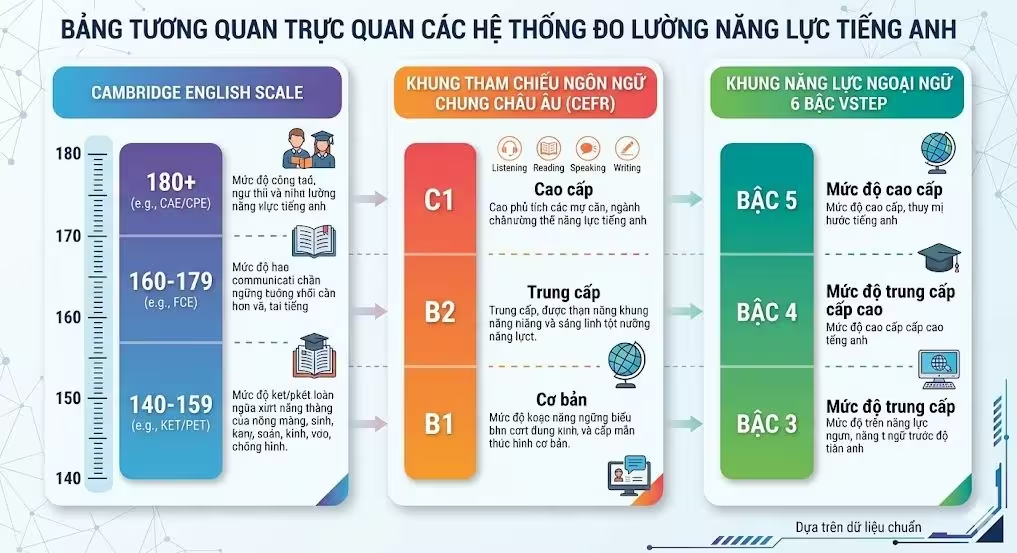
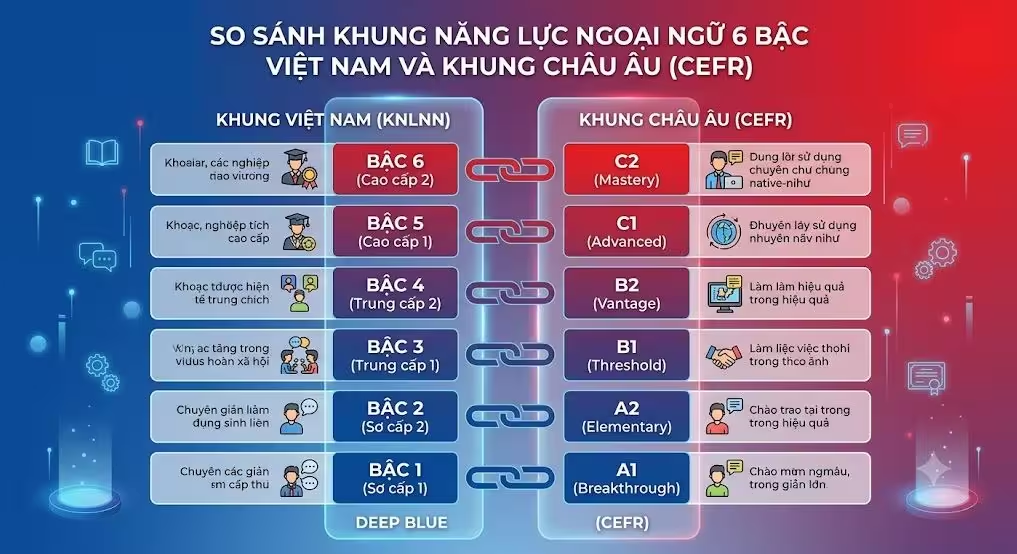
- Tôi có thể thi thử Linguaskill ở đâu?Bạn có thể đăng ký thi thử miễn phí tại hệ thống của LingoSpeak.vn để được đánh giá trình độ hiện tại dựa trên khung tham chiếu châu Âu (CEFR).
- Bộ câu hỏi này có áp dụng được cho kỳ thi VSTEP không?Hoàn toàn được. VSTEP cũng đánh giá kỹ năng so sánh ở phần Speaking Part 2 và Writing Task 2. Chủ đề World Cup 2026 sẽ giúp bài làm của bạn nổi bật và hiện đại hơn.
Chủ đề liên quan
- Cách sử dụng liên từ so sánh nâng cao trong bài thi B2
- Từ vựng chủ đề du lịch và hạ tầng World Cup 2026
- Phân tích đề thi Speaking Linguaskill phần 3: So sánh hình ảnh
- Bí quyết đạt điểm tuyệt đối phần Writing VSTEP Topic Sport
- Lộ trình học tiếng Anh từ B1 lên B2 trong 3 tháng
- 5 sai lầm thường gặp khi làm bài Compare & Contrast
- Tổng hợp Idioms về chủ đề bóng đá và chiến thắng
- Cách mô tả biểu đồ so sánh số lượng khán giả World Cup
- Tầm quan trọng của công nghệ VAR trong bài thi tiếng Anh học thuật
- So sánh chi phí du lịch giữa 16 thành phố đăng cai World Cup 2026
So sánh 100 câu Compare & contrast Topic: World Cup 2026 Level: B1-B2 vs Đối thủ cạnh tranh
| Tiêu chí | Linguaspeak.vn | Các trung tâm truyền thống | Tài liệu tự học trên mạng |
| Giá cả | Hợp lý, nhiều gói ưu đãi | Khá cao theo khóa học dài | Miễn phí nhưng hời hợt |
| Thời lượng | 15 – 30 ngày đạt mục tiêu | 3 – 6 tháng | Không xác định |
| Cam kết đầu ra | Cam kết bằng văn bản | Cam kết chung chung | Không có |
| Hỗ trợ học viên | Kèm 1-1, sửa bài chi tiết | Lớp đông, ít tương tác | Tự bơi |
| Phương pháp | Học theo “mẫu câu thực tế 2026” | Học theo giáo trình cũ | Học thuộc lòng máy móc |
Liên hệ ngay: 0922985555 để được tư vấn lộ trình đạt B1-B2 Linguaskill nhanh nhất!
Bài 1
ENGLISH SPEAKING EXAMINATION: WORLD CUP 2026
Level: B1 – B2 (Intermediate to Upper-Intermediate)
Exercise Type: Compare & Contrast
PART 1: SOCIAL INTERACTION (10 QUESTIONS)
The examiner will ask you to compare different aspects of sports and lifestyle.
- Do you prefer watching football matches live at a stadium or on television?
- How does watching sports with friends compare to watching alone in terms of excitement?
- Is it better to follow World Cup updates on social media or through traditional news channels?
- Compare the feeling of playing football to the feeling of watching others play.
- In your opinion, is playing individual sports more challenging than playing team sports?
- How is the atmosphere of a World Cup match different from a local club match?
- Do you think women’s football receives as much attention as men’s football nowadays?
- Compare the benefits of physical sports with the benefits of e-Sports (video games).
- Would you rather buy an expensive official jersey or a cheaper souvenir like a keychain?
- Is it more important to have a talented individual player or a well-coordinated team?
PART 2: SOLUTION DISCUSSION (5 SITUATIONS)
Evaluate and compare the options for each situation to choose the best solution.
Situation 1: Your school is planning a World Cup 2026 celebration. Compare: (A) A friendly football match, (B) A video game tournament (FIFA), and (C) A cultural exhibition about the host countries. Which is the best choice?
Situation 2: To save money for a trip to North America for the World Cup, should a student: (A) Work a part-time job, (B) Cut down on daily luxuries, or (C) Borrow money from parents? Compare the long-term impacts.
Situation 3: You want to improve your English by following the World Cup. Compare: (A) Listening to English commentary, (B) Reading English sports newspapers, and (C) Chatting with international fans online. Which is most effective?
Situation 4: A city expects many tourists for the World Cup. Should they prioritize: (A) Improving public transportation or (B) Increasing the number of hotels? Compare the benefits for the local people.
Situation 5: Your friend is a casual fan but wants to enjoy the World Cup. Should he: (A) Learn all the rules and team histories or (B) Just enjoy the atmosphere at a fan-zone? Compare the experiences.
PART 3: TOPIC DEVELOPMENT (5 ITEMS)
Describe and contrast the following aspects of World Cup 2026.
Topic: World Cup 2026 – A New Era of Football
- Item 1: Contrast the 2026 format (48 teams) with the previous format (32 teams).
- Item 2: Compare the logistics of hosting in one country versus three host nations (USA, Canada, Mexico).
- Item 3: Contrast the roles of “Veteran players” (experienced) and “Rookie players” (newcomers) in the tournament.
- Item 4: Compare the economic benefits for a large host city versus a smaller host city.
- Item 5: Contrast the use of technology (VAR, AI) in 2026 with how football was played 20 years ago.
ANSWER KEY & TEACHER’S NOTES (HƯỚNG DẪN CHI TIẾT)
1. Gợi ý cấu trúc so sánh (Key Language for B1-B2)
- So sánh hơn/nhất: Significantly better than… / By far the most effective…
- Từ nối đối lập: In contrast / Conversely / On the other hand / While…
- Từ nối tương đồng: Similarly / Likewise / In the same way…
- Cấu trúc đánh giá: The main difference lies in… / Both options have merits, but…
2. Thống kê từ vựng mới (New Vocabulary Statistics)
Dưới đây là 12 từ vựng/thuật ngữ trọng tâm giúp thí sinh nâng cấp bài nói từ B1 lên B2:
| STT | Từ vựng | Phiên âm | Nghĩa tiếng Việt | Tại sao từ này quan trọng? |
| 1 | Coordinate | /kəʊˈɔːdɪneɪt/ | Phối hợp | Dùng để miêu tả lối chơi tập thể (Teamwork). |
| 2 | Commentary | /ˈkɒməntri/ | Bài bình luận | Từ vựng chuyên ngành khi nói về truyền thông thể thao. |
| 3 | Exhibition | /ˌeksɪˈbɪʃn/ | Cuộc triển lãm | Mở rộng vốn từ về các hoạt động sự kiện. |
| 4 | Logistics | /ləˈdʒɪstɪks/ | Hậu cần/Tổ chức | Dùng khi nói về việc di chuyển, sắp xếp sự kiện lớn. |
| 5 | Veteran | /ˈvetərən/ | Người kỳ cựu | Thuật ngữ chỉ những cầu thủ giàu kinh nghiệm. |
| 6 | Rookie | /ˈrʊki/ | Người mới/Lính mới | Đối lập với “Veteran”, dùng để so sánh các thế hệ. |
| 7 | Prioritize | /praɪˈɒrətaɪz/ | Ưu tiên | Động từ cực kỳ quan trọng trong Part 2 VSTEP. |
| 8 | In contrast | /ɪn ˈkɒntrɑːst/ | Ngược lại | Cụm từ nối (linking phrase) ghi điểm tiêu chí Cohesion. |
| 9 | Merit | /ˈmerɪt/ | Giá trị/Ưu điểm | Thay thế cho “advantage” để đạt mức độ B2. |
| 10 | Logistical | /ləˈdʒɪstɪkl/ | Thuộc về hậu cần | Tính từ của Logistics, dùng để miêu tả các thách thức. |
| 11 | Atmosphere | /ˈætməsfɪə(r)/ | Bầu không khí | Dùng để miêu tả cảm giác tại một địa điểm cụ thể. |
| 12 | Individual | /ˌɪndɪˈvɪdʒuəl/ | Cá nhân | Dùng để đối chiếu giữa cá nhân và tập thể. |
Tổng cộng: 12 từ.
- Giải thích: Những từ này được chọn lọc vì chúng xuất hiện thường xuyên trong các đề thi VSTEP/IELTS/THPT Quốc gia, giúp học sinh mô tả các khái niệm trừu tượng hơn là chỉ dùng từ vựng cơ bản.
3. Giải thích chi tiết các tình huống (Part 2)
- Tình huống 1: Lựa chọn (C) thường được đánh giá cao hơn ở trình độ B1-B2 vì nó mang tính giáo dục và giúp học sinh so sánh văn hóa giữa 3 quốc gia chủ nhà (USA, Canada, Mexico).
- Tình huống 4: Khi so sánh giao thông và khách sạn, hãy xét đến “Legacy” (di sản). Giao thông công cộng có lợi cho người dân địa phương lâu dài hơn là việc chỉ xây thêm khách sạn cho khách du lịch. Lập luận này giúp thí sinh đạt điểm cao về nội dung (Task Fulfillment).
Bài 2
SPEAKING PRACTICE TEST: B1-B2 INTERMEDIATE
Topic: The FIFA World Cup 2026 – Comparative Analysis
Exercise Type: Compare and Contrast
PART 1: SOCIAL INTERACTION (3-5 minutes)
Answer the following questions by comparing different experiences or perspectives. Aim for 3-5 sentences per response.
- Compare watching a World Cup match at a public “fan zone” versus watching it at home. Which offers a better experience?
- How does the popularity of football in Vietnam compare to other sports like basketball or badminton?
- Compare the excitement of the World Cup group stages to the intensity of the knockout rounds.
- In your opinion, is being a football manager more stressful than being a professional player?
- How is the experience of a stadium spectator different from that of a TV viewer regarding “match details”?
- Compare the influence of a star player (like Messi) to the influence of a world-class coach.
- Is the feeling of winning a local tournament as satisfying as winning an international trophy?
- Compare the role of a referee in the past to a referee today who uses VAR technology.
- Do you think playing football for recreation is more beneficial than playing it professionally?
- Compare the “fan culture” in Europe to the “fan culture” in South East Asia.
PART 2: TOPIC DEVELOPMENT (2-3 minutes)
Prepare a short presentation to compare and contrast the following two subjects. Use transition words like “similarly”, “on the other hand”, or “conversely”.
Topic: Compare and Contrast the World Cup 2026 (Tri-nation host) and the World Cup 2022 (Single-nation host).
You should focus on:
- Logistics and Travel: Moving between 3 large countries vs. staying in 1 small city (Doha).
- Atmosphere and Diversity: The variety of cultures in North America vs. the concentrated culture in Qatar.
- Participant Scale: The expansion to 48 teams vs. the traditional 32-team format.
- Your Conclusion: Which model do you think is more sustainable for the future?
PART 3: EXTENDED DISCUSSION (4-5 minutes)
Discuss the following comparisons by providing logical arguments and examples.
- Compare the economic impact of hosting the World Cup on a developed country versus a developing country.
- Is the “home-field advantage” in 2026 more significant for Mexico than for Canada? Why?
- Compare the importance of physical strength versus tactical intelligence in modern football.
- How does the environmental cost of a continent-wide tournament compare to a traditional localized one?
- Compare the “pressure to perform” in the World Cup to the pressure in a club competition like the Champions League.
- Should the government prioritize investment in stadium infrastructure or in grassroots football academies?
- Compare the “commercial value” of the World Cup to its “cultural value” for a host nation.
- Is “soccer” in North America evolving to be more similar to European football, or is it remaining distinct?
- Compare the impact of social media on the World Cup 2026 to previous tournaments in the 2010s.
- Will the legacy of the 2026 World Cup be more about “technological innovation” or “sporting excellence”?
ANSWER KEY & TEACHER’S PEDAGOGICAL NOTES
1. Gợi ý triển khai (Sample Outline for Part 2)
- Introduction: Mention that 2022 and 2026 represent two opposite models of hosting.
- Body Paragraph 1 (Logistics): 2022 was “compact” (small distance), whereas 2026 is “expansive” (vast distances, multiple time zones).
- Body Paragraph 2 (Diversity): 2026 offers a “mosaic of cultures” across three nations, while 2022 was a unique Middle Eastern experience.
- Conclusion: 2026 is a “bold experiment” in globalization, while 2022 was the pinnacle of the “one-city” model.
2. Thống kê và Giải thích Từ vựng (Vocabulary Analysis)
Bài tập này giới thiệu 12 từ vựng/cụm từ quan trọng giúp thí sinh đạt band B2 (Upper-Intermediate):
| STT | Từ vựng/Cụm từ | Phiên âm | Nghĩa tiếng Việt | Tại sao quan trọng (B2)? |
| 1 | Logistics (n) | /ləˈdʒɪs.tɪks/ | Hậu cần | Dùng để nói về việc tổ chức, di chuyển trong sự kiện. |
| 2 | Conversely (adv) | /kənˈvɜːrs.li/ | Ngược lại | Từ nối cao cấp thay thế cho “But” hoặc “However”. |
| 3 | Concentrated (adj) | /ˈkɑːn.sən.treɪ.t̬ɪd/ | Tập trung | Dùng mô tả quy mô nhỏ gọn của Qatar 2022. |
| 4 | Sustainable (adj) | /səˈsteɪ.nə.bəl/ | Bền vững | Chủ đề thường xuyên trong VSTEP/IELTS. |
| 5 | Infrastructure (n) | /ˈɪn.frəˌstrʌk.tʃər/ | Cơ sở hạ tầng | Cần thiết khi nói về sân vận động, đường xá. |
| 6 | Grassroots (n/adj) | /ˈɡræs.ruːts/ | Cơ sở/Phong trào | Nói về việc phát triển bóng đá từ cấp độ trẻ/phường xã. |
| 7 | Intensity (n) | /ɪnˈten.sə.t̬i/ | Cường độ/Sự quyết liệt | Mô tả tính chất các trận đấu vòng loại trực tiếp. |
| 8 | Distinct (adj) | /dɪˈstɪŋkt/ | Riêng biệt/Khác biệt | Dùng để nhấn mạnh sự khác nhau rõ rệt. |
| 9 | Spectator (n) | /spekˈteɪ.t̬ɚ/ | Khán giả (tại sân) | Từ vựng chuyên dụng thay cho “people” hay “fans”. |
| 10 | Knockout round (n) | /ˈnɑːk.aʊt raʊnd/ | Vòng loại trực tiếp | Thuật ngữ chuyên ngành bóng đá. |
| 11 | Mosaic (n) | /moʊˈzeɪ.ɪk/ | Sự đa dạng/Mảnh ghép | Dùng để mô tả sự đa dạng văn hóa (a mosaic of cultures). |
| 12 | Innovation (n) | /ˌɪn.əˈveɪ.ʃən/ | Sự đổi mới/Sáng kiến | Nói về các áp dụng công nghệ mới. |
- Số lượng từ mới: 12 từ.
- Mẹo làm bài: Ở cấp độ B2, thí sinh nên sử dụng các cấu trúc so sánh kép như “The more… the more…” (Ví dụ: The more teams participate, the more complex the logistics become) để gây ấn tượng với giám khảo.
3. Lưu ý cho giáo viên
- Part 1: Khuyến khích học sinh sử dụng Comparative Adjectives (-er/more) và từ nối “Whereas”.
- Part 3: Học sinh cần đưa ra Hypothetical situations (Câu điều kiện loại 2) để thảo luận các vấn đề trừu tượng như kinh tế và môi trường.
Bài 3
BÀI THI THỬ KỸ NĂNG NÓI – TIẾNG ANH VSTEP / THPT QUỐC GIA
Dạng bài: So sánh và Đối chiếu (Compare & Contrast)
Chủ đề: FIFA WORLD CUP 2026
Trình độ mục tiêu: B1 – B2 (Intermediate – Upper Intermediate)
PART 1: SOCIAL INTERACTION (12 ITEMS)
Answer the following questions by focusing on the similarities and differences between the given options. Aim for 45 seconds per response.
- Compare the experience of watching a match alone versus watching it with a crowd of fans.
- How does the 2026 tri-host model (USA, Canada, Mexico) differ from the single-host model of previous years?
- Contrast the atmosphere of an opening match with that of the World Cup Final.
- Is following the tournament via traditional TV broadcasting better than using social media updates?
- Compare the playing styles of European teams versus South American teams in major tournaments.
- How is a stadium’s “live energy” different from the “comfort of home” when viewing a game?
- Contrast the pressure on a veteran player with the pressure on a young debutant in the World Cup.
- Compare the convenience of traveling in North America (2026) to the compact travel in Qatar (2022).
- How does the current 48-team format compare to the traditional 32-team format in terms of competitiveness?
- Contrast the role of a head coach with the role of a team captain during a high-stakes match.
- Is buying official merchandise better or worse than buying local souvenirs for a football fan?
- Compare the weather conditions players might face in Vancouver versus Mexico City during June.
PART 2: SOLUTION DISCUSSION / TOPIC DEVELOPMENT
Preparation: 1 minute | Speaking: 3 minutes
Topic: Comparing Two Ways to Support the National Team
- Option A: Attending the match in person (High cost, high immersion).
- Option B: Organizing a local community viewing party (Low cost, high social interaction).
- Task: Compare and contrast these two options. Which one provides a more meaningful experience for a student on a budget?
PART 3: EXTENDED DISCUSSION (5 ITEMS)
Analyze deeper differences and similarities in the sports industry.
- Contrast the economic impact of the World Cup on a developed nation versus a developing nation.
- How has technology (VAR/Goal-line tech) made modern football different from the game in the 20th century?
- Compare the “National Pride” felt during the World Cup with the “Club Loyalty” felt during the Premier League.
- To what extent is the 2026 World Cup similar to the 1994 World Cup held in the USA?
- Contrast the long-term legacy of building new stadiums versus upgrading existing infrastructure.
ANSWER KEY & TEACHER’S EXPLANATIONS (HƯỚNG DẪN CHI TIẾT)
I. Cấu trúc so sánh & đối chiếu (B2 Level)
Để đạt điểm cao, thí sinh cần sử dụng các cấu trúc liên kết (Cohesive devices) đa dạng:
- Similarity: Likewise, Similarly, In the same vein, Just as… so too…
- Difference: Conversely, In stark contrast, While… whereas…, On the contrary.
- Nuance: Despite certain similarities, the fundamental difference lies in…
II. Vocabulary Statistics & Analysis
Bài tập này giới thiệu 12 từ vựng và cụm từ chuyên sâu giúp thí sinh phân biệt các sắc thái khi so sánh.
| STT | Từ vựng/Cụm từ | Phiên âm | Nghĩa tiếng Việt | Tại sao quan trọng? |
| 1 | Debutant | /ˈdeb.juː.tɑ̃ːnt/ | Người mới ra mắt | Dùng khi so sánh cầu thủ trẻ và cầu thủ kỳ cựu. |
| 2 | Stark contrast | /stɑːrk kənˈtræst/ | Sự tương phản rõ rệt | Cụm từ cực hay để bắt đầu một ý đối lập. |
| 3 | Immersion | /ɪˈmɜː.ʃən/ | Sự đắm chìm/nhập tâm | Dùng để miêu tả trải nghiệm trực tiếp tại sân. |
| 4 | Competitiveness | /kəmˈpet.ə.tɪv.nəs/ | Tính cạnh tranh | Dùng khi so sánh thể thức 32 vs 48 đội. |
| 5 | Veteran | /ˈvet.ər.ən/ | Người kỳ cựu | Đối lập với “debutant” hoặc “rookie”. |
| 6 | Compact | /kəmˈpækt/ | Gọn nhẹ, khoảng cách gần | Dùng khi so sánh địa lý giữa các kỳ World Cup. |
| 7 | In the same vein | /ɪn ðə seɪm veɪn/ | Theo cùng một hướng | Dùng để bổ sung ý tương tự (Thay cho “Also”). |
| 8 | High-stakes | /ˌhaɪˈsteɪks/ | Tính chất quan trọng/mạo hiểm | Miêu tả các trận đấu có tính chất sống còn. |
| 9 | Infrastructure | /ˈɪn.frəˌstrʌk.tʃər/ | Cơ sở hạ tầng | Từ vựng chủ chốt cho Part 3 (Kinh tế/Xã hội). |
| 10 | Likewise | /ˈlaɪk.waɪz/ | Tương tự như vậy | Trạng từ nối giúp bài nói mạch lạc. |
| 11 | Fundamental | /ˌfʌn.dəˈmen.təl/ | Cơ bản, cốt lõi | Dùng để nhấn mạnh sự khác biệt quan trọng nhất. |
| 12 | Merchandise | /ˈmɜː.tʃən.daɪz/ | Hàng hóa thương hiệu | Dùng khi so sánh đồ lưu niệm và đồ chính hãng. |
Thống kê:
- Tổng số từ vựng mới: 12 từ/cụm từ (Level B1-B2).
- Trọng tâm ngữ pháp: Mệnh đề nhượng bộ (Although/Even though) và Mệnh đề tương phản (While/Whereas).
- Lời khuyên của giáo viên: Khi so sánh trong Part 2, hãy cố gắng đưa ra tiêu chí so sánh rõ ràng (như Cost, Atmosphere, Convenience) trước khi đi vào chi tiết. Điều này giúp bài nói của bạn có cấu trúc logic (Coherence) – yếu tố quyết định điểm B2.
Teacher’s Tip: Hãy nhớ rằng “Compare” bao gồm cả việc tìm điểm giống nhau và khác nhau, còn “Contrast” chỉ tập trung vào sự khác biệt. Trong đề thi VSTEP, hãy linh hoạt sử dụng cả hai để câu trả lời sâu sắc hơn.
Bài 4
KỲ THI THỬ VSTEP / THPT QUỐC GIA 2026
MÔN: TIẾNG ANH – KỸ NĂNG NÓI (SPEAKING)
Dạng bài: So sánh và Đối chiếu (Compare & Contrast)
Chủ đề: FIFA World Cup 2026
Trình độ: B1 – B2 (Intermediate – Upper Intermediate)
PART 1: SOCIAL INTERACTION (10 ITEMS)
Answer the following questions by comparing different aspects of football and the World Cup. Aim for 3-4 sentences per response.
- Compare the experience of watching a match live at the stadium versus watching it on a digital device.
- How does the atmosphere of the World Cup differ from a local football league?
- Compare the 48-team format of 2026 with the traditional 32-team format. Which do you think is better?
- In your opinion, is playing football more beneficial for health than watching it?
- Compare the roles of a head coach and a team captain during a high-pressure match.
- Is it more exciting to follow the World Cup through social media or live television broadcasts?
- Compare the styles of football in South America and Europe. Which one do you prefer?
- Do you think individual awards (like the Golden Boot) are as important as team trophies?
- Compare the pre-match excitement with the post-match celebrations.
- Is the World Cup more influential than the Olympic Games in terms of global unity?
PART 2: INDIVIDUAL LONG TURN (1 ITEM)
You have 1 minute to prepare and 2 minutes to speak.
Topic: Compare and contrast the benefits of hosting the World Cup 2026 for a developed nation (like the USA) and a developing nation.
You should mention:
- Economic opportunities (tourism, jobs)
- Infrastructure development (stadiums, transport)
- Long-term social impact
- And explain which type of country benefits more from hosting such a “mega-event.”
PART 3: DISCUSSION & CRITICAL ANALYSIS (9 ITEMS)
Discuss these complex comparisons with the examiner.
- Compare modern football technology (VAR, goal-line tech) with traditional officiating. Is the game fairer now?
- Contrast the commercial side of the World Cup with its original sportsmanship values.
- How does the pressure on a host nation compare to the pressure on the defending champions?
- Compare the impact of the World Cup on young children versus professional athletes.
- Is natural talent more decisive than rigorous training in reaching the World Cup finals?
- Compare the environmental footprint of a 3-nation tournament with a single-nation host model.
- Contrast the feelings of fans whose team barely qualified versus fans whose team is a top seed.
- Compare football with another popular sport in your country regarding its power to bring people together.
- Is radio commentary still as effective as video streaming for following a match?
- Compare the legacy of World Cup 2026 with previous tournaments like Qatar 2022.
ANSWER KEY & LINGUISTIC ANALYSIS (HƯỚNG DẪN CHI TIẾT)
1. Cấu trúc so sánh nâng cao (Advanced Comparison Structures)
Ở trình độ B1-B2, thí sinh cần sử dụng các cấu trúc đa dạng hơn:
- Contrast: While… / Whereas… / Conversely… / On the contrary…
- Similarity: Likewise… / Similarly… / Both A and B share…
- Nuance: There is a striking difference between… / A is significantly more… than B.
Ví dụ câu 3: “While the 32-team format ensures a higher concentration of elite talent, the 48-team expansion is significantly more inclusive, allowing smaller nations to showcase their skills on a global stage.”
2. Thống kê và Giải thích Từ vựng (Vocabulary Statistics)
Trong bài tập này, có 15 từ vựng/cụm từ quan trọng ở trình độ B1-B2 được lồng ghép:
| STT | Từ vựng | Phiên âm | Nghĩa tiếng Việt | Tại sao từ này quan trọng? |
| 1 | Atmosphere | /ˈætməsfɪr/ | Bầu không khí | Mô tả cảm giác tại sự kiện. |
| 2 | Influential | /ˌɪnfluˈenʃl/ | Có tầm ảnh hưởng | Dùng trong so sánh quy mô các sự kiện. |
| 3 | Infrastructure | /ˈɪnfrəstrʌktʃər/ | Cơ sở hạ tầng | Từ khóa khi nói về phát triển quốc gia. |
| 4 | Developed nation | /dɪˈveləpt/ | Nước phát triển | Đối chiếu với “developing nation”. |
| 5 | Officiating | /əˈfɪʃieɪtɪŋ/ | Công tác trọng tài | Thuật ngữ chuyên sâu trong thể thao. |
| 6 | Commercial | /kəˈmɜːrʃl/ | Thuộc về thương mại | Đối lập với giá trị tinh thần/thể thao. |
| 7 | Sportsmanship | /ˈspɔːrtsmənʃɪp/ | Tinh thần thể thao | Giá trị cốt lõi của bóng đá. |
| 8 | Rigorous | /ˈrɪɡərəs/ | Khắc nghiệt/Nghiêm ngặt | Miêu tả quá trình tập luyện. |
| 9 | Footprint | /ˈfʊtprɪnt/ | Dấu chân (tác động) | Thường dùng trong “environmental footprint”. |
| 10 | Qualified | /ˈkwɑːlɪfaɪd/ | Đủ điều kiện/Vượt vòng loại | Trạng thái của đội bóng tham gia. |
| 11 | Top seed | /tɑːp siːd/ | Hạt giống hàng đầu | Thuật ngữ chỉ các đội mạnh nhất. |
| 12 | Legacy | /ˈleɡəsi/ | Di sản | Những giá trị để lại sau giải đấu. |
| 13 | Concentration | /ˌkɑːnsnˈtreɪʃn/ | Sự tập trung | Dùng để nói về mật độ tài năng/chất lượng. |
| 14 | Unity | /ˈjuːnəti/ | Sự đoàn kết | Mục tiêu xã hội của World Cup. |
| 15 | Decisive | /dɪˈsaɪsɪv/ | Mang tính quyết định | Dùng trong so sánh các yếu tố thành công. |
3. Giải thích chuyên sâu (Teacher’s Notes)
- Kỹ năng mục tiêu: Bài thi tập trung vào khả năng phân tích đa chiều. Thí sinh không chỉ so sánh bề nổi (ví dụ: vui hơn, đắt hơn) mà phải đi sâu vào bản chất (ví dụ: cơ cấu tổ chức, tác động xã hội).
- Lưu ý Part 2: Thí sinh nên bắt đầu bằng việc nêu ra điểm chung (đều tạo ra lợi ích kinh tế) sau đó mới đi vào các điểm khác biệt cụ thể (nước phát triển tối ưu hóa tài chính, nước đang phát triển nâng cấp hạ tầng).
- Mẹo đạt điểm B2: Hãy sử dụng các trạng từ chỉ mức độ như considerably, marginally, vastly để làm cho phép so sánh của bạn trở nên chính xác và chuyên nghiệp hơn.
Bài 5
VSTEP SPEAKING PRACTICE TEST: PART 2 & PART 3
Topic: FIFA World Cup 2026
Level: B1 – B2 (Intermediate to Upper-Intermediate)
PART 2: SOLUTION DISCUSSION (COMPARE & CONTRAST)
In this part, you are presented with a situation and three potential options. You must compare the options, choose the best one, and justify your choice while explaining why the other two are less suitable.
Situation: Your university’s English club wants to organize a special event to celebrate the 2026 World Cup. Three ideas have been proposed. Which one do you think is the most effective way to engage students?
- Option 1: A “Mini World Cup” football tournament for students and teachers.
- Option 2: A “World Cup Culture Fair” where countries are represented through food and music.
- Option 3: A “Commentary Competition” where students practice live football reporting in English.
PART 3: TOPIC DEVELOPMENT (EXTENDED COMPARISON)
Instructions: Use the following 20 prompts/questions to practice comparing and contrasting different aspects of the 2026 World Cup and modern sports.
- Compare the benefits of hosting the World Cup in one country versus three countries (USA, Canada, and Mexico).
- Contrast the experience of watching a match at a high-tech stadium with watching it at a local fan zone.
- How does the 48-team expansion compare to the previous 32-team format in terms of excitement?
- Compare the potential economic growth of the host cities with the environmental costs of the tournament.
- Contrast the playing styles of North American teams with those from South America or Europe.
- Is it more challenging to be a professional footballer today compared to 20 years ago?
- Compare the roles of a team manager and a team captain in achieving victory.
- Contrast the influence of traditional sports journalism with social media influencers during the World Cup.
- How does the 2026 summer schedule compare to the 2022 winter schedule in Qatar for the players’ health?
- Compare the impact of the World Cup on national pride versus its impact on international diplomacy.
- Contrast the use of VAR (Video Assistant Referee) with traditional “human-only” refereeing.
- Is a stadium with natural grass better or worse than one with hybrid/artificial turf for a World Cup final?
- Compare the ticket prices for the 2026 World Cup with those of major music concerts.
- Contrast the experience of a volunteer at the World Cup with that of a regular spectator.
- How does female football’s popularity compare to male football’s popularity in the current era?
- Compare the security challenges of hosting a World Cup in 16 cities versus a single city.
- Contrast the “live” atmosphere of the 1994 World Cup (USA) with the expected atmosphere in 2026.
- Is it better to invest in high-capacity stadiums or in better transportation infrastructure for the fans?
- Compare the pressure on the host nation’s team versus the pressure on the defending champions.
- Contrast the “physical” souvenirs (jerseys, balls) with “digital” souvenirs (NFTs, social media filters).
ANSWER KEY & EXPLANATIONS (HƯỚNG DẪN TRẢ LỜI)
Part 2: Sample Reasoning (Choosing Option 3)
- Comparison: Option 1 is physically demanding and might exclude non-athletic students. Option 2 is colorful and fun but can be expensive to organize due to food costs.
- Choice (Option 3): I believe the Commentary Competition is the best choice for an English club. It directly improves speaking fluency and vocabulary, making it more academically relevant than a sports match.
- Contrast: Unlike a football game where players don’t talk much, a commentary competition requires constant communication and quick thinking in English.
NEW VOCABULARY STATISTICS (THỐNG KÊ TỪ VỰNG)
Total new advanced words/phrases: 12
| No. | Vocabulary | Vietnamese Meaning | Usage/Importance |
| 1 | Spectator (n) | Khán giả (tại sân) | Dùng thay cho “viewer” hoặc “fan” để tăng tính chuyên nghiệp. |
| 2 | Commentary (n) | Bài bình luận | Từ vựng chuyên ngành truyền thông/thể thao. |
| 3 | Infrastructure (n) | Cơ sở hạ tầng | Cực kỳ quan trọng cho các chủ đề về phát triển và sự kiện lớn. |
| 4 | Diplomacy (n) | Ngoại giao | Dùng khi nói về mối quan hệ giữa các quốc gia qua thể thao. |
| 5 | Defending champion | Nhà đương kim vô địch | Cụm từ cố định (collocation) phải biết trong thể thao. |
| 6 | Fluency (n) | Sự trôi chảy | Mục tiêu chính trong bài thi Speaking B2. |
| 7 | Physically demanding | Đòi hỏi thể lực cao | Cách diễn đạt hay hơn từ “tired” hoặc “hard”. |
| 8 | Hybrid turf (n) | Cỏ lai (tự nhiên & nhân tạo) | Từ vựng chuyên sâu về công nghệ sân vận động. |
| 9 | Journalism (n) | Nghề báo/Báo chí | Dùng để so sánh các nguồn thông tin. |
| 10 | Capacity (n) | Sức chứa | Dùng khi nói về quy mô sân vận động. |
| 11 | Justify (v) | Bào chữa/Giải thích | Kỹ năng cần thiết trong Part 2 để bảo vệ ý kiến. |
| 12 | High-tech (adj) | Công nghệ cao | Mô tả tính hiện đại của các công trình mới. |
Tại sao bộ từ vựng này quan trọng?
Ở trình độ B1-B2, thí sinh không chỉ cần trả lời đúng mà còn phải thể hiện khả năng sử dụng Topic-related vocabulary (Từ vựng theo chủ đề). Việc sử dụng các từ như infrastructure hay diplomacy giúp thí sinh thoát khỏi cách nói “trẻ con” và tiến gần hơn đến tiêu chuẩn học thuật của kỳ thi THPT Quốc gia và VSTEP.