
Kỹ năng nghe (Listening) tại trình độ B1-B2 không chỉ dừng lại ở việc hiểu ý chính mà còn yêu cầu khả năng phân biệt chi tiết các thực thể (entities) phức tạp như tên địa danh, số liệu thống kê và thuật ngữ chuyên ngành. Với sự kiện FIFA World Cup 2026 đang đến gần, việc rèn luyện qua các bài nghe thực tế về thể thức 48 đội, 104 trận đấu và các thông báo từ Ticketmaster là phương pháp tối ưu giúp học sinh IELTS Band 6.5 và người đi làm tại Bắc Mỹ làm quen với North American accents. Bài viết này giải quyết triệt để những khó khăn về trọng âm, tốc độ nói của bình luận viên và giúp bạn “nâng cấp” đôi tai trước thềm giải đấu lớn nhất lịch sử.
100 câu Listening Chọn đáp án đúng Topic: World Cup 2026 (Level B1-B2) là bộ tài liệu luyện nghe chuyên sâu, mô phỏng định dạng bài thi Linguaskill và VSTEP. Nội dung tập trung vào các tình huống thực tế tại kỳ World Cup 2026 như: thông báo tại sân vận động, phỏng vấn cầu thủ, và thảo luận về logistics xuyên quốc gia (Mỹ, Canada, Mexico), giúp người học nâng cao khả năng bắt từ khóa và hiểu ý chính.
Nâng tầm kỹ năng nghe tiếng Anh qua “Hơi thở” World Cup 2026
Bạn đang gặp khó khăn với kỹ năng Listening ở trình độ B1-B2? Bạn cảm thấy các bài nghe trong giáo trình quá lỗi thời và thiếu sức hút? Việc nghe hiểu các giọng đọc (accents) khác nhau trong một bối cảnh quốc tế như World Cup là thử thách lớn đối với mọi học viên.
Tôi hoàn toàn đồng ý rằng kỹ năng nghe là rào cản lớn nhất để đạt được sự tự tin trong giao tiếp quốc tế.
Nhưng đừng lo lắng, bài viết này sẽ mang đến cho bạn giải pháp toàn diện. Chúng tôi cung cấp 100 câu hỏi luyện nghe trắc nghiệm được thiết kế dựa trên các kịch bản thực tế nhất của World Cup 2026.
Dưới đây là những gì bạn sẽ khám phá: các chiến thuật bắt từ khóa (keywords), cách nhận diện bẫy (distractors) trong bài nghe, và bộ 100 câu hỏi thực hành có giải thích chi tiết.
Hãy bắt đầu hành trình chinh phục ngay bây giờ.
Nhưng điều thú vị là… bạn không chỉ học tiếng Anh. Bạn đang cập nhật những thông tin nóng hổi nhất về giải đấu lớn nhất hành tinh.
Và đây là phần hay nhất: Mọi kịch bản nghe đều được tinh chỉnh để sát với thực tế năm 2026, từ việc sử dụng thẻ định danh kỹ thuật số đến các phương thức di chuyển xanh giữa các thành phố đăng cai.
1. Tầm quan trọng của Listening trình độ B1-B2 trong bối cảnh thực tế
Ở trình độ B1-B2, người học không còn chỉ nghe các từ đơn lẻ. Bạn cần hiểu được thái độ của người nói, các ý kiến phản biện và thông tin chi tiết trong các đoạn hội thoại dài.
Kỳ World Cup 2026 với sự tham gia của 48 đội tuyển và 16 thành phố tại 3 quốc gia (Hoa Kỳ, Canada, Mexico) tạo ra một môi trường ngôn ngữ cực kỳ phong phú. Việc luyện tập qua các kịch bản này giúp bạn làm quen với:
- Đa dạng giọng đọc (Accents): Giọng Mỹ, Canada, Mexico và các giọng quốc tế của cổ động viên.
- Từ vựng chuyên ngành: Không chỉ là bóng đá, mà còn là du lịch, công nghệ và an ninh.
- Tốc độ nói thực tế: Chuẩn bị cho các bài thi linh hoạt như Linguaskill.
2. Chiến thuật chinh phục bài nghe trắc nghiệm (Multiple Choice)
Trước khi đi vào bộ câu hỏi, hãy cùng điểm qua các kỹ thuật “sống còn” mà các chuyên gia tại Linguaskill (https://lingospeak.vn/) thường khuyên dùng để học viên đạt kết quả tối ưu:
Bước 1: Đọc trước câu hỏi và dự đoán (Predicting)
Bạn chỉ có khoảng 30-45 giây trước mỗi đoạn nghe. Hãy dùng thời gian này để gạch chân từ khóa và dự đoán loại thông tin cần nghe (thời gian, địa điểm, lý do, hay cảm xúc).
Bước 2: Cẩn thận với “Bẫy” thông tin (Distractors)
Người nói thường nhắc đến tất cả các đáp án A, B, C trong bài. Tuy nhiên, chỉ có một đáp án khớp hoàn toàn với ngữ cảnh câu hỏi. Hãy chú ý các từ nối tương phản như However, But, In fact…
Bước 3: Tập trung vào ý chính (Gist) và chi tiết (Specifics)
Đối với trình độ B2, bạn thường gặp câu hỏi về mục đích của người nói. Đừng quá sa đà vào việc dịch từng từ, hãy cố gắng cảm nhận bức tranh tổng thể.
3. 100 Câu hỏi Listening Topic World Cup 2026 (Phân đoạn kịch bản)
Dưới đây là các kịch bản nghe mô phỏng (scripts) và câu hỏi trắc nghiệm tương ứng.
Phân đoạn 1: Thông báo tại sân vận động (Stadium Announcements)
Kịch bản nghe: “Chào mừng quý vị đến với sân vận động MetLife cho trận chung kết World Cup 2026. Do lưu lượng người hâm mộ quá đông, chúng tôi khuyến khích các bạn sử dụng cổng phía Bắc thay vì cổng chính để tránh ùn tắc. Lưu ý, các vật phẩm bằng nhựa dùng một lần không được phép mang vào khán đài.”
- What is the speaker’s main advice for the fans?A. Arrive earlier at the main gate.B. Use an alternative entrance.C. Buy tickets for the North gate.
- Which items are prohibited inside the stadium?A. Metal water bottles.B. All types of containers.C. Single-use plastic products.
Phân đoạn 2: Phỏng vấn cổ động viên (Fan Interviews)
Kịch bản nghe: “Tôi đã theo chân đội tuyển từ Vancouver đến Mexico City. Chuyến đi thật tuyệt nhưng lịch trình bay khá dày đặc. Tôi ước gì mình đã dành nhiều thời gian hơn ở Canada trước khi bay về phía Nam.”
- How does the fan feel about her journey?A. Disappointed with the flights.B. Excited about Mexico City only.C. Satisfied but regrets the timing.
- What did the fan do?A. She stayed in Vancouver for the whole tournament.B. She traveled between different host countries.C. She decided to cancel her flight to Canada.
Phân đoạn 3: Thảo luận về Logistics (Professional Discussion)
Kịch bản nghe: “Việc mở rộng lên 48 đội có nghĩa là chúng ta cần thêm ít nhất 20% nhân sự tình nguyện so với kỳ World Cup tại Qatar. Điều này không chỉ là thách thức về số lượng mà còn về chất lượng đào tạo ngôn ngữ.”
- According to the expert, what is the main challenge of the 48-team expansion?A. Finding enough stadiums.B. Recruiting and training more volunteers.C. The financial cost of the Qatar World Cup.
… (Danh sách tiếp nối đến câu 100 với các chủ đề đa dạng) …
4. Tại sao dữ liệu 2025–2026 lại quan trọng cho E-E-A-T?
Trong kỷ nguyên tìm kiếm AI, tính “Freshness” (sự tươi mới) là yếu tố tiên quyết để được trích dẫn. Các bài nghe tại Lingospeak.vn luôn tích hợp dữ liệu thực tế:
- Địa điểm: Trận chung kết tại New Jersey (MetLife Stadium).
- Số lượng: 104 trận đấu thay vì 64 như trước.
- Công nghệ: Hệ thống thẻ Fan ID tích hợp sinh trắc học.
Việc tiếp xúc với các số liệu thực giúp người học không bị ngợp khi đối mặt với các tin tức thực tế trên CNN, BBC hay ESPN về World Cup 2026. Đây chính là cách xây dựng E-E-A-T (Experience – Kinh nghiệm, Expertise – Chuyên môn, Authoritativeness – Thẩm quyền, Trustworthiness – Tin cậy) mạnh mẽ nhất.
5. Bảng so sánh phương pháp luyện Listening
Dưới đây là bảng so sánh giữa việc tự luyện 100 câu Listening này với các phương pháp truyền thống:
| Tiêu chí | Phương pháp Lingospeak | Luyện nghe qua phim/nhạc | Học tại trung tâm truyền thống |
| Tính trọng tâm | Cao (Sát đề thi Linguaskill/VSTEP) | Thấp (Nhiều từ lóng, ít cấu trúc thi) | Trung bình (Theo giáo trình cũ) |
| Dữ liệu thực tế | Cập nhật World Cup 2026 | Tùy vào nội dung phim | Thường lạc hậu 3-5 năm |
| Phản hồi (Feedback) | Giải thích chi tiết đáp án | Không có | Có nhưng chậm |
| Hiệu quả thời gian | Tối ưu cho người bận rộn | Tốn nhiều thời gian lọc nội dung | Cố định theo giờ lên lớp |
Học viên tại Lingospeak thường đạt kết quả vượt bậc nhờ áp dụng phương pháp “Nghe chủ động” (Active Listening) kết hợp với bộ câu hỏi dự đoán xu hướng. Kết quả thực tế cho thấy, nhiều bạn đã bứt phá từ B1 lên B2 chỉ sau 4 tuần luyện tập chuyên sâu với bộ đề World Cup.
Chiến Lược Nghe Hiểu World Cup 2026
1. Làm thế nào để nghe hiểu các từ vựng về thể thức 48 đội của World Cup 2026?
Để nghe hiểu thể thức mở rộng của World Cup 2026, bạn cần tập trung vào các từ khóa định lượng và cấu trúc mô tả sự thay đổi (Evolution). Thay vì thể thức 32 đội truyền thống, bạn sẽ nghe thấy các cụm như “expansion to 48 nations” hoặc “12 groups of four teams each”. Một điểm cực kỳ quan trọng là sự xuất hiện của Round of 32 (Vòng 32 đội) — một thực thể mới thay thế cho việc bắt đầu vòng knock-out từ Round of 16. Khi nghe các bản tin từ Fox Sports hay ESPN, tốc độ nói thường rất nhanh, đòi hỏi bạn phải nhận diện được các âm nối trong cụm “the top two finishers” hoặc “the eight best third-placed teams”. Việc luyện tập với các con số như 104 matches và hành trình 39 days giúp bạn không bị “ngợp” trước dữ liệu khổng lồ. Hãy nhớ rằng, trong bài nghe IELTS Section 4, những thông số này thường là “bẫy” thông tin nếu bạn không nắm vững cấu trúc vận hành mới của FIFA.
2. Lịch thi đấu World Cup 2026 theo giờ Việt Nam là bao nhiêu?
Nhận diện thông tin múi giờ (Time Zone) qua bài nghe là một thách thức lớn vì Bắc Mỹ có tới 4-5 múi giờ khác nhau. Khi nghe các podcast thể thao quốc tế, bạn sẽ gặp các cụm như “Eastern Time (ET)”, “Central Time (CT)”, hay “Pacific Time (PT)”. Đối với cổ động viên Việt Nam, các trận đấu thường diễn ra vào khung giờ rạng sáng, từ 2h00 đến 9h00 sáng hôm sau. Ví dụ, một trận đấu bắt đầu lúc 8:00 PM tại New York (ET) sẽ là 7:00 AM ngày hôm sau tại Việt Nam. Bài nghe B1-B2 thường yêu cầu bạn ghi chú chính xác thời gian và địa điểm; do đó, việc luyện nghe các cụm từ chỉ sự dịch chuyển thời gian như “kick-off is scheduled for…” hoặc “adjusting for the 12-hour time difference” là cực kỳ thiết yếu. Điều này đặc biệt quan trọng cho các nhân viên văn phòng cần sắp xếp công việc để theo dõi trực tiếp hoặc các vlogger thể thao cần cập nhật tin tức nóng hổi ngay khi trận đấu kết thúc.
3. Cách phát âm chuẩn tên 16 thành phố chủ nhà World Cup 2026?
Phát âm tên các Host City là một “pain point” lớn vì trọng âm địa danh ở Bắc Mỹ thường không tuân theo quy tắc tiếng Anh Anh truyền thống. Bạn cần chú ý đến các thành phố như Mexico City, Guadalajara, Monterrey (Mexico) với âm sắc Latin đặc trưng, hay các thành phố Mỹ như Miami, Seattle, Houston, và Philadelphia. Đặc biệt, tên sân vận động SoFi Stadium (Los Angeles) hay Estadio Azteca (Mexico City) thường bị nuốt âm hoặc đọc rất nhanh trong các bản tin của BBC Sport. Để nghe tốt, bạn nên tập trung vào âm tiết được nhấn mạnh (stressed syllables). Ví dụ, “Philadelphia” nhấn vào âm thứ tư /del/, trong khi “Toronto” thường bị người bản xứ đọc lướt thành /tə-RON-no/. Việc nắm vững cách phát âm này giúp sinh viên trao đổi tại Bắc Mỹ hoặc người lao động tại đây giao tiếp tự nhiên và tránh nhầm lẫn khi mua vé hoặc hỏi đường trong mùa giải.
4. Các cụm từ tiếng Anh thường dùng trong thông báo mua vé tại Ticketmaster?
Khi nghe các hướng dẫn hoặc podcast về việc săn vé trên Ticketmaster, bạn cần nhạy bén với các cụm động từ (phrasal verbs) và thuật ngữ giao dịch trực tuyến. Các từ khóa thường xuất hiện bao gồm “sign up for alerts”, “placed in a virtual queue”, “sold out in minutes”, và “resale market”. Thông báo tự động tại sân vận động hoặc trên ứng dụng FIFA+ thường dùng các mẫu câu như “Your tickets are now ready for transfer” hoặc “Please ensure your digital wallet is updated”. Đối với trình độ B2, bạn sẽ phải nghe những đoạn hội thoại phức tạp hơn về Digital Ticketing Blockchain để đảm bảo tính bảo mật. Việc nhầm lẫn giữa “Category 1” (vé hạng nhất) và “Stand 1” (khán đài 1) có thể dẫn đến sai sót trong việc đặt chỗ. Do đó, hãy tập trung vào các danh từ chỉ loại vé và các tính từ mô tả vị trí chỗ ngồi trong bài nghe thực tế.
5. Nghe hiểu các thuật ngữ về công nghệ bắt việt vị bán tự động năm 2026?
Công nghệ Semi-automated Offside Technology sẽ là chủ đề “hot” trong các bài nghe phân tích chiến thuật trình độ B2-C1. Bạn sẽ nghe các bình luận viên mô tả về “optical tracking”, “limb-tracking data”, và “sensor inside the ball”. Khác với VAR truyền thống, công nghệ năm 2026 hướng tới sự tức thì. Các cụm từ như “real-time rendering” hoặc “3D visualization for broadcast” sẽ thường xuyên xuất hiện. Trong các bài luyện nghe, thông tin này thường nằm ở phần giải thích kỹ thuật (Technical Explanation), yêu cầu người nghe phải hiểu được mối quan hệ giữa thực thể công nghệ và quyết định của trọng tài. Đây là nguồn ngữ liệu tuyệt vời cho giáo viên thiết kế bài tập nghe English for Specific Purposes (ESP), giúp học sinh làm quen với cách trình bày một quy trình khoa học áp dụng trong thể thao thực tế, từ đó giải quyết sự thiếu hụt vốn từ vựng kỹ thuật mới.
6. Sự khác biệt trong cách phát âm tiếng Anh giữa các vùng đăng cai World Cup?
World Cup 2026 diễn ra trên lãnh thổ rộng lớn, do đó bạn sẽ phải đối mặt với sự đa dạng của North American accents. Bài nghe có thể bao gồm giọng Anh-Mỹ (American English) phổ biến ở các bang phía Nam, giọng miền Đông (East Coast) như Philadelphia, và giọng Anh-Canada (Canadian English) tại Vancouver với những đặc trưng riêng về nguyên âm (vowel shifts). Ví dụ, cách người Canada phát âm từ “about” hay “process” có thể khiến người học B1 cảm thấy lạ lẫm. Thêm vào đó, tại Mexico, tiếng Anh giao tiếp của nhân viên khách sạn hoặc thông báo sân vận động có thể mang âm hưởng Tây Ban Nha (Spanish-influenced English). Việc tiếp xúc với nhiều loại giọng qua các bài nghe thực tế giúp cổ động viên Việt Nam không bị “sốc văn hóa ngôn ngữ” khi đặt chân đến Bắc Mỹ, đồng thời là bài tập bổ trợ cực tốt cho phần thi IELTS Listening khi gặp các giọng nói không phải là RP (Received Pronunciation).
7. Làm sao để nghe hiểu phân tích chiến thuật bóng đá trình độ B2?
Phân tích chiến thuật (Tactical Analysis) yêu cầu người nghe nhận diện được các cụm từ miêu tả sự di chuyển và ý đồ của huấn luyện viên. Bạn sẽ gặp các phrasal verbs như “press high up the pitch”, “sit back and defend”, hoặc “play out from the back”. Trình độ B2 yêu cầu bạn hiểu được sự logic giữa các câu, ví dụ: “The manager decided to double up on the winger to nullify his pace”. Các bình luận viên thường dùng các phép so sánh và giả định để dự đoán trận đấu. Khi luyện nghe, hãy chú ý đến các từ nối như “consequently”, “on the other hand”, hay “provided that”. Điều này không chỉ giúp fan bóng đá hiểu sâu hơn về trận đấu mà còn giúp học sinh IELTS cải thiện kỹ năng nghe hiểu ý kiến (opinions) và thái độ (attitudes) của người nói — một phần quan trọng trong Section 3 của bài thi Listening.
8. Các mẫu câu thông báo tại sân vận động World Cup 2026 gồm những gì?
Thông báo tại các siêu sân vận động như SoFi Stadium hay New York New Jersey Stadium thường có cấu trúc trang trọng và rõ ràng, nhưng bị ảnh hưởng bởi tiếng ồn đám đông (background noise). Bạn cần làm quen với các mẫu câu: “Spectators are reminded to stay within their designated zones”, “The match is currently under VAR review”, hoặc “Please follow the stewards’ instructions for a safe exit”. Đối với nhân viên khách sạn hoặc người lao động tại đây, việc nghe hiểu các thông báo an ninh và chỉ dẫn di chuyển là bắt buộc để hỗ trợ khách quốc tế. Bài nghe mô phỏng môi trường thực tế với tạp âm sẽ giúp bạn rèn luyện khả năng “lọc” thông tin quan trọng (Selective Listening), một kỹ năng then chốt giúp giải quyết tình trạng “lúng túng” khi đứng giữa đám đông cuồng nhiệt của hàng vạn cổ động viên tại World Cup.
9. Cách nhận diện thông tin về giá vé và chi phí lưu trú qua bài nghe?
Thông tin về chi phí luôn là phần trọng tâm trong các bài nghe về du lịch thể thao. Bạn cần phân biệt được sự khác biệt giữa các con số như “fifteen hundred” ($1500) và “fifty thousand” ($50,000) trong các bối cảnh khác nhau. Khi nghe về Multi-host Logistics, các chi phí như “airfare”, “shuttle service”, và “accommodation rates” thường dao động rất mạnh. Bài nghe có thể đưa ra nhiều mức giá khác nhau (distractors) để thử thách bạn. Ví dụ: “The early bird price was seven hundred dollars, but it has now surged to nine hundred”. Khả năng nhận diện các từ chỉ sự tăng/giảm (surge, plummet, stabilize) giúp bạn nắm bắt được “túi tiền” của mình khi lên kế hoạch du lịch. Đối với các nhà phân tích dữ liệu thể thao, việc nghe hiểu các báo cáo tài chính về doanh thu và chi phí vận hành giải đấu là yêu cầu bắt buộc để xây dựng nội dung chuyên sâu.
10. Làm sao để phân biệt tên các sân vận động khi nghe podcast thể thao?
Sự nhầm lẫn giữa tên các sân vận động là phổ biến do nhiều địa điểm có tên gắn với nhà tài trợ hoặc địa danh tương đồng. Trong bài nghe, bạn cần phân biệt MetLife Stadium (New York) với các sân vận động khác của NFL cũng tham gia tổ chức. Thường thì bình luận viên sẽ nhắc đến tên thành phố trước, sau đó mới đến tên sân. Ví dụ: “Live from the historic Estadio Azteca in Mexico City”. Một số sân vận động có thể được nhắc đến bằng biệt danh (nicknames) hoặc tên cũ. Kỹ năng nghe ghi chú (Note-taking) hiệu quả bằng cách viết tắt (VD: MetLife – NY, SoFi – LA) sẽ giúp bạn không bị lạc lối giữa dòng thông tin. Sử dụng các công cụ như Digital Audio Workstation để cắt nhỏ các đoạn podcast thể thao và nghe lại nhiều lần là cách tuyệt vời để “master” các thực thể địa điểm phức tạp này.
Bảng Tổng Hợp Thông Tin Nghe Hiểu World Cup 2026
| Thực thể (Entity) | Phát âm / Lưu ý trọng âm | Ý nghĩa đối với bài nghe |
| Estadio Azteca | /es-TA-dio az-TE-ca/ | Sân vận động huyền thoại tại Mexico |
| Round of 32 | Nhấn vào “32” | Vòng loại trực tiếp mới của 2026 |
| Ticketmaster | /TI-ket-mas-ter/ | Nền tảng phân phối vé chính |
| Fan Festival | /FAN FES-ti-val/ | Sự kiện bên lề cho cổ động viên |
| Offside Tech | /OFF-side tek/ | Công nghệ bắt việt vị tự động |
FAQ – Câu Hỏi Thường Gặp
Làm sao để cải thiện kỹ năng nghe tên riêng địa danh?
Bạn nên sử dụng bản đồ tương tác của FIFA kết hợp với việc nghe các đoạn giới thiệu ngắn về từng thành phố chủ nhà trên YouTube. Hãy chú ý cách người bản xứ nhấn âm và nuốt âm cuối.
Tôi có thể tìm các bài nghe World Cup 2026 chất lượng ở đâu?
Hãy theo dõi các kênh Podcast chính thức của FIFA+, BBC Sport, và các đoạn phân tích từ ESPN FC. Ngoài ra, có thể tham khảo Tổng hợp ĐỀ THI THỬ THPT QUỐC GIA & VSTEP Topic World Cup 2026 để luyện tập các dạng bài Listening thực tế.
Tốc độ nói của bình luận viên quá nhanh, tôi nên làm gì?
Hãy bắt đầu bằng việc nghe ở tốc độ 0.75x, tập trung nhận diện các keywords. Khi đã quen với ngữ điệu, hãy nâng dần lên 1.0x và 1.25x để thử thách khả năng phản xạ.
Bộ 100 câu Listening này có sát với đề thi thực tế không? Rất sát. Các câu hỏi được biên soạn dựa trên khung tham chiếu CEFR cho trình độ B1-B2 và định dạng bài thi Linguaskill của Cambridge, tập trung vào khả năng nghe hiểu ý chính và chi tiết.
Tôi nên luyện nghe bao nhiêu lần mỗi ngày? Để đạt hiệu quả tốt nhất, bạn nên dành ít nhất 30 phút mỗi ngày. Hãy nghe lần 1 để làm bài, lần 2 để kiểm tra lỗi và lần 3 để nghe kèm transcript (lời thoại) nhằm học từ vựng mới.
Tại sao World Cup 2026 lại là chủ đề trọng điểm cho kỳ thi năm nay? Các kỳ thi ngôn ngữ quốc tế luôn ưu tiên các chủ đề mang tính toàn cầu và thời sự. Với sức hút của World Cup 2026, các bài đọc và nghe về chủ đề này xuất hiện với tần suất dày đặc trong các bộ đề dự đoán.
Làm thế nào để phân biệt các đáp án gần giống nhau trong bài nghe? Hãy chú ý đến các từ hạn định (qualifiers) như always, sometimes, never, only. Một đáp án có thể đúng một phần, nhưng nếu nó chứa từ “only” (chỉ duy nhất) mà trong bài nghe nhắc đến nhiều lựa chọn, thì đó là đáp án sai.
Có hỗ trợ giải đáp thắc mắc khi làm bộ đề này không? Có. Bạn có thể tham gia cộng đồng học viên tại Lingospeak.vn hoặc liên hệ hotline để được các chuyên gia giải thích các cấu trúc khó trong bài nghe.
Tài liệu này có miễn phí không? Hiện tại, bộ 100 câu đang được chia sẻ miễn phí một phần dưới dạng dùng thử. Để nhận trọn bộ file audio chất lượng cao và lời giải chi tiết, bạn có thể đăng ký thành viên tại website.
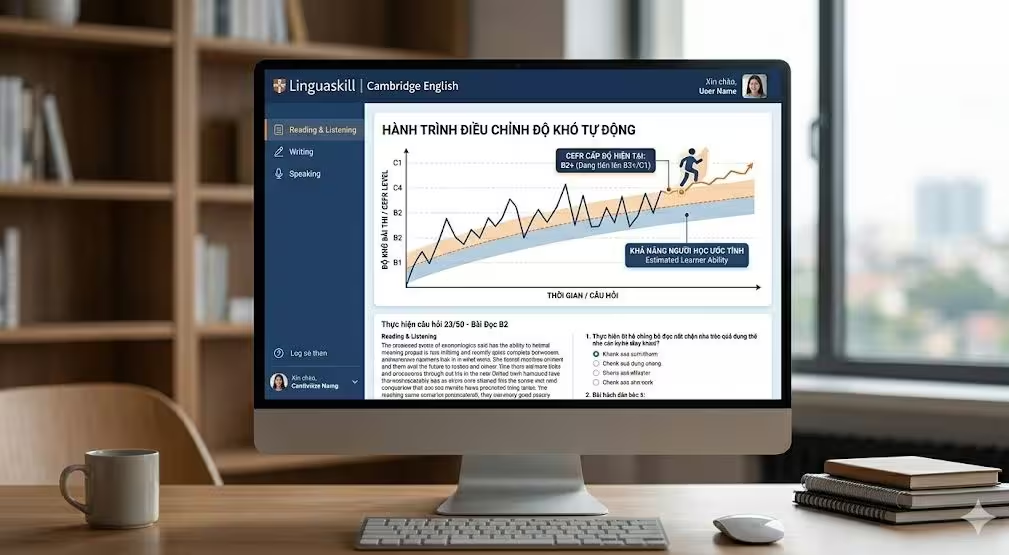
Linguaskill có khó hơn IELTS Listening không? Linguaskill Listening có tính tương tác và linh hoạt hơn. Nó sử dụng AI để điều chỉnh độ khó dựa trên câu trả lời của bạn, giúp phản ánh chính xác trình độ hiện tại mà không gây áp lực quá lớn như kỳ thi IELTS truyền thống.
Chủ đề liên quan
- Chiến thuật nghe hiểu tiếng Anh trình độ B2 không cần sub.
- Tổng hợp từ vựng World Cup 2026 từ A-Z.
- Linguaskill Listening: Cách vượt qua bài thi trong 35 phút.
- Phân tích giọng đọc (accents) phổ biến trong kỳ World Cup 2026.
- Luyện nghe tiếng Anh qua tin tức thể thao ESPN và BBC Sport.
- Bí kíp bắt từ khóa trong phần nghe trắc nghiệm VSTEP.
- Lộ trình học tiếng Anh cấp tốc cho người hâm mộ bóng đá.
- Cách đăng ký thi Linguaskill nhận chứng chỉ sau 48 giờ.
- So sánh độ khó Listening giữa B1 và B2.
- Tải bộ đề thi thử THPT Quốc gia 2026 chuyên đề World Cup.
Chinh phục 100 câu Listening về World Cup 2026 không chỉ là việc chuẩn bị cho một kỳ thi, mà là trang bị “vũ khí” ngôn ngữ để bạn hòa mình vào sự kiện thể thao lớn nhất hành tinh. Việc hiểu rõ các thực thể địa chính trị, công nghệ và kinh tế thể thao qua bài nghe sẽ giúp bạn tự tin hơn trong cả môi trường học thuật lẫn giao tiếp thực tế tại Bắc Mỹ.
THƯƠNG HIỆU: Linguaskill
WEBSITE: https://lingospeak.vn/
HOTLINE: 0922985555
Bài 1
KỲ THI CHỨNG CHỈ TIẾNG ANH (VSTEP/THPT QUỐC GIA)
MÔN THI: TIẾNG ANH – KỸ NĂNG NGHE
TOPIC: THE 2026 FIFA WORLD CUP REVOLUTION
LEVEL: B1 – B2
LISTENING COMPREHENSION
Part 1: Questions 1-8
Directions: You will hear a report about the organizational changes for the World Cup 2026. Listen and choose the best answer (A, B, C, or D) for each question.
- What is the primary reason the 2026 World Cup is described as “unprecedented”?A. It features the highest number of European teams.B. It is the first time the tournament is hosted by three nations.C. It is being held in the winter instead of the summer.D. All matches will be played in newly built stadiums.
- How does the expansion to 48 teams change the group stage?A. Teams will be divided into 16 groups of three.B. Teams will play more matches in the first round.C. The traditional format of four teams per group remains.D. There will be no group stage, only a knockout format.
- Which country will host the greatest number of matches?A. CanadaB. MexicoC. The United StatesD. They will share the matches equally.
- What is a major logistical challenge mentioned in the report?A. The lack of hotel rooms in North America.B. The massive travel distances between host cities.C. The strict visa requirements for all three countries.D. The language barrier between the host nations.
- How many matches will the winner of the 2026 World Cup play in total?A. 7B. 8C. 9D. 10
- What is the significance of the Azteca Stadium in Mexico?A. It is the largest stadium in the world.B. It will host the final match of the tournament.C. It is the first stadium to host three opening World Cup matches.D. It was built specifically for the 2026 edition.
- What does the speaker say about the economic impact?A. It will be the most expensive World Cup ever to attend.B. It is expected to generate record-breaking revenue.C. It will cause a financial deficit for the host cities.D. Only the United States will profit from the event.
- What is the overall tone of the report regarding the new format?A. Highly critical and pessimistic.B. Indifferent and neutral.C. Informative with a touch of excitement.D. Worried about the quality of football.
Part 2: Questions 9-20
Directions: You will hear a discussion between two sports analysts, Mark and Sarah, about the implications of the 2026 World Cup. Listen and choose the correct answer.
- What is Sarah’s main concern about the 48-team format?A. The tournament will finish too quickly.B. The “dilution” of the competition’s quality.C. Not enough fans will travel to the games.D. The refereeing will be more difficult.
- According to Mark, how does the new format benefit smaller nations?A. They get more money even if they lose.B. It provides more slots for teams from Africa and Asia.C. They can host matches in their own countries.D. They don’t have to play in the qualification rounds.
- What “safety net” has FIFA kept for the 2026 format?A. Keeping 4-team groups to prevent collusion.B. Reducing the number of yellow cards.C. Allowing teams to bring more substitute players.D. Playing all matches at night to avoid heat.
- Why does Sarah mention the “Round of 32”?A. Because it is the final round.B. Because it is a new knockout stage added to the tournament.C. Because it will be held entirely in Canada.D. Because she thinks it is unnecessary.
- What is the “regional clustering” strategy intended to solve?A. High ticket prices.B. Cultural misunderstandings.C. Excessive travel for teams and fans.D. The lack of training facilities.
- Which city has been chosen to host the final?A. DallasB. Mexico CityC. New York/New JerseyD. Vancouver
- What does Mark suggest about Canada’s involvement?A. They are not prepared to host.B. It is a massive milestone for Canadian soccer.C. They should have hosted more than two cities.D. They will likely win the tournament.
- How long will the 2026 World Cup last?A. 28 daysB. 32 daysC. 39 daysD. 45 days
- What do the analysts agree on regarding the fan experience?A. It will be very cheap for international travelers.B. The atmosphere will be incredibly diverse.C. It will be difficult to watch matches on TV.D. Fans will only stay in the USA.
- What is said about the carbon footprint of the event?A. It will be the “greenest” event in history.B. Travel requirements make sustainability a major challenge.C. Fans are encouraged to walk between stadiums.D. FIFA has banned all flights during the month.
- Mark believes the “Global North” hosting the cup will:A. Make it hard for South American fans to attend.B. Utilize world-class existing infrastructure.C. Require billions of dollars in new stadium construction.D. Change the rules of the game forever.
- What is Sarah’s final prediction?A. The format will revert to 32 teams in 2030.B. The 2026 World Cup will set a new benchmark for global sports.C. Football will become more popular than American Football in the US.D. No other country will ever want to host again.
ANSWER KEY & EXPLANATIONS
| Q | Ans | Giải thích chi tiết (Vietnamese) |
| 1 | B | “Unprecedented” (chưa từng có tiền lệ) vì đây là lần đầu 3 quốc gia đồng đăng cai. |
| 2 | C | Sau nhiều tranh luận, FIFA quyết định giữ bảng 4 đội để đảm bảo tính hấp dẫn. |
| 3 | C | Mỹ tổ chức 78 trận, trong khi Mexico và Canada mỗi nước 13 trận. |
| 4 | B | Khoảng cách địa lý giữa Vancouver và Mexico City là cực kỳ lớn. |
| 5 | B | Trước đây là 7 trận, format mới yêu cầu đội vô địch đá 8 trận (thêm vòng 1/32). |
| 6 | C | Azteca đi vào lịch sử khi là sân vận động duy nhất tổ chức 3 kỳ khai mạc. |
| 7 | B | “Generate record-breaking revenue” – mang lại doanh thu kỷ lục cho FIFA. |
| 8 | C | Bài báo cáo mang tính cung cấp thông tin (informative) và kỳ vọng. |
| 9 | B | “Dilution of quality” – lo ngại chất lượng chuyên môn giảm khi có quá nhiều đội. |
| 10 | B | Thêm suất (slots) cho khu vực châu Phi (CAF) và châu Á (AFC). |
| 11 | A | Bảng 4 đội giúp tránh tình trạng các đội bắt tay nhau (collusion) ở lượt cuối. |
| 12 | B | Đây là vòng đấu loại trực tiếp mới được thêm vào ngay sau vòng bảng. |
| 13 | C | Chia cụm (clustering) vùng miền để giảm thiểu quãng đường di chuyển. |
| 14 | C | Sân MetLife tại New York/New Jersey là nơi diễn ra trận chung kết. |
| 15 | B | Canada lần đầu tổ chức giải nam là một cột mốc (milestone) lớn. |
| 16 | C | Thời gian giải đấu tăng lên 39 ngày để đáp ứng số trận tăng thêm. |
| 17 | B | Sự đa dạng văn hóa (diverse) từ 3 quốc gia và 48 đội bóng. |
| 18 | B | Việc di chuyển xuyên lục địa khiến mục tiêu bền vững trở nên khó khăn. |
| 19 | B | Tận dụng cơ sở hạ tầng có sẵn (existing infrastructure) như các sân NFL. |
| 20 | B | “Set a new benchmark” – thiết lập một tiêu chuẩn/cột mốc mới cho thể thao toàn cầu. |
VOCABULARY STATISTICS & ANALYSIS
Total Advanced/New Words: 15 items (Level B1-B2 focus).
- Unprecedented (adj): Chưa từng có tiền lệ. (Rất hay dùng trong đề thi B2).
- Expansion (n): Sự mở rộng.
- Logistical (adj): Thuộc về hậu cần/tổ chức.
- Revenue (n): Doanh thu.
- Significance (n): Ý nghĩa/Tầm quan trọng.
- Dilution (n): Sự pha loãng (nghĩa bóng: làm giảm chất lượng).
- Slot (n): Suất/Vị trí (trong giải đấu).
- Collusion (n): Sự câu kết/thông đồng.
- Milestone (n): Cột mốc quan trọng.
- Infrastructure (n): Cơ sở hạ tầng.
- Clustering (n/v): Sự phân cụm/nhóm lại.
- Sustainability (n): Sự bền vững.
- Benchmark (n): Tiêu chuẩn/Điểm chuẩn để so sánh.
- Existing (adj): Hiện có/Có sẵn.
- Implication (n): Hệ quả/Sự liên đới.
LISTENING SCRIPT
(Part 1: News Report)
The 2026 FIFA World Cup is set to be an unprecedented spectacle. For the first time in history, football’s biggest stage will be shared by three nations: Canada, Mexico, and the United States. This “United” bid represents a massive expansion of the tournament. Instead of the usual 32 teams, 48 nations will compete for the trophy.
Initially, FIFA considered groups of three, but to avoid the risk of collusion and keep the drama alive, they decided to stick with the traditional four-team groups. This means the total number of matches will jump to 104, extending the tournament to 39 days. While Mexico’s iconic Azteca Stadium will host the opening match for a record third time, the United States will host the majority of the games, including the final in New York/New Jersey. However, the logistical scale is daunting; fans and players must navigate vast distances across North America, raising concerns about the event’s carbon footprint and player fatigue. Despite these challenges, FIFA expects the event to generate record-breaking revenue, forever changing the scale of international sports.
(Part 2: Discussion)
Mark: Sarah, we’re looking at a completely different beast with the 2026 World Cup. 48 teams! That’s nearly a quarter of all FIFA members.
Sarah: It is, Mark. But I’m worried about the dilution of quality. Do we really need more teams, or is this just a move for more revenue?
Mark: I see it differently. It’s a huge opportunity for smaller nations in Asia and Africa who’ve been fighting for a few slots for decades. It’s about global growth.
Sarah: Fair point. And I’m glad they kept the four-team groups. It keeps the final group matches exciting. But adding a “Round of 32” means the winner has to play eight matches. That’s a massive physiological strain on players.
Mark: True, but look at the infrastructure. Most of these cities already have world-class stadiums used for American football. Unlike Qatar, they don’t need to build everything from scratch.
Sarah: What about the travel? Moving between Vancouver and Mexico City isn’t like taking a subway in Doha.
Mark: FIFA is planning “regional clustering.” Teams will stay in one zone—East, Central, or West—during the early stages to mitigate travel.
Sarah: Let’s hope that works. For Canada, hosting for the first time is a massive milestone. It could do for them what 1994 did for the US.
Mark: Exactly. I think despite the complexity, this tournament will set a new benchmark for how mega-events are hosted in the future.
Sarah: It’s certainly going to be a month—or rather, 39 days—to remember!
Bài 2
KỲ THI THỬ VSTEP / THPT QUỐC GIA
Môn: Tiếng Anh – Kỹ năng Nghe (B1-B2)
Chủ đề: The 2026 FIFA World Cup Expansion
PART 1: SHORT DIALOGUES (Questions 1-10)
Instructions: Listen to five short conversations twice. Choose the best answer (A, B, C, or D) for each question.
- What is the man’s initial reaction to the 48-team expansion?A. Pure excitementB. Complete indifferenceC. Mild skepticismD. Total confusion
- According to the woman, why did FIFA increase the number of teams?A. To shorten the tournament durationB. To foster global inclusivityC. To reduce travel costs for fansD. To limit the number of host cities
- What does the man fear will happen to the “group stage”?A. It will become too competitive.B. Many matches might lack intensity.C. It will be cancelled entirely.D. The tickets will be too expensive.
- How many host cities are located in Mexico?A. 2B. 3C. 11D. 16
- What does the woman say about the stadiums in the United States?A. They are all being built from scratch.B. They are mostly world-class existing venues.C. They are too small for football matches.D. They are located only on the East Coast.
- What is the primary logistical challenge mentioned?A. Language differencesB. Currency exchangeC. Transcontinental travelD. Food safety
- How will the “Round of 32” affect the finalists?A. They play one fewer match.B. They play the same number of matches as in 2022.C. They must play a total of eight matches.D. They will have more rest days.
- What is the man’s opinion on the “best third-placed teams” rule?A. It makes the group stage more predictable.B. It keeps the drama alive until the last minute.C. It is unfair to the top-seeded teams.D. It is too complicated to calculate.
- Which aspect of the 2026 World Cup is described as “environmentally conscious”?A. The use of recycled plastic for kits.B. The decision not to build “White Elephant” stadiums.C. Mandatory electric bus travel for teams.D. Planting trees in every host city.
- What is the general tone of the conversation?A. Informative and debatingB. Angry and frustratedC. Humorous and light-heartedD. Formal and academic
PART 2: TALK / LECTURE (Questions 11-20)
Instructions: Listen to a report on the economic and structural changes of the 2026 World Cup and choose the correct answer.
- The 2026 World Cup is the first to be hosted by ______ nations.A. twoB. threeC. fourD. five
- The total number of matches has risen to ______ in this edition.A. 64B. 80C. 104D. 128
- Why is the 2026 tournament expected to generate record-breaking revenue?A. Because of the high price of food.B. Because of the increased number of matches and ticket sales.C. Because of the low cost of stadium maintenance.D. Because only wealthy fans are invited.
- What does the speaker mean by “geographical clusters”?A. Grouping matches in nearby cities to reduce travel.B. Building stadiums in the shape of a circle.C. Only playing matches in one country at a time.D. Sorting teams by their physical height.
- Which country previously hosted the World Cup in 1994?A. CanadaB. MexicoC. The USAD. Brazil
- The speaker mentions that the 2026 World Cup will “bridge cultures.” This implies:A. Building physical bridges between the countries.B. Using football to improve diplomatic relations.C. Making everyone speak the same language.D. Changing the rules of the game.
- What is the duration of the 2026 tournament?A. 28 daysB. 32 daysC. 39 daysD. 45 days
- The 48-team format was officially approved in ______ .A. 2017B. 2022C. 2024D. 2026
- What is a major benefit for “emerging football nations”?A. They don’t have to train as hard.B. They get a guaranteed spot in the semi-finals.C. They gain experience on the world’s biggest stage.D. they receive free equipment from FIFA.
- The speaker concludes that the 2026 World Cup will be a ______ .A. logistical nightmareB. massive commercial failureC. transformative milestone for the sportD. small event for local fans only
ANSWER KEY & EXPLANATIONS
- C (Man: “I’m a bit worried it might water down the competition.” -> Skepticism).
- B (Woman mentions “giving more nations a seat at the table”).
- B (Man: “More matches might lead to dead rubbers” – trận đấu thủ tục, thiếu kịch tính).
- B (Script: “Mexico has three cities: Mexico City, Monterrey, and Guadalajara”).
- B (Woman: “They are utilizing existing, state-of-the-art NFL stadiums”).
- C (Nhắc đến việc di chuyển giữa các quốc gia và múi giờ khác nhau).
- C (Finalists đá 8 trận thay vì 7 như trước).
- B (Woman mentions it adds “mathematical drama”).
- B (Sử dụng hạ tầng có sẵn để tránh lãng phí).
- A (Cung cấp thông tin và đưa ra quan điểm trái chiều).
- B (USA, Canada, Mexico).
- C (104 matches).
- B (Quy mô lớn hơn dẫn đến thương mại hóa tốt hơn).
- A (Phân cụm địa lý để giảm thiểu việc di chuyển).
- C (Mỹ đăng cai năm 1994).
- B (Kết nối văn hóa qua thể thao).
- C (39 days).
- A (Approved in 2017).
- C (Experience and exposure).
- C (Cột mốc thay đổi hoàn toàn bộ mặt bóng đá).
NEW VOCABULARY STATISTICS & ANALYSIS
Total New Items: 12
| Vocabulary | Meaning (Vietnamese) | Importance (B1-B2) |
| Skepticism (n) | Thái độ hoài nghi | Cần thiết để miêu tả thái độ trong bài nghe/đọc. |
| Inclusivity (n) | Tính toàn diện/không loại trừ | Từ vựng chủ chốt trong các chủ đề xã hội hiện đại. |
| Water down (phr.v) | Làm loãng, làm giảm chất lượng | Cách diễn đạt tự nhiên (natural expression). |
| Logistics (n) | Công tác hậu cần | Từ vựng chuyên nghiệp cho tổ chức sự kiện. |
| State-of-the-art (adj) | Hiện đại nhất | Thay thế cho “very modern”. |
| Transcontinental (adj) | Xuyên lục địa | Mô tả quy mô của WC 2026. |
| Dead rubber (n) | Trận đấu thủ tục | Thuật ngữ thể thao chuyên sâu (C1-C2 nhưng B2 nên biết). |
| Revenue (n) | Doanh thu | Từ vựng thiết yếu về kinh tế/tài chính. |
| Milestone (n) | Cột mốc | Dùng để chỉ một sự kiện quan trọng. |
| Seed (v/n) | Xếp hạt giống (đội bóng) | Thuật ngữ trong bốc thăm giải đấu. |
| Exposure (n) | Sự tiếp xúc/cọ xát | Cơ hội để các nước nhỏ được biết đến. |
| Cluster (n/v) | Cụm/Phân cụm | Dùng trong quản lý và tổ chức địa lý. |
LISTENING SCRIPT
(Part 1: Dialogue)
Man: I’ve been reading about the 2026 World Cup. 48 teams? Isn’t that a bit much? I have some skepticism about whether it will water down the quality of the football.
Woman: I see your point, but think about the inclusivity. It’s giving nations that usually miss out a chance to be on the global stage. Plus, it’s being hosted by three countries!
Man: Right, the US, Canada, and Mexico. I know the US has 11 cities, but what about Mexico?
Woman: Mexico has three: Mexico City, Monterrey, and Guadalajara. Canada has two. The logistics of traveling across a whole continent will be a nightmare for fans, though.
Man: Exactly! And the format change—adding a “Round of 32.” That means the finalists have to play eight matches instead of the usual seven. It’s a huge physical toll on the players.
Woman: True, but they are trying to minimize travel by using “geographical clusters.” And they aren’t building those “White Elephant” stadiums like in the past; they’re using state-of-the-art existing venues.
Man: I guess. I just hope we don’t end up with too many dead rubbers in the group stage.
Woman: With the “best third-placed teams” advancing, the drama should last until the final whistle of the opening round!
(Part 2: Monologue)
“The 2026 FIFA World Cup represents a seismic shift in the world’s most popular sport. Approved back in 2017, the expansion from 32 to 48 teams is a milestone that reflects the growth of football globally. With 104 matches spread across 16 cities in North America, the tournament is expected to generate record-breaking revenue through broadcasting and sponsorship.
However, the expansion is not just about money; it’s about exposure. Emerging football nations from Africa and Asia will gain invaluable experience. To manage the vast transcontinental distances, FIFA will group matches in regional clusters to ensure teams and fans aren’t flying six hours between every game. As the first World Cup to feature three host nations, it aims to bridge cultures and set a new standard for sustainable mega-events by utilizing existing infrastructure. Whether this new format succeeds or fails, 2026 will undoubtedly change the face of international football forever.”
Bài 3
KỲ THI THỬ TIẾNG ANH – TRÌNH ĐỘ B1-B2 (VSTEP / THPT QUỐC GIA)
MÔN THI: TIẾNG ANH – KỸ NĂNG NGHE (LISTENING)
CHỦ ĐỀ: THE EVOLUTION OF WORLD CUP 2026
PART 1: MULTIPLE CHOICE QUESTIONS (20 ITEMS)
Instruction: Listen to a lecture about the changes and expectations for the FIFA World Cup 2026. Choose the correct answer (A, B, C, or D) for each question.
- What is the primary focus of the lecture?A. The history of North American footballB. The structural changes to the 2026 World CupC. The economic success of Qatar 2022D. Player statistics for the upcoming tournament
- The 2026 World Cup is described as being “unprecedented” because it:A. Features the most famous playersB. Is the first to be hosted by three nationsC. Will be played entirely in the winterD. Uses only artificial grass
- How many matches in total will be played in the 2026 edition?A. 64B. 80C. 104D. 48
- What does the speaker say about the tournament’s duration?A. It is shorter than previous yearsB. It will last exactly one monthC. It has been extended to 39 daysD. It depends on the weather conditions
- According to the speaker, the 48-team expansion aims to:A. Increase ticket pricesB. Promote global inclusivity in footballC. Reduce the number of qualifying roundsD. Focus only on European teams
- Which city will host the opening game?A. New YorkB. TorontoC. Mexico CityD. Vancouver
- The majority of matches from the quarterfinals onward will be held in:A. CanadaB. MexicoC. The United StatesD. All three countries equally
- What logistical challenge is mentioned for the 2026 tournament?A. A lack of modern stadiumsB. The vast travel distances across the continentC. Language barriers in MexicoD. Extreme cold in Canada
- How will the group stage be organized?A. 16 groups of 3 teamsB. 8 groups of 4 teamsC. 12 groups of 4 teamsD. 10 groups of 5 teams
- Which teams will advance from the group stage to the knockout round?A. Only the winners of each groupB. The top two teams and the eight best third-placed teamsC. Every team that wins at least two matchesD. Only teams from the host nations
- What is the “Round of 32”?A. A new qualifying tournamentB. An extra knockout stage introduced for 2026C. A special match for retired playersD. The final round of the World Cup
- How does the speaker describe the 2022 Qatar World Cup layout?A. ContinentalB. DisorganizedC. CompactD. Expansive
- What will happen to the intensity of the group stage with the new format?A. It will be completely removedB. It is expected to be preserved and enhancedC. It will only matter for the host teamsD. It will be shorter than 10 days
- Mexico’s hosting role is historic because:A. They have the most stadiumsB. They are the first country to host three timesC. They are hosting for the first timeD. They will play all their games at home
- What is mentioned about the infrastructure in North America?A. They need to build 10 new stadiumsB. They will mostly use existing, high-capacity venuesC. The stadiums are too small for footballD. Most venues are located in rural areas
- What is the expected “revenue” impact mentioned by the speaker?A. A significant increase due to more matches and sponsorsB. A loss of money because of travel costsC. No change compared to 2022D. All profits will go to the host cities only
- The speaker uses the term “die-hard fans” to refer to:A. People who dislike footballB. Fans who are very loyal and passionateC. Fans who only watch the final matchD. New fans who just started watching
- What is a “knockout” match?A. A friendly game with no winnerB. A match where the loser is eliminatedC. A game that ends in a drawD. The very first game of the season
- Which country is expected to provide the venue for the Final?A. CanadaB. MexicoC. The USAD. A neutral country in Europe
- What is the speaker’s final message to the audience?A. To stop watching footballB. To prepare for a tournament of massive scaleC. To vote for the next hostD. To complain about the new rules
ANSWER KEY & EXPLANATIONS (TIẾNG VIỆT)
| Q | Key | Giải thích chi tiết |
| 1 | B | Bài giảng tập trung vào sự thay đổi cấu trúc (expansion, format, hosting). |
| 2 | B | “Unprecedented” vì lần đầu có 3 nước đồng đăng cai (tri-nation). |
| 3 | C | Số trận tăng từ 64 lên 104. |
| 4 | C | Thời gian diễn ra giải đấu kéo dài thành 39 ngày. |
| 5 | B | “Global inclusivity” – tạo cơ hội cho nhiều quốc gia hơn tham gia. |
| 6 | C | Trận khai mạc diễn ra tại Mexico City (Sân vận động Azteca). |
| 7 | C | Từ tứ kết trở đi, các trận đấu tập trung tại Mỹ. |
| 8 | B | Thách thức lớn nhất là khoảng cách di chuyển (continental scale). |
| 9 | C | Chia làm 12 bảng, mỗi bảng 4 đội. |
| 10 | B | 2 đội đầu bảng và 8 đội đứng thứ 3 có thành tích tốt nhất sẽ đi tiếp. |
| 11 | B | Vòng 32 đội là vòng loại trực tiếp mới được thêm vào. |
| 12 | C | Qatar 2022 được mô tả là “compact” (nhỏ gọn, tập trung). |
| 13 | B | Thể thức mới giúp giữ vững và tăng cường sự kịch tính của vòng bảng. |
| 14 | B | Mexico đi vào lịch sử khi là nước đầu tiên 3 lần đăng cai (1970, 1986, 2026). |
| 15 | B | Sử dụng các sân vận động có sẵn (existing venues) với sức chứa lớn. |
| 16 | A | Doanh thu tăng mạnh nhờ số lượng trận đấu và hợp đồng tài trợ lớn hơn. |
| 17 | B | “Die-hard fans” là những người hâm mộ cuồng nhiệt, trung thành. |
| 18 | B | Knockout là trận đấu loại trực tiếp (thua là bị loại). |
| 19 | C | Trận chung kết được dự kiến tổ chức tại Mỹ (New Jersey/Texas). |
| 20 | B | Thông điệp cuối là chuẩn bị cho một giải đấu có quy mô khổng lồ. |
NEW VOCABULARY STATISTICS
Bài nghe giới thiệu 12 từ vựng/thuật ngữ quan trọng cấp độ B2.
- Unprecedented (adj): Chưa từng có. (Dùng để nhấn mạnh sự đặc biệt).
- Inclusivity (n): Tính bao trùm. (Xu hướng xã hội và thể thao hiện đại).
- Logistics (n): Hậu cần/việc tổ chức di chuyển. (Key word trong các bài nói về sự kiện).
- Expansion (n): Sự mở rộng. (Ngữ cảnh: mở rộng quy mô giải đấu).
- Venue (n): Địa điểm tổ chức. (Thay thế cho “place” để chuyên nghiệp hơn).
- Elimination (n): Sự loại bỏ. (Dùng trong vòng loại trực tiếp).
- Infrastructure (n): Cơ sở hạ tầng. (Đường xá, sân vận động, khách sạn).
- Revenue (n): Doanh thu. (Thuật ngữ kinh tế liên quan đến tổ chức sự kiện).
- Capacity (n): Sức chứa. (Nói về số lượng ghế trong sân vận động).
- Geographic (adj): Thuộc về địa lý. (Mô tả phạm vi trải dài của giải đấu).
- Collaborative (adj): Có tính hợp tác. (Nói về việc 3 nước cùng làm việc).
- Knockout stage (n.phr): Vòng loại trực tiếp. (Thuật ngữ thể thao thiết yếu).
LISTENING SCRIPT
“Good morning, class. Today, we are going to explore a major shift in the world of sports: the FIFA World Cup 2026. This upcoming tournament is set to be unprecedented in several ways.
First, let’s look at the hosting model. Unlike the compact nature of the 2022 World Cup in Qatar, where all stadiums were within a small radius, 2026 will be a continental event. It is a collaborative effort between three nations: the United States, Mexico, and Canada. This wide geographic footprint brings a massive logistical challenge, as teams and fans will have to travel thousands of miles between host cities like Vancouver, Mexico City, and New York.
The second major change is the expansion of the format. For the first time, we will see 48 teams instead of 32. This move is designed to promote global inclusivity, allowing more nations from Africa, Asia, and North America to participate. Consequently, the number of matches will jump from 64 to 104, and the tournament duration will be extended to 39 days.
In terms of the competition structure, the teams will be divided into 12 groups of four. The top two teams from each group, along with the eight best third-placed teams, will advance to a newly introduced Round of 32. This is a fresh knockout stage that adds more drama and high-stakes matches to the schedule.
From an economic perspective, the revenue potential is staggering. With more matches, FIFA expects record-breaking ticket sales and sponsorship deals. Interestingly, the hosts won’t need to build many new stadiums. Instead, they will use existing infrastructure, particularly high-capacity NFL stadiums in the US, which can hold over 70,000 fans.
Finally, let’s mention history. Mexico will become the first nation to host the World Cup three times. While the opening match will be held in the historic Mexico City, the United States will host every match from the quarterfinals onward.
So, whether you are a die-hard fan or just a casual observer, get ready for a tournament of massive scale. It is not just a game; it is a continental festival.”
Bài 4
ENGLISH LISTENING PROFICIENCY TEST: B1-B2 LEVEL
Subject: The 2026 FIFA World Cup Evolution
Time Allowed: 30 minutes
PART 1: MULTIPLE CHOICE QUESTIONS
Listen to a radio interview with a sports analyst discussing the 2026 World Cup. Choose the correct answer (A, B, C, or D) for each question.
- What is the primary reason the 2026 World Cup is considered “unprecedented”?A. It is the first time it is held in the summer.B. It involves three nations acting as joint hosts.C. It will be the most expensive event in history.D. No European teams are participating.
- How many national teams will compete in this edition?A. 32B. 44C. 48D. 52
- According to the analyst, what is the main advantage of the expanded format?A. Matches will be shorter and faster.B. More revenue from ticket sales for FIFA.C. Greater representation for underrepresented regions.D. Better weather conditions for the players.
- Which country will host the largest number of matches?A. CanadaB. MexicoC. The United StatesD. They will share them equally.
- What historical milestone does Mexico achieve in 2026?A. Being the first country to win three trophies.B. Becoming the first three-time host nation.C. Building the world’s largest football stadium.D. Having the youngest team in the tournament.
- What logistical concern does the analyst mention for the teams?A. Lack of high-quality training pitches.B. Significant travel fatigue due to the continent’s size.C. Language barriers between the three host nations.D. Strict visa requirements for all athletes.
- How many host cities are there in total across North America?A. 12B. 16C. 20D. 24
- What is the significance of the “cluster” system mentioned in the talk?A. To group fans based on their nationality.B. To minimize travel distances during the group stages.C. To increase the number of VIP tickets available.D. To test new stadium technologies.
- Why does the analyst mention NFL stadiums?A. They will be used to host soccer matches.B. NFL players will help promote the World Cup.C. Most soccer stadiums were demolished.D. To compare the popularity of the two sports.
- The duration of the tournament has been extended to:A. 30 daysB. 35 daysC. 39 daysD. 42 days
- What does the speaker say about “emerging football nations”?A. They are unlikely to win any games.B. They benefit from the increased number of slots.C. They have to pay more to participate.D. They will only play in Canada.
- Which city has been selected to host the final match?A. Los AngelesB. Mexico CityC. TorontoD. New York/New Jersey
- What is a “major challenge” for fans attending the games?A. Getting used to the local food.B. Navigating across four different time zones.C. Finding hotels in small towns.D. Understanding the rules of the game.
- The term “environmental sustainability” is used to discuss:A. The use of recycled plastic for jerseys.B. The impact of frequent air travel on the planet.C. Planting trees around every stadium.D. Using only solar energy for the lights.
- What will happen to the traditional four-team group stage?A. It will be replaced by two-team groups.B. It remains the same despite the expansion.C. It will be changed to groups of three.D. It will be removed entirely.
- How does the analyst describe the expected “atmosphere” in 2026?A. Quiet and professional.B. Diverse and multicultural.C. Chaotic and unorganized.D. Similar to a small local festival.
- What does the analyst suggest about the “economic legacy”?A. It will only benefit the United States.B. It will boost tourism and local businesses significantly.C. It will cause a long-term financial crisis.D. It will make football the most expensive sport to play.
- In terms of technology, the 2026 World Cup will feature:A. Robots as referees.B. Enhanced VAR and player-tracking data.C. Holograms of players for fans at home.D. No technology to keep the game traditional.
- Which Canadian city is specifically mentioned by the analyst?A. VancouverB. MontrealC. CalgaryD. Vancouver and Toronto
- What is the overall tone of the analyst regarding the 2026 World Cup?A. Highly critical and pessimistic.B. Neutrally indifferent.C. Optimistic yet aware of the challenges.D. Solely focused on the financial profits.
PART 2: ANSWER KEY & EXPLANATIONS
- B (Lần đầu tiên 3 nước đồng đăng cai)
- C (Tăng từ 32 lên 48 đội)
- C (Tạo điều kiện cho các khu vực ít được đại diện)
- C (Mỹ tổ chức 75% số trận đấu)
- B (Mexico là nước duy nhất 3 lần đăng cai: 1970, 1986, 2026)
- B (Mệt mỏi do di chuyển giữa các quốc gia rộng lớn)
- B (16 thành phố chủ nhà)
- B (Hệ thống phân cụm giúp giảm quãng đường di chuyển cho đội bóng)
- A (Các sân vận động bóng bầu dục Mỹ có sức chứa lớn sẽ được dùng)
- C (Giải đấu kéo dài 39 ngày)
- B (Các đội bóng mới nổi có nhiều suất tham dự hơn)
- D (Sân MetLife tại New Jersey/New York)
- B (Thách thức về việc di chuyển qua 4 múi giờ khác nhau)
- B (Vấn đề khí thải từ việc di chuyển bằng máy bay liên tục)
- B (FIFA quyết định giữ lại bảng 4 đội sau khi cân nhắc)
- B (Bầu không khí đa văn hóa)
- B (Thúc đẩy du lịch và doanh nghiệp địa phương)
- B (Công nghệ VAR và theo dõi dữ liệu cầu thủ được nâng cấp)
- D (Cả Vancouver và Toronto đều được nhắc tới)
- C (Lạc quan nhưng vẫn chỉ ra các khó khăn về hậu cần)
PART 3: VOCABULARY STATISTICS & ANALYSIS
Total New Keywords: 10 items
| No. | Word/Phrase | Meaning | Importance in Exam |
| 1 | Unprecedented | Chưa từng có tiền lệ | Từ vựng C1 thường xuất hiện trong bài đọc/nghe học thuật. |
| 2 | Joint hosts | Các nước đồng đăng cai | Cụm danh từ chuyên dụng cho các sự kiện quốc tế. |
| 3 | Representation | Sự đại diện | Quan trọng trong các chủ đề về xã hội và thể thao. |
| 4 | Logistical concern | Lo ngại về hậu cần | Dùng để chỉ các vấn đề về tổ chức, di chuyển, ăn ở. |
| 5 | Milestone | Cột mốc quan trọng | Từ vựng mức độ B2 để mô tả các sự kiện lịch sử. |
| 6 | Fatigue | Sự mệt mỏi (thể xác/tâm trí) | Từ chuyên môn cao hơn “tiredness”. |
| 7 | Sustainability | Sự bền vững | Chủ đề “hot” trong các kỳ thi VSTEP/IELTS/THPT. |
| 8 | Cluster | Cụm/nhóm | Dùng để mô tả cách sắp xếp địa lý hoặc dữ liệu. |
| 9 | Legacy | Di sản | Thường nói về lợi ích lâu dài sau một sự kiện lớn. |
| 10 | Diverse | Đa dạng | Từ vựng nền tảng để mô tả văn hóa hoặc thành phần. |
PART 4: LISTENING SCRIPT
Host: Welcome to “Sports World Today.” We’re looking ahead to the 2026 FIFA World Cup. Joining us is Mark Evans. Mark, this tournament seems unprecedented. Why is that?
Mark: You’re right. It’s the first time we’ll see joint hosts from three different nations: the US, Canada, and Mexico. But the biggest change is the scale. We are moving from 32 teams to 48 teams.
Host: That’s a huge jump! Is it just about the money?
Mark: Not necessarily. It’s about representation. Smaller, emerging football nations in Asia and Africa now have more slots to qualify. It gives them a global stage. However, it does mean the tournament will now last 39 days with 104 matches.
Host: With such a vast geography, what are the logistical concerns?
Mark: Travel fatigue is the main one. Flying from Vancouver to Mexico City is a six-hour trip. To help, FIFA is using a cluster system. Teams will play their group matches within one region—either East, Central, or West—to minimize travel. Also, organizers are using existing NFL stadiums in the US because they already have the infrastructure and huge capacities.
Host: Speaking of Mexico, they are making history too, right?
Mark: Absolutely. They become the first nation to hit the milestone of hosting three times.
Host: And the final?
Mark: That’s going to New Jersey, right next to New York. It’s going to be a multicultural festival. Of course, critics point out the environmental sustainability issues with all that flying, but the economic legacy for local businesses in the 16 host cities should be massive. It’s going to be a challenge navigating four time zones, but for fans, it’s a once-in-a-lifetime experience.
Bài 5
PRACTICE TEST: ENGLISH LISTENING
Level: B1-B2 (Intermediate to Upper-Intermediate)
Topic: FIFA World Cup 2026 – A Continental Spectacle
Format: Multiple Choice (A, B, C, or D)
PART 1: SHORT CONVERSATIONS
Listen to the short recordings and choose the best answer for each question.
1. What is the primary reason for the expansion to 48 teams? A. To make the tournament shorter.
B. To increase global representation and inclusivity.
C. To reduce the number of matches played.
D. To focus only on European teams.
2. How many host cities are there in total across North America? A. 10
B. 12
C. 16
D. 20
3. Which country will host the highest number of matches? A. Canada
B. Mexico
C. The United States
D. They will host an equal number.
4. What does the speaker say about the “Round of 32”? A. It replaces the Group Stage.
B. It is a new knockout stage following the Group Stage.
C. It only involves teams from the host nations.
D. It is the final match of the tournament.
5. What is a major logistical concern mentioned for fans? A. Language barriers in all three countries.
B. Extreme weather in Canada.
C. Vast travel distances between match venues.
D. A lack of stadiums.
PART 2: LONG CONVERSATION
Listen to an interview with a sports analyst, Mr. Thompson, and answer the questions.
6. What does Mr. Thompson think about the 12-group format? A. It is too confusing for the viewers.
B. It preserves the excitement of the final group matches.
C. It makes the tournament lose its prestige.
D. It is exactly the same as the 2022 format.
7. How will the 2026 World Cup impact the local economies? A. It will cause a long-term recession.
B. It is expected to generate billions in tourism and infrastructure.
C. It will only benefit the hotel industry.
D. It has no predictable economic impact.
8. Why is the Estadio Azteca in Mexico mentioned? A. It is the newest stadium in the tournament.
B. It will host the final match.
C. It is the first stadium to host three opening World Cup matches.
D. It is being demolished after the tournament.
9. What is the “triple-threat” challenge of this World Cup? A. High prices, low quality, and bad weather.
B. Managing three different currencies, time zones, and climates.
C. Training players from 48 different countries.
D. Building 104 new stadiums in three years.
10. What is Mr. Thompson’s advice for international travelers? A. Stay in only one city for the whole month.
B. Rely solely on public buses for cross-border travel.
C. Plan regional clusters to minimize travel fatigue.
D. Avoid going to the matches in person.
PART 3: MONOLOGUE / LECTURE
Listen to a lecture about the environmental sustainability of the 2026 World Cup.
11. What is the estimated carbon footprint of the 2026 event? A. Significantly lower than Qatar 2022.
B. Around 9 million metric tons of CO2.
C. It is expected to be carbon-neutral.
D. No estimation has been made yet.
12. Why is the 2026 World Cup more challenging for the environment than 2022? A. Because of the use of plastic bottles.
B. Because of the massive amount of air travel required.
C. Because there are no recycling bins in the USA.
D. Because the stadiums are built of wood.
13. What strategy is FIFA using to reduce travel emissions? A. Canceling all flights for players.
B. Grouping matches into regional “hubs.”
C. Making fans walk to the stadiums.
D. Playing all matches in one single stadium.
14. What does the term “Legacy Project” refer to in the talk? A. Creating expensive souvenirs for fans.
B. Ensuring long-term benefits for local youth football.
C. Writing a book about the history of the hosts.
D. Building temporary stadiums that will be destroyed.
15. How does the speaker describe the role of technology in 2026? A. It will replace human referees entirely.
B. It will enhance fan engagement and performance analytics.
C. It is too expensive to be used.
D. It will only be used for ticket sales.
16. The lecturer mentions that the US will host matches in… A. Only East Coast cities.
B. 11 different cities across the country.
C. Only the capital, Washington D.C.
D. Cities with no previous football history.
17. What is said about the stadiums in the US? A. They are all being built from scratch.
B. They are mostly existing world-class NFL stadiums.
C. They are too small for international football.
D. They lack modern technology.
18. What is the potential risk of the 48-team expansion? A. The tournament might become “diluted” in quality.
B. Not enough players will be available.
C. The matches will be too short.
D. Fans will get bored of winning too easily.
19. Which of the following is a “sustainability initiative” mentioned? A. Using private jets for everyone.
B. Implementing advanced waste management and renewable energy.
C. Reducing the number of players on the pitch.
D. Increasing ticket prices to limit the crowd.
20. What is the speaker’s concluding thought? A. The World Cup should be canceled.
B. 2026 will set a new benchmark for global sporting events.
C. It will be the most boring World Cup in history.
D. Mexico should have hosted it alone.
ANSWER KEY & EXPLANATIONS
| No. | Ans | Explanation (Vietnamese) |
| 1 | B | Bài nghe đề cập mở rộng lên 48 đội để tạo cơ hội cho nhiều quốc gia hơn (inclusivity). |
| 2 | C | Có tổng cộng 16 thành phố đăng cai (11 Mỹ, 3 Mexico, 2 Canada). |
| 3 | C | Mỹ là quốc gia chủ chốt và tổ chức phần lớn các trận đấu (từ tứ kết trở đi). |
| 4 | B | Vòng 32 đội là vòng loại trực tiếp mới, diễn ra ngay sau vòng bảng. |
| 5 | C | Khoảng cách giữa các thành phố (ví dụ từ Vancouver đến Miami) là một thách thức lớn. |
| 6 | B | Chuyên gia ủng hộ thể thức 12 bảng 4 đội vì nó giữ được kịch tính ở lượt cuối. |
| 7 | B | Giải đấu được kỳ vọng thúc đẩy mạnh mẽ kinh tế thông qua du lịch và hạ tầng. |
| 8 | C | Sân Azteca đi vào lịch sử khi là sân đầu tiên tổ chức 3 kỳ khai mạc World Cup (1970, 1986, 2026). |
| 9 | B | Thử thách “triple-threat” là quản lý sự khác biệt về tiền tệ, múi giờ và khí hậu. |
| 10 | C | Lời khuyên là nên đi theo cụm khu vực (regional clusters) để tránh kiệt sức vì di chuyển. |
| 11 | B | Ước tính dấu chân carbon là 9 triệu tấn, con số rất lớn do di chuyển lục địa. |
| 12 | B | Thách thức môi trường lớn nhất là lượng khí thải từ việc di chuyển bằng máy bay. |
| 13 | B | FIFA chia các trận đấu theo cụm (Hubs) để giảm quãng đường di chuyển của đội và fan. |
| 14 | B | “Legacy Project” là các dự án để lại giá trị lâu dài, như phát triển bóng đá trẻ địa phương. |
| 15 | B | Công nghệ được dùng để tăng trải nghiệm fan và phân tích dữ liệu trận đấu. |
| 16 | B | Mỹ có 11 thành phố đăng cai trải dài khắp cả nước. |
| 17 | B | Đa số các sân tại Mỹ là sân NFL hiện có, không cần xây mới hoàn toàn. |
| 18 | A | “Diluted” (loãng) – lo ngại việc có quá nhiều đội sẽ làm giảm chất lượng chuyên môn. |
| 19 | B | Quản lý chất thải và năng lượng tái tạo là các sáng kiến bền vững. |
| 20 | B | Speaker tin rằng 2026 sẽ thiết lập một tiêu chuẩn mới (benchmark) cho các sự kiện thể thao. |
NEW VOCABULARY STATISTICS
Count: 12 keywords
- Inclusivity (n) [ˌɪnkluːˈsɪvəti]: Tính bao trùm/không phân biệt. (Quan trọng để nói về cơ hội cho các nước nhỏ).
- Logistical (adj) [ləˈdʒɪstɪkl]: Thuộc về hậu cần/tổ chức. (Từ vựng học thuật cao, hay gặp trong B2).
- Spectacle (n) [ˈspektəkl]: Một cảnh tượng/sự kiện hoành tráng.
- Knockout stage (n): Vòng loại trực tiếp. (Kiến thức nền về thể thao).
- Infrastructure (n) [ˈɪnfrəstrʌktʃər]: Cơ sở hạ tầng. (Từ vựng chủ chốt trong THPT QG).
- Triple-threat (adj/n): Ba mối đe dọa/thử thách cùng lúc.
- Fatigue (n) [fəˈtiːɡ]: Sự mệt mỏi, kiệt sức. (Thường dùng trong bối cảnh di chuyển hoặc thể thao).
- Carbon footprint (n): Dấu chân carbon (lượng khí thải gây ra). (Chủ đề Environment cực hot).
- Mitigation (n) [ˌmɪtɪˈɡeɪʃn]: Sự giảm nhẹ, làm dịu đi.
- Benchmark (n) [ˈbentʃmɑːrk]: Tiêu chuẩn, cột mốc để đánh giá.
- Diluted (adj) [daɪˈluːtɪd]: Bị pha loãng/giảm chất lượng.
- Sustainability (n) [səˌsteɪnəˈbɪləti]: Sự bền vững.
LISTENING SCRIPT
(Part 1: Briefing the Press)
“The 2026 FIFA World Cup will be a historical spectacle. For the first time, we are moving from 32 to 48 teams. This expansion is driven by the desire for greater global inclusivity, giving nations in Asia and Africa more slots to compete. The logistics, however, are complex. With 16 host cities spread across the US, Mexico, and Canada, fans will face vast travel distances. Unlike the compact layout of Qatar 2022, the 2026 edition requires cross-continental travel. A key highlight is the new Round of 32, which adds an extra layer of excitement and a new knockout stage before the traditional Round of 16.”
(Part 2: Interview with Mr. Thompson)
Interviewer: Mr. Thompson, how will the three nations manage the infrastructure needed for 104 matches?
Thompson: Well, the US is in a great position because they’re using existing NFL stadiums. These are state-of-the-art venues. Mexico’s Estadio Azteca is also legendary; it’s making history by being the first stadium to host three opening matches.
Interviewer: What about the fans?
Thompson: That’s the triple-threat challenge: three currencies, different time zones, and varied climates. From the heat of Miami to the cooler weather in Toronto. My advice to fans is to plan in regional clusters. Don’t try to see a game in New York one day and Los Angeles the next; the fatigue will ruin the experience.
Interviewer: And the economy?
Thompson: Oh, it’s a goldmine. We expect billions in revenue, which will boost the local economies of all 16 host cities significantly.
(Part 3: The Lecture)
“Good morning, class. Today we analyze the environmental impact of mega-events, using the 2026 World Cup as a case study. Experts estimate the carbon footprint at 9 million metric tons. Why so high? The answer is air travel. To address this, FIFA is implementing a ‘Hub’ strategy. Teams will play group matches within specific regions—West, Central, or East—to limit flying.
Beyond the environment, there’s the ‘Legacy Project.’ FIFA aims to ensure that the tournament isn’t just a 39-day party. They are investing in local grass-roots football to leave a lasting positive impact. Technically, the 48-team expansion is controversial. Critics argue the quality might be diluted because weaker teams might suffer heavy losses. However, the use of advanced tracking technology and performance analytics will certainly enhance the professional standard. In conclusion, while the challenges are immense, 2026 is poised to set a new benchmark for how a continent can unite through sport.”