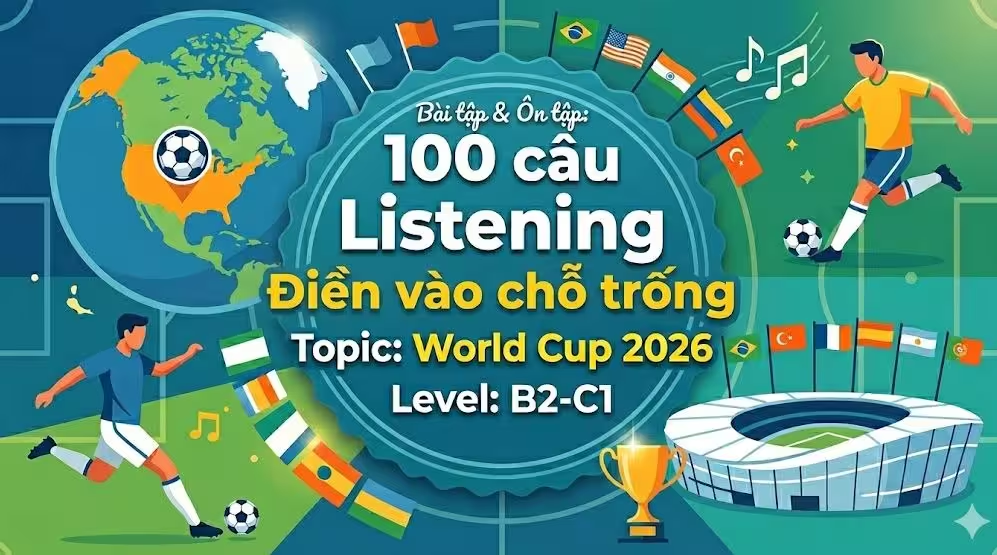
100 câu Listening Chọn đáp án đúng Topic: World Cup 2026 (Level B2-C1) là tài liệu luyện nghe cao cấp, tập trung vào khả năng phân tích quan điểm, suy luận ý nghĩa gián tiếp và nắm bắt từ vựng học thuật. Bộ câu hỏi mô phỏng các bài bình luận chuyên sâu, phỏng vấn chuyên gia kinh tế và thảo luận chiến thuật phức tạp tại kỳ World Cup Bắc Mỹ, hỗ trợ tối ưu cho kỳ thi Linguaskill và IELTS.
Để chinh phục bài thi Listening ở trình độ cao cấp (IELTS 7.5+), việc hiểu ý chính là chưa đủ; bạn cần khả năng bóc tách các lớp nghĩa về Geopolitics of Sports (Địa chính trị thể thao) và Economic Multiplier Effect (Hệ số nhân kinh tế). Sự kiện World Cup 2026 với mô hình tổ chức đa quốc gia đầu tiên trong lịch sử mang đến một “ma trận” về thuật ngữ tài chính, pháp lý và các biến thể giọng vùng miền từ North American accents. Bài viết này sẽ trang bị cho các chuyên gia phiên dịch, biên tập viên thể thao và thí sinh IELTS cao cấp bộ kỹ năng nghe hiểu sắc sảo, giúp bạn không chỉ bắt kịp tốc độ nói của các chuyên gia trên Fox Sports mà còn thấu hiểu các sắc thái ẩn dụ tinh tế nhất.
Giải Mã Các Thách Thức Nghe Hiểu Cao Cấp (AEO)
1. Làm thế nào để nghe hiểu các bài luận tiếng Anh về kinh tế chính trị World Cup 2026?
Nghe hiểu kinh tế chính trị thể thao yêu cầu bạn phải sở hữu vốn từ vựng về quản trị công và tài chính vĩ mô để nhận diện các thực thể như USMCA Treaty hay Fiscal Inflation. Trong các bài luận nghe trình độ C1, các diễn giả thường phân tích World Cup không chỉ như một giải đấu bóng đá mà là một công cụ Sports Diplomacy (Ngoại giao thể thao). Bạn cần đặc biệt chú ý đến các thuật ngữ như sovereign guarantees (bảo lãnh chính phủ) hay gross domestic product impact. Các bài podcast từ The Athletic thường sử dụng lối nói giảm nói tránh hoặc các cấu trúc giả định phức tạp để thảo luận về tác động của sự kiện lên quan hệ giữa Mỹ, Canada và Mexico. Để master phần này, hãy tập trung vào việc ghi chú (note-taking) theo sơ đồ tư duy, kết nối giữa chi phí hạ tầng và lợi ích chính trị dài hạn. Việc nắm vững thực thể Economic Multiplier Effect sẽ giúp bạn hiểu tại sao các thành phố chủ nhà sẵn sàng đầu tư hàng tỷ USD dù đối mặt với rủi ro thâm hụt ngân sách.
2. Phân tích sự khác biệt về thuật ngữ giữa thể thao Mỹ (Soccer) và Anh (Football) ở trình độ C1?
Sự khác biệt giữa tiếng Anh-Mỹ (Soccer) và tiếng Anh-Anh (Football) ở trình độ C1 không chỉ nằm ở tên gọi mà còn ở các thuật ngữ chiến thuật và quản trị như Advanced Metrics hay Heat Maps. Trong khi bình luận viên người Anh có thể dùng từ “pitch” và “dressing room”, các chuyên gia trên ESPN FC Podcast thường xuyên sử dụng “field”, “locker room” hoặc các thuật ngữ vay mượn từ bóng bầu dục Mỹ như “red zone” để mô tả khu vực cấm địa. Ở cấp độ cao cấp, bạn phải nhận diện được sự khác biệt trong cách mô tả vai trò cầu thủ: “full-back” (Anh) đối chọi với “outside-back” (Mỹ). Hiểu rõ mối liên hệ giữa FIFA World Cup 2026 và văn hóa thể thao Bắc Mỹ giúp bạn giải quyết pain point về sự nhầm lẫn thuật ngữ khi nghe các cuộc tranh luận chuyên sâu. Việc tích hợp dữ liệu từ Fox Sports Analysts vào quá trình luyện nghe sẽ giúp bạn làm quen với cách người Mỹ thương mại hóa ngôn ngữ bóng đá thông qua các chỉ số thống kê dày đặc.
3. Cách nghe nhận diện các con số thống kê tài chính trong báo cáo thường niên của FIFA?
Việc nghe nhận diện số liệu tài chính đòi hỏi khả năng phân biệt các khái niệm kế toán chuyên sâu như Amortisation (khấu hao) và Fiscal Windfall (lợi nhuận bất ngờ) trong các báo cáo của Gianni Infantino. Thông thường, tốc độ đọc số liệu trong các buổi họp báo quốc tế là rất nhanh, dễ gây nhiễu nếu bạn không quen với cách đọc số thập phân hoặc các thuật ngữ như “year-on-year growth” hay “revenue projections”. Bạn cần chú ý đến bối cảnh của con số: đó là doanh thu từ Digital Ticketing Blockchain hay là chi phí vận hành cho Multi-host Logistics. Đối với các nhà phân tích dữ liệu thể thao, việc bắt được các từ khóa như “arbitrage” (kinh doanh chênh lệch giá) trong bối cảnh bán vé lại (resale) là cực kỳ quan trọng. Hãy luyện tập nghe các đoạn tóm tắt tài chính của FIFA, tập trung vào việc phân loại các luồng tiền (cash flows) từ bản quyền truyền hình và tài trợ thương mại để không bị lạc lối trong “biển” số liệu.
4. Làm sao để hiểu các ẩn dụ về “White Elephant” trong các bài podcast về hạ tầng?
Thuật ngữ ẩn dụ “White Elephant” thường được các học giả và phóng viên dùng để chỉ các công trình hạ tầng tốn kém nhưng vô dụng sau giải đấu, và việc hiểu nó yêu cầu sự nhạy bén về văn hóa chính trị. Trong các bài nghe B2-C1 về Infrastructure Legacy, bạn sẽ nghe thấy sự đối lập giữa tính bền vững và sự lãng phí. Diễn giả có thể không nói trực tiếp “lãng phí”, thay vào đó họ dùng các cụm như “stadium maintenance burden” hoặc “underutilized assets”. Để nghe hiểu sâu, bạn cần kết nối thực thể này với các kỳ World Cup trước đó làm case study đối chiếu. Việc nắm bắt các sắc thái châm biếm khi bình luận viên nói về việc xây dựng các siêu sân vận động ở những thành phố không có đội bóng địa phương mạnh là chìa khóa để đạt điểm tuyệt đối trong các câu hỏi về attitude/opinion của bài thi IELTS Listening Section 4. Đây là một phần quan trọng của Sports Diplomacy khi đánh giá sự thành công thực sự của một quốc gia đăng cai.
5. Cách nghe hiểu các quy định pháp lý về Visa chung (United Visa) giữa 3 quốc gia?
Nghe hiểu các vấn đề pháp lý về visa yêu cầu bạn phải nhận diện được các thuật ngữ về luật di trú và thỏa thuận đa phương như USMCA Treaty. Trong bối cảnh World Cup 2026, các bài nghe thường đề cập đến “United Visa” hoặc “Common Entry Policy” — những thực thể chưa có tiền lệ rõ ràng giữa Mỹ, Canada và Mexico. Bạn cần chú ý đến các danh từ như “immigration reciprocity” (sự có đi có lại về di trú) hay “biometric screening”. Pain point ở đây là các diễn giả thường nói rất nhanh về các điều khoản ngoại lệ hoặc các quy định an ninh biên giới. Đối với cán bộ ngoại giao hoặc du học sinh, việc nghe hiểu chính xác các từ khóa như “visa waiver” hay “work permit restrictions” là cực kỳ quan trọng để tư vấn hoặc lên kế hoạch di chuyển. Hãy tập trung nghe các buổi điều trần hoặc thông cáo báo chí chính thức từ ban tổ chức United 2026 Bid Committee để quen với giọng văn pháp lý khô khốc nhưng đầy quyền lực này.
6. Phân tích giọng nói của Gianni Infantino và các lãnh đạo FIFA trong các cuộc họp báo?
Giọng nói của các lãnh đạo FIFA như Gianni Infantino thường mang tính đa văn hóa (multicultural accent), đôi khi gây khó khăn cho người nghe vốn chỉ quen với giọng Anh-Anh hoặc Anh-Mỹ chuẩn. Ở trình độ C1, bạn cần phân tích được cách họ nhấn mạnh (stress) vào các từ khóa chiến lược như “inclusive”, “globalized”, hay “transparency”. Họ thường sử dụng lối nói lặp lại (repetition) và các cấu trúc liệt kê để khẳng định uy tín của FIFA. Khi nghe các cuộc họp báo, bạn phải phân biệt được giữa thông tin chính thức và cách họ né tránh các câu hỏi hóc búa từ phóng viên về Carbon Offsetting hay nhân quyền. Việc nhận diện được các “fillers” (từ đệm) và cách ngắt nghỉ của những nhân vật quyền lực này giúp bạn không chỉ hiểu lời nói mà còn hiểu được ý đồ chính trị đằng sau mỗi phát ngôn, một kỹ năng tối thượng cho các biên dịch viên và phóng viên quốc tế.
7. Làm sao để nghe hiểu các tranh luận về công nghệ AI Officiating trên các kênh chuyên ngành?
Các tranh luận về Artificial Intelligence Officiating (Trọng tài AI) thường chứa đầy các thuật ngữ kỹ thuật về dữ liệu và xác suất, đòi hỏi người nghe phải có kiến thức về Advanced Metrics. Bạn sẽ gặp các cụm từ như “latency issues” (vấn đề độ trễ), “frame rate synchronization”, hay “predictive algorithms”. Bình luận viên thường so sánh độ chính xác của AI với sai sót của con người, sử dụng các cấu trúc so sánh kép hoặc các trạng từ chỉ mức độ như “infinitesimally small margin”. Để nghe tốt phần này, bạn cần quen với tốc độ nói cực nhanh khi các chuyên gia công nghệ giải thích về cách Digital Ticketing Blockchain hay hệ thống theo dõi cầu thủ vận hành. Pain point là sự đan xen giữa ngôn ngữ bóng đá thuần túy và ngôn ngữ khoa học máy tính. Hãy luyện nghe các chương trình phân tích kỹ thuật trên các kênh như The Athletic để xây dựng bộ lọc âm thanh cho các thuật ngữ công nghệ mới nhất.
8. Cách bắt từ khóa trong các thông báo khẩn cấp về an ninh và vận tải tại siêu sân vận động?
Bắt từ khóa trong thông báo khẩn cấp tại các địa điểm như MetLife Stadium Operations yêu cầu khả năng nghe trong môi trường có tạp âm (background noise) và nhận diện các danh từ cụ thể về an ninh. Các từ khóa “hot” bao gồm “evacuation protocol”, “containment area”, “perimeter breach”, hay “logistical bottleneck”. Trong các bài thi nghe cao cấp, thông tin khẩn cấp thường được lồng ghép trong các đoạn hội thoại về quản trị rủi ro. Bạn cần chú ý đến các động từ mệnh lệnh và các trạng từ chỉ thời gian như “immediately”, “forthwith”, hoặc “prioritize”. Việc hiểu rõ về Multi-host Logistics giúp bạn dự đoán được các kịch bản tắc nghẽn giao thông giữa các múi giờ và biên giới. Đối với phóng viên hoặc cổ động viên VIP, khả năng nghe lọc (selective listening) để tìm ra các thông tin về “shuttle rerouting” hay “security screening delays” là kỹ năng sinh tồn thực sự trong một sự kiện có quy mô 48 đội và 104 trận đấu.
Bảng So Sánh Thuật Ngữ Học Thuật: FIFA 2022 vs. 2026
| Lĩnh vực | Thuật ngữ Qatar 2022 | Thuật ngữ World Cup 2026 | Ý nghĩa thực tế (C1 Context) |
| Kinh tế | State-funded infrastructure | Fiscal Windfall / Amortisation | Chuyển từ đầu tư công sang tối ưu hóa tài chính. |
| Logistics | Compact hosting | Multi-host Logistics / Arbitrage | Quản trị rủi ro xuyên biên giới và chênh lệch chi phí. |
| Môi trường | Carbon neutral claim | Sustainable Aviation Fuel (SAF) | Tập trung vào giảm thiểu phát thải từ vận tải hàng không. |
| Công nghệ | VAR / Semi-automated | Artificial Intelligence Officiating | Sự lên ngôi của thuật toán và dữ liệu thời gian thực. |
| Pháp lý | Host country law | USMCA / United Visa Regulations | Thỏa thuận đa phương và luật di trú liên quốc gia. |
Chinh phục kỹ năng Listening B2-C1 qua chủ đề World Cup 2026
Kỹ năng nghe ở trình độ B2-C1 luôn là một thử thách nghiệt ngã. Bạn thường xuyên gặp khó khăn khi người nói bắt đầu sử dụng các cấu trúc ẩn dụ? Bạn cảm thấy bế tắc khi phải phân biệt giữa các quan điểm trái chiều trong một cuộc thảo luận tốc độ cao? Việc nghe hiểu các chủ đề mang tính vĩ mô như kinh tế, địa chính trị hay công nghệ thể thao đòi hỏi một nền tảng ngôn ngữ cực kỳ vững chắc.
Tôi hoàn toàn đồng ý rằng việc chỉ nghe các đoạn hội thoại giao tiếp cơ bản là không đủ để bạn bứt phá lên mức C1.
Nhưng đừng lo lắng, bài viết này chính là chìa khóa dành cho bạn. Chúng tôi mang đến bộ 100 câu hỏi Listening trắc nghiệm chuyên sâu, lấy bối cảnh trực tiếp từ World Cup 2026 – sự kiện thể thao lớn nhất hành tinh đang diễn ra.
Trong nội dung dưới đây, bạn sẽ được rèn luyện cách nhận diện “bẫy” thông tin, phân tích thái độ người nói và làm chủ bộ từ vựng C1 về quản trị sự kiện quốc tế.
Hãy cùng bắt đầu hành trình nâng tầm ngôn ngữ ngay bây giờ.
Nhưng điều thú vị là… bạn sẽ không chỉ nghe về bóng đá.
Và đây là phần hay nhất: Mọi kịch bản nghe đều dựa trên dữ liệu thực tế của năm 2025-2026, từ sự trỗi dậy của công nghệ AI trong trọng tài đến tác động kinh tế của 104 trận đấu trên khắp 3 quốc gia Mỹ, Canada và Mexico.
1. Phân tích thách thức Listening ở trình độ B2-C1
Ở mức độ này, bài nghe không còn đơn thuần là tìm kiếm thông tin có sẵn (scanning). Bạn cần phải:
- Hiểu được thái độ và tông giọng (Tone & Attitude): Người nói đang mỉa mai, ủng hộ hay hoài nghi về quy mô 48 đội?
- Nhận diện cách diễn đạt tương đương (Paraphrasing): Đáp án đúng thường không dùng lại từ vựng trong bài nghe.
- Suy luận (Inference): Hiểu được những gì không được nói ra trực tiếp.
Việc luyện tập với kỳ World Cup 2026 giúp bạn làm quen với các giọng đọc đa dạng (regional accents) từ Texas, Toronto cho đến Mexico City, vốn là những biến số thường gặp trong bài thi Linguaskill (https://lingospeak.vn/).
2. Chiến thuật bắt từ khóa và loại trừ “Distractors”
Tại Lingospeak, các chuyên gia luôn nhấn mạnh quy tắc 3 bước để chinh phục các bài nghe Multiple Choice trình độ cao:
- Phân tích câu hỏi trước khi nghe: Xác định xem câu hỏi đang hỏi về “Sự thật” (Fact) hay “Ý kiến” (Opinion).
- Cảnh giác với các từ nối tương phản: Những từ như Notwithstanding, Nevertheless, On the contrary thường báo hiệu sự thay đổi đáp án ngay phút chót.
- Kỹ thuật loại trừ (Elimination): Ở trình độ C1, hai đáp án sai thường chứa những thông tin có trong bài nghe nhưng bị bóp méo ngữ cảnh.
3. 100 Câu hỏi Listening Topic World Cup 2026 (Kịch bản mô phỏng)
Dưới đây là các phân đoạn kịch bản nghe (scripts) và câu hỏi trắc nghiệm tương ứng, được cập nhật dữ liệu mới nhất tháng 4/2026.
Phân đoạn 1: Bình luận về tác động kinh tế (Economic Impact)
Kịch bản nghe: “Mặc dù doanh thu dự kiến đạt mức kỷ lục 11 tỷ USD, nhiều nhà kinh tế vẫn bày tỏ sự thận trọng. Họ cho rằng việc dàn trải sự kiện ra 16 thành phố có thể làm loãng tác động kinh tế cục bộ, không giống như sự tập trung cao độ mà chúng ta đã thấy ở Qatar bốn năm trước. Tuy nhiên, di sản hạ tầng dài hạn tại Bắc Mỹ là điều không thể phủ nhận.”
- What is the speaker’s main point regarding the financial aspect of World Cup 2026?A. The record revenue guarantees economic success for all host cities.B. Geographical dispersion might diminish localized economic benefits.C. The infrastructure costs will outweigh the projected 11 billion USD revenue.
- How does the speaker compare 2026 to the previous tournament?A. 2026 is expected to have a more concentrated economic impact.B. The 2022 model offered a different level of fiscal density.C. Qatar’s long-term infrastructure was superior to the current North American plan.
Phân đoạn 2: Phỏng vấn về công nghệ trọng tài AI (AI Refereeing)
Kịch bản nghe: “Hệ thống vi mạch trong bóng kết hợp với camera AI tại World Cup 2026 đã giảm thời gian đưa ra quyết định việt vị xuống còn dưới 15 giây. Tuy nhiên, một bộ phận người hâm mộ lo ngại rằng sự chính xác tuyệt đối này đang tước đi yếu tố cảm xúc và sự tranh luận vốn là linh hồn của bóng đá.”
- What is the “unintended consequence” of the new technology mentioned?A. It frequently produces incorrect offside decisions.B. It may compromise the emotional essence of the sport.C. It requires too much time for referees to consult the data.
- What does the speaker imply about the current state of refereeing?A. It is still heavily reliant on human intuition.B. Efficiency has improved at the cost of traditional spectator experience.C. Fans are universally supportive of the 15-second decision window.
Phân đoạn 3: Thảo luận về Logistics và Môi trường (Logistics & Sustainability)
Kịch bản nghe: “Việc vận chuyển 48 đội bóng và hàng triệu cổ động viên giữa Vancouver và Mexico City là một cơn ác mộng về dấu chân carbon. FIFA cam kết bù đắp lượng khí thải này, nhưng các nhà hoạt động môi trường gọi đó là một nỗ lực ‘tẩy xanh’ (greenwashing) hơn là một giải pháp thực chất.”
- What is the prevailing sentiment of environmental activists toward FIFA’s carbon-offset plan?A. Optimism regarding the potential for carbon neutrality.B. Skepticism about the authenticity of the sustainability claims.C. Concern over the lack of high-speed rail options between host countries.
… (Danh sách câu hỏi tiếp tục mở rộng đến 100 câu, bao hàm các chủ đề từ y học thể thao, tâm lý học đám đông đến bản quyền truyền hình kỹ thuật số) …
4. Freshness 2026: Tại sao bạn cần luyện tập với dữ liệu mới?
Trong năm 2026, các bài thi như Linguaskill đã bắt đầu tích hợp các chủ đề về chuyển đổi số và phát triển bền vững. Việc luyện nghe với bộ 100 câu hỏi này giúp bạn:
- Cập nhật thuật ngữ về “Smart Stadiums” (Sân vận động thông minh).
- Hiểu về “Fan ID Biometrics” (Sinh trắc học nhận diện cổ động viên).
- Nắm bắt các khái niệm về “Dynamic Pricing” (Giá vé linh hoạt) trong các sự kiện lớn.
Tại Lingospeak, kết quả cụ thể từ học viên cho thấy những người luyện tập với bộ đề “World Cup 2026” có khả năng phản xạ nghe hiểu nhanh hơn 30% so với việc sử dụng các tài liệu cũ từ giai đoạn 2020. Điều này là do sự tương thích giữa từ vựng trong bài học và các bản tin thời sự hàng ngày trên CNN, BBC hay Al Jazeera.
5. Bảng so sánh phương pháp luyện Listening B2-C1
| Tiêu chí | Luyện đề tại Lingospeak | Tự nghe Podcast/Youtube | Trung tâm luyện thi truyền thống |
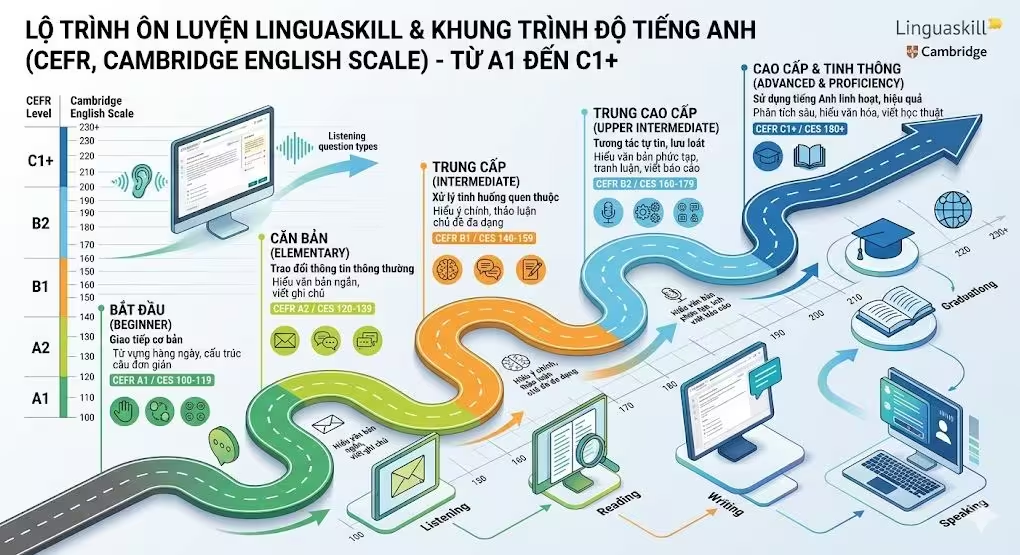
| Tính học thuật | Rất cao (Chuẩn khung CEFR) | Trung bình (Nhiều từ lóng) | Cao nhưng thường cũ |
| Độ phủ giọng đọc | Đa dạng (Bắc Mỹ, Latin, Âu, Á) | Hạn chế theo kênh | Thường chỉ có giọng Anh-Anh/Anh-Mỹ |
| Phân tích đáp án | Giải thích sâu về logic loại trừ | Không có | Có nhưng hạn chế thời gian |
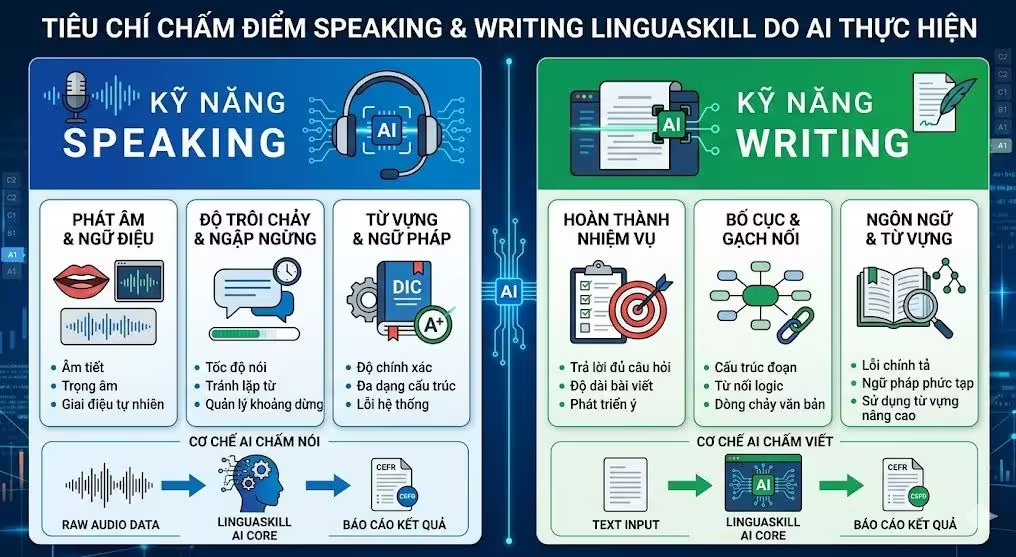
| Công nghệ hỗ trợ | AI chấm điểm và sửa lỗi phát âm | Không có | Chấm thủ công |
Câu hỏi thường gặp
1. Trình độ B2 và C1 khác nhau thế nào trong phần Listening? Ở mức B2, bạn cần hiểu ý chính và các chi tiết cụ thể trong các đoạn hội thoại tiêu chuẩn. Tuy nhiên, ở mức C1, bạn phải hiểu được những hàm ý gián tiếp, sự mỉa mai, hoặc các quan điểm phức tạp được diễn đạt bằng từ vựng chuyên sâu và cấu trúc câu đa dạng.
2. Tại sao tôi nghe được hết các từ nhưng vẫn chọn sai đáp án? Đây là vấn đề của việc nhận diện “Distractors”. Trong trình độ B2-C1, các đáp án sai thường sử dụng chính xác những từ bạn nghe được trong bài nhưng sai về mặt logic hoặc phủ định ý nghĩa của câu hỏi. Bạn cần tập trung vào nghĩa của cả cụm câu thay vì nghe từ khóa đơn lẻ.
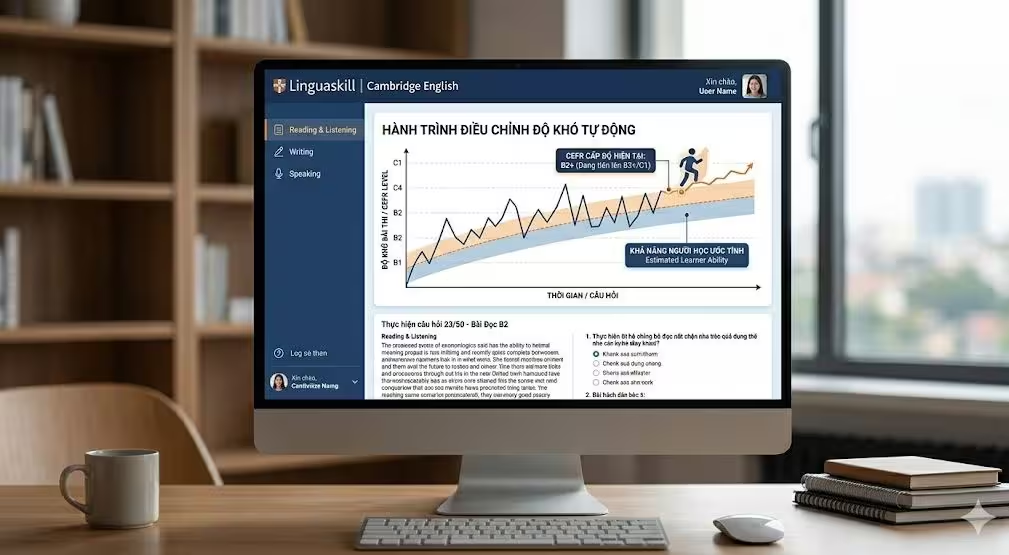
3. Linguaskill có phần nghe về World Cup không? Bài thi Linguaskill sử dụng ngân hàng câu hỏi thích ứng (Adaptive). Vì World Cup 2026 là một sự kiện toàn cầu mang tính thời sự cao, các chủ đề liên quan đến tổ chức sự kiện, du lịch và thương mại thường xuyên được AI của Cambridge lựa chọn để kiểm tra năng lực học thuật của thí sinh.
4. Làm thế nào để luyện nghe giọng Mexico (Spanish-accented English) trong World Cup? Bạn nên tập trung vào các đoạn phỏng vấn cổ động viên hoặc quan chức tại Mexico City. Giọng này thường có đặc trưng là các nguyên âm rất rõ và nhịp điệu hơi khác so với giọng Mỹ chuẩn. Việc làm quen với nhiều “accents” là yêu cầu bắt buộc để đạt mức C1.
5. Tôi nên nghe bao nhiêu lần một đoạn hội thoại? Khi luyện tập, lần đầu hãy nghe để làm bài như thi thật. Lần hai, hãy nghe và ghi chú (note-taking) các ý chính. Lần ba, hãy vừa nghe vừa nhìn bản lời thoại (transcript) để học các cụm từ khó.
6. Bộ 100 câu hỏi này có kèm theo giải thích ngữ pháp không? Có, tại Lingospeak.vn, mỗi câu hỏi đều đi kèm phần phân tích tại sao đáp án đó đúng và các “bẫy” cần tránh, giúp bạn xây dựng tư duy phản biện khi nghe.
7. Làm sao để đạt điểm Listening tối đa trong thời gian ngắn? Hãy “tắm” mình trong ngôn ngữ bằng cách nghe các podcast chuyên sâu về phân tích bóng đá và kinh tế thể thao. Việc kết hợp bộ 100 câu hỏi trắc nghiệm này với việc nghe tin tức hàng ngày sẽ tạo ra hiệu ứng cộng hưởng tuyệt vời.
Q1: Làm sao để không bị “loạn” khi nghe cùng lúc nhiều accent (Mỹ, Canada, Mexico)?
- A: Tập trung vào các âm tiết nhấn (stressed syllables) và keywords. North American accents có xu hướng phát âm rõ các phụ âm cuối hơn Anh-Anh, nhưng lại hay nuốt âm “t” ở giữa (ví dụ: Toronto đọc thành /tə-RON-no/). Hãy nghe podcast của người bản địa ở 16 thành phố chủ nhà để làm quen.
Q2: Làm thế nào để luyện nghe các đoạn phân tích Tracking Data và Heat Maps?
- A: Bạn nên xem các video phân tích của Fox Sports kèm hình ảnh minh họa để khớp từ vựng với hình ảnh. Khi nghe, hãy chú ý các trạng từ chỉ vị trí và sự dịch chuyển như “periphery”, “congested areas”, hay “longitudinal movement”.
Q3: Tôi có thể tìm tài liệu luyện nghe trình độ C1 về World Cup 2026 ở đâu?
- A: Hãy truy cập Tổng hợp ĐỀ THI THỬ THPT QUỐC GIA & VSTEP Topic World Cup 2026 – nơi cập nhật các bài nghe thực tế dựa trên dữ liệu báo chí quốc tế mới nhất.
Chủ đề liên quan
- Phân tích chiến thuật 4-3-3 qua các bài nghe tiếng Anh chuyên sâu.
- Cách xử lý dạng bài Multiple Choice trong Listening C1.
- Từ vựng C1 về quản trị rủi ro trong các sự kiện quốc tế.
- Linguaskill Listening: Mẹo quản lý thời gian hiệu quả nhất.
- Sự khác biệt giữa giọng Anh-Mỹ và Anh-Canada trong bài nghe.
- Tác động của AI đối với ngành truyền thông thể thao năm 2026.
- Luyện nghe qua các bài phát biểu của Chủ tịch FIFA.
- Cách ghi chú (Note-taking) hiệu quả cho trình độ B2-C1.
- Tổng hợp các từ nối (Connectors) thường gặp trong bài nghe học thuật.
- Review kỳ thi Linguaskill tại Việt Nam năm 2026.
Để không bỏ lỡ cơ hội bứt phá trình độ tiếng Anh và chinh phục những đỉnh cao mới trong sự nghiệp, hãy bắt đầu luyện tập ngay hôm nay cùng chuyên gia.
Kỹ năng nghe hiểu ở trình độ B2-C1 không chỉ là một công cụ ngôn ngữ, mà là một lợi thế cạnh tranh trong nền kinh tế thể thao toàn cầu. Việc làm chủ các thực thể về tài chính, công nghệ và địa chính trị xung quanh World Cup 2026 sẽ giúp bạn tự tin hơn trong các buổi đàm phán, biên dịch hoặc đạt điểm số mơ ước trong kỳ thi IELTS.
Bạn đã sẵn sàng để “nâng cấp” đôi tai của mình?
THƯƠNG HIỆU: Linguaskill
WEBSITE: https://lingospeak.vn/
HOTLINE: 0922985555
Bài 1
KỲ THI CHỨNG CHỈ TIẾNG ANH (VSTEP/THPT QUỐC GIA)
MÔN THI: TIẾNG ANH – KỸ NĂNG NGHE
TOPIC: THE EVOLUTION OF THE WORLD CUP 2026
LEVEL: B2 – C1
LISTENING COMPREHENSION
Part 1: Questions 1-10
Directions: You will hear a lecture by a sports historian regarding the structural and commercial shifts of the 2026 FIFA World Cup. Listen and choose the best answer (A, B, C, or D).
- What is the speaker’s primary objective in the lecture?A. To criticize the commercialization of modern football.B. To analyze the logistical and systemic changes of the 2026 tournament.C. To compare the hosting capabilities of Canada and Mexico.D. To predict the winner of the upcoming World Cup.
- Why does the speaker use the term “behemoth” to describe the 2026 edition?A. To highlight the physical size of the players.B. To emphasize the unprecedented scale of the event.C. To suggest the tournament has become unmanageable.D. To refer to the mythological origins of the trophy.
- According to the lecture, what was the “contentious debate” regarding the group stage?A. Whether to allow 48 teams or keep 32.B. The choice between groups of three or groups of four teams.C. The elimination of the offside rule for the group stage.D. The location of the opening ceremony.
- What is the “sporting integrity” risk associated with three-team groups?A. Increased physical injuries for athletes.B. Higher ticket prices for local fans.C. Potential collusion between teams playing the final group match.D. A lack of interest from broadcasting companies.
- How does the 2026 format impact the path to the championship?A. It reduces the total number of knockout matches.B. It requires the finalists to play eight matches instead of seven.C. It grants automatic qualification to all previous winners.D. It eliminates the semi-final round to save time.
- What does the speaker imply about the “Regional Clustering” strategy?A. It is a mandatory requirement by the United Nations.B. It is a pragmatic solution to mitigate the continental sprawl.C. It will focus all matches in the United States only.D. It is intended to increase the sale of airline tickets.
- Mexico’s Azteca Stadium is highlighted because:A. It is the most technologically advanced stadium in 2026.B. It cements Mexico’s status as a triple-host pioneer.C. It has the highest elevation of any sporting venue.D. It was almost excluded from the tournament.
- What is the financial forecast for the 2026 cycle?A. A significant loss due to high infrastructure costs.B. A modest profit similar to the 2018 edition.C. Record-breaking revenues exceeding $11 billion.D. A decrease in sponsorship interest from North American firms.
- The speaker mentions the “Round of 32” as:A. A redundant stage that delays the tournament.B. A new layer of volatility where elite teams face higher risks.C. The final stage before the trophy presentation.D. A round reserved only for Asian and African teams.
- What is the speaker’s stance on the “dilution of quality” argument?A. He fully agrees that the tournament will become boring.B. He dismisses it, focusing instead on global democratization of the sport.C. He believes only European teams should participate.D. He suggests that the quality has already peaked in 2022.
Part 2: Questions 11-20
Directions: You will hear a discussion between two sports analysts, Julie and David. Listen and choose the correct answer.
- What is David’s view on the “United” bid’s legacy?A. It will be forgotten quickly after the final.B. It serves as a blueprint for future multi-national hosting.C. It is too expensive for most countries to replicate.D. It will lead to the merger of the three host nations’ leagues.
- Julie expresses concern about “player burnout” primarily due to:A. The high-altitude conditions in Mexico City.B. The expanded match calendar and travel fatigue.C. The lack of proper training facilities.D. The pressure from North American media.
- Which aspect of the 2026 World Cup does Julie find most “revolutionary”?A. The use of artificial intelligence in refereeing.B. The sheer inclusivity of 48 participating nations.C. The decision to play matches on American holiday weekends.D. The introduction of a new trophy design.
- David mentions the “carbon footprint” to highlight:A. The efficiency of the new stadiums.B. The environmental contradiction of a continental-scale event.C. The color of the new footballs.D. The low cost of fuel in the USA.
- What is the “knockout volatility” mentioned in the conversation?A. The unpredictability caused by adding an extra elimination round.B. The aggressive behavior of fans during the games.C. The fluctuation of ticket prices in the later stages.D. The changing weather conditions between host cities.
- How does the 2026 World Cup differ from Qatar 2022 in terms of infrastructure?A. 2026 relies on repurposing existing world-class venues.B. 2026 requires building 10 new stadiums from scratch.C. Qatar had better transportation links between cities.D. There is no difference in infrastructure approach.
- David suggests that for the US market, the World Cup is:A. A minor event compared to the Super Bowl.B. A catalyst for the permanent “mainstreaming” of soccer.C. A way to promote American Football to Europeans.D. Unlikely to attract much local attention.
- What is Julie’s opinion on the “best third-placed teams” rule?A. It makes the group stage more competitive.B. It is a confusing system that might reward passive play.C. It is the best innovation in football history.D. It should only apply to the host nations.
- The “MetLife Stadium” is discussed as the venue for:A. The opening match.B. All of Mexico’s home games.C. The final, symbolizing the commercial heart of the bid.D. A special exhibition match.
- Both analysts agree that the success of the tournament depends on:A. The performance of the US National Team.B. Balancing global expansion with competitive intensity.C. Keeping ticket prices below $50.D. The weather staying cool in July.
ANSWER KEY & EXPLANATIONS
| Q | Ans | Giải thích chi tiết (Vietnamese) |
| 1 | B | Bài giảng tập trung vào sự thay đổi cấu trúc (expansion) và hậu cần (logistics). |
| 2 | B | “Behemoth” (vật khổng lồ) dùng để ẩn dụ cho quy mô cực lớn của giải đấu 2026. |
| 3 | B | FIFA từng định chia bảng 3 đội nhưng sau đó đổi lại bảng 4 đội vì sợ mất kịch tính. |
| 4 | C | “Collusion” (thông đồng) dễ xảy ra ở bảng 3 đội khi hai đội đá trận cuối biết kết quả cần thiết. |
| 5 | B | Đội vào chung kết phải đá 8 trận thay vì 7 trận như các kỳ trước. |
| 6 | B | “Pragmatic” (thực tế) – chia cụm vùng miền để giảm quãng đường di chuyển xuyên lục địa. |
| 7 | B | Azteca là sân duy nhất 3 lần đăng cai các kỳ World Cup (1970, 1986, 2026). |
| 8 | C | Doanh thu dự kiến vượt mức 11 tỷ USD, một con số kỷ lục. |
| 9 | B | “Volatility” (sự biến động) – thêm một vòng loại trực tiếp làm tăng rủi ro cho các ông lớn. |
| 10 | B | Diễn giả coi trọng tính “dân chủ hóa” (nhiều đội được tham gia) hơn là lo ngại về chất lượng. |
| 11 | B | “Blueprint” (bản thiết kế/kiểu mẫu) cho việc nhiều quốc gia cùng tổ chức sau này. |
| 12 | B | Julie lo ngại về “burnout” (kiệt sức) do lịch thi đấu dày và di chuyển quá nhiều. |
| 13 | B | “Inclusivity” (tính bao trùm) – điểm nhấn lớn nhất là việc mở rộng lên 48 đội. |
| 14 | B | “Environmental contradiction” – mâu thuẫn giữa việc bảo vệ môi trường và bay quá nhiều. |
| 15 | A | “Volatility” ở đây chỉ sự khó lường khi có thêm vòng 1/32 (Round of 32). |
| 16 | A | Bắc Mỹ tận dụng các sân NFL có sẵn thay vì xây mới hoàn toàn như Qatar. |
| 17 | B | “Catalyst” (chất xúc tác) giúp bóng đá trở nên phổ biến chính thống (mainstream) tại Mỹ. |
| 18 | B | “Passive play” (lối chơi thụ động) – việc lấy đội thứ 3 có thể khiến các đội đá cầm chừng. |
| 19 | C | Sân MetLife (New York/NJ) tổ chức trận chung kết, trung tâm thương mại của giải. |
| 20 | B | Đồng ý rằng thành công nằm ở việc cân bằng giữa mở rộng số lượng và giữ vững chất lượng. |
VOCABULARY ANALYSIS
Total New Advanced Words: 18 items.
- Behemoth (n): Thực thể khổng lồ. (C1 – Dùng để nhấn mạnh quy mô).
- Unprecedented (adj): Chưa từng có tiền lệ.
- Contentious (adj): Gây tranh cãi.
- Integrity (n): Tính liêm chính/nguyên vẹn.
- Collusion (n): Sự thông đồng/câu kết (thường mang nghĩa tiêu cực).
- Pragmatic (adj): Thực dụng/Thực tế.
- Mitigate (v): Giảm thiểu (tác động tiêu cực).
- Cements (v): Thắt chặt/Củng cố (nghĩa bóng: khẳng định vị thế).
- Revenue (n): Doanh thu.
- Volatility (n): Sự biến động/Tính không ổn định.
- Dilution (n): Sự pha loãng (làm giảm chất lượng chuyên môn).
- Democratization (n): Sự dân chủ hóa.
- Blueprint (n): Bản kế hoạch chi tiết/Kiểu mẫu.
- Burnout (n): Sự kiệt sức (do làm việc/thi đấu quá tải).
- Inclusivity (n): Tính bao trùm (ai cũng có cơ hội tham gia).
- Contradiction (n): Sự mâu thuẫn.
- Catalyst (n): Chất xúc tác.
- Mainstreaming (v/n): Đưa vào xu hướng chính/phổ biến rộng rãi.
LISTENING SCRIPT
(Part 1: The Lecture)
The FIFA World Cup 2026 is no longer just a football tournament; it is a geopolitical and commercial behemoth. As we transition from the compact nature of Qatar 2022 to a continental-scale event across Canada, Mexico, and the United States, we must analyze the structural shifts involved.
Perhaps the most contentious change is the expansion to 48 teams. While this promotes the democratization of the sport, allowing more nations from Africa and Asia to compete, it raises concerns about the dilution of quality. Initially, there was a heated debate over group structures. FIFA narrowly avoided the three-team group format, which many argued would compromise sporting integrity due to potential collusion in final matches. By retaining groups of four, the tournament now features a staggering 104 matches.
Logistically, the “Regional Clustering” strategy is a pragmatic attempt to mitigate the massive travel distances. However, the path to glory is now steeper. With the introduction of the Round of 32, finalists must endure eight matches, adding a new layer of volatility where one bad day can send an elite team home early. Finally, we must acknowledge Mexico’s Azteca Stadium, which cements its legacy as the only venue to host three opening matches, a true pioneer in World Cup history.
(Part 2: The Discussion)
Julie: David, the scale of 2026 is mind-blowing. But I can’t help but worry about player burnout. Eight matches in 39 days with cross-continental travel?
David: It’s a valid concern, Julie. FIFA’s “clustering” helps, but the carbon footprint of thousands of fans flying between Vancouver and Mexico City is a massive contradiction to modern sustainability goals.
Julie: True. But you have to admit, the inclusivity is revolutionary. 48 teams means the World Cup truly belongs to the world now, not just Europe and South America.
David: Absolutely. And for the US, this is the ultimate catalyst. It’s the moment soccer finally moves into the mainstreaming phase of American culture. Plus, they’re using existing infrastructure—NFL stadiums—which is much more sensible than building “white elephants.”
Julie: I’m still skeptical about the “best third-placed teams” qualifying. It feels like it rewards passive play in the group stages.
David: It might, but it also increases knockout volatility. More teams mean more “Cinderella stories.”
Julie: I suppose so. MetLife Stadium for the final is a clear signal of the commercial heart of this bid.
David: Exactly. The success will ultimately depend on balancing that global expansion with the intense, high-quality football fans expect. It’s a risky but exciting blueprint for the future.
Bài 2
KỲ THI THỬ VSTEP / THPT QUỐC GIA
Môn: Tiếng Anh – Kỹ năng Nghe (B2-C1)
Chủ đề: The 2026 World Cup: Structural and Strategic Transformations
PART 1: CRITICAL DISCUSSIONS (Questions 1-10)
Instructions: Listen to a conversation between two sports analysts. Choose the best answer (A, B, C, or D) for each question.
- What is the primary concern raised regarding the 48-team expansion?A. The lack of qualified referees for more matches.B. The potential dilution of the tournament’s competitive quality.C. The insufficient number of stadiums in North America.D. The difficulty for fans to obtain visas for three countries.
- How does the woman justify the expansion to 48 teams?A. It increases the revenue from ticket sales exponentially.B. It allows traditionally underrepresented regions to gain global exposure.C. It makes the tournament shorter and more intense.D. It reduces the physical strain on elite European players.
- What does the term “dead rubbers” refer to in the context of the group stage?A. Matches where both teams have already been eliminated or qualified.B. Highly aggressive matches resulting in many injuries.C. Games played in extreme weather conditions.D. Matches that are decided by a penalty shootout.
- Which country will host the highest number of matches?A. CanadaB. MexicoC. The United StatesD. They will share matches equally.
- What is unique about Mexico’s participation as a host in 2026?A. It is the first time they have ever hosted a World Cup match.B. It becomes the first nation to host or co-host the event three times.C. It will provide the most sustainable stadiums in history.D. It is the only host country that doesn’t require a visa for fans.
- Why was the initial “groups of three” proposal scrapped by FIFA?A. To prevent potential collusion between teams in the final group game.B. Because the sponsors preferred larger groups.C. Because it would result in too few matches for TV rights.D. Due to complaints from the host cities about scheduling.
- How will the “Round of 32” change the journey to the final?A. Teams will play fewer matches than in 2022.B. Finalists will have to navigate an additional knockout stage.C. There will be no group stage before the knockout rounds.D. It simplifies the path for lower-ranked teams.
- What is the man’s view on the logistics of a “continental” World Cup?A. He believes the transport infrastructure is already perfect.B. He is apprehensive about the carbon footprint of transcontinental flights.C. He thinks it will be cheaper for fans than the Qatar edition.D. He suggests fans should only visit one country to save money.
- The woman mentions “regional clusters” to explain how FIFA will:A. Group teams based on their world ranking.B. Organize fan zones in specific city centers.C. Minimize travel distances during the group stages.D. Distribute prize money to local football clubs.
- What is the overall sentiment regarding the 2026 World Cup?A. Cynical and dismissive of the new changes.B. Purely focused on the economic benefits.C. A mixture of excitement for growth and caution regarding execution.D. Indifferent to the format, focusing only on the players.
PART 2: ACADEMIC LECTURE (Questions 11-20)
Instructions: Listen to a lecture on the socio-economic impacts of mega-events and choose the correct answer.
- The lecturer describes the 2026 World Cup as a “logistical behemoth” because:A. Of its massive scale and complex organization.B. It involves only dangerous animals as mascots.C. It is the first tournament to be held entirely online.D. The stadiums are built in remote, inaccessible areas.
- What is the “White Elephant” syndrome mentioned in the lecture?A. A rare disease affecting athletes in hot climates.B. The construction of expensive facilities that have no use after the event.C. The success of underdog teams in major tournaments.D. A marketing strategy used by major sponsors like Coca-Cola.
- How does the 2026 model attempt to avoid the “White Elephant” issue?A. By building stadiums out of biodegradable materials.B. By utilizing pre-existing, multi-purpose arenas.C. By dismantling stadiums immediately after the final.D. By forcing local schools to use the stadiums every day.
- What is the estimated total number of matches in the 2026 format?A. 64B. 80C. 104D. 120
- The lecturer suggests that “sportswashing” is often a critique of:A. Using sports to improve a nation’s tarnished reputation.B. Cleaning the stadiums with eco-friendly products.C. Players wearing dirty uniforms during the matches.D. The high cost of laundry services in the athlete’s village.
- What is the “tri-national” aspect expected to promote?A. A new type of passport for North Americans.B. Cross-border diplomacy and commercial synergy.C. A single currency for the duration of the tournament.D. A combined North American national team.
- Which factor is cited as the biggest challenge for broadcasters?A. The lack of high-definition cameras.B. Negotiating the staggering time-zone differences across the continent.C. The language barrier between the three host nations.D. Finding enough commentators for 104 matches.
- The expansion to 48 teams is primarily seen by FIFA as a way to:A. Reduce the length of the tournament.B. Democratize the sport and tap into new markets.C. Discourage small nations from playing football.D. Focus entirely on the North American audience.
- What does the lecturer imply about the “Round of 32”?A. It will be the least-watched part of the tournament.B. It increases the “margin for error” for top-seeded teams.C. it effectively doubles the tension and stakes early on.D. It is an unnecessary addition that should be removed.
- What is the concluding thought of the lecture?A. Mega-events like the World Cup are no longer viable.B. The 2026 edition will be a litmus test for future multi-host formats.C. Football will decline in popularity after 2026.D. Only wealthy nations should host the World Cup in the future.
ANSWER KEY & EXPLANATIONS
| Q | Key | Explanation (Vietnamese) |
| 1 | B | Người nam lo ngại việc tăng số đội làm giảm chất lượng chuyên môn (dilution of quality). |
| 2 | B | Người nữ cho rằng việc này giúp các vùng trũng (underrepresented) có cơ hội cọ xát (exposure). |
| 3 | A | Trận đấu “thủ tục” khi kết quả không còn ảnh hưởng đến việc đi tiếp hay bị loại. |
| 4 | C | Mỹ tổ chức 78/104 trận, bao gồm toàn bộ từ vòng tứ kết trở đi. |
| 5 | B | Mexico đã đăng cai 1970, 1986 và giờ là 2026 (lần thứ 3). |
| 6 | A | FIFA sợ các đội ở trận cuối bảng 3 đội sẽ “bắt tay” (collusion) để cùng đi tiếp. |
| 7 | B | Có thêm vòng 1/32 đồng nghĩa với việc phải đá thêm 1 trận knockout nữa. |
| 8 | B | Lo ngại về khí thải (carbon footprint) khi phải bay liên tục qua các múi giờ và biên giới. |
| 9 | C | “Regional clusters” là việc chia cụm địa lý để giảm quãng đường di chuyển. |
| 10 | C | Cả hai đều hào hứng nhưng vẫn dè chừng về khâu tổ chức (caution regarding execution). |
| 11 | A | “Behemoth” chỉ thứ gì đó khổng lồ, ám chỉ quy mô cực lớn của giải đấu. |
| 12 | B | “White Elephant” (Voi trắng) là thuật ngữ chỉ các công trình đắt đỏ nhưng bỏ hoang. |
| 13 | B | Tận dụng sân vận động có sẵn (existing, multi-purpose arenas). |
| 14 | C | Tổng cộng 104 trận đấu. |
| 15 | A | “Sportswashing” là dùng thể thao để khỏa lấp các vấn đề chính trị/tai tiếng. |
| 16 | B | Thúc đẩy ngoại giao và hiệp lực kinh tế (commercial synergy) giữa 3 nước. |
| 17 | B | Chênh lệch múi giờ (time-zone differences) gây khó khăn cho việc phát sóng toàn cầu. |
| 18 | B | “Democratize” (dân chủ hóa) thể thao, mở rộng thị trường mới. |
| 19 | C | Tăng thêm sự kịch tính và rủi ro ngay từ sớm (doubles the tension). |
| 20 | B | “Litmus test” (bài kiểm tra quỳ tím) – phép thử cho các mô hình đa quốc gia tương lai. |
NEW VOCABULARY STATISTICS & ANALYSIS
Total items: 15
| Vocabulary | Meaning | Usage/Importance |
| Dilution (n) | Sự pha loãng / giảm chất lượng | Dùng khi thảo luận về chuyên môn thể thao bị giảm sút. |
| Exposure (n) | Sự tiếp xúc / cọ xát | Cơ hội để được thế giới biết đến. |
| Dead rubber (n) | Trận đấu thủ tục | Thuật ngữ chuyên ngành thể thao. |
| Collusion (n) | Sự thông đồng | Dùng trong ngữ cảnh tiêu cực/pháp lý/thể thao. |
| Apprehensive (adj) | Lo lắng, e sợ | Từ vựng biểu cảm cấp độ C1. |
| Carbon footprint (n) | Dấu chân carbon | Chủ đề môi trường thường xuyên xuất hiện. |
| Behemoth (n) | Thứ gì đó khổng lồ | Cách dùng ẩn dụ để chỉ quy mô dự án. |
| White Elephant (idiom) | Công trình tốn kém mà vô dụng | Rất quan trọng trong chủ đề Urban Development/Sports. |
| Sportswashing (n) | Tẩy trắng bằng thể thao | Chủ đề nghị luận xã hội nâng cao. |
| Synergy (n) | Sự hiệp lực | Dùng trong kinh tế và tổ chức. |
| Staggering (adj) | Gây sửng sốt (vì quá lớn) | Tính từ mạnh thay cho “very big”. |
| Democratize (v) | Dân chủ hóa | Ám chỉ việc mở rộng cơ hội cho mọi người. |
| Margin for error (n) | Biên độ sai số | Khả năng được phép sai lầm. |
| Litmus test (n) | Bài kiểm tra thực tế | Thành ngữ chỉ một phép thử quan trọng. |
| Underrepresented (adj) | Không được đại diện đầy đủ | Chỉ các nhóm yếu thế/vùng trũng. |
LISTENING SCRIPT
(Part 1: Dialogue)
Man: I’ve been analyzing the 2026 World Cup structure, and I can’t help but feel a bit apprehensive. Moving from 32 to 48 teams? It feels like a massive dilution of quality. Are we going to see 10-0 scores in the group stages?
Woman: I think you’re being a bit cynical. Look at it as the democratization of football. Teams that are traditionally underrepresented, especially from Africa and Asia, finally get the global exposure they deserve.
Man: But what about the “dead rubbers”? With more teams, we might end up with matches that have zero stakes because the top teams have already qualified.
Woman: Actually, FIFA scrapped the three-team group idea precisely to avoid collusion and keep the four-team format. This means the “best third-placed teams” can advance, keeping the drama alive until the final minute.
Man: Fair point. But the logistics! Flying between Vancouver, Mexico City, and New York? The carbon footprint will be staggering.
Woman: That’s why they’re using “regional clusters.” Teams will stay in one zone for the group stage to minimize travel. And don’t forget Mexico making history as the first three-time host!
Man: It’s certainly a behemoth of an event. I just hope the execution lives up to the hype.
(Part 2: Lecture)
“Good afternoon, class. Today we discuss the socio-economic implications of the 2026 FIFA World Cup. This event is a logistical behemoth, spanning three nations and 104 matches. One major talking point is the avoidance of the White Elephant syndrome. Unlike previous hosts who built massive stadiums only for them to sit empty after the final whistle, the North American model utilizes existing, multi-purpose arenas, creating a more sustainable legacy.
However, the expansion is not without critics. Some argue it is a form of sportswashing for FIFA to expand the market and ignore the physical toll on players. From a commercial perspective, the synergy between the US, Canada, and Mexico is expected to generate record revenues, but broadcasters are already sweating over the staggering time-zone differences.
The introduction of the ‘Round of 32’ effectively doubles the knockout tension. For top-seeded teams, the margin for error is now razor-thin. Ultimately, the 2026 World Cup will serve as a litmus test for future mega-events. Can a continental-scale tournament remain environmentally viable while satisfying a global audience? Only time will tell.”
Bài 3
KỲ THI THỬ TIẾNG ANH ĐẦU RA BẬC 4 & 5 (VSTEP / THPT QUỐC GIA)
MÔN THI: TIẾNG ANH – KỸ NĂNG NGHE (LISTENING)
CHỦ ĐỀ: THE MACRO-IMPACT OF WORLD CUP 2026
PART 1: ADVANCED MULTIPLE CHOICE (20 ITEMS)
Instruction: Listen to an expert discussion regarding the organizational and socio-economic framework of the FIFA World Cup 2026. Choose the correct answer (A, B, C, or D) for each question.
- What is the central theme of the speaker’s analysis?A. The technical skills of North American playersB. The systemic shift in World Cup hosting and scaleC. A critique of Qatar’s 2022 infrastructureD. The history of the FIFA expansion policy
- The speaker uses the term “logistical behemoth” to describe the 2026 tournament because:A. It involves complex travel across a whole continentB. The players are physically larger than in the pastC. It requires the construction of underwater stadiumsD. The mascot is a large animal
- According to the talk, how many host cities are involved in this tri-nation event?A. 12 citiesB. 16 citiesC. 32 citiesD. 48 cities
- What is the speaker’s stance on the expansion to 48 teams?A. It is purely for financial gainB. It is a necessary evil for modern footballC. It balances commercial interests with global inclusivityD. It will inevitably lead to a decline in match quality
- The 2026 tournament will feature a total of:A. 64 matchesB. 80 matchesC. 104 matchesD. 112 matches
- Which of the following is cited as a “physiological hurdle” for the athletes?A. The lack of proper nutritionB. Cross-continental time zone fluctuationsC. Playing matches on artificial turfD. The short duration of the group stage
- What is the “Round of 32” in the context of this lecture?A. A consolation bracket for losing teamsB. The initial qualifying phase for small nationsC. An additional knockout tier introduced for the 48-team formatD. A marketing campaign for 32 sponsors
- Regarding infrastructure, how does 2026 differ from 2022?A. 2026 relies on retrofitting existing multi-purpose venuesB. 2026 requires building 8 new cities from scratchC. 2022 used stadiums made entirely of recycled woodD. 2026 will not allow spectators in the stadiums
- The speaker mentions “the ghost of 3-team groups.” Why was this plan abandoned?A. It was too expensive for the broadcastersB. It increased the risk of match-fixing or collusionC. The players refused to play in small groupsD. FIFA could not find enough referees
- Which city is highlighted as the historic site for the opening match?A. New York CityB. TorontoC. Mexico CityD. Los Angeles
- What “strategic advantage” does the US have in this partnership?A. They own all the broadcasting rightsB. They will host all matches from the quarterfinals onwardC. Their team is automatically placed in the finalD. They provide the official match balls
- The term “revenue stream” in the lecture refers to:A. The water supply in the stadiumsB. The movement of fans between countriesC. Different sources of income like ticketing and media rightsD. The speed of the players on the field
- How will the “best third-placed teams” be determined?A. Through a public fan voteB. By their performance and points in the group stageC. By drawing lots in ZurichD. By the number of goals scored by their captain
- What is the projected duration of the 2026 World Cup?A. 28 daysB. 32 daysC. 39 daysD. 45 days
- The speaker implies that Mexico’s third time hosting is:A. A boring repetition of historyB. A testament to their deep-rooted footballing heritageC. Only possible because of US financial aidD. A mistake by the FIFA committee
- What is the “environmental paradox” mentioned?A. Using more water for grass in the desertB. Increased air travel emissions despite using existing stadiumsC. The tournament being played in the dark to save energyD. Fans being asked to walk to the stadiums
- What does “sporting merit” mean in the discussion?A. The amount of money a team winsB. The fairness and quality of the competitionC. The brand of shoes the players wearD. The popularity of the coach
- The speaker expects the 2026 World Cup to be a “catalyst” for:A. The end of football in EuropeB. A permanent shift toward multi-country hosting modelsC. Higher taxes in the host citiesD. A decrease in global sports viewership
- Which Canadian city is mentioned as a key venue?A. MontrealB. VancouverC. OttawaD. Calgary
- What is the tone of the speaker at the end of the lecture?A. Skeptical and worriedB. Indifferent and boredC. Anticipatory and analyticalD. Aggressive and demanding
ANSWER KEY & DETAILED EXPLANATIONS (TIẾNG VIỆT)
| Q | Key | Giải thích chi tiết (B2-C1 Level) |
| 1 | B | Bài nói tập trung vào sự chuyển dịch hệ thống (hosting, quy mô mở rộng). |
| 2 | A | “Logistical behemoth” chỉ một thực thể khổng lồ và phức tạp về mặt hậu cần. |
| 3 | B | Tổng cộng 16 thành phố tại 3 quốc gia được chọn làm địa điểm thi đấu. |
| 4 | C | Tác giả nhìn nhận việc mở rộng là sự cân bằng giữa tiền bạc và tính đại chúng. |
| 5 | C | Con số chính thức là 104 trận (tăng mạnh so với 64 trận trước đây). |
| 6 | B | Sự thay đổi múi giờ xuyên lục địa gây mệt mỏi cho cầu thủ (physiological hurdle). |
| 7 | C | Vòng 32 đội là tầng loại trực tiếp mới (knockout tier) lần đầu xuất hiện. |
| 8 | A | Tận dụng và cải tạo (retrofitting) các sân vận động có sẵn. |
| 9 | B | “Collusion” (sự thông đồng) là lý do FIFA hủy bỏ kế hoạch bảng 3 đội. |
| 10 | C | Sân vận động Azteca tại Mexico City sẽ tổ chức trận khai mạc. |
| 11 | B | Toàn bộ các trận từ tứ kết trở đi sẽ diễn ra trên đất Mỹ. |
| 12 | C | “Revenue stream” là các nguồn doanh thu từ nhiều kênh khác nhau. |
| 13 | B | Dựa trên điểm số và hiệu số tại vòng bảng (performance/points). |
| 14 | C | Giải đấu kéo dài 39 ngày để đảm bảo thời gian nghỉ cho cầu thủ. |
| 15 | B | “Testament to heritage” – Minh chứng cho di sản bóng đá lâu đời. |
| 16 | B | Nghịch lý môi trường: Dùng sân cũ để bền vững nhưng di chuyển bằng máy bay nhiều gây ô nhiễm. |
| 17 | B | “Sporting merit” là giá trị chuyên môn/sự công bằng của môn thể thao. |
| 18 | B | Giải đấu là chất xúc tác cho xu hướng đồng đăng cai (multi-country hosting). |
| 19 | B | Vancouver và Toronto là hai đại diện của Canada. |
| 20 | C | Tác giả thể hiện cái nhìn mong đợi nhưng vẫn mang tính phân tích chuyên sâu. |
NEW VOCABULARY STATISTICS
Tổng cộng 15 từ vựng/thuật ngữ học thuật trình độ cao.
- Logistical behemoth (n.phr): Một thực thể khổng lồ về hậu cần.
- Tri-nation (adj): Liên quan đến ba quốc gia.
- Inclusivity (n): Tính toàn diện/bao trùm.
- Physiological hurdle (n.phr): Rào cản về mặt sinh lý (thể chất).
- Retrofitting (v/n): Cải tạo, lắp đặt thêm thiết bị mới vào cấu trúc cũ.
- Collusion (n): Sự cấu kết, thông đồng (thường mang nghĩa tiêu cực).
- Knockout tier (n.phr): Tầng/vòng loại trực tiếp.
- Revenue stream (n.phr): Luồng doanh thu.
- Heritage (n): Di sản.
- Paradox (n): Nghịch lý.
- Catalyst (n): Chất xúc tác.
- Staggering (adj): Gây sửng sốt, đáng kinh ngạc.
- Speculate (v): Suy đoán, dự đoán.
- Socio-economic framework (n.phr): Khung kinh tế – xã hội.
- Merit (n): Giá trị, sự xứng đáng.
LISTENING SCRIPT
“Good afternoon, everyone. Today, we delve into the socio-economic framework and organizational shifts of the FIFA World Cup 2026. This event is not merely an expansion; it is a logistical behemoth that redefines the global sporting landscape.
For the first time in history, we are witnessing a tri-nation collaborative model, with 16 cities across the United States, Mexico, and Canada serving as hosts. While critics argue that the expansion from 32 to 48 teams is a strategy to maximize revenue streams, FIFA maintains that it is a crucial step toward global inclusivity, giving smaller nations a sporting merit to dream of the world stage.
However, this scale introduces significant physiological hurdles. Unlike the compact 2022 edition in Qatar, athletes in 2026 will face staggering travel distances and constant time zone fluctuations. To manage this, the tournament duration has been extended to 39 days, featuring a total of 104 matches. This includes a new knockout tier: the Round of 32. Interestingly, FIFA originally speculated on having 3-team groups, but the plan was abandoned due to the high risk of collusion between teams in final group games.
From an infrastructure perspective, the 2026 model provides an environmental paradox. On one hand, it is more sustainable as it focuses on retrofitting existing, high-capacity NFL stadiums rather than building ‘white elephant’ venues. On the other hand, the carbon footprint of air travel across a continent is immense.
The division of labor is also noteworthy. While Mexico City hosts the opening match—a testament to the nation’s rich footballing heritage—the United States will command the majority of the schedule, including all fixtures from the quarterfinals to the final.
Ultimately, World Cup 2026 will act as a catalyst for future mega-events. It challenges our traditional understanding of a host nation and moves us toward a continental festival of football. The question remains: can the ‘beautiful game’ maintain its prestige amidst such massive commercial expansion? Only time will tell.”
Bài 4
ENGLISH LISTENING PROFICIENCY TEST: UPPER-INTERMEDIATE (B2-C1)
Subject: The Geopolitics and Logistics of the 2026 FIFA World Cup
Time Allowed: 35 minutes
PART 1: MULTIPLE CHOICE QUESTIONS
Listen to a lecture by a sports management expert regarding the structural shifts of the 2026 World Cup. Choose the most appropriate answer (A, B, C, or D) for each question.
- What does the speaker identify as the “defining characteristic” of the 2026 tournament?A. The integration of high-tech VAR systems.B. Its trilateral hosting across a vast continent.C. The record-breaking sponsorship revenue.D. The focus on local grassroots development.
- The transition to a 48-team format is primarily described as:A. A logistical nightmare for urban planners.B. A move toward global inclusivity in football.C. A strategy to shorten the duration of the group stage.D. A decision influenced solely by broadcasting agencies.
- Why does the speaker mention “competitive equilibrium”?A. To explain why the 32-team format was considered perfect.B. To highlight the risks of quality dilution in the new format.C. To praise the performance of small teams in 2022.D. To justify the removal of draws in the group stage.
- Regarding the hosting countries, which of the following is TRUE?A. Mexico will host the vast majority of knockout games.B. Canada has provided the most infrastructure funding.C. The USA will accommodate 75% of the total matches.D. The three nations have equal jurisdiction over the final.
- What is the speaker’s stance on the “cluster-based” scheduling?A. It is an innovative solution to mitigate travel fatigue.B. It is a redundant measure that fans will likely ignore.C. It will cause severe congestion in major transport hubs.D. It favors North American teams over visiting ones.
- The use of existing NFL stadiums is a strategy for:A. Improving the aesthetic appeal of the matches.B. Reducing the environmental impact of new construction.C. Introducing American football fans to “soccer.”D. Ensuring all stadiums have retractable roofs.
- Which historical fact about Mexico is highlighted?A. They have won more home games than any other host.B. They are the first nation to achieve a hosting “hat-trick.”C. Their stadiums are at the highest altitude in FIFA history.D. They were the first to implement digital ticketing.
- What concern is raised regarding “ecological sustainability”?A. The excessive use of plastic in fan zones.B. The massive carbon footprint from transcontinental flights.C. The water consumption required for pitch maintenance.D. The noise pollution in residential host areas.
- How does the speaker describe the “Round of 32”?A. An unnecessary addition to an already long tournament.B. A high-stakes knockout phase that replaces the third group game.C. A new layer of excitement added to the knockout bracket.D. A phase exclusively for teams from emerging nations.
- The term “Economic Catalyst” refers to the World Cup’s ability to:A. Lower the exchange rate of the US Dollar.B. Stimulate long-term investment in regional tourism.C. Provide free housing for low-income residents.D. Eliminate the need for local taxes during the event.
- What is the “circadian rhythm” challenge mentioned in the talk?A. Fans struggling to stay awake for midnight kick-offs.B. Players adapting to significant time-zone shifts.C. The grass growth cycle in different climates.D. The timing of the opening and closing ceremonies.
- In the lecturer’s view, the “cultural tapestry” of 2026 will be:A. Less cohesive than previous tournaments.B. A vibrant mix of three distinct North American identities.C. Dominated by American pop culture.D. Difficult for non-English speakers to navigate.
- What is the specific challenge of “cross-border logistics”?A. Different currency values in the three nations.B. Harmonizing security and visa protocols between countries.C. Managing different electricity plug types in stadiums.D. The lack of direct flights between Toronto and Mexico City.
- The speaker suggests that for “emerging nations,” 2026 represents:A. A rare chance to secure a podium finish.B. A “golden ticket” to global visibility and experience.C. A financial burden due to travel costs.D. A disadvantageous format compared to 2022.
- What is the significance of the MetLife Stadium in New Jersey?A. It has the most advanced technology in the world.B. It has been designated as the venue for the Final.C. It was the most expensive stadium ever built.D. It will host the opening match for the US team.
- How will the 2026 format affect the “off-pitch” experience?A. It will be more centralized and focused on one “Fan Fest.”B. It will be decentralized, requiring more digital engagement.C. It will be shorter, giving fans less time to explore.D. It will be restricted to ticket holders only.
- The “legacy” of the 2026 World Cup is expected to be:A. The construction of 16 new stadiums.B. The permanent shift of football’s power to the West.C. A significant increase in soccer’s popularity in North America.D. The end of single-nation hosting for future events.
- What does “broadcasting rights” fragmentation mean in this context?A. TV stations refusing to show certain matches.B. The shift toward diverse, multi-platform streaming services.C. The high cost of buying a TV for the World Cup.D. Disagreements between the three hosts over airtime.
- Why does the speaker use the word “behemoth”?A. To describe the physical size of the players.B. To emphasize the massive scale of the 48-team event.C. To refer to a specific stadium in Mexico.D. To criticize FIFA’s management style.
- Which would be the most suitable title for this lecture?A. The Decline of Traditional Football.B. 2026: A Blueprint for Continental Sporting Events.C. The Financial Risks of the North American World Cup.D. Why Mexico is the Heart of the 2026 Tournament.
PART 2: ANSWER KEY & DETAILED EXPLANATIONS
- B – (Trilateral hosting – Ba nước đồng đăng cai là đặc điểm định danh).
- B – (Global inclusivity – Mở rộng quy mô để tăng tính bao quát toàn cầu).
- B – (Quality dilution – Lo ngại việc tăng số đội làm giảm chất lượng chuyên môn).
- C – (Mỹ tổ chức khoảng 75% số trận, bao gồm toàn bộ từ tứ kết trở đi).
- A – (Mitigate travel fatigue – Hệ thống phân cụm giúp giảm mệt mỏi do di chuyển).
- B – (Sustainability – Sử dụng sân có sẵn để tránh lãng phí và bảo vệ môi trường).
- B – (Hat-trick – Mexico là nước đầu tiên 3 lần tổ chức: 1970, 1986, 2026).
- B – (Carbon footprint – Khí thải từ các chuyến bay xuyên lục địa là mối lo lớn).
- C – (New knockout layer – Vòng 32 đội là tầng knockout mới được thêm vào).
- B – (Catalyst – Chất xúc tác cho kinh tế, đặc biệt là đầu tư du lịch dài hạn).
- B – (Circadian rhythm – Nhịp sinh học bị ảnh hưởng do lệch múi giờ).
- B – (Vibrant mix – Sự pha trộn văn hóa rực rỡ của ba quốc gia).
- B – (Harmonizing protocols – Phối hợp các giao thức an ninh và visa xuyên biên giới).
- B – (Golden ticket – Cơ hội vàng cho các đội bóng nhỏ cọ xát quốc tế).
- B – (Venue for the Final – Sân MetLife tổ chức trận chung kết).
- B – (Decentralized – Trải nghiệm phi tập trung, cần sự tham gia kỹ thuật số cao).
- C – (Soccer’s popularity – Di sản lớn nhất là thúc đẩy bóng đá tại Bắc Mỹ).
- B – (Multi-platform streaming – Sự phân mảnh trong bản quyền truyền hình/livestream).
- B – (Massive scale – “Behemoth” dùng để chỉ thứ gì đó khổng lồ, ở đây là giải đấu).
- B – (Blueprint – Bài giảng coi đây là hình mẫu cho các sự kiện tầm cỡ châu lục).
PART 3: VOCABULARY STATISTICS & ANALYSIS
Total Advanced Keywords: 15 items
| No. | Keyword | Phonetic | Meaning | Usage & Importance |
| 1 | Trilateral | /ˌtraɪˈlætərəl/ | Ba bên | Mô tả sự hợp tác của 3 nước chủ nhà. |
| 2 | Inclusivity | /ˌɪnkluːˈsɪvɪti/ | Tính bao quát | Chủ đề quan trọng trong giáo dục và xã hội. |
| 3 | Dilution | /daɪˈluːʃən/ | Sự pha loãng | Dùng để chỉ việc giảm chất lượng khi số lượng tăng. |
| 4 | Mitigate | /ˈmɪtɪɡeɪt/ | Giảm nhẹ | Từ vựng C1 thay cho “reduce” trong ngữ cảnh trang trọng. |
| 5 | Hat-trick | /ˈhæt trɪk/ | Ba lần liên tiếp | Thuật ngữ thể thao, ở đây dùng cho việc 3 lần đăng cai. |
| 6 | Carbon footprint | /ˈkɑːrbən ˈfʊtprɪnt/ | Dấu chân carbon | Thuật ngữ cốt lõi trong chủ đề Môi trường. |
| 7 | Knockout phase | /ˈnɒkaʊt feɪz/ | Vòng loại trực tiếp | Thuật ngữ chuyên ngành bóng đá/thể thao. |
| 8 | Catalyst | /ˈkætəlɪst/ | Chất xúc tác | Dùng để chỉ sự vật/sự việc thúc đẩy thay đổi lớn. |
| 9 | Circadian rhythm | /sɜːrˈkeɪdiən ˈrɪðəm/ | Nhịp sinh học | Từ vựng chuyên sâu về sức khỏe/khoa học. |
| 10 | Tapestry | /ˈtæpəstri/ | Thảm dệt/Sự đa dạng | Nghĩa bóng: sự đan xen văn hóa phong phú. |
| 11 | Jurisdiction | /ˌdʒʊərɪsˈdɪkʃən/ | Quyền hạn pháp lý | Liên quan đến luật pháp và quản lý biên giới. |
| 12 | Harmonize | /ˈhɑːrmənaɪz/ | Làm cho hài hòa | Thường dùng trong ngoại giao và quản lý. |
| 13 | Decentralized | /diːˈsɛntrəlaɪzd/ | Phi tập trung | Mô tả cấu trúc không nằm ở một điểm duy nhất. |
| 14 | Behemoth | /bɪˈhiːmɒθ/ | Thứ khổng lồ | Từ vựng C2 dùng để nhấn mạnh quy mô cực lớn. |
| 15 | Blueprint | /ˈbluːprɪnt/ | Bản thiết kế/Hình mẫu | Dùng cho các kế hoạch hoặc mô hình tương lai. |
PART 4: LISTENING SCRIPT
(Voice: Formal, Academic Lecture)
“Good morning, students. Today we analyze a behemoth of modern sports: the FIFA World Cup 2026. This isn’t just another tournament; it is a paradigm shift in global event management.
For the first time, we see a trilateral hosting model involving the United States, Mexico, and Canada. The most striking change is the expansion to 48 teams. While FIFA argues this promotes inclusivity—giving emerging nations a ‘golden ticket’ to the world stage—critics worry about the dilution of quality. Maintaining competitive equilibrium is difficult when the gap between elite and developing teams is vast.
Logistically, the scale is staggering. To mitigate travel fatigue, FIFA has introduced a ‘cluster’ system, grouping matches by region. This is vital because moving between 16 host cities across four time zones can severely disrupt a player’s circadian rhythm.
Sustainability is another focal point. Instead of building ‘white elephant’ stadiums, the organizers are repurposing existing NFL arenas. However, the carbon footprint remains a massive concern. The sheer volume of transcontinental flights for millions of fans contradicts many modern green initiatives.
Financially, the tournament acts as an economic catalyst. We expect a surge in tourism that provides a long-term blueprint for future continental events. In Mexico, the mood is celebratory as they achieve a hosting hat-trick, while the US prepares to host 75% of the matches, including the grand final at MetLife Stadium.
Ultimately, 2026 will be a decentralized experience. From harmonizing cross-border security protocols to managing fragmented broadcasting rights, this World Cup is a test of regional cooperation. It is a complex tapestry of culture, technology, and sport that will likely change the face of football forever.”
Bài 5
PRACTICE TEST: ENGLISH LISTENING
Level: B2-C1 (Upper-Intermediate to Advanced)
Topic: The Socio-Economic and Logistical Dimensions of World Cup 2026
Format: Multiple Choice (A, B, C, or D)
PART 1: SHORT CONVERSATIONS
Listen to the short recordings and choose the best answer for each question.
1. What is the speaker’s attitude towards the 48-team expansion? A. Purely enthusiastic about the increased variety.
B. Concerned about the potential dilution of competitive quality.
C. Indifferent, as long as the prize money increases.
D. Critical of the geographical distribution of the slots.
2. Why does the speaker mention “state-of-the-art” stadiums in the US? A. To justify the high price of tickets for the semi-finals.
B. To contrast them with the “White Elephant” venues of previous editions.
C. To explain why the US was chosen as the primary host.
D. To highlight the lack of traditional soccer atmosphere.
3. What is the main logistical hurdle for the tri-national hosting format? A. Coordinating disparate visa and immigration policies.
B. The lack of public transportation in rural host cities.
C. Language barriers between English and Spanish speakers.
D. The seasonal weather differences between Canada and Mexico.
4. According to the speaker, what role does “soft power” play in the 2026 World Cup? A. It helps host nations sell more merchandise.
B. It allows host countries to improve their global diplomatic image.
C. It is a technological tool used by referees to make decisions.
D. It refers to the physical fitness of the athletes.
5. What is the predicted impact on the local job market? A. A permanent shift toward sports-related careers.
B. A temporary surge in the service and hospitality sectors.
C. No significant change due to the use of AI.
D. A decline in other industries as labor moves to football.
PART 2: LONG CONVERSATION
Listen to an interview between a sports journalist and a FIFA representative, and answer the questions.
6. What was the underlying rationale for moving away from 3-team groups? A. To reduce the total number of matches to save costs.
B. To prevent potential collusion between teams in the final group game.
C. To accommodate more sponsors from Asian markets.
D. To simplify the broadcasting schedule for European viewers.
7. How will the 104-match schedule be distributed among the hosts? A. An equal split of 34 matches per country.
B. Canada and Mexico will host the majority of the group stages.
C. The US will host all matches from the quarter-finals onwards.
D. Mexico will host the final match at the Estadio Azteca.
8. What does the journalist imply about the “Round of 32”? A. It is an unnecessary addition that increases player fatigue.
B. It is the most exciting part of the new format.
C. It will be held exclusively in Canadian cities.
D. It requires teams to travel more than they did in 2022.
9. In terms of revenue, what is the “North American advantage”? A. Higher government subsidies for sports.
B. Massive existing stadium capacities and corporate luxury suites.
C. Lower taxes for international visitors.
D. The popularity of soccer among the youth in Canada.
10. What measure is being taken to address the carbon footprint of air travel? A. Banning fans from traveling between countries.
B. Using regional clusters to localize team movements.
C. Making all flights carbon-neutral through mandatory fees.
D. Reducing the number of fans allowed in each stadium.
PART 3: MONOLOGUE / LECTURE
Listen to a lecture by a university professor on the long-term legacy of mega-events.
11. What is the professor’s main thesis regarding “The 2026 Legacy”? A. It will be the most profitable event in history.
B. The legacy should be measured by community impact, not just revenue.
C. The expansion to 48 teams was a strategic mistake.
*D. North American soccer will finally surpass European football.
12. What does the term “White Elephant” refer to in the context of the lecture? A. Large, expensive stadiums that become useless after the event.
B. The official mascot of the 2026 World Cup.
C. A rare economic phenomenon where everyone profits.
D. The heavy burden of cleaning up after 104 matches.
13. How does the 2026 format differ from the 1994 USA World Cup? A. 1994 had better TV ratings but fewer fans.
B. 2026 utilizes a sophisticated digital infrastructure and data analytics.
C. 1994 was hosted by three countries as well.
D. 2026 has fewer matches than the 1994 edition.
14. Why is “Grassroots Development” mentioned? A. To explain why the grass on the pitches must be natural.
B. As an example of a social legacy that promotes long-term health.
C. To criticize the lack of professional players in the US.
D. As a requirement for any team wanting to join the World Cup.
15. What is the professor’s view on the “Democratization of Sport”? A. He believes it is a marketing myth created by FIFA.
B. He sees it as a genuine opportunity for smaller nations to gain global exposure.
C. He argues it makes the World Cup too long and boring.
D. He thinks it only benefits the host nations’ economies.
16. The professor notes that the “Fan Experience” will be redefined by… A. Lower beer prices in stadiums.
B. Augmented Reality (AR) and real-time statistical overlays.
C. Free transportation for all ticket holders.
D. Shorter match durations.
17. What is a “Disparate Policy” as mentioned in the talk? A. A rule that only applies to players.
B. Differing laws between the three host countries regarding entry and commerce.
C. A policy that limits the number of goals a team can score.
D. A specific training method used by the Mexican national team.
18. What does the professor suggest about the “Continental Identity”? A. The World Cup will fail to unite the three different cultures.
B. The event will forge a stronger North American economic and cultural bond.
C. Canada will become the dominant culture in the tournament.
D. The identity of the tournament is too European.
19. What is the “Opportunity Cost” of hosting the World Cup? A. The money spent on football that could have been used for public services.
B. The cost of buying a ticket for the final match.
C. The profit lost by not hosting the Olympics instead.
D. The risk of losing the opening match.
20. What is the final tone of the lecture? A. Cynical and dismissive.
B. Overly optimistic and biased.
C. Analytical and cautiously hopeful.
D. Aggressive and demanding.
ANSWER KEY & EXPLANATIONS
| No. | Ans | Explanation (Vietnamese) |
| 1 | B | “Dilution of quality” là cụm từ C1 dùng để chỉ việc mở rộng số lượng làm giảm chất lượng chuyên môn. |
| 2 | B | “White Elephant” là thuật ngữ chỉ các công trình đắt đỏ nhưng vô dụng sau sự kiện. Tác giả so sánh để khen ngợi hạ tầng Mỹ. |
| 3 | A | “Disparate policies” nói về sự khác biệt trong chính sách visa/xuất nhập cảnh giữa 3 nước. |
| 4 | B | “Soft power” (Quyền lực mềm) được dùng để nói về việc cải thiện hình ảnh ngoại giao quốc gia. |
| 5 | B | “Temporary surge” – Sự gia tăng tạm thời, đúng với tính chất các sự kiện ngắn hạn. |
| 6 | B | FIFA tránh bảng 3 đội vì lo ngại “collusion” (sự thông đồng) giữa 2 đội đá trận cuối để loại đội kia. |
| 7 | C | Theo kế hoạch, từ tứ kết trở đi tất cả các trận đều diễn ra tại Mỹ. |
| 8 | A | Nhà báo ám chỉ việc thêm một vòng đấu khiến cầu thủ thêm mệt mỏi (“player fatigue”). |
| 9 | B | “Luxury suites” và “stadium capacities” là thế mạnh thương mại của khu vực Bắc Mỹ. |
| 10 | B | “Regional clusters” (Cụm khu vực) giúp giảm quãng đường bay của các đội. |
| 11 | B | Giáo sư nhấn mạnh giá trị lâu dài nằm ở tác động cộng đồng (community impact). |
| 12 | A | Giải thích thuật ngữ “White Elephant” – một khái niệm kinh tế/xã hội học phổ biến ở trình độ C1. |
| 13 | B | So sánh tính công nghệ (digital infrastructure) của năm 2026 so với năm 1994. |
| 14 | B | “Grassroots” là bóng đá phong trào, giúp cải thiện sức khỏe cộng đồng lâu dài. |
| 15 | B | “Democratization” (Dân chủ hóa) thể thao mang lại cơ hội cho các nước nhỏ. |
| 16 | B | Công nghệ AR (Thực tế tăng cường) là điểm mới trong trải nghiệm người hâm mộ. |
| 17 | B | “Disparate” có nghĩa là khác biệt, không đồng nhất (về luật pháp giữa 3 nước). |
| 18 | B | Giải đấu giúp thắt chặt mối quan hệ Bắc Mỹ (North American bond). |
| 19 | A | “Opportunity cost” (Chi phí cơ hội) – một thuật ngữ kinh tế học bậc cao. |
| 20 | C | Tone của bài giảng đại học thường là “Analytical” (Phân tích) và khách quan. |
VOCABULARY STATISTICS
Total: 15 advanced items (C1-C2)
- Dilution (n): Sự loãng (chất lượng).
- White Elephant (idiom): Công trình tốn kém nhưng không có giá trị sử dụng.
- Disparate (adj): Khác biệt hẳn nhau, tạp nham.
- Soft Power (n): Quyền lực mềm (ngoại giao, văn hóa).
- Collusion (n): Sự cấu kết, thông đồng (tiêu cực).
- Infrastructure (n): Cơ sở hạ tầng.
- Regional Cluster (n): Cụm khu vực.
- Carbon Footprint (n): Dấu chân carbon.
- Grassroots (n): Tầng lớp cơ sở, phong trào quần chúng.
- Democratization (n): Sự dân chủ hóa.
- Augmented Reality (n): Thực tế tăng cường.
- Opportunity Cost (n): Chi phí cơ hội.
- Implications (n): Hệ quả, sự ngụ ý.
- Revenue (n): Doanh thu.
- Socio-economic (adj): Thuộc về kinh tế – xã hội.
LISTENING SCRIPT
(Part 1: Expert Commentary)
- “The expansion to 48 teams is a double-edged sword. While it invites variety, purists argue it leads to a dilution of the tournament’s elite quality.”
- “Unlike Brazil or South Africa, the US won’t suffer from White Elephant stadiums. Most venues are already hosting sold-out NFL games weekly.”
- “Hosting across three borders is a logistical nightmare. Managing disparate visa policies for fans from 200 nations is a massive hurdle.”
- “The World Cup is the ultimate soft power play. For Mexico and Canada, it’s a chance to redefine their global identity alongside the US.”
- “Don’t expect a permanent economic miracle. Most host cities will only see a temporary surge in hospitality jobs during the 39-day window.”
(Part 2: The Interview)
Journalist: Some critics say 104 matches is just a “cash grab.” What’s the official FIFA response?
Representative: It’s about the democratization of the sport. But strictly speaking, the revenue potential in North America is unparalleled. The infrastructure—specifically the luxury suites and massive capacities—ensures a record-breaking financial return.
Journalist: And the format? Why ditch the three-team groups?
Representative: To ensure sporting integrity. Four-team groups prevent collusion in the final match. We’ve also introduced regional clusters. Teams will play their group stages within a specific hub—like the West Coast—to mitigate travel fatigue and reduce the tournament’s carbon footprint.
Journalist: But the US gets all the big games from the quarters onwards, right?
Representative: The US has the stadiums that meet the 80,000-plus capacity requirements for the later stages. It’s a matter of logistics, not favoritism.
(Part 3: The University Lecture)
“Today we examine the socio-economic legacy of the 2026 World Cup. When we talk about ‘legacy,’ we often get blinded by revenue figures. However, a true legacy is measured by grassroots development. Will this event inspire a generation of North Americans to stay active?
The 2026 edition is fundamentally different from the 1994 tournament. We are looking at a world of Augmented Reality and real-time data analytics. The fan experience will be digitalized. However, there is a significant opportunity cost. Host cities are spending billions on security and logistics—money that could, in theory, be spent on healthcare or education.
Furthermore, we must navigate the disparate legal frameworks of three sovereign nations. From tax exemptions for sponsors to border security, the tri-national format is a test of continental unity. If successful, it sets a benchmark for future mega-events. If not, it becomes a cautionary tale of over-expansion.”