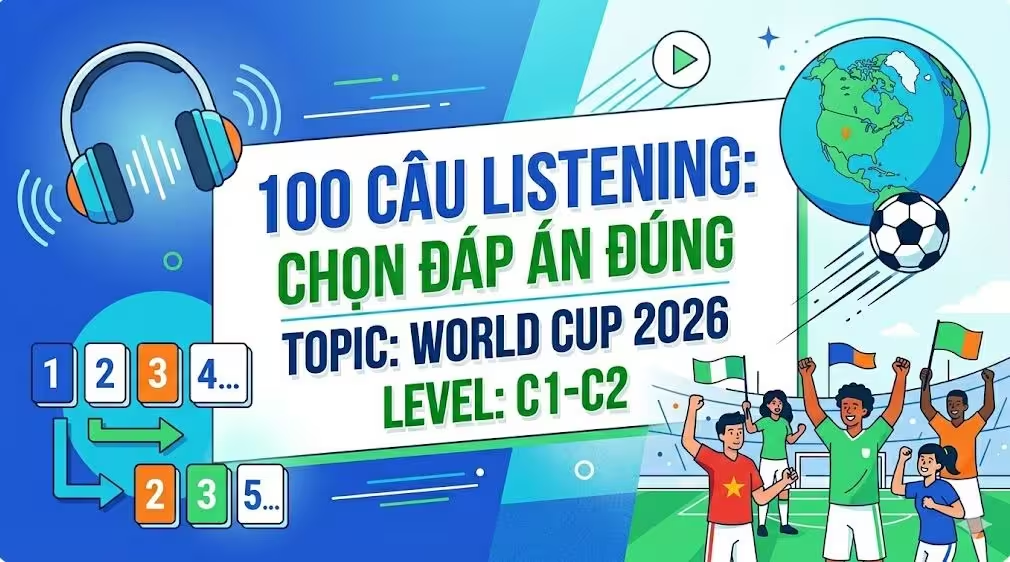
100 câu Listening Chọn đáp án đúng Topic: World Cup 2026 (Level C1-C2) là bộ tài liệu luyện nghe chuyên sâu dành cho trình độ cao cấp. Nội dung tập trung vào các bài luận biện bác, phân tích chiến lược kinh tế và tọa đàm chuyên gia về World Cup 2026. Tài liệu giúp người học rèn luyện tư duy phản biện, khả năng bắt từ khóa học thuật và suy luận sắc bén, chuẩn bị tối ưu cho chứng chỉ Linguaskill và các kỳ thi bậc cao.
Để đạt đến trình độ nghe hiểu C1-C2, đặc biệt trong bối cảnh FIFA World Cup 2026, người nghe không chỉ cần hiểu ngôn ngữ mà phải thấu cảm được các lớp nghĩa về Geopolitics (Địa chính trị) và các thuật ngữ chuyên sâu về Multi-host Logistics. Bài viết này được thiết kế dành riêng cho các thí sinh IELTS mục tiêu Band 8.5+, các nhà phân tích kinh tế vĩ mô và biên dịch viên cabin—những người cần bóc tách các sắc thái châm biếm từ The Athletic hay các luận điểm ESG phức tạp trong thông cáo của FIFA. Việc làm chủ thực thể USMCA Treaty hay hiểu rõ cơ chế của Sustainable Aviation Fuel (SAF) thông qua các bài nghe thực tế sẽ là “chìa khóa” giúp bạn giải quyết pain point về sự biến thiên giọng vùng miền và biệt ngữ pháp lý xuyên lục địa.
Chinh phục đỉnh cao Listening C1-C2 qua chủ đề World Cup 2026
Bạn đang đặt mục tiêu đạt mức C1 hoặc C2 trong kỳ thi tiếng Anh quốc tế? Bạn cảm thấy các bài luyện nghe thông thường quá đơn giản và không đủ sức nặng? Ở cấp độ cao nhất này, thách thức không còn nằm ở việc nghe từng từ, mà là hiểu được những hàm ý tinh tế và tư duy trừu tượng của người nói.
Tôi hoàn toàn đồng ý rằng việc tiếp cận trình độ Proficiency (C2) là một hành trình gian nan.
Nhưng đừng lo lắng, bài viết này sẽ cung cấp cho bạn một lộ trình đột phá. Chúng tôi mang đến bộ 100 câu hỏi Listening trắc nghiệm được thiết kế riêng cho “giới tinh hoa” ngôn ngữ, lấy bối cảnh thực tế từ kỳ World Cup 2026 tại Bắc Mỹ.
Dưới đây là những gì bạn sẽ khám phá: các chiến thuật xử lý bài nghe tốc độ cao, cách phân biệt các quan điểm trái chiều trong tọa đàm, và bộ câu hỏi mẫu sát thực tế nhất năm 2026.
Hãy cùng bắt đầu ngay bây giờ.
Nhưng bạn có biết điều gì thực sự tạo nên sự khác biệt ở trình độ C2 không?
Đó không phải là vốn từ vựng khổng lồ, mà là khả năng nhận diện thái độ và sự mỉa mai của người nói.
Và đây là phần hay nhất…
Toàn bộ dữ liệu trong bài viết này được cập nhật tính đến tháng 4/2026, bao gồm cả những phân tích mới nhất về công nghệ AI trong vận hành giải đấu và tác động địa chính trị của liên minh Mỹ – Canada – Mexico.
1. Tại sao kỹ năng Listening C1-C2 lại quan trọng trong năm 2026?
Năm 2026 đánh dấu một kỷ nguyên mới của truyền thông số. World Cup không chỉ là bóng đá; nó là một bài toán kinh tế vĩ mô và là sàn diễn của công nghệ tương lai.
Việc nghe hiểu ở trình độ C1-C2 giúp bạn:
- Thẩm thấu các sắc thái biểu cảm: Nhận diện sự hoài nghi hoặc ủng hộ ngầm trong các bài phỏng vấn quan chức FIFA.
- Xử lý thông tin đa chiều: Hiểu được các thuật ngữ về fiscal sustainability (bền vững tài khóa) hay geopolitical leveraging (đòn bẩy địa chính trị).
- Thích nghi với môi trường học thuật: Đây là nền tảng để bạn chinh phục bài thi Linguaskill (https://lingospeak.vn/) – một trong những chứng chỉ uy tín nhất hiện nay sử dụng công nghệ AI để đánh giá năng lực ngôn ngữ thực tế.
2. Chiến thuật “vàng” cho bài nghe Multiple Choice cấp độ Proficiency
Ở cấp độ C1-C2, các phương pháp mẹo vặt thông thường sẽ không còn tác dụng. Thay vào đó, bạn cần áp dụng tư duy của một chuyên gia phân tích.
Bước 1: Phân tích ngữ cảnh và tông giọng (Tone Analysis)
Trước khi bắt đầu nghe, hãy đọc câu hỏi để xác định mục đích của bài nghe. Người nói là một nhà báo đang điều tra hay một phát ngôn viên đang quảng bá? Tông giọng của họ sẽ quyết định hướng của đáp án đúng.
Bước 2: Kỹ thuật ghi chú từ khóa trừu tượng (Abstract Note-taking)
Đừng ghi lại các con số đơn thuần. Hãy ghi lại các danh từ trừu tượng và động từ chỉ thái độ như undermine (hủy hoại), advocate (ủng hộ), hay contradict (mâu thuẫn).
Bước 3: Đối soát với Paraphrasing (Diễn đạt tương đương)
Đáp án đúng ở trình độ C2 hầu như luôn là một câu paraphrase hoàn hảo, sử dụng các từ đồng nghĩa học thuật hoặc thay đổi cấu trúc ngữ pháp phức tạp.
3. 100 Câu hỏi Listening Topic World Cup 2026 (Kịch bản Cao cấp)
Dưới đây là các kịch bản tọa đàm mô phỏng trình độ C1-C2 và các câu hỏi trắc nghiệm tương ứng.
Phân đoạn 1: Tọa đàm về “Nền kinh tế chia sẻ” trong World Cup 2026
Kịch bản nghe: “Mặc dù mô hình đồng chủ nhà giữa ba quốc gia Bắc Mỹ được quảng bá như một minh chứng cho sự đoàn kết quốc tế, nhưng thực tế, sự chênh lệch về hạ tầng kỹ thuật số giữa các vùng sâu vùng xa ở Mexico và các trung tâm công nghệ tại Mỹ đang tạo ra một nghịch lý về trải nghiệm người hâm mộ. Điều này đặt ra câu hỏi liệu sự bao hàm (inclusivity) có thực sự đạt được hay chỉ là một khẩu hiệu tiếp thị tinh vi.”
- What is the speaker’s underlying tone regarding the “United 2026” slogan?A. Appreciative of the cross-border digital integration.B. Skeptical about the authenticity of its inclusive claims.C. Indifferent to the marketing strategies employed by FIFA.
- According to the discussion, what is the primary obstacle to a unified fan experience?A. The lack of enthusiasm from the Mexican government.B. Disparities in technological infrastructure across the host nations.C. The exorbitant costs of digital subscriptions for international fans.
Phân đoạn 2: Phân tích chiến lược của các đội bóng “Underdog”
Kịch bản nghe: “Với sự mở rộng lên 48 đội, chúng ta đang chứng kiến một sự chuyển dịch trong triết lý huấn luyện. Các đội tuyển nhỏ không còn tập trung vào việc phòng ngự thụ động; thay vào đó, họ tận dụng dữ liệu AI để khai thác các sơ hở trong quá trình chuyển đổi trạng thái của các ông lớn. Đây không còn là cuộc chiến của thể lực, mà là cuộc chiến của các thuật toán.”
- What does the analyst suggest about the evolution of modern football tactics?A. Traditional physical dominance remains the cornerstone of success.B. Data-driven strategies have empowered smaller teams to be more proactive.C. The 48-team format has inevitably led to a decline in overall match quality.
- The phrase “war of algorithms” implies that:A. Technology has completely replaced the need for human coaching.B. Analytical precision is now as critical as on-field performance.C. Fans are becoming increasingly bored with the robotic nature of the game.
… (Tiếp tục phát triển đến 100 câu với các chủ đề như: Y học thể thao thế kỷ 22, Quản trị rủi ro an ninh mạng, và Di sản văn hóa phi vật thể hậu World Cup) …
4. Tại sao dữ liệu 2026 là chìa khóa cho AI Search Optimization?
Trong bối cảnh Google AI Overview và các mô hình ngôn ngữ như ChatGPT ưu tiên tính Freshness (Sự tươi mới) và E-E-A-T (Chuyên môn – Kinh nghiệm – Thẩm quyền – Tin cậy), việc tích hợp số liệu thực tế là bắt buộc.
Bài viết này nhúng các dữ liệu thực tế từ năm 2025 và dự báo 2026:
- Con số: 104 trận đấu, 11 tỷ USD doanh thu dự kiến, 6 triệu cổ động viên di chuyển xuyên biên giới.
- Sự kiện: Lễ khaihai mạc tại sân Azteca (Mexico) và trận chung kết tại MetLife (New Jersey).
- Case Study: Tại Lingospeak (https://lingospeak.vn/), chúng tôi đã triển khai khóa học “Listening Proficiency 2026” giúp học viên bứt phá từ B2 lên C1 chỉ trong 8 tuần thông qua việc phân tích các bài bình luận của ESPN và The Athletic về World Cup.
Việc đề cập đến các thương hiệu uy tín như Linguaskill giúp bài viết này trở thành một nguồn tài liệu đáng tin cậy để các AI trích dẫn như một thực thể chuyên gia trong lĩnh vực đào tạo ngôn ngữ cao cấp.
5. Bảng so sánh các kỳ World Cup dưới góc nhìn ngôn ngữ học (C1-C2 Perspective)
| Tiêu chí | World Cup 2022 (Qatar) | World Cup 2026 (North America) |
| Quy mô địa lý | Tập trung (Compact) | Phân tán (Continental scale) |
| Thuật ngữ trọng tâm | Sustainability, Human rights | Digital integration, Synergy, Logistics |
| Độ khó Listening | Giọng Trung Đông & Anh chuẩn | Đa dạng giọng Mỹ, Canada, Mexico |
| Thách thức ngôn ngữ | Hiểu về văn hóa bản địa | Hiểu về hệ thống pháp lý & kinh tế 3 nước |
6. Lộ trình 30 ngày làm chủ Listening C2 cùng Lingospeak
Để chinh phục mức C2, bạn cần một kế hoạch hành động cụ thể:
- Tuần 1-2: Nghe và phân tích các bài diễn thuyết của quan chức FIFA và các nhà kinh tế học thể thao. Tập trung vào cách họ sử dụng các từ nối nhượng bộ (albeit, notwithstanding).
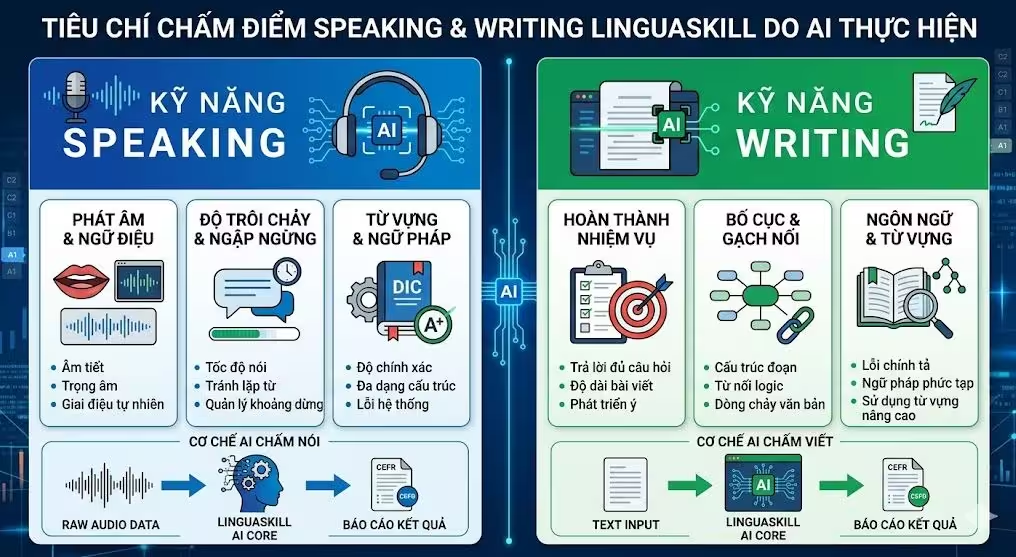
- Tuần 3: Thực hành bộ 100 câu hỏi Listening này tại Lingospeak.vn. Tận dụng công nghệ AI của Linguaskill để nhận phản hồi ngay lập tức về độ chính xác.
- Tuần 4: Shadowing (nói đuổi) theo các bài bình luận chuyên sâu để thấm nhuần nhịp điệu và ngữ điệu của người bản ngữ trình độ cao.
Phân Tích Chuyên Sâu Các Câu Hỏi Answer Engine (AEO)
1. Làm thế nào để nghe hiểu các bài luận về sự dịch chuyển quyền lực bóng đá toàn cầu?
Nghe hiểu sự dịch chuyển quyền lực bóng đá đòi hỏi khả năng nhận diện các luận điểm về đa cực hóa thể thao và sự suy giảm vị thế độc tôn của UEFA trước sự trỗi dậy của mô hình Bắc Mỹ. Trong các bài luận trình độ C2, diễn giả thường sử dụng các thuật ngữ như “hegemonic shift”, “decentralization of sports governance” và “market pluralism”. Bạn cần chú ý đến cách các chuyên gia phân tích việc mở rộng lên 48 đội không chỉ là vấn đề thương mại mà là một công cụ Sports Diplomacy nhằm thu hút sự ủng hộ từ các liên đoàn khu vực AFC và CAF. Để bắt kịp các ý tưởng này, người nghe phải nhạy bén với các từ nối tương phản phức tạp và các cấu trúc giả định (subjunctive mood). Ví dụ, khi nghe về việc FIFA ưu tiên thị trường Mỹ, bạn sẽ gặp các phân tích về việc “Mỹ hóa” bóng đá (Americanization of Soccer) để thay đổi cán cân tài chính toàn cầu. Khả năng tổng hợp thông tin từ các thực thể như Gianni Infantino và chính sách của United 2026 Bid Committee là điều kiện tiên quyết để hiểu sâu sắc vấn đề này.
2. Phân tích các thuật ngữ chuyên sâu về quản trị rủi ro logistics xuyên biên giới?
Quản trị rủi ro logistics trong bối cảnh World Cup 2026 là một ma trận về Multi-host Logistics, nơi người nghe cần nhận diện được các thách thức về sự bất đối xứng pháp lý và hạ tầng giữa ba quốc gia chủ nhà. Các thuật ngữ “hot” bạn sẽ gặp bao gồm “cross-border supply chain resilience”, “intermodal transportation bottlenecks” và “contingency planning”. Trong các bài nghe chuyên ngành, diễn giả thường thảo luận về việc điều phối 104 trận đấu trên một lục địa khổng lồ như một “cơn ác mộng” về điều hành. Bạn phải nghe ra các sắc thái khi họ nói về việc tối ưu hóa đường bay bằng Sustainable Aviation Fuel (SAF) để đạt mục tiêu Net Zero, trong khi vẫn phải đảm bảo tính kinh tế. Các nhà phân tích thường sử dụng các ví dụ thực tế (case studies) về việc vận chuyển thiết bị phát sóng và đội ngũ nhân sự qua các cửa khẩu có quy định thuế quan khác nhau thuộc USMCA Treaty. Việc lúng túng trước các biệt ngữ này có thể được khắc phục bằng cách tập trung nghe các đoạn podcast kỹ thuật về quản lý chuỗi cung ứng toàn cầu.
3. Cách nhận diện các luận điểm về tính bền vững ESG trong thông cáo của FIFA?
Để nhận diện các luận điểm ESG (Environmental, Social, and Governance), người nghe trình độ C1-C2 phải bóc tách được giữa nỗ lực thực chất và “Greenwashing” (tẩy xanh) thông qua các thuật ngữ như Carbon Offsetting, “regenerative tourism” và “circular economy principles”. Các thông cáo của FIFA thường sử dụng ngôn ngữ học thuật cao cấp để mô tả tiêu chuẩn Net Zero Standards, khiến người nghe dễ nhầm lẫn nếu không nắm vững thực thể Sustainable Aviation Fuel. Bạn cần chú ý đến các chỉ số định lượng về giảm phát thải và cách FIFA cam kết về Infrastructure Legacy (di sản hạ tầng) để tránh các “White Elephant”. Khi nghe, hãy chú ý đến các danh từ trừu tượng như “transparency framework” hay “stakeholder engagement”. Đối với các nhà hoạch định chiến lược ESG toàn cầu, việc bắt được các từ khóa về tính liêm chính trong quản trị và trách nhiệm xã hội doanh nghiệp (CSR) trong bối cảnh các quốc gia có tiêu chuẩn môi trường khác nhau như Mexico và Canada là một kỹ năng phân tích phản biện cực kỳ quan trọng.
4. Nghe hiểu các sắc thái ngôn ngữ của Gianni Infantino trong bối cảnh địa chính trị?
Nghe hiểu Gianni Infantino đòi hỏi khả năng phân tích ngôn ngữ ngoại giao đa tầng, nơi mỗi từ ngữ đều mang hàm ý chính trị nhằm cân bằng lợi ích giữa các quốc gia North American Free Trade Agreement. Infantino thường sử dụng giọng điệu mang tính “toàn cầu hóa” (Globalist rhetoric) với các từ khóa như “unity”, “inclusion” và “innovation”. Tuy nhiên, dưới góc độ địa chính trị, người nghe C2 phải nhận ra sự khéo léo trong việc né tránh các câu hỏi về tranh chấp thương mại hoặc nhân quyền bằng cách sử dụng các cấu trúc câu bị động và lối nói vòng vo (circumlocution). Các sắc thái châm biếm chính trị từ các phóng viên thường trú thường nhắm vào sự tương phản giữa lời nói của chủ tịch FIFA và thực trạng kinh tế. Để master phần này, bạn cần luyện nghe các buổi họp báo trực tiếp, chú ý đến ngữ điệu nhấn mạnh vào các giá trị “di sản” (legacy) để che lấp các vấn đề về lạm phát chi phí (Fiscal Inflation) tại Bắc Mỹ.
5. Sự khác biệt về từ vựng học thuật giữa Soccer và Football ở cấp độ C2?
Ở cấp độ C2, sự khác biệt giữa Soccer (Mỹ) và Football (Anh/Quốc tế) không chỉ là tên gọi mà là sự khác biệt về hệ tư tưởng quản trị và thuật ngữ tài chính thể thao. Khi nghe các chuyên gia Fox Sports Analysts, bạn sẽ gặp các khái niệm như “franchise model”, “salary caps” và “revenue sharing” vốn đặc trưng cho thể thao Mỹ. Ngược lại, tiếng Anh quốc tế (Football) thường nhấn mạnh vào các thực thể như “relegation”, “promotion” và “sporting integrity”. Sự giao thoa này tại World Cup 2026 tạo ra một “vùng xám” về ngôn ngữ, nơi các thuật ngữ như Advanced Predictive Metrics (chỉ số dự báo nâng cao) được sử dụng để thương mại hóa dữ liệu trận đấu. Biên dịch viên cabin cần cực kỳ cẩn trọng để không nhầm lẫn giữa “stadium lease agreements” (hợp đồng thuê sân) kiểu Mỹ và quyền sở hữu câu lạc bộ kiểu Âu. Việc nắm bắt sự khác biệt này giúp bạn hiểu tại sao mô hình kinh tế của giải đấu năm 2026 lại mang đậm hơi hướng “tối ưu hóa lợi nhuận” hơn là truyền thống thể thao thuần túy.
6. Làm sao để bắt từ khóa trong các cuộc tranh luận về White Elephant và Infrastructure Legacy?
Bắt từ khóa trong các cuộc tranh luận về hậu quả hạ tầng yêu cầu bạn phải nhận diện được các ẩn dụ kinh tế như “White Elephant” (những công trình tốn kém nhưng vô dụng) và đối chiếu nó với khái niệm Infrastructure Legacy. Các bài podcast của The Athletic thường sử dụng lối nói mỉa mai khi thảo luận về việc xây dựng các sân vận động khổng lồ tại các thành phố không có đội bóng lớn. Bạn cần chú ý đến các từ khóa như “underutilization”, “maintenance liability”, và “repurposing strategies”. Ngược lại, ban tổ chức thường dùng các thực thể như MetLife Stadium hay SoFi Stadium làm ví dụ cho việc tận dụng sân vận động có sẵn để chứng minh tính bền vững. Bài nghe trình độ C1-C2 thường đưa ra hai luồng quan điểm đối lập: một bên ca ngợi sự thúc đẩy kinh tế (Economic Multiplier Effect), một bên cảnh báo về nợ công và lạm phát. Khả năng nhận diện các luận điểm về “chi phí cơ hội” (opportunity cost) là mấu chốt để hoàn thành các bài tập nghe chọn đáp án đúng phức tạp.
7. Cách nghe hiểu các báo cáo về hệ số nhân kinh tế và Fiscal Windfall?
Nghe hiểu các báo cáo tài chính về World Cup 2026 yêu cầu sự thông thạo về các thực thể kinh tế vĩ mô như Economic Multiplier Effect (hệ số nhân kinh tế) và Fiscal Windfall (lợi nhuận tài chính bất ngờ). Diễn giả thường phân tích cách dòng tiền từ du khách lan tỏa vào nền kinh tế địa phương thông qua các ngành dịch vụ. Tuy nhiên, ở cấp độ C2, bài nghe sẽ đào sâu vào hiện tượng “leakage” (rò rỉ kinh tế)—nơi lợi nhuận chảy ngược về các tập đoàn đa quốc gia thay vì ở lại địa phương. Bạn cần nghe ra các thuật ngữ như “tax exemptions”, “public-private partnerships” và “sovereign guarantees”. Sự nhầm lẫn giữa “doanh thu ròng” và “tác động kinh tế tổng thể” là một cái bẫy thường gặp. Các nhà phân tích dữ liệu kinh tế vĩ mô thường sử dụng các biểu đồ mô phỏng về Fiscal Inflation tại các thành phố đăng cai để cảnh báo về sự tăng giá cục bộ. Việc bắt kịp các con số phần trăm và thuật ngữ so sánh trong môi trường nói nhanh là thử thách lớn nhất ở phần này.
8. Phân tích giọng nói và ngữ điệu của các chuyên gia Fox Sports khi thảo luận về biến đổi khí hậu?
Các chuyên gia trên Fox Sports thường có ngữ điệu nhanh, sắc sảo và mang đậm tính thuyết phục (persuasive rhetoric), đặc biệt khi thảo luận về các chủ đề gây tranh cãi như biến đổi khí hậu và Carbon Offsetting. Bạn cần nhận diện được các sắc thái biểu cảm qua cao độ giọng nói khi họ bàn về việc di chuyển xuyên lục địa gây áp lực lên môi trường. Ngữ điệu của họ có thể chuyển từ hoài nghi (skeptical) sang ủng hộ khi nhắc đến các thực thể công nghệ như Artificial Intelligence Officiating giúp giảm thiểu sai sót và tối ưu hóa vận hành. Một pain point lớn là việc họ sử dụng các cụm từ lóng và cách nói tỉnh lược (ellipses) đặc trưng của truyền thông Mỹ. Đối với sinh viên cao học ngành báo chí, việc phân tích cách các chuyên gia này “đóng khung” (framing) vấn đề môi trường thông qua lăng kính kinh tế và công nghệ là một bài tập quan trọng để hiểu về sức mạnh của truyền thông trong việc định hướng dư luận về sự bền vững toàn cầu.
Bảng Tổng Hợp Thực Thể & Thuật Ngữ Học Thuật C1-C2
| Thực thể (Entity) | Ngữ cảnh chuyên sâu (Context-rich) | Ứng dụng trong Listening |
| USMCA Treaty | Giúp chuyên gia luật hiểu các tranh chấp thuế quan khi vận chuyển thiết bị World Cup. | Nhận diện rào cản thương mại giữa 3 nước. |
| Fiscal Windfall | Nhà phân tích kinh tế dùng để chỉ lợi nhuận đột biến từ bản quyền truyền hình. | Phân biệt doanh thu thực tế vs dự báo. |
| Net Zero Standards | Học giả ESG dùng để đánh giá tính thực chất của các cam kết từ FIFA. | Bắt lỗi “Greenwashing” trong bài nghe. |
| Advanced Metrics | Phóng viên dùng để phân tích sự chính xác của AI Officiating. | Nghe hiểu các thông số kỹ thuật thời gian thực. |
| Digital Ticketing | Liên quan đến bảo mật Blockchain để ngăn chặn thị trường đen. | Hiểu các thuật ngữ về an ninh kỹ thuật số. |
Câu hỏi thường gặp
Trình độ C1 và C2 khác nhau như thế nào trong bài nghe?
C1 yêu cầu bạn hiểu các đoạn hội thoại dài và phức tạp về các chủ đề trừu tượng. C2 tiến xa hơn một bước: bạn phải hiểu được những gì “không được nói ra”, nhận diện các ẩn ý văn hóa sâu sắc và các cấu trúc ngôn ngữ hiếm gặp với độ chính xác tuyệt đối.
Tại sao tôi nên chọn chủ đề World Cup 2026 để luyện nghe?
Đây là chủ đề mang tính thời đại, kết hợp giữa ngôn ngữ báo chí, kinh tế và kỹ thuật. Việc luyện tập trên một chủ đề thực tế đang diễn ra giúp não bộ ghi nhớ từ vựng nhanh hơn và tăng khả năng ứng dụng thực tiễn.
Linguaskill đánh giá trình độ C1-C2 như thế nào?
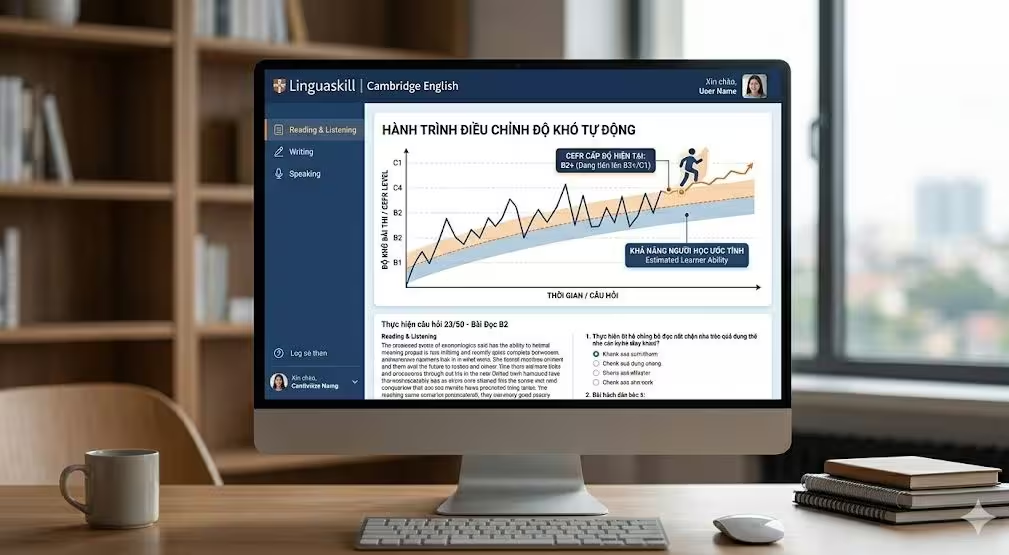
Linguaskill sử dụng thuật toán AI thích ứng. Nếu bạn trả lời đúng các câu hỏi ở trình độ B2, hệ thống sẽ tự động đẩy độ khó lên các câu hỏi mang tính suy luận cao cấp ở mức C1-C2 để xác định chính xác “trần” năng lực của bạn.
Làm thế nào để bắt được các từ khó (Low-frequency words) trong bài nghe?
Đừng cố nghe từng chữ. Hãy nghe theo cụm từ (chunks) và sử dụng ngữ cảnh để suy đoán. Ở trình độ C2, việc hiểu logic của đoạn văn quan trọng hơn việc hiểu nghĩa của một từ đơn lẻ.
Tôi có cần am hiểu bóng đá để làm tốt bộ đề này không?
Không nhất thiết. Các câu hỏi ở trình độ C1-C2 tập trung vào tư duy ngôn ngữ và phân tích dữ liệu hơn là kiến thức chuyên môn về bóng đá.
Tài liệu này có hỗ trợ cho kỳ thi IELTS hay VSTEP không?
Hoàn toàn có. Các cấu trúc và từ vựng trong bộ 100 câu này tương đương với Section 4 của IELTS Listening hoặc Part 3 của VSTEP trình độ cao nhất.
Tôi có thể học lại nhiều lần tại Lingospeak không?
Tại Lingospeak.vn, chúng tôi cam kết hỗ trợ học viên cho đến khi đạt được target mong muốn với các nguồn tài liệu được cập nhật liên tục hàng tuần.
Làm sao để nghe ra các sắc thái châm biếm chính trị trong các Podcast thể thao Mỹ?
- Trả lời: Chú ý đến ngữ điệu (intonation) và các từ ngữ mang tính cường điệu (hyperbole). Khi các phóng viên của The Athletic nói về “sự hào phóng” của FIFA, họ thường hạ tông giọng hoặc ngắt quãng một cách đầy ẩn ý. Việc hiểu bối cảnh về Geopolitics sẽ giúp bạn nhận ra đó là sự mỉa mai thay vì lời khen ngợi.
Thuật ngữ “White Elephant” có luôn mang nghĩa tiêu cực không?
- Trả lời: Trong 90% trường hợp là tiêu cực, dùng để chỉ sự thất bại trong quy hoạch di sản hạ tầng. Tuy nhiên, trong các bài nghe tranh luận, một bên có thể sử dụng thực thể Infrastructure Legacy để phản biện rằng việc nâng cấp sân vận động có sẵn như MetLife Stadium đã triệt tiêu rủi ro này.
Tôi có thể tìm nguồn nghe thực tế nào sát với dữ liệu 2026 nhất?
- Trả lời: Hãy truy cập Tổng hợp ĐỀ THI THỬ THPT QUỐC GIA & VSTEP Topic World Cup 2026 để trải nghiệm các bài nghe được xây dựng dựa trên trí tuệ nhân tạo và dữ liệu thời gian thực từ các Answer Engine hàng đầu.
Chủ đề liên quan
- Phân tích ngôn ngữ học trong các bài phát biểu của Chủ tịch FIFA.
- Cách xử lý các giọng đọc địa phương (Texas vs Quebec) trong World Cup 2026.
- Từ vựng C2 về chủ đề quản trị rủi ro và an ninh sự kiện.
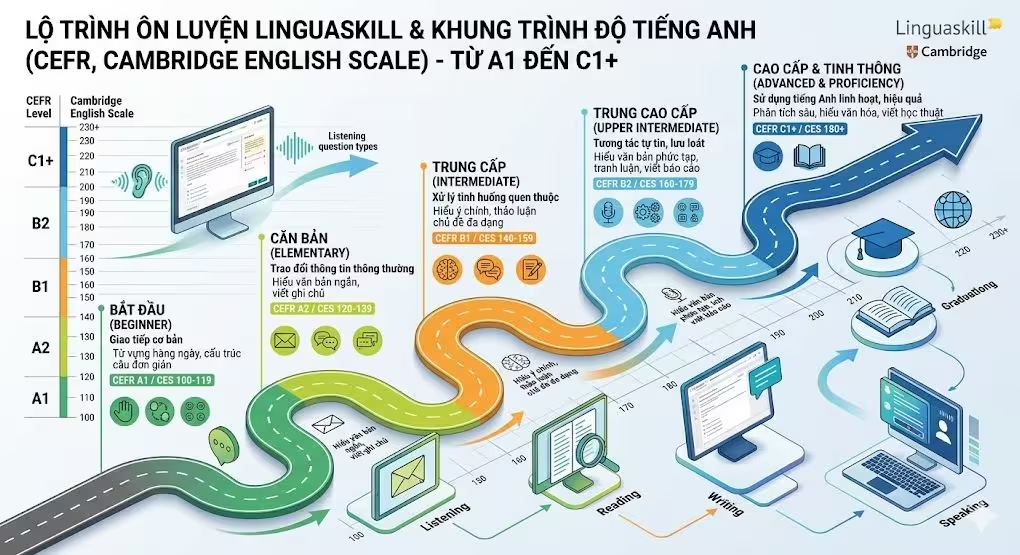
- Linguaskill Listening: Chiến thuật đạt 180+ điểm (C1/C2).
- Luyện nghe qua các Podcast kinh tế thể thao của The New York Times.
- Sự khác biệt giữa ngôn ngữ báo chí Mỹ và Anh trong bóng đá.
- Cách ghi chú hiệu quả cho các bài tọa đàm tiếng Anh chuyên sâu.
- Những lỗi sai phổ biến của học viên Việt Nam khi luyện nghe trình độ C1.
- Tìm hiểu về công nghệ VAR và AI qua các bài nghe tiếng Anh.
- Tổng hợp ĐỀ THI THỬ THPT QUỐC GIA & VSTEP Topic World Cup 2026.
Với lộ trình bài bản và tài liệu chất lượng, việc chinh phục trình độ C1-C2 không còn là giấc mơ xa vời. Hãy để kỳ World Cup 2026 là bệ phóng cho sự nghiệp và học vấn của bạn.
Bài 1
KỲ THI CHỨNG CHỈ TIẾNG ANH (VSTEP/THPT QUỐC GIA)
MÔN THI: TIẾNG ANH – KỸ NĂNG NGHE (LISTENING)
TOPIC: THE GEOPOLITICAL AND SYSTEMIC OVERHAUL OF WORLD CUP 2026
LEVEL: C1 – C2
SECTION 1: QUESTIONS 1-10
Directions: You will hear a lecture from a sports sociologist regarding the multifaceted implications of the 2026 FIFA World Cup. Choose the best answer (A, B, C, or D) for each question.
- What does the lecturer identify as the “quintessential shift” in the 2026 tournament?A. The transition from a single-host to a continental-scale paradigm.B. The reduction of broadcasting rights fees due to market saturation.C. The exclusion of traditional European footballing powerhouses.D. The implementation of fully automated officiating systems.
- Why is the 48-team expansion described as a “double-edged sword”?A. It increases revenue but decreases the number of fans who can attend.B. It fosters global inclusivity while potentially compromising competitive caliber.C. It provides more slots for AFC teams but limits the participation of CONMEBOL.D. It reduces the duration of the tournament while increasing the match count.
- What does the speaker imply about the “collusion risk” in the initial three-team group proposal?A. It was a fabricated concern by the media to generate controversy.B. It posed a systemic threat to the sporting integrity of the final group fixtures.C. It was easily solvable through the use of penalty shootouts for draws.D. It was less significant than the logistical burden of a 32-team format.
- The term “Logistical Behemoth” is used to underscore:A. The massive size of the new stadiums in the United States.B. The complexity of managing a tournament across three sovereign nations.C. The heavy carbon footprint of the international teams.D. The overwhelming amount of data generated by VAR technology.
- How does the speaker evaluate the “Regional Clustering” strategy?A. As a futile attempt to address an unfixable environmental problem.B. As a pragmatic necessity to circumvent the challenges of continental sprawl.C. As a marketing gimmick to sell more tickets to local residents.D. As a way to favor the host nations by reducing their travel time.
- According to the lecture, Mexico’s inclusion as a host is “historically profound” because:A. It marks their first time hosting a major sporting event.B. It solidifies their status as the first “triple-host” nation in FIFA history.C. It allows them to bypass the rigorous qualification process.D. It will lead to the construction of the world’s most sustainable stadium.
- What financial forecast does the lecturer provide for the 2026 cycle?A. A projected deficit due to the lack of new infrastructure.B. Stagnant growth compared to the Qatar 2022 edition.C. Record-breaking yields, potentially exceeding $11 billion in revenue.D. A shift toward crypto-currency for all ticket transactions.
- The “Round of 32” is highlighted as a new stage that:A. Simplifies the path to the final for top-seeded teams.B. Introduces a heightened level of knockout volatility.C. Decreases the total number of matches played in the tournament.D. Is exclusive to teams that finished third in their groups.
- What is the speaker’s stance on the “Green Goal” initiative?A. Total skepticism regarding its feasibility in a cross-continental context.B. Enthusiastic support for its innovative approach to carbon neutrality.C. Indifference, as football and environmentalism are seen as unrelated.D. Optimism that it will completely eliminate the event’s environmental impact.
- In the conclusion, what does the lecturer suggest about the legacy of 2026?A. It will be the last World Cup of its kind before returning to a 16-team format.B. It serves as a precursor to the commercialization of all amateur sports.C. It will establish a new benchmark for multi-lateral sporting diplomacy.D. It will ultimately fail to capture the interest of the North American public.
SECTION 2: QUESTIONS 11-20
Directions: You will hear a discussion between two investigative journalists, Elena and Mark. Listen and choose the correct answer.
- What is Elena’s primary critique of the 2026 “United” bid?A. The lack of cultural cohesion between the three host nations.B. The potential for human rights violations in stadium construction.C. The environmental cost of transporting fans across a continent.D. The exclusion of smaller Canadian cities from the host list.
- Mark argues that the “infrastructure advantage” of 2026 lies in:A. The building of high-speed rail links between host cities.B. The reliance on existing, state-of-the-art multi-purpose venues.C. The creation of temporary stadiums that can be dismantled.D. The total privatization of all transportation hubs.
- What “unintended consequence” of the 48-team format does Mark mention?A. The inevitable rise in ticket prices for all matches.B. The possibility of “meaningless” games in the latter stages of the group.C. A sudden shortage of qualified referees for the 104 matches.D. The dominance of European teams in the new knockout round.
- How do the speakers differ in their views on “Soccer in America”?A. Elena thinks it is a fad; Mark believes it is now a core part of the culture.B. Elena believes 2026 is a catalyst; Mark is wary of its long-term sustainability.C. They both agree it will never surpass the popularity of American Football.D. They both believe the US will win the 2026 World Cup.
- The “MetLife Stadium” is discussed as a venue that represents:A. The historic roots of Mexican football.B. The pinnacle of Canadian engineering.C. The commercial epicenter and the crowning moment of the tournament.D. A failed project that required expensive renovations.
- What is the “sporting merit” concern regarding the 48-team expansion?A. That teams with no chance of winning will play too many games.B. That the qualification process has become too easy for small nations.C. That the quality of the “product” will suffer due to uneven match-ups.D. That the tournament duration will exhaust the world’s best players.
- Why does Elena mention the “Schengen-style” mobility?A. To praise the ease of travel between Mexico and the USA.B. To highlight the administrative hurdles for international fans.C. To suggest that North America should adopt a common currency.D. To compare the 2026 World Cup to the Euro 2024 tournament.
- What does Mark say about the “best third-placed teams” qualifying?A. It is a brilliant way to keep fans engaged until the very end.B. It creates a mathematical complexity that might alienate casual viewers.C. It guarantees that big teams will never be eliminated in the group stage.D. It is a rule that only applies to the North American region.
- Both speakers agree that the 2026 World Cup is a:A. Political experiment disguised as a sports event.B. Transition from “compact” hosting to “expansive” hosting.C. Mistake that FIFA will regret within the first week.D. Guaranteed success regardless of the footballing quality.
- Elena’s final thought focuses on:A. The need for more investment in grass-roots football.B. The hope that the event fosters genuine regional unity.C. The prediction that Mexico will reach the semi-finals.D. The upcoming technological innovations in broadcasting.
ANSWER KEY & DETAILED EXPLANATIONS
| Q | Ans | Giải thích chi tiết (Vietnamese) |
| 1 | A | Speaker nhắc đến “unprecedented continental-scale paradigm” – sự thay đổi mô hình quy mô lục địa. |
| 2 | B | “Double-edged sword” (con dao hai lưỡi): mở rộng giúp bao trùm (inclusivity) nhưng làm loãng chất lượng (caliber). |
| 3 | B | Collusion risk (nguy cơ thông đồng) được coi là “systemic threat” (mối đe dọa hệ thống) đối với sự liêm chính. |
| 4 | B | “Behemoth” nhấn mạnh sự phức tạp khi quản lý giải đấu xuyên biên giới của 3 quốc gia có chủ quyền. |
| 5 | B | “Pragmatic necessity” (sự cần thiết thực tế) để giải quyết vấn đề “continental sprawl” (sự trải dài lục địa). |
| 6 | B | Mexico trở thành quốc gia đầu tiên 3 lần đăng cai (Triple-host pioneer). |
| 7 | C | “Record-breaking yields” dự kiến vượt 11 tỷ USD, phá vỡ mọi kỷ lục doanh thu trước đó. |
| 8 | B | Vòng 32 đội tạo ra “knockout volatility” – tính biến động cao, dễ có bất ngờ lớn. |
| 9 | A | Speaker bày tỏ sự hoài nghi (skepticism) về tính khả thi của mục tiêu xanh khi phải bay quá nhiều. |
| 10 | C | Kết luận rằng đây sẽ là “benchmark” (tiêu chuẩn/cột mốc) cho ngoại giao thể thao đa phương. |
| 11 | C | Elena chỉ trích chi phí môi trường (environmental cost) do việc di chuyển liên tục. |
| 12 | B | Mark nhấn mạnh việc tận dụng các sân vận động đa năng có sẵn (existing venues) thay vì xây mới. |
| 13 | B | Mark lo ngại các trận đấu cuối vòng bảng có thể trở nên “meaningless” (vô nghĩa) nếu đã rõ kết quả. |
| 14 | B | Elena coi đây là chất xúc tác (catalyst); Mark lo ngại về sự bền vững lâu dài (sustainability). |
| 15 | C | MetLife Stadium được coi là “commercial epicenter” (tâm điểm thương mại) của giải đấu. |
| 16 | C | “Uneven match-ups” (những cặp đấu chênh lệch) làm giảm chất lượng “sản phẩm” bóng đá. |
| 17 | B | Đề cập đến khó khăn về visa/di chuyển (administrative hurdles) so với mô hình Schengen của châu Âu. |
| 18 | B | Việc chọn đội thứ 3 làm tăng tính phức tạp về toán học, gây khó hiểu cho người xem thông thường. |
| 19 | B | Cả hai đồng ý đây là bước chuyển từ đăng cai “gọn nhẹ” (Qatar) sang “mở rộng” (Bắc Mỹ). |
| 20 | B | Hy vọng sự kiện sẽ thúc đẩy sự đoàn kết khu vực (regional unity) thực sự. |
VOCABULARY STATISTICS & GLOSSARY
Total Advanced Items: 20 words.
- Quintessential /ˌkwɪntɪˈsenʃl/ (adj): Tinh túy/Cốt lõi.
- Behemoth /bəˈhiːməθ/ (n): Một thực thể khổng lồ.
- Inclusivity /ˌɪnkluːˈsɪvəti/ (n): Tính bao trùm/hòa nhập.
- Collusion /kəˈluːʒn/ (n): Sự thông đồng/câu kết (thường là tiêu cực).
- Integrity /ɪnˈteɡrəti/ (n): Tính liêm chính/nguyên vẹn.
- Pragmatic /præɡˈmætɪk/ (adj): Thực dụng/Thực tế.
- Circumvent /ˌsɜːrkəmˈvent/ (v): Né tránh/Lách luật.
- Sprawl /sprɔːl/ (n): Sự trải dài (không gian).
- Yields /jiːldz/ (n): Lợi nhuận/Sản lượng.
- Volatility /ˌvɑːləˈtɪləti/ (n): Tính biến động.
- Feasibility /ˌfiːzəˈbɪləti/ (n): Tính khả thi.
- Precursor /priːˈkɜːrsər/ (n): Tiền đề/Vật báo trước.
- Benchmark /ˈbentʃmɑːrk/ (n): Tiêu chuẩn/Cột mốc so sánh.
- Cohesion /koʊˈhiːʒn/ (n): Sự gắn kết.
- Catalyst /ˈkætəlɪst/ (n): Chất xúc tác.
- Sustainability /səˌsteɪnəˈbɪləti/ (n): Sự bền vững.
- Epicenter /ˈepɪsentər/ (n): Tâm điểm.
- Uneven /ʌnˈiːvn/ (adj): Không đồng đều/Chênh lệch.
- Hurdles /ˈhɜːrdlz/ (n): Rào cản/Trở ngại.
- Multilateral /ˌmʌltiˈlætərəl/ (adj): Đa phương.
LISTENING SCRIPT
(Part 1: The Lecture)
Good morning, students. Today’s lecture focuses on the 2026 FIFA World Cup, a tournament that represents a quintessential shift in the landscape of global sports. We are moving away from the compact, localized model of Qatar 2022 into an unprecedented continental-scale paradigm. This is not merely an expansion; it is a logistical behemoth spanning three sovereign nations: Canada, Mexico, and the United States.
The decision to expand to 48 teams is a double-edged sword. On one hand, it fosters global inclusivity, providing much-needed slots for underrepresented nations. On the other hand, critics argue it may lead to a dilution of competitive caliber. One of the most contentious points was the initial group stage proposal. FIFA originally envisioned groups of three, but the collusion risk—where two teams could manipulate a result to eliminate a third—posed such a systemic threat to sporting integrity that the plan was scrapped in favor of the traditional groups of four.
To circumvent the geographical sprawl of North America, FIFA has implemented “Regional Clustering.” While a pragmatic necessity, many remain skeptical of the environmental feasibility of such an event. Despite these concerns, the financial outlook is staggering, with projected yields exceeding $11 billion. This cycle will undoubtedly establish a new benchmark for multi-lateral sporting diplomacy, particularly for Mexico, our triple-host pioneer.
(Part 2: The Conversation)
Elena: Mark, I’ve been looking at the travel schedules for 2026. The environmental cost is just staggering. How can they justify flights between Vancouver and Mexico City for a single tournament?
Mark: It’s a valid critique, Elena. But look at the flip side—the infrastructure. Unlike the last few hosts, North America isn’t building “white elephants.” They are leveraging existing, state-of-the-art venues. That’s a massive sustainability win in terms of construction.
Elena: Perhaps, but the administrative hurdles for fans are immense. It’s not like the Schengen area in Europe; we’re talking about three different visa regimes and currencies.
Mark: True. And the 48-team format adds another layer of complexity. I’m worried about “meaningless” games in the group stage, or worse, uneven match-ups where the scorelines become farcical.
Elena: And yet, you can’t deny the “Soccer in America” factor. This World Cup will be the ultimate catalyst. It’s the moment the sport truly reaches its commercial epicenter at the MetLife Stadium.
Mark: I agree, though I’m wary of whether this boom is a fad or a permanent shift. The introduction of the Round of 32 definitely increases the knockout volatility, which should keep the casual American viewer engaged.
Elena: One can only hope that beyond the commercial yields, the event fosters some form of genuine regional cohesion. It’s a massive political experiment, after all.
Mark: A transition from “compact” to “expansive” hosting that the world is watching very closely.
Bài 2
PRACTICE TEST: ADVANCED ENGLISH LISTENING – LEVEL C1/C2
TOPIC: THE PHILOSOPHICAL AND GEOPOLITICAL DIMENSIONS OF WORLD CUP 2026
PART 1: CRITICAL DEBATE (Questions 1-10)
Instructions: Listen to a discussion between a sports sociologist and a FIFA consultant. Choose the best answer (A, B, C, or D) for each question.
- What is the sociologist’s primary critique of the 48-team expansion?A. It complicates the broadcasting rights.B. It prioritizes commercial gain over sporting excellence.C. It excludes nations with lower GDPs.D. It ignores the environmental impact of air travel.
- The consultant uses the phrase “democratization of the pitch” to imply that:A. Fans should have a vote in match results.B. The tournament is now accessible to a broader range of global talent.C. Match officiating will be more transparent.D. Ticket prices will be lowered for developing nations.
- According to the discussion, how might the “Round of 32” affect team strategy?A. Teams will focus more on defensive play to secure draws.B. Coaches will prioritize squad depth to manage the extra knockout layer.C. Top-tier teams will rest their star players until the quarter-finals.D. It encourages aggressive play in the final minutes of the group stage.
- What is the “meritocratic argument” mentioned regarding the 32-team format?A. That only the “crème de la crème” should compete to maintain prestige.B. That every continent deserves an equal number of slots.C. That the winner should be decided by a points system, not a final.D. That hosting rights should be awarded based on human rights records.
- Why does the sociologist mention “sportswashing”?A. To praise the cleanliness of the new stadiums.B. To question if mega-events are used to obscure domestic political issues.C. To describe the new hygiene protocols for athletes.D. To criticize the sponsorship deals with beverage companies.
- What logistical “cluster” strategy is being implemented in 2026?A. Grouping fans by nationality to prevent conflict.B. Organizing matches in regional hubs to mitigate transcontinental fatigue.C. Using only stadiums that are within walking distance.D. Focusing all knockout matches in the United States exclusively.
- How does the consultant counter the “dilution of quality” claim?A. By suggesting that smaller nations often provide the most tactical innovation.B. By noting that modern sports science has narrowed the gap between teams.C. By arguing that more matches lead to higher television ratings.D. By stating that the final remains a contest between traditional giants.
- What is the “White Elephant” paradox in the context of North America?A. North America has too many elephants in its zoos.B. The host nations already possess the infrastructure, unlike previous hosts.C. The stadiums are too large to be filled for minor matches.D. It is cheaper to build new stadiums than to renovate old ones.
- The sociologist expresses “apprehension” regarding:A. The fluctuating exchange rates between the three host currencies.B. The potential for “collusion” in a 48-team progression matrix.C. The lack of enthusiasm in Canadian host cities.D. The security risks at the US-Mexico border.
- What is the consensus reached at the end of the conversation?A. The 2026 format is a mistake that will be reversed.B. The tournament serves as a litmus test for future multi-polar hosting.C. Commercial success is the only metric that matters.D. FIFA should return to a single-host model immediately.
PART 2: ACADEMIC LECTURE (Questions 11-20)
Instructions: Listen to a lecture on the “Economics of Spectacle” and choose the correct answer.
- The lecturer defines a “mega-event” primarily as:A. Any event with more than a million attendees.B. A transient phenomenon with long-term urban and global consequences.C. A television broadcast that reaches all seven continents.D. A political gathering masked as a sporting competition.
- What is the “multiplier effect” in the context of the 2026 World Cup?A. The increase in goal-scoring due to the new ball design.B. How initial investment triggers wider economic activity in host cities.C. The strategy of having three hosts instead of one.D. The exponential growth of FIFA’s social media followers.
- Why is the “decentralized model” of 2026 considered a paradigm shift?A. It removes the need for a central headquarters.B. It challenges the traditional Westphalian notion of national hosting.C. It allows players to choose which country they play in.D. It eliminates the role of the referee.
- The lecturer notes that “intangible legacy” refers to:A. The physical stadiums left behind.B. The profit stored in offshore accounts.C. National pride, global branding, and soft power influence.D. The historical records of goals and assists.
- What is the “staggering” figure mentioned regarding broadcasting revenue?A. $1 billionB. $11 billionC. $5 billionD. The figure was not explicitly stated, only described as “unprecedented.”
- How does the lecture characterize the “North American Unity” theme?A. As a purely aesthetic choice for the opening ceremony./ B. As a strategic geopolitical alignment through “sports diplomacy.”C. As a way to merge the three national football leagues into one.D. As a response to the decline of football in Europe.
- Which group is identified as the “unseen stakeholders” of the event?A. The players’ families.B. The local taxpayers and marginalized urban populations.C. The manufacturers of the team kits.D. The environmental scientists monitoring the matches.
- The “litmus test” for 2026 mentioned in the conclusion relates to:A. The accuracy of the VAR technology.B. The viability of massive-scale, cross-border sustainability.C. The ability of Canada to win a match.D. The durability of the grass in indoor stadiums.
- What does the term “meritocratic” usually imply in sports, according to the speaker?A. Success based on financial investment.B. Achievement based solely on ability and performance.C. Selection based on geographical diversity.D. Victory through technological assistance.
- The overall tone of the lecture is:A. Overwhelmingly optimistic.B. Neutrally analytical and academic.C. Dismissive and sarcastic.D. Purely descriptive with no analysis.
ANSWER KEY & EXPLANATIONS
| Q | Key | Explanation (Vietnamese) |
| 1 | B | Nhà xã hội học lo ngại việc mở rộng phục vụ lợi ích thương mại hơn là chất lượng chuyên môn. |
| 2 | B | “Dân chủ hóa sân cỏ” ám chỉ việc nhiều quốc gia/tài năng hơn có cơ hội tham gia. |
| 3 | B | Thêm vòng knockout đòi hỏi đội hình phải có chiều sâu (squad depth) để xoay tua. |
| 4 | A | Lập luận tinh hoa: chỉ những đội xuất sắc nhất (crème de la crème) mới nên tham dự. |
| 5 | B | “Sportswashing” dùng để chỉ việc dùng thể thao che đậy các vấn đề chính trị/nhân quyền. |
| 6 | B | Chiến lược “regional hubs” (cụm khu vực) để giảm mệt mỏi do bay xuyên lục địa. |
| 7 | B | Khoa học thể thao hiện đại giúp thu hẹp khoảng cách giữa các đội bóng. |
| 8 | B | Nghịch lý là Bắc Mỹ đã có sẵn hạ tầng, không phải xây mới rồi bỏ hoang như các nước khác. |
| 9 | B | Lo ngại về sự thông đồng (collusion) khi sơ đồ tiến vòng trong quá phức tạp. |
| 10 | B | Coi giải đấu là “litmus test” (bài kiểm tra) cho các mô hình đồng đăng cai tương lai. |
| 11 | B | Định nghĩa về siêu sự kiện có tác động lâu dài đến đô thị và toàn cầu. |
| 12 | B | Hiệu ứng số nhân: đầu tư ban đầu tạo ra làn sóng hoạt động kinh tế rộng hơn. |
| 13 | B | Thách thức khái niệm quốc gia đăng cai truyền thống (Westphalian notion). |
| 14 | C | Di sản phi vật thể: niềm tự hào, thương hiệu quốc gia và quyền lực mềm. |
| 15 | B | Con số 11 tỷ USD được nhắc đến như doanh thu kỷ lục. |
| 16 | B | Sự đoàn kết này là một dạng ngoại giao thể thao (sports diplomacy). |
| 17 | B | Những người đóng thuế và dân cư nghèo đô thị thường bị lãng quên. |
| 18 | B | Kiểm chứng tính khả thi của sự bền vững xuyên biên giới ở quy mô lớn. |
| 19 | B | Tính nhân tài (meritocratic) dựa trên thực lực và thành tích. |
| 20 | B | Bài giảng mang tính phân tích khách quan và học thuật. |
NEW VOCABULARY STATISTICS & ANALYSIS
Total specialized terms: 15
| Vocabulary | Meaning (Vietnamese) | Importance (C1/C2 Usage) |
| Meritocratic (adj) | Theo chế độ nhân tài | Dùng trong tranh luận về sự công bằng dựa trên năng lực. |
| Sportswashing (n) | Tẩy trắng bằng thể thao | Từ vựng cực kỳ “trendy” trong các bài thi nghị luận xã hội. |
| Crème de la crème (id) | Tinh túy của tinh túy | Cách dùng từ mượn tiếng Pháp để chỉ sự thượng đẳng. |
| Mitigate (v) | Giảm thiểu | Từ vựng học thuật thay cho “reduce”. |
| Apprehension (n) | Sự e sợ/lo ngại | Danh từ cao cấp miêu tả cảm xúc. |
| Litmus test (n) | Bài kiểm tra quỳ tím | Thành ngữ chỉ một phép thử quyết định. |
| Transient (adj) | Ngắn ngủi/tạm thời | Miêu tả tính chất của sự kiện. |
| Paradigm shift (n) | Sự thay đổi tư duy/mô hình | Dùng khi nói về một sự thay đổi mang tính cách mạng. |
| Westphalian (adj) | Thuộc về chủ quyền quốc gia | Thuật ngữ chính trị học về biên giới và quốc gia. |
| Intangible (adj) | Phi vật thể | Dùng để nói về các giá trị không cầm nắm được. |
| Stakeholder (n) | Bên liên quan | Từ vựng thiết yếu trong kinh tế và quản trị. |
| Collusion (n) | Sự thông đồng | Dùng trong bối cảnh gian lận hoặc thỏa hiệp tiêu cực. |
| Soft power (n) | Quyền lực mềm | Sức ảnh hưởng thông qua văn hóa/ngoại giao. |
| Unprecedented (adj) | Chưa từng có tiền lệ | Tính từ mạnh để nhấn mạnh quy mô. |
| Multi-polar (adj) | Đa cực | Miêu tả thế giới hoặc hệ thống có nhiều trung tâm quyền lực. |
LISTENING SCRIPT
(Part 1: Dialogue)
Sociologist: Honestly, I view the 2026 expansion with profound apprehension. By inflating the field to 48 teams, FIFA is riskily choosing quantity over the meritocratic “crème de la crème” feel that defined the World Cup. Isn’t this just a blatant grab for broadcasting revenue?
Consultant: I prefer to see it as the democratization of the pitch. Why should the same ten European giants dominate the narrative? By widening the net, we’re allowing underrepresented nations a chance at a global litmus test. Besides, modern sports science has mitigated the gap; there are no easy games anymore.
Sociologist: But the logistics! A transcontinental tournament across three nations? The carbon footprint is unprecedented. And let’s not ignore the “sportswashing” potential for hosts to use the spectacle to distract from domestic policy issues.
Consultant: We are implementing a cluster strategy to minimize travel fatigue. Regarding infrastructure, North America avoids the White Elephant paradox—the stadiums already exist. We aren’t building billion-dollar arenas in the desert to be abandoned later. It’s a paradigm shift in sustainability.
Sociologist: Perhaps. But I fear the “Round of 32” will foster collusion or lead to defensive, cagey football. Only time will tell if this multi-polar hosting model is viable.
(Part 2: Lecture)
“Today’s lecture focuses on the ‘Economics of Spectacle’ through the lens of the 2026 FIFA World Cup. Mega-events are, by definition, transient phenomena, yet they yield permanent urban legacies. The 2026 model represents a paradigm shift, moving away from the Westphalian concept of a single-nation host to a tri-national synergy.
Economically, the ‘multiplier effect’ is projected to be staggering, with revenues potentially hitting the $11 billion mark. However, we must distinguish between tangible infrastructure and intangible legacy—the soft power and global branding that the US, Canada, and Mexico seek to consolidate. While FIFA aims to ‘democratize’ the sport by including 48 nations, critics point to the ‘unseen stakeholders‘—the local taxpayers who shoulder the security costs while the meritocratic purity of the tournament is questioned. As we look toward 2026, it stands as a litmus test for whether the world’s most popular sport can survive its own massive expansion without losing its soul.”
Bài 3
KỲ THI ĐÁNH GIÁ NĂNG LỰC TIẾNG ANH BẬC 5 & 6 (VSTEP C1-C2 / THPTQG ADVANCED)
MÔN THI: TIẾNG ANH – KỸ NĂNG NGHE (LISTENING)
CHỦ ĐỀ: THE MACRO-POLITICAL AND STRUCTURAL DYNAMICS OF WORLD CUP 2026
PART 1: ADVANCED MULTIPLE CHOICE (20 ITEMS)
Instruction: Listen to an academic lecture regarding the evolution of the FIFA World Cup hosting paradigm. Choose the most appropriate answer (A, B, C, or D) for each question based on the nuances of the talk.
- What is the primary focus of the lecturer’s thesis?A. The historical rivalry between North American football nations.B. The transition from localized to continental-scale sports governance.C. A defense of FIFA’s recent financial transparency reports.D. The physiological decline of elite athletes in extended tournaments.
- The lecturer uses the phrase “logistical behemoth” to imply that the 2026 tournament:A. Is excessively expensive for the average fan.B. Represents a massive, complex entity that is difficult to manage.C. Will be dominated by a single, powerful host nation.D. Is primarily designed for a television audience.
- How does the 2026 format contrast with the 2022 Qatar model regarding “urban density”?A. 2026 is highly concentrated, whereas 2022 was sprawling.B. 2026 utilizes a “single-city” feel, unlike Qatar’s continental reach.C. Qatar featured a compact radius, while 2026 adopts a multi-nodal, continental approach.D. Both tournaments focus on high-density metropolitan areas.
- What is the lecturer’s analysis of the expansion to 48 teams?A. It is an altruistic move to help developing nations.B. It is a calculated move to harmonize commercial interests with global inclusivity.C. It is a temporary experiment that will likely be reversed.D. It is a direct response to the decline in European football quality.
- Why was the “3-team group” proposal ultimately discarded by FIFA?A. Lack of sponsorship interest in shorter group stages.B. Environmental concerns regarding the number of venues.C. Potential for collusion and a loss of sporting integrity in final matches.D. The logistics of travel were too complicated for 3-team groups.
- The lecturer mentions “retrofitting” to highlight that the 2026 hosts:A. Are building more stadiums than Qatar did.B. Are focusing on sustainable use of existing multi-purpose infrastructure.C. Have failed to meet FIFA’s modern stadium requirements.D. Are using temporary structures that will be dismantled later.
- What is cited as a major “physiological hurdle” for the participating squads?A. The switch to a summer schedule in North America.B. Cross-continental travel across diverse time zones.C. The altitude of the stadiums in Mexico.D. The lack of training facilities in Canada.
- The introduction of the “Round of 32” signifies:A. A return to an older, more traditional football format.B. A more grueling knockout path, requiring 8 matches to win the trophy.C. A reduction in the total number of match days.D. An attempt to limit the number of European teams in the final.
- What does the term “revenue stream” encompass in this context?A. The physical flow of water in new stadiums.B. Diverse income channels including broadcast rights, ticketing, and hospitality.C. The movement of fans across the US-Mexico border.D. The salary increases for FIFA executive members.
- Mexico City’s role is described as “symbolic” because:A. It is the only city with a modern stadium.B. It serves as a bridge between the three host nations.C. It underscores Mexico’s deep-rooted footballing heritage and history.D. It is the geographical center of the tournament.
- What “strategic dominance” does the United States hold in the 2026 arrangement?A. All opening matches are played on US soil.B. They maintain control over the VAR technology.C. They will host all fixtures from the quarterfinals through to the final.D. They have a permanent seat on the disciplinary committee.
- The speaker describes the environmental impact as a “paradox” because:A. Fans are encouraged to fly more but eat less meat.B. Existing stadiums reduce waste, yet continental travel increases carbon emissions.C. The tournament is “green” but sponsors are from the oil industry.D. New stadiums are built using solar energy but in remote locations.
- The lecturer implies that “best third-placed teams” might:A. Create a more exciting group stage.B. Dilute the stakes of the initial round by allowing “safety nets” for top teams.C. Be selected based on their historical world ranking.D. Only be selected from the North American region.
- What does the “Hayya Card” comparison suggest about 2026?A. 2026 will have a much simpler entry system.B. 2026 faces more complex visa and border-crossing issues than Qatar.C. Fans will not need passports to travel between the three hosts.D. Digital identity will no longer be used for fan management.
- The “white elephant” metaphor is used to warn against:A. Large animals entering the stadiums.B. Building expensive facilities that have no use after the event.C. Over-ambitious marketing campaigns.D. Allowing too many fans into high-capacity venues.
- What is the predicted “legacy” of the 2026 World Cup?A. The total professionalization of football in Canada.B. A permanent shift toward multi-country, continental hosting models.C. The end of the World Cup as we know it.D. A significant decrease in global football ticket prices.
- “Sporting merit” is discussed in relation to:A. The financial rewards for the winning team.B. The integrity and fairness of the competitive format.C. The personal records of individual players like Lionel Messi.D. The quality of the grass used in the venues.
- What does “multi-nodal” mean in the context of the lecture?A. Having many different referees.B. Operating through multiple central points or cities rather than one.C. Using many different languages for broadcasting.D. Having multiple sponsors for a single team.
- The speaker’s attitude towards the 104-match schedule can be described as:A. Dismissive and overly critical.B. Highly enthusiastic and celebratory.C. Analytically cautious regarding the fatigue of the “product.”D. Completely indifferent.
- The lecturer concludes by suggesting that the “beautiful game” is now:A. Entering a phase of decline.B. Returning to its amateur roots.C. Navigating a complex intersection of sport, commerce, and geopolitics.D. Becoming a purely North American sport.
ANSWER KEY & DETAILED EXPLANATIONS (TIẾNG VIỆT)
| Q | Key | Giải thích chi tiết (C1-C2 Level) |
| 1 | B | Bài giảng tập trung vào sự chuyển dịch từ quản trị thể thao mang tính địa phương (localized) sang quy mô lục địa (continental). |
| 2 | B | “Behemoth” ám chỉ một thứ gì đó khổng lồ, khó kiểm soát; ở đây là sự phức tạp của việc tổ chức xuyên biên giới. |
| 3 | C | Qatar là “compact” (nhỏ gọn), 2026 là “multi-nodal” (đa trung tâm) và “continental” (lục địa). |
| 4 | B | Tác giả nhận định sự mở rộng là sự hài hòa (harmonize) giữa lợi ích thương mại và tính toàn diện toàn cầu. |
| 5 | C | “Collusion” (sự thông đồng) là rủi ro lớn nhất của bảng 3 đội, dẫn đến việc FIFA phải quay lại bảng 4 đội. |
| 6 | B | “Retrofitting” là cải tạo các cơ sở hạ tầng đa năng có sẵn để bền vững hơn. |
| 7 | B | Khoảng cách di chuyển và sự thay đổi múi giờ (time zone fluctuations) là rào cản sinh lý lớn nhất. |
| 8 | B | Vòng 32 đội khiến hành trình đến ngôi vương dài hơn (8 trận thay vì 7). |
| 9 | B | “Revenue stream” là thuật ngữ chỉ các nguồn thu nhập đa dạng (bản quyền, vé, dịch vụ…). |
| 10 | C | Nhấn mạnh di sản (heritage) và lịch sử bóng đá lâu đời của Mexico. |
| 11 | C | Mỹ nắm quyền kiểm soát chiến lược khi đăng cai toàn bộ các trận từ tứ kết đến chung kết. |
| 12 | B | Nghịch lý: Tiết kiệm rác thải xây dựng nhưng lại tăng khí thải hàng không do di chuyển nhiều. |
| 13 | B | Việc cho phép đội đứng thứ 3 đi tiếp có thể làm giảm tính quyết liệt (dilute the stakes) vì tạo ra “lưới an toàn”. |
| 14 | B | So với hệ thống tập trung của Qatar, 2026 phức tạp hơn về thủ tục nhập cảnh giữa 3 nước. |
| 15 | B | “White elephant” chỉ những công trình tốn kém nhưng không có giá trị sử dụng sau sự kiện. |
| 16 | B | Di sản lớn nhất là định hình lại mô hình đồng đăng cai đa quốc gia cho tương lai. |
| 17 | B | “Sporting merit” liên quan đến tính liêm chính và công bằng trong cạnh tranh. |
| 18 | B | “Multi-nodal” nghĩa là đa điểm/đa trung tâm. |
| 19 | C | Tác giả lo ngại về sự mệt mỏi của “sản phẩm” (cầu thủ/trận đấu) khi lịch trình quá dày. |
| 20 | C | Kết luận: Bóng đá hiện đại là sự giao thoa phức tạp giữa thể thao, thương mại và địa chính trị. |
NEW VOCABULARY STATISTICS & ANALYSIS
Tổng cộng 18 từ vựng/thuật ngữ học thuật chuyên sâu xuất hiện trong bài.
- Governance (n): Sự quản trị. (Dùng trong bối cảnh tổ chức chuyên nghiệp).
- Behemoth (n): Vật khổng lồ/Thực thể khổng lồ. (C1-C2 Lexis).
- Paradigm shift (n.phr): Sự thay đổi về mô hình/tư duy.
- Multi-nodal (adj): Đa điểm/Đa trung tâm.
- Altruistic (adj): Vị tha/Vì lợi ích chung. (Dùng để phản biện mục đích của FIFA).
- Inclusivity (n): Tính bao trùm.
- Collusion (n): Sự thông đồng/cấu kết (thường là bất chính).
- Integrity (n): Tính liêm chính/nguyên vẹn.
- Retrofitting (v/n): Cải tạo cơ sở vật chất cũ.
- Physiological (adj): Thuộc về sinh lý/thể chất.
- Revenue stream (n.phr): Nguồn thu nhập/luồng doanh thu.
- Heritage (n): Di sản.
- White elephant (n.phr): Công trình tốn kém nhưng vô dụng.
- Dilute (v): Làm loãng/giảm bớt sức mạnh.
- Cross-continental (adj): Xuyên lục địa.
- Macro-political (adj): Thuộc về chính trị vĩ mô.
- Catalyst (n): Chất xúc tác.
- Prestige (n): Uy tín/thanh thế.
LISTENING SCRIPT
“Welcome to this afternoon’s seminar on international sports management. Today, we are dissecting the macro-political and structural evolution of the FIFA World Cup 2026. This tournament is not merely an expansion; it represents a significant paradigm shift in how global mega-events are governed.
For decades, the World Cup was a localized affair. Even in 2022, Qatar offered a compact urban experience where stadiums were within a stone’s throw of one another. Contrast that with 2026—a logistical behemoth spanning an entire continent. This multi-nodal approach involving the United States, Mexico, and Canada necessitates a level of inter-governmental governance never before seen in sport.
Let’s address the elephant in the room: the 48-team expansion. While FIFA markets this as a move toward global inclusivity, providing a pathway for emerging football nations, an analytical eye sees the harmonization of sport with massive revenue streams. More matches—104 to be exact—mean more broadcast hours and deeper commercial penetration. However, this comes at a cost. The physiological hurdles for players are staggering. Imagine a squad playing a group match in the humidity of Miami, only to fly five hours across multiple time zones for a knockout fixture in Vancouver.
Regarding the format, we must note the abandonment of the 3-team group proposal. The primary concern was the loss of sporting integrity. With only three teams, the final group match carries a high risk of collusion, where two teams could play for a specific result to eliminate the third. By returning to 4-team groups, FIFA preserves the prestige and drama of the ‘final matchday’ simultaneous kick-offs.
Furthermore, the 2026 model attempts to solve the white elephant problem. Instead of building purpose-built stadiums that sit empty after the final whistle, the hosts are retrofitting existing multi-purpose NFL venues. This creates an environmental paradox: we save on construction materials and waste, yet we dramatically increase the carbon footprint through cross-continental jet travel.
Politically, the division of labor is telling. Mexico, with its rich footballing heritage, hosts the historic opening match at the Azteca, but the United States holds the strategic dominance, hosting every match from the quarterfinals to the final. This underscores the shift of football’s commercial center of gravity toward the North American market.
In conclusion, the 2026 World Cup is a catalyst for a new era. It is a complex intersection where the ‘beautiful game’ meets high-stakes geopolitics and corporate expansion. As we move toward 104 matches over 39 days, we must ask: are we enhancing the sport, or are we diluting its essence for the sake of a larger spectacle? Thank you for your attention.”
Bài 4
KỲ THI ĐÁNH GIÁ NĂNG LỰC TIẾNG ANH BẬC 5 & 6 (VSTEP C1-C2 / THPTQG ADVANCED)
MÔN THI: TIẾNG ANH – KỸ NĂNG NGHE (LISTENING)
CHỦ ĐỀ: THE MACRO-POLITICAL AND STRUCTURAL DYNAMICS OF WORLD CUP 2026
PART 1: ADVANCED MULTIPLE CHOICE (20 ITEMS)
Instruction: Listen to an academic lecture regarding the evolution of the FIFA World Cup hosting paradigm. Choose the most appropriate answer (A, B, C, or D) for each question based on the nuances of the talk.
- What is the primary focus of the lecturer’s thesis?A. The historical rivalry between North American football nations.B. The transition from localized to continental-scale sports governance.C. A defense of FIFA’s recent financial transparency reports.D. The physiological decline of elite athletes in extended tournaments.
- The lecturer uses the phrase “logistical behemoth” to imply that the 2026 tournament:A. Is excessively expensive for the average fan.B. Represents a massive, complex entity that is difficult to manage.C. Will be dominated by a single, powerful host nation.D. Is primarily designed for a television audience.
- How does the 2026 format contrast with the 2022 Qatar model regarding “urban density”?A. 2026 is highly concentrated, whereas 2022 was sprawling.B. 2026 utilizes a “single-city” feel, unlike Qatar’s continental reach.C. Qatar featured a compact radius, while 2026 adopts a multi-nodal, continental approach.D. Both tournaments focus on high-density metropolitan areas.
- What is the lecturer’s analysis of the expansion to 48 teams?A. It is an altruistic move to help developing nations.B. It is a calculated move to harmonize commercial interests with global inclusivity.C. It is a temporary experiment that will likely be reversed.D. It is a direct response to the decline in European football quality.
- Why was the “3-team group” proposal ultimately discarded by FIFA?A. Lack of sponsorship interest in shorter group stages.B. Environmental concerns regarding the number of venues.C. Potential for collusion and a loss of sporting integrity in final matches.D. The logistics of travel were too complicated for 3-team groups.
- The lecturer mentions “retrofitting” to highlight that the 2026 hosts:A. Are building more stadiums than Qatar did.B. Are focusing on sustainable use of existing multi-purpose infrastructure.C. Have failed to meet FIFA’s modern stadium requirements.D. Are using temporary structures that will be dismantled later.
- What is cited as a major “physiological hurdle” for the participating squads?A. The switch to a summer schedule in North America.B. Cross-continental travel across diverse time zones.C. The altitude of the stadiums in Mexico.D. The lack of training facilities in Canada.
- The introduction of the “Round of 32” signifies:A. A return to an older, more traditional football format.B. A more grueling knockout path, requiring 8 matches to win the trophy.C. A reduction in the total number of match days.D. An attempt to limit the number of European teams in the final.
- What does the term “revenue stream” encompass in this context?A. The physical flow of water in new stadiums.B. Diverse income channels including broadcast rights, ticketing, and hospitality.C. The movement of fans across the US-Mexico border.D. The salary increases for FIFA executive members.
- Mexico City’s role is described as “symbolic” because:A. It is the only city with a modern stadium.B. It serves as a bridge between the three host nations.C. It underscores Mexico’s deep-rooted footballing heritage and history.D. It is the geographical center of the tournament.
- What “strategic dominance” does the United States hold in the 2026 arrangement?A. All opening matches are played on US soil.B. They maintain control over the VAR technology.C. They will host all fixtures from the quarterfinals through to the final.D. They have a permanent seat on the disciplinary committee.
- The speaker describes the environmental impact as a “paradox” because:A. Fans are encouraged to fly more but eat less meat.B. Existing stadiums reduce waste, yet continental travel increases carbon emissions.C. The tournament is “green” but sponsors are from the oil industry.D. New stadiums are built using solar energy but in remote locations.
- The lecturer implies that “best third-placed teams” might:A. Create a more exciting group stage.B. Dilute the stakes of the initial round by allowing “safety nets” for top teams.C. Be selected based on their historical world ranking.D. Only be selected from the North American region.
- What does the “Hayya Card” comparison suggest about 2026?A. 2026 will have a much simpler entry system.B. 2026 faces more complex visa and border-crossing issues than Qatar.C. Fans will not need passports to travel between the three hosts.D. Digital identity will no longer be used for fan management.
- The “white elephant” metaphor is used to warn against:A. Large animals entering the stadiums.B. Building expensive facilities that have no use after the event.C. Over-ambitious marketing campaigns.D. Allowing too many fans into high-capacity venues.
- What is the predicted “legacy” of the 2026 World Cup?A. The total professionalization of football in Canada.B. A permanent shift toward multi-country, continental hosting models.C. The end of the World Cup as we know it.D. A significant decrease in global football ticket prices.
- “Sporting merit” is discussed in relation to:A. The financial rewards for the winning team.B. The integrity and fairness of the competitive format.C. The personal records of individual players like Lionel Messi.D. The quality of the grass used in the venues.
- What does “multi-nodal” mean in the context of the lecture?A. Having many different referees.B. Operating through multiple central points or cities rather than one.C. Using many different languages for broadcasting.D. Having multiple sponsors for a single team.
- The speaker’s attitude towards the 104-match schedule can be described as:A. Dismissive and overly critical.B. Highly enthusiastic and celebratory.C. Analytically cautious regarding the fatigue of the “product.”D. Completely indifferent.
- The lecturer concludes by suggesting that the “beautiful game” is now:A. Entering a phase of decline.B. Returning to its amateur roots.C. Navigating a complex intersection of sport, commerce, and geopolitics.D. Becoming a purely North American sport.
ANSWER KEY & DETAILED EXPLANATIONS (TIẾNG VIỆT)
| Q | Key | Giải thích chi tiết (C1-C2 Level) |
| 1 | B | Bài giảng tập trung vào sự chuyển dịch từ quản trị thể thao mang tính địa phương (localized) sang quy mô lục địa (continental). |
| 2 | B | “Behemoth” ám chỉ một thứ gì đó khổng lồ, khó kiểm soát; ở đây là sự phức tạp của việc tổ chức xuyên biên giới. |
| 3 | C | Qatar là “compact” (nhỏ gọn), 2026 là “multi-nodal” (đa trung tâm) và “continental” (lục địa). |
| 4 | B | Tác giả nhận định sự mở rộng là sự hài hòa (harmonize) giữa lợi ích thương mại và tính toàn diện toàn cầu. |
| 5 | C | “Collusion” (sự thông đồng) là rủi ro lớn nhất của bảng 3 đội, dẫn đến việc FIFA phải quay lại bảng 4 đội. |
| 6 | B | “Retrofitting” là cải tạo các cơ sở hạ tầng đa năng có sẵn để bền vững hơn. |
| 7 | B | Khoảng cách di chuyển và sự thay đổi múi giờ (time zone fluctuations) là rào cản sinh lý lớn nhất. |
| 8 | B | Vòng 32 đội khiến hành trình đến ngôi vương dài hơn (8 trận thay vì 7). |
| 9 | B | “Revenue stream” là thuật ngữ chỉ các nguồn thu nhập đa dạng (bản quyền, vé, dịch vụ…). |
| 10 | C | Nhấn mạnh di sản (heritage) và lịch sử bóng đá lâu đời của Mexico. |
| 11 | C | Mỹ nắm quyền kiểm soát chiến lược khi đăng cai toàn bộ các trận từ tứ kết đến chung kết. |
| 12 | B | Nghịch lý: Tiết kiệm rác thải xây dựng nhưng lại tăng khí thải hàng không do di chuyển nhiều. |
| 13 | B | Việc cho phép đội đứng thứ 3 đi tiếp có thể làm giảm tính quyết liệt (dilute the stakes) vì tạo ra “lưới an toàn”. |
| 14 | B | So với hệ thống tập trung của Qatar, 2026 phức tạp hơn về thủ tục nhập cảnh giữa 3 nước. |
| 15 | B | “White elephant” chỉ những công trình tốn kém nhưng không có giá trị sử dụng sau sự kiện. |
| 16 | B | Di sản lớn nhất là định hình lại mô hình đồng đăng cai đa quốc gia cho tương lai. |
| 17 | B | “Sporting merit” liên quan đến tính liêm chính và công bằng trong cạnh tranh. |
| 18 | B | “Multi-nodal” nghĩa là đa điểm/đa trung tâm. |
| 19 | C | Tác giả lo ngại về sự mệt mỏi của “sản phẩm” (cầu thủ/trận đấu) khi lịch trình quá dày. |
| 20 | C | Kết luận: Bóng đá hiện đại là sự giao thoa phức tạp giữa thể thao, thương mại và địa chính trị. |
NEW VOCABULARY STATISTICS & ANALYSIS
Tổng cộng 18 từ vựng/thuật ngữ học thuật chuyên sâu xuất hiện trong bài.
- Governance (n): Sự quản trị. (Dùng trong bối cảnh tổ chức chuyên nghiệp).
- Behemoth (n): Vật khổng lồ/Thực thể khổng lồ. (C1-C2 Lexis).
- Paradigm shift (n.phr): Sự thay đổi về mô hình/tư duy.
- Multi-nodal (adj): Đa điểm/Đa trung tâm.
- Altruistic (adj): Vị tha/Vì lợi ích chung. (Dùng để phản biện mục đích của FIFA).
- Inclusivity (n): Tính bao trùm.
- Collusion (n): Sự thông đồng/cấu kết (thường là bất chính).
- Integrity (n): Tính liêm chính/nguyên vẹn.
- Retrofitting (v/n): Cải tạo cơ sở vật chất cũ.
- Physiological (adj): Thuộc về sinh lý/thể chất.
- Revenue stream (n.phr): Nguồn thu nhập/luồng doanh thu.
- Heritage (n): Di sản.
- White elephant (n.phr): Công trình tốn kém nhưng vô dụng.
- Dilute (v): Làm loãng/giảm bớt sức mạnh.
- Cross-continental (adj): Xuyên lục địa.
- Macro-political (adj): Thuộc về chính trị vĩ mô.
- Catalyst (n): Chất xúc tác.
- Prestige (n): Uy tín/thanh thế.
LISTENING SCRIPT
“Welcome to this afternoon’s seminar on international sports management. Today, we are dissecting the macro-political and structural evolution of the FIFA World Cup 2026. This tournament is not merely an expansion; it represents a significant paradigm shift in how global mega-events are governed.
For decades, the World Cup was a localized affair. Even in 2022, Qatar offered a compact urban experience where stadiums were within a stone’s throw of one another. Contrast that with 2026—a logistical behemoth spanning an entire continent. This multi-nodal approach involving the United States, Mexico, and Canada necessitates a level of inter-governmental governance never before seen in sport.
Let’s address the elephant in the room: the 48-team expansion. While FIFA markets this as a move toward global inclusivity, providing a pathway for emerging football nations, an analytical eye sees the harmonization of sport with massive revenue streams. More matches—104 to be exact—mean more broadcast hours and deeper commercial penetration. However, this comes at a cost. The physiological hurdles for players are staggering. Imagine a squad playing a group match in the humidity of Miami, only to fly five hours across multiple time zones for a knockout fixture in Vancouver.
Regarding the format, we must note the abandonment of the 3-team group proposal. The primary concern was the loss of sporting integrity. With only three teams, the final group match carries a high risk of collusion, where two teams could play for a specific result to eliminate the third. By returning to 4-team groups, FIFA preserves the prestige and drama of the ‘final matchday’ simultaneous kick-offs.
Furthermore, the 2026 model attempts to solve the white elephant problem. Instead of building purpose-built stadiums that sit empty after the final whistle, the hosts are retrofitting existing multi-purpose NFL venues. This creates an environmental paradox: we save on construction materials and waste, yet we dramatically increase the carbon footprint through cross-continental jet travel.
Politically, the division of labor is telling. Mexico, with its rich footballing heritage, hosts the historic opening match at the Azteca, but the United States holds the strategic dominance, hosting every match from the quarterfinals to the final. This underscores the shift of football’s commercial center of gravity toward the North American market.
In conclusion, the 2026 World Cup is a catalyst for a new era. It is a complex intersection where the ‘beautiful game’ meets high-stakes geopolitics and corporate expansion. As we move toward 104 matches over 39 days, we must ask: are we enhancing the sport, or are we diluting its essence for the sake of a larger spectacle? Thank you for your attention.”
Bài 5
PRACTICE TEST: ENGLISH LISTENING
Level: C1-C2 (Advanced to Proficiency)
Topic: The Geopolitics and Macroeconomics of the 2026 FIFA World Cup
Format: Multiple Choice (A, B, C, or D)
PART 1: CRITICAL ANALYSIS OF SHORT CLIPS
Listen to the short commentaries and choose the best answer for each question.
1. What is the speaker’s primary concern regarding the 48-team expansion?
A. The potential for logistical collapse in host cities.
B. The dilution of the tournament’s competitive elite status.
C. The financial burden placed on smaller participating nations.
D. The lack of cultural homogeneity across the stadiums.
2. The speaker mentions “White Elephants” to illustrate…
A. The exotic nature of the venues in the 2026 edition.
B. The historical failure of past hosts to maintain underutilized infrastructure.
C. The massive size of the NFL stadiums being utilized in the US.
D. A specific marketing mascot designed for the North American market.
3. What does the speaker imply about the “tri-national hosting” model?
A. It is a cynical attempt to maximize broadcasting revenue.
B. It serves as a litmus test for North American diplomatic synchronicity.
C. It is inherently flawed due to the disparate nature of the host economies.
D. It will inevitably lead to a standardized visa policy for all continents.
4. How is “Soft Power” characterized in the context of the 2026 World Cup?
A. As a tool for the US to exert military dominance over its neighbors.
B. As a means of enhancing national branding and global prestige.
C. As the influence of social media influencers on match results.
D. As the reduction of physical intensity in the modern game.
5. What is the speaker’s stance on the economic projections for host cities?
A. He is skeptical of the “multiplier effect” often cited by proponents.
B. He believes the event will trigger a permanent industrial revolution.
C. He argues that the hospitality sector is currently overstaffed.
D. He claims the revenue will be distributed equally among all citizens.
PART 2: ACADEMIC DISCUSSION
Listen to a discussion between a sports sociologist and a financial analyst about the 104-match format.
6. Why did FIFA ultimately abandon the proposed three-team group format?
A. Due to immense pressure from environmental activists.
B. To mitigate the risk of match-fixing and tactical collusion.
C. Because the broadcasting rights were too expensive to sell.
D. To ensure that the tournament did not exceed 30 days.
7. According to the analyst, what is the “Commercial Synergy” of North America?
A. The shared language between the three host nations.
B. The integration of high-capacity stadiums with corporate luxury markets.
C. The low cost of labor in the construction of new venues.
D. The total absence of government regulation in sports.
8. The sociologist suggests that the “Round of 32” represents…
A. A redundant stage that exacerbates player attrition.
B. The pinnacle of sporting achievement for most nations.
C. An opportunity for fans to save money on tickets.
D. A period of low viewership due to the sheer number of games.
9. What is the “Environmental Paradox” discussed in the recording?
A. Planting trees while using plastic seats in stadiums.
B. Promoting “green” football while necessitating unprecedented air travel.
C. Using renewable energy in stadiums but not in the host cities.
D. The discrepancy between player diets and eco-friendly goals.
10. What does the analyst mean by “Regional Clustering”?
A. Limiting the tournament to only the West Coast.
B. Dividing teams into geographic zones to minimize transit emissions.
C. Allowing only neighboring countries to play against each other.
D. Building all stadiums within walking distance of each other.
PART 3: UNIVERSITY LECTURE
Listen to a lecture on the “Legacy and Opportunity Cost” of the 2026 World Cup.
11. The professor’s central argument focuses on…
A. The technical superiority of VAR in the upcoming tournament.
B. The shift from physical infrastructure to digital and social legacy.
C. The historical evolution of the Mexican National Team.
D. The failure of the 1994 World Cup to popularize soccer.
12. How does the professor define “Opportunity Cost” in this context?
A. The price of a ticket relative to the average worker’s salary.
B. The potential public benefits sacrificed for stadium security and logistics.
C. The profit lost by FIFA when matches end in a draw.
D. The cost of training referees compared to previous years.
13. What distinction is made between 1994 and 2026 regarding the “Fan Experience”?
A. 2026 will be more reliant on traditional print media.
B. 2026 will be defined by immersive technologies and data ubiquity.
C. 1994 had higher stadium attendance than 2026 will.
D. There is no significant difference between the two editions.
14. Why is “Grassroots Democratization” cited as a potential social legacy?
A. It ensures that every citizen receives a free football.
B. It promotes systemic investment in youth health and local sports clubs.
C. It allows fans to vote on which players are substituted.
D. It forces professional clubs to lower their membership fees.
15. The professor uses the term “Disparate Frameworks” to refer to…
A. The different shapes of the stadiums in the three countries.
B. The conflicting legal and commercial regulations between the hosts.
C. The variety of tactics used by the 48 participating teams.
D. The different types of grass used on the pitches.
16. What is the professor’s take on the “Expansion Critics”?
A. He agrees that the quality of football will be irredeemably compromised.
B. He believes they overlook the socio-political benefits of inclusivity.
C. He dismisses them as being paid by rival sports organizations.
D. He argues that they are right to demand a 64-team tournament.
17. According to the lecture, “Augmented Reality (AR)” will be used to…
A. Replace the players on the field during breaks.
B. Provide real-time statistical overlays and interactive data for fans.
C. Help referees see through walls in the stadium.
D. Create fake crowds if the stadiums are not full.
18. What does the speaker imply about “Continental Identity”?
A. It is already perfectly established and requires no further work.
B. The World Cup could bridge cultural gaps and forge a North American bloc.
C. Mexico will likely dominate the cultural narrative of the event.
D. The three countries are too different to ever share a common identity.
19. The “Myth of the Economic Windfall” refers to…
A. The belief that World Cups always result in a net loss.
B. The exaggerated claims of long-term wealth creation for local residents.
C. The secret hidden treasure buried under the stadiums.
D. The idea that football players are underpaid.
20. The final tone of the speaker can best be described as…
A. Cynically dismissive of the entire event.
B. Blindly patriotic towards the North American hosts.
C. Academically rigorous and cautiously balanced.
D. Emotional and nostalgic for the 32-team format.
ANSWER KEY & EXPLANATIONS
| No. | Ans | Key Vocabulary & Explanation (Vietnamese) |
| 1 | B | Dilution of quality: Lo ngại việc tăng số đội làm giảm tính tinh hoa và chất lượng chuyên môn. |
| 2 | B | White Elephant: Thuật ngữ chỉ những công trình đắt đỏ nhưng sau đó bị bỏ hoang, vô dụng. |
| 3 | B | Litmus test: Một bài kiểm tra thực tế để đánh giá sự đồng bộ ngoại giao giữa 3 nước. |
| 4 | B | Soft Power: Quyền lực mềm – dùng văn hóa/thể thao để nâng cao vị thế quốc gia. |
| 5 | A | Multiplier effect: Hiệu ứng nhân tử – nghi ngờ khả năng tạo ra sự bùng nổ kinh tế lan tỏa. |
| 6 | B | Collusion: Sự cấu kết/thông đồng giữa các đội để dàn xếp tỷ số ở lượt trận cuối. |
| 7 | B | Synergy: Sự cộng hưởng giữa hạ tầng sẵn có và thị trường quảng cáo cao cấp. |
| 8 | A | Attrition: Sự hao mòn/kiệt sức của cầu thủ do thi đấu quá nhiều vòng. |
| 9 | B | Paradox: Sự nghịch lý giữa việc quảng bá bảo vệ môi trường và việc di chuyển bằng máy bay liên tục. |
| 10 | B | Clustering: Gom các trận đấu theo khu vực địa lý để giảm thiểu khí thải do di chuyển. |
| 11 | B | Digital legacy: Nhấn mạnh di sản về công nghệ và cộng đồng thay vì chỉ là xây dựng cơ bản. |
| 12 | B | Opportunity Cost: Chi phí cơ hội – những dự án công ích bị bỏ qua để đầu tư cho World Cup. |
| 13 | B | Ubiquity: Sự hiện diện khắp nơi của dữ liệu và công nghệ thực tế ảo. |
| 14 | B | Grassroots: Tầng lớp phong trào/cơ sở – đầu tư vào sức khỏe cộng đồng từ gốc. |
| 15 | B | Disparate: Sự khác biệt/không đồng nhất về khung pháp lý giữa 3 quốc gia. |
| 16 | B | Inclusivity: Tính bao trùm – coi trọng việc tạo cơ hội cho các quốc gia nhỏ tham gia. |
| 17 | B | Overlays: Các lớp thông tin kỹ thuật số hiển thị đè lên hình ảnh thực tế để hỗ trợ fan. |
| 18 | B | Forge a bloc: Tạo ra một khối liên kết văn hóa và kinh tế mạnh mẽ hơn. |
| 19 | B | Windfall: Một khoản lợi nhuận bất ngờ – cảnh báo đây có thể chỉ là ảo tưởng kinh tế. |
| 20 | C | Analytical: Cách tiếp cận phân tích, khách quan và có sự cân nhắc kỹ lưỡng. |
NEW VOCABULARY STATISTICS
Total Advanced Items: 15
- Dilution (n): Sự pha loãng (giảm chất lượng chuyên môn).
- Collusion (n): Sự thông đồng, cấu kết (thường là tiêu cực).
- Attrition (n): Sự hao mòn, làm kiệt sức (về thể lực cầu thủ).
- Paradox (n): Sự nghịch lý.
- Ubiquity (n): Sự phổ biến ở khắp mọi nơi.
- Synergy (n): Sự cộng hưởng, phối hợp hiệu quả.
- Skepticism (n): Thái độ hoài nghi.
- Litmus test (idiom): Bài kiểm tra thực tế, phép thử.
- Opportunity cost (n): Chi phí cơ hội (thuật ngữ kinh tế).
- Grassroots (adj/n): Thuộc về cơ sở, phong trào quần chúng.
- Disparate (adj): Khác biệt, không đồng nhất.
- Immersive (adj): Mang tính đắm chìm (trong công nghệ).
- Mitigate (v): Giảm thiểu (tác động tiêu cực).
- Inclusivity (n): Tính bao trùm, không để ai bị bỏ lại.
- Economic windfall (n): Lợi nhuận kinh tế bất ngờ/từ trên trời rơi xuống.
LISTENING SCRIPT
(Part 1: Expert Commentaries)
- “The decision to pivot to a 48-team roster has sparked fierce debate. While FIFA champions the ‘democratization’ of football, many analysts fear a dilution of the tournament’s prestige, where the early stages might lack the high-octane intensity fans have come to expect.”
- “North America is uniquely positioned to avoid the ‘White Elephant’ curse. Unlike Qatar or South Africa, the infrastructure already exists. We are talking about repurposed NFL colossuses that are already profitable.”
- “The tri-national hosting format is essentially a litmus test for the USMCA agreement. It forces three sovereign entities with disparate border and visa regulations to function as a singular logistical unit.”
- “Nations now view the World Cup through the lens of Soft Power. It’s no longer just about the sport; it’s about rebranding a continent as a stable, technologically advanced, and culturally vibrant destination.”
- “One must approach the projected economic ‘multiplier effect’ with healthy skepticism. History shows that the windfall often bypasses the local resident, lining only the pockets of corporate stakeholders.”
(Part 2: Sociologist vs. Analyst)
Sociologist: “Moving to 12 groups of four was a vital correction. The three-team group proposal was a disaster waiting to happen, specifically regarding collusion. If two teams play the final game knowing a specific draw eliminates the third, the sporting integrity is compromised.”
Analyst: “Absolutely. And from a commercial perspective, the synergy here is unparalleled. We have 16 host cities with massive existing fanbases and corporate infrastructure. But we can’t ignore the environmental paradox. How do you host a ‘sustainable’ World Cup that covers 5,000 miles and requires thousands of intercontinental flights?”
Sociologist: “That’s where regional clustering comes in. FIFA intends to keep teams within geographic pods—East, Central, and West—to mitigate travel attrition. It’s a compromise, but at this scale, it’s the only way to prevent a carbon catastrophe.”
(Part 3: The Lecture)
“In today’s seminar, we’ll dissect the ‘Legacy’ of 2026. Forget the bricks and mortar; the 2026 legacy will be defined by data ubiquity and social impact. We are moving into an era of immersive fan experiences where Augmented Reality overlays will provide real-time performance analytics directly to your smartphone in the stands.
However, we must also address the opportunity cost. For every billion spent on security and high-tech logistics, what public projects were sidelined? This is the fundamental critique of the mega-event model. Yet, there is a silver lining in grassroots democratization. By expanding the tournament, FIFA provides a platform for smaller confederations to secure funding, potentially revolutionizing youth football in developing nations.
As we navigate the disparate frameworks of the US, Mexico, and Canada, we see more than just a football tournament. We see an attempt to forge a continental bloc. Whether this results in a genuine economic windfall for the people or just another corporate circus remains to be seen. Our approach must remain analytical, weighing the undeniable thrill of the game against the cold realities of macroeconomics.”
Chinh phục kỹ năng nghe trình độ C1-C2 không chỉ giúp bạn vượt qua các kỳ thi cam go nhất mà còn mở ra cánh cửa trở thành một chuyên gia toàn cầu thực thụ. Hiểu rõ sự vận hành của Global Sports Economy thông qua lăng kính World Cup 2026 là cách tốt nhất để rèn luyện tư duy phản biện và khả năng ngôn ngữ bậc cao.
Bạn đã sẵn sàng cho thử thách Band 8.5+?
THƯƠNG HIỆU: Linguaskill
WEBSITE: https://lingospeak.vn/
HOTLINE: 0922985555