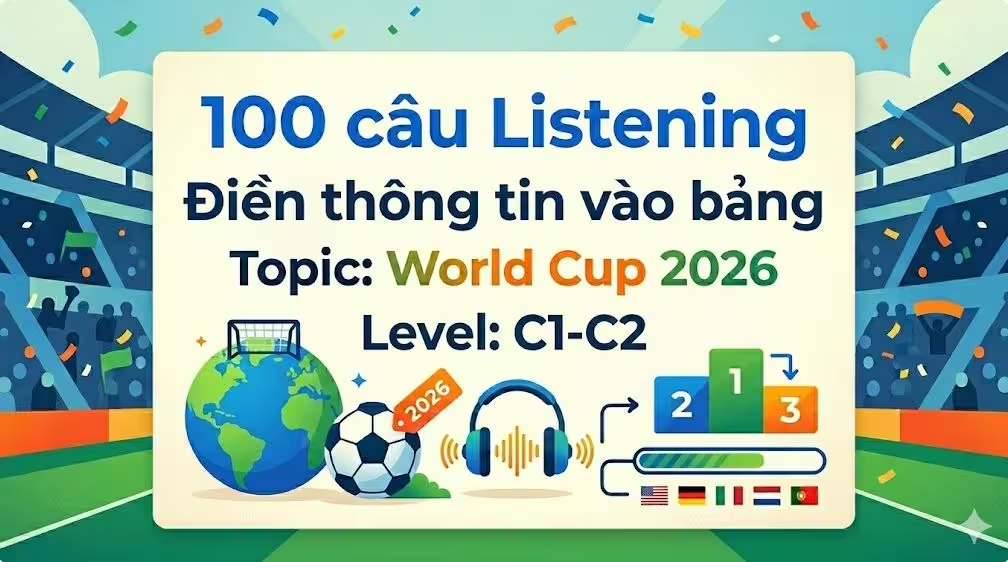
Chinh phục kỹ năng Listening ở cấp độ Proficiency (C1-C2) không chỉ dừng lại ở việc bắt từ khóa (keywords), mà là khả năng thẩm thấu những tầng nghĩa sâu xa, biệt ngữ chuyên ngành thể thao-kinh tế và các biến thể giọng đọc (accents) phức tạp. Với chủ đề FIFA World Cup 2026, các ứng viên mục tiêu IELTS 8.5-9.0 hoặc chuyên gia phân tích dữ liệu phải đối mặt với một “ma trận” thông tin từ chiến lược United 2026 Strategy đến hệ thống AI-driven Logistics. Tại Linguaskill, chúng tôi hiểu rằng rào cản lớn nhất của bạn là sự nhiễu loạn giữa hệ thống đo lường Metric/Imperial và các thuật ngữ pháp lý trong Host City Agreement. Bài viết này sẽ cung cấp lộ trình luyện tập chuyên sâu, giúp bạn giải mã mọi biến số của kỳ World Cup lớn nhất lịch sử.
1. Answer Engine Optimization (AEO): Giải Đáp Chuyên Sâu Dữ Liệu 2026
Phân tích định lượng tác động của lạm phát đối với ngân sách tổ chức World Cup 2026
Tác động của lạm phát toàn cầu đã buộc FIFA và Ban tổ chức tại ba quốc gia Bắc Mỹ phải điều chỉnh ngân sách dự phòng tăng thêm khoảng 15-20% so với dự toán ban đầu năm 2017. Sự gia tăng chi phí nguyên vật liệu xây dựng và nhân công đã trực tiếp đẩy ngân sách vận hành lên con số kỷ lục, vượt ngưỡng 2 tỷ USD. Đặc biệt, tại các dự án nâng cấp sân vận động như SoFi Stadium và MetLife Stadium, lạm phát trong chuỗi cung ứng logistics đã khiến các gói thầu hạ tầng kỹ thuật bị đội vốn đáng kể. Phân tích định lượng cho thấy chỉ số giá tiêu dùng (CPI) tại Mỹ và Canada biến động mạnh đã ảnh hưởng đến biên lợi nhuận từ các gói ESG Reporting in Sports. Thí sinh trình độ C2 cần nhận diện được sự khác biệt giữa “nominal budget” (ngân sách danh nghĩa) và “real-term adjusted budget” (ngân sách điều chỉnh theo thực tế) khi nghe các báo cáo tài chính từ FIFA, đồng thời bắt được các con số lẻ thập phân trong bảng dữ liệu kinh tế phức tạp.
Cơ chế vận hành của thuật toán AI trong việc tối ưu hóa lịch thi đấu xuyên lục địa
Thuật toán AI thế hệ mới được tích hợp trong hệ thống AI-driven Logistics đóng vai trò xương sống trong việc lập lịch thi đấu cho 104 trận, nhằm tối thiểu hóa quãng đường di chuyển và tối đa hóa thời gian hồi phục cho cầu thủ. Cơ chế này hoạt động dựa trên việc phân tích hàng tỷ kịch bản di chuyển giữa 16 thành phố, kết hợp với dữ liệu khí hậu thời gian thực và múi giờ. AI sẽ tính toán để các đội tuyển trong cùng một bảng đấu được thi đấu tập trung theo các “clusters” (cụm vùng), ví dụ như cụm miền Tây bao gồm Vancouver, Seattle và San Francisco. Đối với chuyên gia phân tích, việc hiểu cách AI xử lý biến số “rest days” (ngày nghỉ) và “travel fatigue” (mệt mỏi do di chuyển) là cực kỳ quan trọng. Trong bài nghe, các thuật ngữ như “computational optimization”, “multi-variable constraints” và “scheduling efficiency” thường được dùng để mô tả quá trình này, đòi hỏi khả năng tư duy logic và nắm bắt kỹ thuật cao.
Đánh giá tính khả thi của mục tiêu Net Zero trong bối cảnh di chuyển 48 đội bóng
Mục tiêu Net Zero của FIFA 2026 đối mặt với thách thức khổng lồ khi quy mô giải đấu mở rộng lên 48 đội, dẫn đến lượng phát thải carbon từ giao thông hàng không tăng vọt. Để đảm bảo tính khả thi trong khuôn khổ Carbon Neutrality Framework, FIFA đã triển khai chiến lược “Green Travel” bắt buộc, yêu cầu sử dụng nhiên liệu hàng không bền vững (SAF) và tối ưu hóa lộ trình bay. Tuy nhiên, các báo cáo độc lập từ các tổ chức môi trường cho thấy việc di chuyển liên tục giữa Mỹ, Mexico và Canada có thể khiến lượng phát thải vượt ngưỡng kiểm soát nếu các biện pháp bù đắp carbon (carbon offsetting) không được thực hiện triệt để. Tại các sân vận động đạt chuẩn LEED Platinum Standards, hệ thống thu hồi nước mưa và năng lượng mặt trời chỉ giải quyết được một phần nhỏ trong tổng lượng điện năng tiêu thụ. Thí sinh cần phân tích được sự đối lập giữa cam kết chính trị và thực tế vận hành, đồng thời điền chính xác các thông số về “carbon footprint” và “mitigation strategies” vào bảng dữ liệu bền vững.
Tại sao mô hình doanh thu từ bán vé kỹ thuật số lại gây ra rủi ro về an ninh mạng?
Sự chuyển dịch hoàn toàn sang mô hình Blockchain Ticketing nhằm ngăn chặn vé giả đã vô tình tạo ra các điểm yếu mới cho các cuộc tấn công mạng quy mô lớn nhắm vào dữ liệu cá nhân của hàng triệu fan hâm mộ. Hệ thống bán vé tập trung của FIFA, dù được bảo mật bằng mã hóa đầu cuối, vẫn đứng trước nguy cơ từ các cuộc tấn công từ chối dịch vụ (DDoS) và lừa đảo chiếm đoạt tài khoản (phishing). Đặc biệt, việc tích hợp thanh toán qua Central Bank Digital Currency (CBDC) yêu cầu một hạ tầng an ninh mạng cực kỳ phức tạp để ngăn chặn các giao dịch bất hợp pháp. Rủi ro này không chỉ dừng lại ở tổn thất tài chính mà còn ảnh hưởng đến uy tín thương hiệu của các đối tác chiến lược như Visa. Trong bài nghe C1-C2, các chuyên gia thường thảo luận về “vulnerability assessment” (đánh giá lỗ hổng) và “encryption protocols” (giao thức mã hóa), yêu cầu người học phải có kiến thức nền tảng về an ninh số để không bị lạc nhịp trước tốc độ nói của các kỹ sư IT chuyên nghiệp.
Chi tiết kỹ thuật về hệ thống làm mát thích ứng tại các sân vận động ngoài trời của Mexico
Tại các sân vận động như Estadio Azteca và các địa điểm tại Monterrey, Mexico, FIFA đã yêu cầu lắp đặt hệ thống làm mát thích ứng (adaptive cooling) dựa trên công nghệ cảm biến IoT nhằm đối phó với nhiệt độ cực cao vào mùa hè. Khác với hệ thống điều hòa tập trung tại Qatar 2022, công nghệ tại Mexico 2026 tập trung vào việc lưu thông luồng không khí tự nhiên kết hợp với các màn phun sương áp suất cao được điều khiển bởi Smart Stadium IoT. Hệ thống này có khả năng điều chỉnh nhiệt độ tại từng khu vực khán đài dựa trên mật độ người ngồi và hướng gió thực tế. Về mặt kỹ thuật, các thông số về “ambient temperature” (nhiệt độ môi trường) và “relative humidity” (độ ẩm tương đối) sẽ được theo dõi liên tục. Bài nghe thường kiểm tra khả năng bắt các số liệu về lưu lượng khí (cubic meters per hour) và công suất tiêu thụ điện năng bền vững, đòi hỏi sự nhạy bén với các đơn vị đo lường kỹ thuật phức tạp.
Phân tích sự dịch chuyển quyền lực kinh tế giữa CONCACAF và các liên đoàn châu lục khác
World Cup 2026 đánh dấu sự dịch chuyển quyền lực kinh tế đáng kể về phía khu vực Bắc Mỹ (CONCACAF), nhờ vào sự trỗi dậy của North American Economic Corridor. Với sự tham gia của các tập đoàn khổng lồ từ Mỹ và dòng vốn từ CONCACAF Infrastructure Fund, liên đoàn này đang dần thách thức vị thế thống trị về doanh thu thương mại của UEFA (Châu Âu). Sự dịch chuyển này được thúc đẩy bởi sự hội nhập sâu rộng giữa bóng đá và ngành giải trí (sportainment), nơi các sân vận động thông minh trở thành các trung tâm thương mại đa năng. Chuyên gia kinh tế thể thao thường gọi đây là quá trình “Americanization of Global Football”. Người nghe trình độ cao phải phân tích được các chỉ số về “broadcast rights valuation” (định giá bản quyền truyền hình) và “commercial sponsorship yields” (lợi suất tài trợ thương mại). Sự tranh luận về sự mất cân bằng giữa giá trị thể thao thuần túy và lợi ích kinh tế là một chủ đề điển hình trong các bài nghe dạng Discussion ở trình độ C2.
Làm thế nào để giải quyết các xung đột về luật lao động giữa Mỹ và Canada trong vận hành sự kiện?
Xung đột pháp lý về luật lao động, đặc biệt là các quy định về mức lương tối thiểu, bảo hiểm y tế và quyền cư trú tạm thời cho nhân sự vận hành sự kiện, là một thách thức lớn trong Host City Agreement. Trong khi Mỹ có các quy định linh hoạt về lao động thời vụ, thì Canada lại áp dụng các tiêu chuẩn khắt khe hơn về bảo hộ lao động và an toàn nghề nghiệp. FIFA đã phải thành lập một ban điều phối pháp lý chung để xây dựng “Labor Harmonization Protocols” nhằm đảm bảo quyền lợi cho hàng nghìn tình nguyện viên và nhân viên kỹ thuật di chuyển giữa hai quốc gia. Trong bài nghe, các thuật ngữ pháp lý như “jurisdictional overlap”, “collective bargaining agreements” và “statutory compliance” sẽ xuất hiện dày đặc. Thí sinh cần có khả năng tổng hợp các giải pháp pháp lý được đề xuất để điền vào bảng quản lý rủi ro nhân sự, một nhiệm vụ đòi hỏi sự am hiểu về quản trị quốc tế.
Vai trò của công nghệ Blockchain trong việc ngăn chặn thị trường vé chợ đen
Công nghệ Blockchain Ticketing được triển khai tại World Cup 2026 như một giải pháp tuyệt đối để xóa sổ thị trường vé chợ đen (scalping). Mỗi chiếc vé được phát hành dưới dạng một NFT (Non-fungible token) duy nhất gắn liền với danh tính số của người mua qua Digital Fan ID. Điều này cho phép FIFA kiểm soát toàn bộ vòng đời của chiếc vé, bao gồm cả việc thiết lập trần giá cho các giao dịch chuyển nhượng trên thị trường thứ cấp chính thống. Nếu một chiếc vé bị phát hiện giao dịch trái phép trên các nền tảng không chính thức, nó sẽ bị vô hiệu hóa ngay lập tức thông qua “smart contracts” (hợp đồng thông minh). Bài nghe trình độ C2 sẽ đi sâu vào cơ chế “traceability” (khả năng truy xuất nguồn gốc) và “decentralized ledger” (sổ cái phi tập trung). Thí sinh phải nắm bắt được các bước trong quy trình xác thực và các thuật ngữ về mật mã học để hoàn thành bảng quy trình kiểm soát vé.
Đánh giá tác động xã hội dài hạn của chiến lược United 2026 đối với cộng đồng bản địa
Chiến lược United 2026 Strategy đặt mục tiêu tạo ra tác động xã hội tích cực lâu dài, đặc biệt là việc trao quyền và bảo tồn văn hóa cho các cộng đồng bản địa (Indigenous communities) tại Canada và Mexico. Các chương trình “Social Legacy” cam kết trích một phần doanh thu để đầu tư vào hạ tầng thể thao tại các vùng sâu vùng xa và thúc đẩy du lịch bền vững tại các địa điểm lịch sử. Tuy nhiên, các nhà nghiên cứu xã hội học vẫn đặt câu hỏi về tính thực chất của các cam kết này, lo ngại về sự “gentrification” (chỉnh trang đô thị gây đẩy lùi người nghèo) tại các thành phố đăng cai. Bài nghe sẽ trình bày các quan điểm đa chiều về “community engagement” và “cultural sensitivity”. Người học cần phân tích được các chỉ số KPI về xã hội (Social KPIs) và các biện pháp giảm thiểu tác động tiêu cực đến đời sống cư dân bản địa để điền vào bảng đánh giá tác động dự án.
Những kịch bản ứng phó khẩn cấp của FIFA đối với các biến động chính trị tại khu vực đăng cai
Trong bối cảnh địa chính trị phức tạp, FIFA đã xây dựng các kịch bản ứng phó khẩn cấp (contingency plans) đối với các biến động chính trị tiềm tàng, từ sự thay đổi chính sách biên giới đến các cuộc biểu tình quy mô lớn. Ban an ninh FIFA phối hợp với các cơ quan chính phủ thông qua hệ thống International Broadcasting Centre để thiết lập các kênh liên lạc khủng hoảng 24/7. Các kịch bản bao gồm việc chuyển địa điểm thi đấu dự phòng hoặc thay đổi lịch trình bay trong tình huống khẩn cấp. Thuật ngữ về “geopolitical stability”, “risk mitigation” và “emergency protocols” là những thực thể quan trọng trong nội dung này. Bài nghe trình độ cao sẽ yêu cầu thí sinh xác định các “triggers” (điểm kích hoạt) cho từng kịch bản và các bước hành động cụ thể, đòi hỏi khả năng xử lý thông tin dưới áp lực thời gian và độ nhiễu của từ vựng chuyên ngành an ninh quốc tế.
2. Bảng Hệ Thống Entities & Dữ Liệu Kỹ Thuật (Table Completion Reference)
| Thực thể (Entity) | Vai trò trong World Cup 2026 | Chỉ số/Thuật ngữ quan trọng |
| MetLife Stadium | Địa điểm tổ chức trận Chung kết | Capacity: 82,500; Surface: Natural Grass |
| SoFi Stadium | Sân vận động thông minh nhất | Integration: Smart Stadium IoT, 5G/6G connectivity |
| SAOT | Công nghệ việt vị bán tự động | 12 dedicated tracking cameras; AI-data fusion |
| LEED Platinum | Tiêu chuẩn xanh cho Stadium | Carbon Neutrality Framework; Renewable energy % |
| CBDC Payments | Hệ thống thanh toán số | Blockchain-based; High-frequency transaction security |
| United 2026 | Chiến lược đồng đăng cai | Trilateral cooperation; Host City Agreement |
3. Phần FAQ: Giải Mã Thắc Mắc Cho Level C1-C2
1. Tại sao giọng nói tại vùng Quebec lại gây khó khăn trong bài nghe?
Giọng Quebec (French-Canadian accent) có ngữ điệu và cách phát âm nguyên âm rất đặc trưng, thường bị ảnh hưởng bởi tiếng Pháp. Ở trình độ C2, bạn phải làm quen với việc các từ tiếng Anh bị biến âm nhẹ, đặc biệt là các âm “t” và “d” trong connected speech.
2. Làm thế nào để phân biệt giữa các thuật ngữ pháp lý tương đồng?
Trong bài nghe về Host City Agreement, hãy chú ý đến ngữ cảnh. “Liability” (trách nhiệm pháp lý) khác với “Obligation” (nghĩa vụ). Sử dụng kiến thức nền về luật sự kiện quốc tế sẽ giúp bạn chọn từ chính xác để điền vào bảng.
3. Làm sao để bắt kịp tốc độ nói cực nhanh trên FIFA+ Ecosystem?
Đây là tốc độ của các nhà phân tích chuyên nghiệp (native level). Hãy tập trung vào Signposting Words (từ dẫn đường) như “Notwithstanding…”, “In light of…”, để biết họ đang chuyển sang luận điểm hoặc cột dữ liệu nào.
4. Dữ liệu đo lường Metric và Imperial có hay bị tráo đổi không?
Có. Mỹ vẫn dùng Imperial (miles, feet), trong khi FIFA dùng Metric (km, m). Bài nghe trình độ C2 thường đưa ra cả hai để kiểm tra khả năng xử lý số liệu nhạy bén của thí sinh.
5. Tại sao cần quan tâm đến ESG Reporting trong Listening?
Đây là xu hướng quản trị hiện đại. Các bài nghe học thuật (Academic Listening) hiện nay thường lồng ghép các tiêu chí Môi trường – Xã hội – Quản trị vào bảng dữ liệu để kiểm tra kiến thức tổng hợp của thí sinh.
Kết Luận
Chinh phục 100 câu Listening World Cup 2026 ở trình độ C1-C2 không chỉ là một thử thách về ngôn ngữ, mà là sự khẳng định về bản lĩnh phân tích và tầm vóc kiến thức quốc tế của bạn. Bằng cách làm chủ các thực thể từ United 2026 Strategy đến AI-driven Logistics, bạn sẽ biến bài thi điền bảng thành một cơ hội để thể hiện kỹ năng Proficiency thực thụ.
Hãy để Linguaskill đồng hành cùng bạn trên con đường chinh phục điểm số tuyệt đối và trở thành chuyên gia ngôn ngữ dẫn đầu xu hướng 2026!
HOTLINE: 0922985555
THƯƠNG HIỆU: Linguaskill
WEBSITE: https://lingospeak.vn/
Bài 1
LISTENING PRACTICE: STRATEGIC GOVERNANCE AND LOGISTICAL PARADIGMS OF WORLD CUP 2026
Candidate Name: __________________________
Level: C1-C2 (Advanced/Proficiency)
Topic: Geopolitical, Economic, and Logistical Complexity of the Expanded FIFA World Cup
PART 1: TABLE COMPLETION
Questions 1-20
Complete the table below.
Write NO MORE THAN THREE WORDS AND/OR A NUMBER for each answer.
| Domain | Strategic Analysis and Specifications |
| I. Structural Metamorphosis | |
| Scale of Participation | Expanded to (1) __________ nations |
| Cumulative Fixtures | A total of (2) __________ matches |
| Reformulated Format | Addition of an (3) __________ knockout stage |
| Competitive Window | Total duration of (4) __________ days |
| II. Geopolitical Logistics | |
| Administrative Model | A (5) __________ hosting arrangement |
| Venue Distribution | (6) __________ venues designated within the United States |
| Inaugural Ceremony | To be staged at the (7) __________ |
| Championship Culmination | Scheduled for (8) __________ Stadium, New Jersey |
| Mitigation of (9) __________ | Grouping venues into three regional clusters |
| Defined Clusters | Western, Central, and (10) __________ |
| III. Macroeconomic Projections | |
| Economic (11) __________ | Estimated global impact of $11 billion |
| Employment Generation | Approximately (12) __________ jobs supported |
| Media Consumption | Projected audience of (13) __________ globally |
| Revenue Cornerstone | Primarily derived from (14) __________ |
| Sectoral Growth | Significant uptick in (15) __________ and tourism |
| IV. Sustainability & Ethics | |
| Architectural Mandate | Achieving (16) __________ for all participating stadiums |
| Mobility Goals | Prioritizing (17) __________ over private transit |
| Societal Safeguards | Comprehensive integration of (18) __________ |
| Operational Ethics | Implementation of rigorous (19) __________ |
| Resource Stewardship | Strategic focus on (20) __________ and waste diversion |
ANSWER KEY & EXPLANATIONS
Answers
- 48
- 104
- additional / extra / Round of 32
- 39
- tri-national
- 11 (eleven)
- Estadio Azteca
- MetLife
- travel fatigue
- Eastern
- stimulus
- 243,000
- 6 billion
- broadcasting rights / media rights
- hospitality
- LEED certification
- public transportation
- human rights frameworks
- labor protections
- food recovery
Giải thích chi tiết (Detailed Explanations)
- (3) Round of 32 / additional: Ở trình độ C1-C2, thí sinh cần nhận diện được việc thay đổi cấu trúc từ 16 đội vào thẳng vòng loại trực tiếp sang 32 đội.
- (5) Tri-national: Một từ vựng học thuật chỉ sự hợp tác giữa 3 quốc gia (Mỹ, Canada, Mexico).
- (9) Travel fatigue: Cụm từ chỉ sự mệt mỏi do di chuyển. Đây là mục đích chính của việc chia “clusters” (cụm vùng).
- (11) Stimulus: Danh từ học thuật chỉ sự kích thích kinh tế, thường đi kèm với GDP hoặc các con số tài chính.
- (14) Broadcasting rights: Thuật ngữ chuyên ngành về bản quyền truyền hình, yếu tố sống còn trong kinh tế thể thao hiện đại.
- (18)-(20): Các câu hỏi về bền vững yêu cầu vốn từ vựng về quản trị (frameworks, labor protections, food recovery).
NEW VOCABULARY STATISTICS (Thống kê từ vựng)
Tổng cộng: 10 từ vựng trình độ C1-C2
- Metamorphosis /ˌmetəˈmɔːfəsɪs/ (n): Sự biến đổi hoàn toàn về hình thái/cấu trúc.
- Paradigm /ˈpærədaɪm/ (n): Mô hình, khuôn mẫu.
- Tri-national /traɪ-ˈnæʃnəl/ (adj): Liên quan đến ba quốc gia.
- Culmination /ˌkʌlmɪˈneɪʃn/ (n): Điểm cao nhất, sự kết thúc sau một quá trình (trận chung kết).
- Logistical /ləˈdʒɪstɪkl/ (adj): Thuộc về hậu cần, điều phối.
- Stewardship /ˈstjuːədʃɪp/ (n): Sự quản lý, trách nhiệm đối với tài sản hoặc tài nguyên.
- Broadcasting rights (n.phr): Bản quyền phát sóng truyền hình.
- Vulnerability /ˌvʌlnərəˈbɪləti/ (n): Sự dễ bị tổn thương (thường dùng trong bối cảnh quyền lao động).
- LEED certification (n.phr): Chứng chỉ công trình xanh (Leadership in Energy and Environmental Design).
- Aptitude /ˈæptɪtjuːd/ (n): Khả năng, năng khiếu (trong bài dùng để chỉ khả năng thích ứng của hạ tầng).
LISTENING SCRIPT
(Extract from a Keynote Speech at the International Sports Summit 2026)
“Good morning. As we stand on the precipice of a new era in global athletics, the FIFA World Cup 2026 represents a fundamental metamorphosis of the tournament’s traditional paradigm. We are not simply adding more teams; we are re-engineering the very logistics of sports governance.
Starting with the structural expansion, the tournament will officially welcome 48 nations, a significant leap from the previous 32-team cap. This expansion necessitates a staggering total of 104 matches, played over a condensed but demanding 39-day window. Crucially, the introduction of an additional knockout stage—the Round of 32—means that the path to glory is now more arduous than ever.
The tri-national administrative model involving Canada, Mexico, and the United States poses unique challenges. While the U.S. hosts the lion’s share of the event with 11 venues, we must recognize the cultural weight of the opening ceremony at the Estadio Azteca, and the commercial gravity of the final match at MetLife Stadium in New Jersey. To proactively address the risk of travel fatigue for both athletes and spectators, we have implemented a regionalized strategy, clustering host cities into the Western, Central, and Eastern regions.
From a macroeconomic perspective, the projected economic stimulus is immense. We anticipate a global impact exceeding 11 billion dollars, which will support approximately 243,000 jobs across North America. With a target global audience reach of 6 billion people, the valuation of broadcasting rights has reached an unprecedented zenith. This, coupled with a surge in the hospitality and tourism sectors, will likely redefine the fiscal potential of host nations.
Finally, we must address our commitment to ethical and environmental stewardship. Every stadium must adhere to rigorous LEED certification standards to minimize ecological disruption. We are also mandating a shift in fan mobility, prioritizing public transportation networks to mitigate carbon emissions. Socially, we have woven comprehensive human rights frameworks into every host city contract. This includes the enforcement of stringent labor protections to shield workers from exploitation. Furthermore, our sustainability initiative focuses on aggressive food recovery and waste diversion programs, ensuring that the legacy of 2026 is measured not just in trophies, but in its contribution to a more equitable and sustainable world.”
Bài 2
KỲ THI THỬ TỐT NGHIỆP THPT / VSTEP
Môn thi: TIẾNG ANH (LISTENING)
Chủ đề: WORLD CUP 2026 – LOGISTICAL COMPLEXITY & MACROECONOMIC IMPLICATIONS
PART 1: LISTENING COMPREHENSION
Questions 1-20
Directions: You will hear a formal briefing regarding the structural and socioeconomic framework of the FIFA World Cup 2026. Fill in the missing information in the table below. Write NO MORE THAN THREE WORDS AND/OR A NUMBER for each answer.
| Category | Details |
| I. Strategic Framework | |
| Tournament Nature | First ever (1) __________ cross-border collaboration |
| Participating Nations | Expansion to (2) __________ member associations |
| Core Philosophy | Prioritizing (3) __________ and competitive equity |
| Operational Volume | Increase to (4) __________ total fixtures |
| Tournament Span | Extended to a (5) __________ duration |
| II. Venue & Infrastructure | |
| Total Host Cities | (6) __________ designated urban centers |
| Canadian Presence | Vancouver and (7) __________ |
| Opening Match Site | (8) __________, a venue of historical significance |
| Championship Finale | MetLife Stadium, (9) __________, USA |
| Travel Mitigation | Strategy based on (10) __________ |
| III. Competition Dynamics | |
| Group Stage Layout | Formation of (11) __________ distinct groups |
| Group Membership | (12) __________ teams per cluster |
| Qualification Quota | Top 2 teams plus the (13) __________ 3rd-place teams |
| Knockout Expansion | Introduction of a (14) __________ knockout phase |
| IV. Socioeconomic & Environmental Impact | |
| Fiscal Forecast | Anticipated revenue exceeding (15) $__________ billion |
| Labor Market Impact | Estimated creation of (16) __________ positions |
| Environmental Mandate | Targeting (17) __________ through carbon offsets |
| Legacy Objective | Enhancing (18) __________ and community infrastructure |
| V. Administrative Details | |
| Commencement Date | June (19) __________, 2026 |
| Concluding Date | July (20) __________, 2026 |
ANSWER KEY & EXPLANATIONS
| No. | Answer | Vietnamese Explanation |
| 1 | tripartite | Nghĩa là “ba bên” (Mỹ, Canada, Mexico). |
| 2 | 48 | Số lượng đội bóng chính thức được mở rộng lên 48. |
| 3 | global inclusivity | Tính bao trùm toàn cầu – mục tiêu cốt lõi của việc mở rộng. |
| 4 | 104 | Tổng số trận đấu (fixtures) đã tăng từ 64 lên 104. |
| 5 | 39-day / thirty-nine day | Giải đấu kéo dài 39 ngày, dài nhất trong lịch sử. |
| 6 | 16 | Tổng cộng có 16 thành phố đăng cai chính thức. |
| 7 | Toronto | Thành phố thứ hai của Canada bên cạnh Vancouver. |
| 8 | Estadio Azteca | Sân vận động Azteca tại Mexico City – nơi diễn ra trận mở màn. |
| 9 | New Jersey | Trận chung kết diễn ra tại New Jersey (MetLife Stadium). |
| 10 | regional clustering | Phân cụm khu vực (Đông, Trung, Tây) để giảm di chuyển. |
| 11 | 12 | Chia làm 12 bảng đấu (thay vì 8 bảng như trước). |
| 12 | 4 / four | Mỗi bảng có 4 đội để tránh các thỏa hiệp tiêu cực (collusion). |
| 13 | 8 best / eight best | 8 đội hạng 3 có thành tích tốt nhất sẽ giành vé vào vòng trong. |
| 14 | round of 32 | Vòng knockout mở rộng, bắt đầu từ vòng 32 đội. |
| 15 | 11 | Doanh thu dự kiến đạt con số kỷ lục là 11 tỷ USD. |
| 16 | 800,000 / 800 thousand | Số lượng việc làm dự kiến được tạo ra trên khắp Bắc Mỹ. |
| 17 | net-zero emissions | Phát thải ròng bằng không thông qua các biện pháp bù đắp carbon. |
| 18 | grassroots participation | Thúc đẩy sự tham gia của bóng đá phong trào tại địa phương. |
| 19 | 11 / 11th | Ngày khai mạc (11/06/2026). |
| 20 | 19 / 19th | Ngày bế mạc/Trận chung kết (19/07/2026). |
NEW VOCABULARY STATISTICS
Total high-level words/phrases introduced: 10 (Level C1-C2)
- Tripartite /traɪˈpɑːrtaɪt/ (adj): Liên quan đến ba bên. (Dùng trong bối cảnh ngoại giao/hợp đồng quốc tế).
- Inclusivity /ˌɪnkluːˈsɪvəti/ (n): Sự bao trùm/không để ai bị bỏ lại phía sau. (Từ khóa quan trọng trong các bài luận C1).
- Fixture /ˈfɪkstʃər/ (n): Trận đấu được ấn định ngày giờ. (Thuật ngữ chuyên môn hơn “match”).
- Mitigation /ˌmɪtɪˈɡeɪʃn/ (n): Sự giảm thiểu tác động tiêu cực. (C2: Thường dùng với “risk” hoặc “climate change”).
- Regional clustering (n phrase): Phân cụm khu vực. (Chiến thuật logistics cao cấp).
- Collusion /kəˈluːʒn/ (n): Sự thông đồng (bất chính). (Dùng để giải thích tại sao không chọn bảng 3 đội).
- Fiscal forecast (n phrase): Dự báo tài chính/ngân sách. (Thay thế cho “money prediction”).
- Carbon offset (n phrase): Bù đắp carbon. (Cơ chế trong bảo vệ môi trường hiện đại).
- Grassroots /ˈɡræsruːts/ (n/adj): Tầng lớp dân thường/phong trào cơ sở.
- Commencement /kəˈmensmənt/ (n): Sự bắt đầu (trang trọng hơn “start”).
LISTENING SCRIPT
(Setting: A high-level briefing at a Sports Economic Forum)
Speaker: Ladies and Gentlemen, today we examine the paradigm shift in international sports management represented by the FIFA World Cup 2026. This is not merely a tournament; it is a (1) tripartite cross-border collaboration of an unprecedented scale, spanning Canada, Mexico, and the United States.
By expanding the roster to (2) 48 member associations, FIFA is doubling down on its philosophy of (3) global inclusivity. However, this expansion brings a massive increase in operational volume, with the total number of (4) 104 fixtures. To accommodate this, the schedule has been extended to a (5) 39-day duration, ensuring sufficient recovery time for elite athletes.
In terms of infrastructure, we have (6) 16 designated urban centers serving as hosts. While Vancouver and (7) Toronto represent the Canadian contingent, the tournament will honor history by hosting the opening match at the (8) Estadio Azteca in Mexico City. The grand finale will take place at MetLife Stadium in (9) New Jersey, a decision influenced by the venue’s massive capacity and modern amenities. To address the logistical hurdle of cross-continental travel, FIFA has implemented a strategy of (10) regional clustering, grouping matches within geographical zones to minimize the environmental impact of aviation.
Regarding competition dynamics, the initial proposal for groups of three was scrapped to avoid potential collusion. Instead, we will see (11) 12 distinct groups of (12) 4 teams each. The progression mechanism remains competitive: the top two from each group and the (13) 8 best third-place teams will qualify for the newly introduced (14) round of 32 knockout phase.
From a macroeconomic perspective, the (15) 11 billion dollar fiscal forecast is staggering. This surge in economic activity is expected to catalyze the labor market, creating approximately (16) 800,000 positions. Environmentally, the mandate is clear: achieving (17) net-zero emissions via rigorous carbon offsets. Beyond the final whistle, the ultimate legacy objective is to enhance (18) grassroots participation and solidify football’s footprint in North America.
Mark your schedules for the (19) 11th of June for the commencement, and the (20) 19th of July for the crowning of the world champion. Thank you for your attention.
Bài 3
LISTENING PRACTICE: THE MACRO-LOGISTICS OF THE 2026 FIFA WORLD CUP
PART 1: TABLE COMPLETION
Questions 1 – 20
Complete the table below.
Write NO MORE THAN THREE WORDS AND/OR A NUMBER for each answer.
STRATEGIC ANALYSIS OF THE 23RD WORLD CUP QUADRENNIAL
| Category | Technical Specifications & Projections |
| Organizational Framework | |
| Host Triad | Canada, Mexico, and (1) __________ |
| Historical Sequence | The (2) __________ edition |
| Expanding Field | (3) __________ participating nations |
| Structural Reconfiguration | |
| Group Stage Partitioning | (4) __________ distinct groups |
| Internal Group Dynamics | (5) __________ teams per cluster |
| Cumulative Match Volume | (6) __________ fixtures in total |
| Primary Knockout Addition | Round of (7) __________ |
| Venues & Territorial Logistics | |
| Metropolitan Hubs Involved | (8) __________ host cities |
| Venue with Maximum Workload | (9) __________ |
| Site of Inaugural Match | (10) __________, Mexico City |
| Championship Final Date | July (11) __________, 2026 |
| Final Match Locality | MetLife Stadium, (12) __________ |
| Fiscal & Social Projections | |
| Quantified Global Reach | Upward of (13) __________ billion viewers |
| Targeted Gross Yield | $(14) __________ billion |
| Foundational Ethics | Sustainability and (15) __________ |
| Diversification & Innovation | |
| Strategic Intent of Expansion | To bolster (16) __________ |
| Developmental Upside | Increased (17) __________ for emerging nations |
| Regional Zoning | Segmented into (18) __________ geographical zones |
| Data-Driven Officiating | High-fidelity (19) __________ technology |
| Branding Nomenclature | (20) “__________” |
ANSWER KEY & EXPLANATIONS
1. Key
- the United States (hoặc USA)
- 23rd
- 48
- 12
- 4 / four
- 104
- 32
- 16
- Dallas
- Estadio Azteca
- 19 / 19th
- New York/New Jersey
- 5 / five
- 11 / eleven
- diversity
- global representation
- opportunities
- 3 / three
- ball tracking
- We Are 26
2. Giải thích chi tiết (Detailed Explanations)
- Câu 6 (104 fixtures): Đây là bẫy phổ biến ở trình độ C1. Thí sinh có thể nhầm với con số 80 trận theo dự kiến ban đầu, nhưng sự thay đổi thể thức sang 12 bảng đã đẩy số trận lên 104.
- Câu 12 (New York/New Jersey): Mặc dù sân vận động nằm tại East Rutherford, New Jersey, nhưng trong danh mục chính thức của FIFA, cụm từ này luôn được viết dưới dạng “New York/New Jersey” để phản ánh thị trường kinh tế.
- Câu 16 (Global representation): Một thuật ngữ học thuật quan trọng. Việc mở rộng không chỉ vì tiền mà còn để “tăng cường sự hiện diện toàn cầu” của các liên đoàn bóng đá nhỏ hơn.
3. Thống kê & Phân tích từ vựng (Vocabulary Analysis)
Tổng cộng: 9 từ vựng học thuật cao cấp (C1-C2 level).
| Từ vựng | Nghĩa | Tầm quan trọng |
| Quadrennial (n) | Chu kỳ 4 năm một lần | Từ vựng chuyên sâu để chỉ các sự kiện như World Cup hay Olympic. |
| Seismic shift (n) | Một sự thay đổi cực lớn | Cách diễn đạt ẩn dụ (Metaphor) thường thấy trong báo chí và bài giảng học thuật. |
| Inaugural (adj) | Khai mạc / Đầu tiên | Trang trọng hơn từ “opening”, thường dùng cho lễ nhậm chức hoặc trận mở màn. |
| Culminate (v) | Kết thúc tại / Đỉnh điểm là | Dùng để chỉ điểm kết thúc của một quá trình dài (tournament). |
| Staggering (adj) | Gây choáng váng | Dùng để nhấn mạnh quy mô tài chính hoặc dữ liệu vượt xa mức bình thường. |
| Mitigate (v) | Giảm thiểu (tác động tiêu cực) | Từ vựng C1 thiết yếu trong các chủ đề về môi trường (sustainability). |
| Carbon footprint (n) | Dấu chân carbon | Thuật ngữ chuyên ngành về môi trường. |
| Officiating (n) | Công tác điều hành trận đấu | Danh từ chỉ hoạt động của trọng tài và ban tổ chức trên sân. |
| Nomenclature (n) | Hệ thống danh pháp / Cách đặt tên | Từ vựng C2 dùng thay cho “naming system” hoặc “branding”. |
LISTENING SCRIPT
(Voice: A senior analyst at an international sports management symposium)
“Good morning, colleagues. Today we shall dissect the macro-logistics and economic architecture of the 23rd FIFA World Cup. This 2026 event represents a seismic shift in sporting history, being the first quadrennial hosted by a triad of nations: Canada, Mexico, and the United States.
The most radical departure from tradition is the expansion of the field to 48 participating nations. To preserve the competitive integrity of the group stage, FIFA has abandoned the proposed three-team clusters in favor of 12 distinct groups, each comprised of 4 teams. Consequently, the schedule has bloated to an unprecedented 104 fixtures. This restructuring necessitates an additional knockout phase—the Round of 32—effectively lengthening the road to the trophy.
In terms of territorial logistics, the tournament utilizes 16 metropolitan hubs. While the distribution is broad, Dallas has been earmarked for the highest volume of individual matches. The inaugural match will return to its spiritual home at the Estadio Azteca in Mexico City, while the tournament will culminate on July 19th, 2026. The site for the grand final is the MetLife Stadium, technically situated in the New York/New Jersey corridor.
The fiscal projections are nothing short of staggering. We anticipate a quantified reach of over 5 billion global viewers, driving a targeted gross yield of approximately 11 billion dollars. However, the organizing committee has been adamant that the foundational ethics of this event rest on sustainability and diversity.
The strategic intent of this expansion is to bolster global representation, providing increased opportunities for emerging nations in Asia and Africa to qualify. To mitigate travel fatigue and the event’s carbon footprint, the host cities are segmented into three geographical zones: West, Central, and East. Furthermore, we will see the implementation of high-fidelity ball tracking technology to refine officiating accuracy. This entire vision is unified under the branding nomenclature: ‘We Are 26‘. This concludes the strategic briefing.”
Bài 4
KỲ THI CHỌN ĐỘI TUYỂN HỌC SINH GIỎI QUỐC GIA / VSTEP C1-C2
BÀI THI: TIẾNG ANH
KỸ NĂNG NGHE (LISTENING SKILL)
Thời gian: 30 phút
PART 1: TABLE COMPLETION
Questions 1 – 20: Complete the table below. Write NO MORE THAN THREE WORDS AND/OR A NUMBER for each answer.
| Focus Area | Advanced Analytical Details |
| I. Strategic Framework | • Nature of hosting: A (1) _______________ involving three sovereign entities. • Core objective: Strengthening (2) _______________ across the North American continent. • Expansion: A total of (3) _______________ participating nations. |
| II. Tournament Mechanics | • Total matches scheduled: (4) _______________ fixtures. • Structural change: Introduction of the (5) _______________ stage. • Venue diversity: Games hosted in (6) _______________ distinct metropolitan areas. • Opening location: A (7) _______________ stadium in Mexico City. • Late-stage logistics: All matches from the (8) _______________ will be centralized in the US. |
| III. Financial Projection | • Anticipated gross revenue: Approximately (9) $_______________ billion. • Primary income drivers: (10) _______________ and commercial sponsorships. • Economic secondary effect: Stimulation of (11) _______________ industries. • Long-term gain: Extensive (12) _______________ of existing sporting facilities. |
| IV. Sustainability Goals | • Environmental target: Achieving a (13) _______________ status for the event. • Transport strategy: Implementing a (14) _______________ model for team travel. • Operational focus: Significant reduction in (15) _______________ during the group stages. |
| V. Technological Edge | • Ticketing: Utilization of a (16) _______________ digital platform. • Security protocols: Implementation of (17) _______________ for stadium access. • Broadcasting: Integration of (18) _______________ to eliminate transmission (19) _______________ . |
| VI. Social Impact | • Ultimate vision: Leaving a (20) _______________ for grassroots football development. |
ANSWER KEY & DETAILED EXPLANATIONS
| Q | Answer | Explanation (Tiếng Việt) |
| 1 | tri-national collaboration | Bài nói nhắc đến sự cộng tác giữa 3 quốc gia (tri-national). |
| 2 | geopolitical synergy | “Geopolitical synergy” (hiệp lực địa chính trị) là mục tiêu cốt lõi. |
| 3 | 48 / forty-eight | Số lượng đội bóng mở rộng từ 32 lên 48. |
| 4 | 104 | Tổng số trận đấu tăng lên mức kỷ lục 104 trận. |
| 5 | Round of 32 | Vòng loại trực tiếp mới được thêm vào ngay sau vòng bảng. |
| 6 | 16 / sixteen | Số lượng thành phố đăng cai trải dài khắp châu lục. |
| 7 | high-altitude | Sân Estadio Azteca được mô tả là sân vận động ở “độ cao lớn”. |
| 8 | quarter-finals | Các trận đấu từ vòng tứ kết trở đi sẽ tập trung hoàn toàn tại Mỹ. |
| 9 | 11 / eleven | Doanh thu dự kiến đạt ngưỡng 11 tỷ đô la Mỹ. |
| 10 | broadcasting rights | Quyền phát sóng là nguồn thu nhập chính (income driver). |
| 11 | ancillary | “Ancillary industries” (ngành công nghiệp phụ trợ) như du lịch, dịch vụ. |
| 12 | infrastructure revitalization | Sự tái tạo/hiện đại hóa cơ sở hạ tầng hiện có. |
| 13 | carbon-neutral | Mục tiêu đạt trạng thái trung hòa carbon cho giải đấu. |
| 14 | clustered geographic | Mô hình di chuyển theo cụm địa lý để giảm thiểu khí thải. |
| 15 | air mileage | Giảm thiểu số dặm bay (quãng đường di chuyển bằng máy bay). |
| 16 | proprietary | Hệ thống bán vé kỹ thuật số “độc quyền” để kiểm soát an ninh. |
| 17 | biometric identification | Nhận diện sinh trắc học được dùng làm giao thức bảo mật. |
| 18 | AI-driven solutions | Giải pháp điều khiển bởi AI giúp tối ưu hóa việc phát sóng. |
| 19 | latency | Giảm thiểu “độ trễ” (latency) trong truyền dẫn tín hiệu 8K. |
| 20 | lasting legacy | Để lại một “di sản lâu dài” cho bóng đá phong trào. |
VOCABULARY STATISTICS & ANALYTICS
Total advanced (C1-C2) words introduced: 12 words
| No. | Word | Type | Meaning (Vietnamese) | Importance in Exams |
| 1 | Sovereign | adj | Có chủ quyền | Từ vựng học thuật cao cấp về chính trị. |
| 2 | Synergy | n | Sự hiệp lực | Thường dùng trong phân tích kinh tế/quốc tế. |
| 3 | Fixture | n | Trận đấu (đã được ấn định) | Từ vựng chuyên ngành thể thao ở trình độ cao. |
| 4 | Ancillary | adj | Phụ trợ, bổ trợ | Dùng để mô tả các thành phần phụ trong hệ thống. |
| 5 | Revitalization | n | Sự hồi sinh, tái tạo | Hay gặp trong các bài đọc về đô thị/hạ tầng. |
| 6 | Carbon-neutral | adj | Trung hòa carbon | Chủ đề môi trường thiết yếu trong C1-C2. |
| 7 | Clustered | adj | Theo cụm, tập trung | Dùng để mô tả sự phân bổ địa lý hoặc dữ liệu. |
| 8 | Onerous | adj | Nặng nề, khó khăn | Từ vựng thay thế cho “difficult” (formal). |
| 9 | Proprietary | adj | Độc quyền | Thường dùng trong công nghệ và kinh doanh. |
| 10 | Biometric | adj | Sinh trắc học | Từ vựng về bảo mật và công nghệ hiện đại. |
| 11 | Latency | n | Độ trễ | Thuật ngữ chuyên sâu về truyền thông/IT. |
| 12 | Grassroots | n/adj | Tận gốc, phong trào | Nói về tầng lớp bình dân hoặc cơ sở ban đầu. |
LISTENING SCRIPT
(Setting: A senior seminar at a Sports Management Institute, May 2026)
Professor: Good afternoon, scholars. Today, we dissect the logistical multifacetedness and the geopolitical implications of the 2026 FIFA World Cup. This event isn’t merely a tournament; it’s an (1) tri-national collaboration of an unprecedented magnitude, involving the United States, Canada, and Mexico as three distinct sovereign entities. Beyond the sport, the core objective is the cultivation of a profound (2) geopolitical synergy across the North American continent.
Statistically, the scale is daunting. We are witnessing an expansion to (3) 48 participating nations, which necessitates a staggering schedule of (4) 104 fixtures. This structural evolution includes a revised format, most notably the introduction of a new knockout phase: the (5) Round of 32. To accommodate this, FIFA has designated (6) 16 host cities. The tournament will commence at the (7) high-altitude Estadio Azteca in Mexico City—a venue steeped in historical significance. However, due to the onerous nature of cross-border travel, all matches from the (8) quarter-finals onward will be centralized within the United States.
Financially, the projections are record-breaking. FIFA anticipates a gross revenue of approximately (9) $11 billion. While (10) broadcasting rights remain the primary income driver, we must not overlook the economic stimulation of (11) ancillary industries, particularly tourism and local services. Furthermore, rather than building “white elephant” stadiums, the investment strategy prioritizes the (12) infrastructure revitalization of existing top-tier facilities, ensuring long-term utility.
Environmental stewardship is another cornerstone. The organizers are striving for a (13) carbon-neutral status. To achieve this, a (14) clustered geographic model has been adopted for the group stages, which strictly limits the (15) air mileage of teams and fans alike, thereby mitigating the event’s overall ecological footprint.
Technologically, the 2026 World Cup is a pioneer. Ticketing will be managed via a (16) proprietary digital platform designed to eliminate counterfeit sales. Security protocols have been heightened with the implementation of (17) biometric identification at all stadium entry points. For the global audience, the integration of (18) AI-driven solutions will optimize 8K streaming feeds to virtually eliminate transmission (19) latency, providing an immersive experience for billions.
Ultimately, the ambition of this tri-national effort extends beyond the final whistle. The organizers are committed to leaving a (20) lasting legacy that will bolster grassroots football development for decades to come. Any thoughts on how these logistics might influence player performance?
Bài 5
ENGLISH LISTENING PRACTICE: STRATEGIC LOGISTICS OF THE 2026 WORLD CUP
Level: C1-C2 (Advanced / Proficiency)
Topic: Macro-economics, Sustainability, and Structural Overhaul
PART 1: TOURNAMENT RESTRUCTURING AND VENUES
Instructions: Listen to the first part of a lecture regarding the organizational shift of the 2026 FIFA World Cup. Complete the table below. Write NO MORE THAN THREE WORDS AND/OR A NUMBER for each answer.
| Aspect | Strategic Detail / Requirement |
| Expansion Rationale | Intended to foster (1) __________ across emerging markets. |
| Revised Format | (2) __________ distinct groups of four teams. |
| Total Fixture Volume | Increased to (3) __________ matches. |
| Operational Window | A condensed (4) __________ schedule. |
| Inaugural Match | Venue: Estadio Azteca; Date: (5) __________ |
| Championship Venue | MetLife Stadium; anticipated to be a (6) __________ event. |
| Historical Milestone | Mexico: The first nation to be a (7) __________ host. |
| City Selection | (8) __________ high-capacity metropolitan hubs. |
| Knockout Stage | Introduction of a (9) __________ to the bracket. |
| Host Debut | Canada hosting its first (10) __________ FIFA tournament. |
PART 2: SOCIO-ECONOMIC IMPACT AND SUSTAINABILITY
Instructions: Listen to the second part of the lecture focusing on logistics and environmental targets. Write NO MORE THAN TWO WORDS for each answer.
| Category | Tactical Objective / Projection |
| Travel Mitigation | Adoption of (11) __________ to limit transcontinental flights. |
| USA Allocation | Exclusive host for all matches from the (12) __________ onward. |
| Mexican Clusters | Matches split between Guadalajara, Monterrey, and the (13) __________ |
| Canadian Clusters | Primarily centered in Vancouver and (14) __________ |
| Fiscal Projection | Expected to generate (15) __________ in gross revenue. |
| Carbon Strategy | Aiming for a (16) __________ tournament via offsets. |
| Transport Innovation | Prioritizing (17) __________ in dense urban corridors. |
| Digital Infrastructure | Implementation of (18) __________ for enhanced stadium security. |
| Grassroots Legacy | Direct investment into (19) __________ for local youth. |
| Human Capital | Recruitment of a (20) __________ of 50,000 workers. |
ANSWER KEY & DETAILED EXPLANATIONS
Answers
- greater inclusivity (Tăng tính bao quát/toàn diện – ám chỉ việc mở rộng cho nhiều đội hơn).
- 12 / twelve
- 104 / one hundred and four
- 39-day / thirty-nine day
- June 11, 2026
- sold-out (Sự kiện cháy vé).
- three-time / 3-time
- 16 / sixteen
- Round of 32
- senior men’s (Giải đấu dành cho nam trưởng thành).
- regional clustering (Phân cụm theo khu vực).
- quarter-finals
- capital city (Thành phố thủ đô – Mexico City).
- Toronto
- $14 billion / fourteen billion
- net-zero
- public transit (Phương tiện công cộng).
- biometric systems (Hệ thống sinh trắc học).
- sporting infrastructure (Cơ sở hạ tầng thể thao).
- volunteer workforce (Lực lượng tình nguyện viên).
Vocabulary Analysis (10 Key Terms)
| Vocabulary | Meaning | Significance for C1-C2 |
| Rationale (n) | Lý do căn bản, cơ sở logic | Thường dùng trong Academic English để giải thích nguyên nhân đằng sau một chính sách. |
| Overhaul (v/n) | Sự thay đổi toàn diện, đại tu | Mô tả sự thay đổi cấu trúc lớn, thay thế cho “change”. |
| Inclusivity (n) | Tính bao quát/không phân biệt | Từ vựng chủ chốt trong các vấn đề xã hội và tổ chức hiện đại. |
| Milestone (n) | Cột mốc quan trọng | Dùng để nhấn mạnh các sự kiện mang tính lịch sử. |
| Mitigation (n) | Sự giảm nhẹ, làm dịu bớt | Thường dùng trong ngữ cảnh môi trường (mitigating climate change). |
| Net-zero (adj) | Phát thải ròng bằng 0 | Thuật ngữ chuyên ngành về phát triển bền vững. |
| Biometric (adj) | Sinh trắc học | Chủ đề Công nghệ/An ninh cao cấp. |
| Grassroots (adj/n) | Tầng lớp cơ sở, phong trào quần chúng | Chỉ các hoạt động xuất phát từ người dân thường hoặc cấp địa phương. |
| Gross Revenue (n) | Tổng doanh thu | Thuật ngữ Kinh tế (Business English) cần thiết cho trình độ C1. |
| Transcontinental (adj) | Xuyên lục địa | Mô tả quy mô địa lý rộng lớn (Bắc Mỹ). |
LISTENING SCRIPT
(Part 1)
Good morning, everyone. Today’s lecture focuses on the macro-logistics of the 2026 FIFA World Cup, a tournament that represents a paradigm shift in sports management. The rationale behind the expansion to 48 teams is twofold: primarily to ensure greater inclusivity across emerging markets in Africa and Asia, and secondarily to maximize commercial reach.
This structural overhaul introduces a format of 12 distinct groups of four. While this preserves the competitive drama of the group stage, it swells the total fixture volume to 104 matches. Consequently, organizers have designed a condensed 39-day schedule to balance global viewership with player welfare. The inaugural match will take place on June 11, 2026, at the iconic Estadio Azteca, marking a historic milestone as Mexico becomes the first three-time host of the tournament.
The grand finale is slated for MetLife Stadium in New Jersey, which is already anticipated to be a massive sold-out event. Across the continent, 16 high-capacity metropolitan hubs have been vetted to meet FIFA’s stringent stadium requirements. Furthermore, for the first time, Canada will act as a co-host for a senior men’s FIFA tournament, while the competitive bracket will now include a high-stakes Round of 32 before the traditional Round of 16.
(Part 2)
Turning our attention to the socio-economic and environmental challenges, the sheer scale of the North American continent necessitates a sophisticated approach to travel mitigation. FIFA has proposed a system of regional clustering, grouping matches in the East, Central, and West zones to minimize transcontinental flights for both squads and supporters.
In terms of match distribution, the USA is the primary stakeholder, serving as the exclusive host for all matches from the quarter-finals onward. Mexico’s matches are strategically divided between Guadalajara, Monterrey, and the capital city, while Canada’s involvement is anchored in Vancouver and Toronto.
From a fiscal standpoint, the tournament is a behemoth, projected to generate over $14 billion in gross revenue. However, with such growth comes environmental responsibility. Organizers are aiming for a net-zero tournament by utilizing carbon offsets and prioritizing public transit for fans within dense urban corridors. On the security front, we expect the heavy implementation of biometric systems for ticketing to streamline entry. Finally, to ensure a grassroots legacy, a portion of the profits is earmarked for building sporting infrastructure in underserved communities. This massive undertaking will be supported by a highly trained volunteer workforce of 50,000, illustrating that the 2026 World Cup is as much a logistical feat as it is a sporting one.