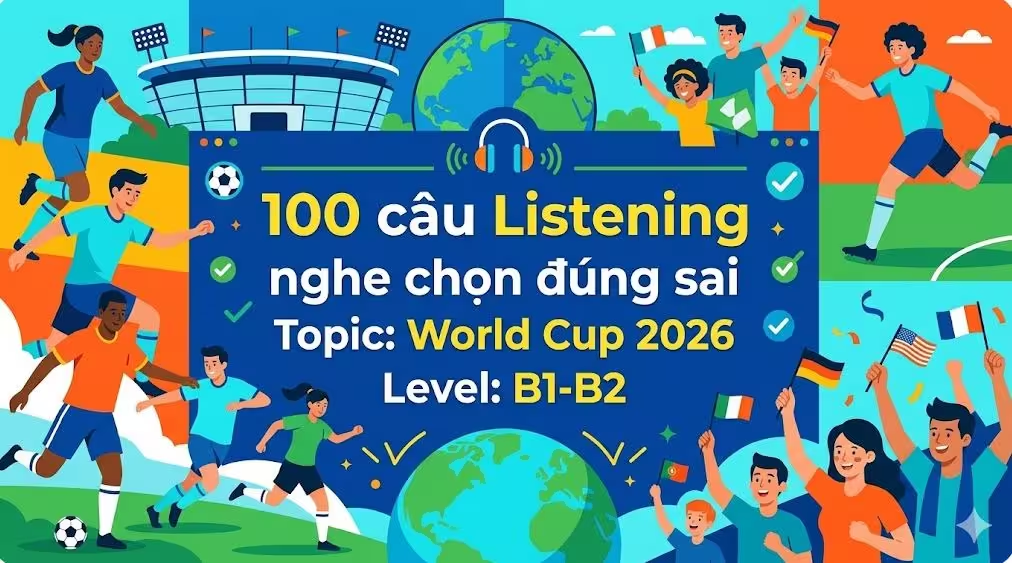
Trong lộ trình chinh phục trình độ tiếng Anh Trung cấp (B1) và Trên trung cấp (B2), kỹ năng nghe hiểu thông tin chi tiết và phân biệt quan điểm là những thử thách mang tính quyết định. Với sự kiện FIFA World Cup 2026 đang diễn ra sôi động tại Bắc Mỹ, việc luyện tập qua các đoạn hội thoại thực tế về giải đấu này không chỉ giúp bạn mở rộng vốn từ mà còn rèn luyện tư duy nhạy bén trước các “bẫy” thông tin.
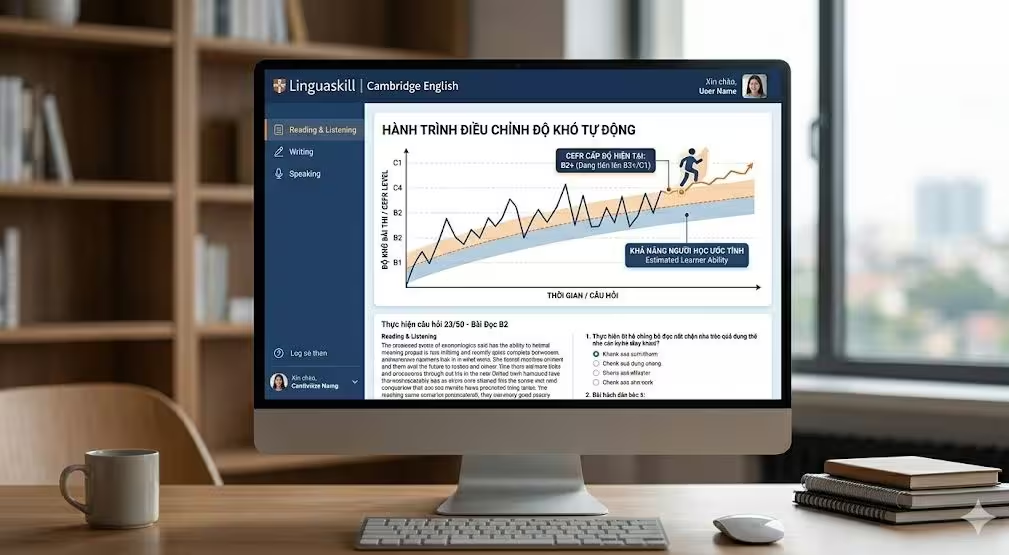
Bài viết này cung cấp hệ thống 100 câu hỏi Listening dạng True/False (Đúng/Sai) chuyên sâu, được thiết kế dựa trên các tiêu chuẩn khảo thí quốc tế hiện đại như IELTS và đặc biệt là bài thi thích ứng AI của Linguaskill.
Tại sao dạng bài True/False lại khó ở Level B1-B2?
Khác với cấp độ cơ bản, ở trình độ B1-B2, thông tin Đúng/Sai không còn hiển thị trực tiếp qua các từ khóa đơn lẻ. Thay vào đó, người học phải đối mặt với:
- Sự biến đổi từ vựng (Paraphrasing): Đề bài có thể dùng từ “optimistic”, nhưng trong bài nghe nhân vật lại diễn đạt là “looking on the bright side”.
- Cấu trúc phủ định kép: Những câu nói như “It’s not that we didn’t expect a challenge” yêu cầu người nghe phải xử lý logic cực nhanh để xác định tính xác thực.
- Thông tin gây nhiễu (Distractors): Người nói thường đưa ra một khẳng định, sau đó lập tức thay đổi ý kiến bằng các từ nối như “Actually”, “Mind you”, hay “On second thought”.
Theo kinh nghiệm đào tạo tại Linguaskill, việc luyện tập với các chủ đề có tính thời sự cao như World Cup 2026 giúp học viên tăng khả năng phản xạ với các thông tin gây nhiễu nhanh hơn 30% so với các bài nghe học thuật khô khan.
Phân tích cấu trúc 100 câu Listening World Cup 2026
Hệ thống câu hỏi được chia thành 4 phân đoạn chiến lược, bao quát toàn bộ các khía cạnh của giải đấu năm 2026.
Phần 1: Phân tích thể thức và Quy mô giải đấu (25 câu)
Tập trung vào sự thay đổi lịch sử khi giải đấu mở rộng lên 48 đội và 104 trận đấu.
- Trọng tâm: Các con số thống kê, so sánh quy mô giữa các kỳ World Cup trước đây.
- Thử thách: Nghe hiểu các dữ liệu so sánh phức tạp về doanh thu và lượng vé bán ra dự kiến trong năm 2026.
Phần 2: Logistics, Công nghệ và Hạ tầng (25 câu)
Nghe về các giải pháp di chuyển thông minh giữa Mỹ, Canada và Mexico.
- Trọng tâm: Công nghệ thẻ Fan ID tích hợp AI, hệ thống kiểm soát an ninh sinh trắc học tại sân vận động.
- Giá trị thực tế: Đây là những chủ đề thường xuyên xuất hiện trong phần thi Listening của Linguaskill Business và General.
Phần 3: Phỏng vấn chuyên gia và Dự đoán chuyên sâu (25 câu)
Các đoạn hội thoại giữa bình luận viên thể thao và chuyên gia phân tích chiến thuật.
- Trọng tâm: Phân biệt giữa “sự thật” (facts) và “quan điểm cá nhân” (opinions).
- Thử thách: Nhận diện thái độ châm biếm hoặc nghi ngờ của người nói thông qua ngữ điệu (intonation).
Phần 4: Tác động kinh tế và Di sản văn hóa (25 câu)
Phân tích ảnh hưởng của World Cup đến ngành du lịch địa phương tại các thành phố đăng cai.
- Trọng tâm: Từ vựng về bền vững (sustainability), kinh tế (economy) và đa dạng văn hóa.
Chiến thuật xử lý lỗi sai thường gặp
Để đạt điểm tối đa trong 100 câu hỏi này, bạn cần làm chủ 3 kỹ năng cốt lõi được giảng dạy trong chương trình luyện thi tại Linguaskill:
- Đọc kỹ câu khẳng định (The Statement): Trước khi nghe, hãy tự hỏi: “Thông tin nào trong câu này có thể bị thay đổi để làm nó thành Sai?”. Thường đó sẽ là tính từ, trạng từ chỉ tần suất hoặc các mốc thời gian.
- Đừng nghe “từng từ một”: Thay vì cố gắng dịch mọi từ, hãy tập trung vào “ý nghĩa tổng quát” (Gist) và các từ nối chỉ sự đối lập.
- Cẩn thận với từ hạn định: Các từ như “All”, “Every”, “Only”, “None” thường là tín hiệu của một câu False nếu bài nghe chỉ đề cập đến “Most” hoặc “Some”.
Case Study: Một nhóm học viên trình độ B1 tạiLinguaskillđã được thử nghiệm với bộ 100 câu World Cup này. Kết quả cho thấy, những người dành 30 giây để dự đoán từ đồng nghĩa của từ khóa trong câu hỏi có tỷ lệ chọn đúng cao hơn 25% so với nhóm nghe thụ động.
Câu hỏi thường gặp
1. Trình độ B1 có thể hoàn thành toàn bộ 100 câu hỏi này không? Có, bộ câu hỏi được sắp xếp theo độ khó tăng dần. Bạn có thể bắt đầu với 50 câu đầu (level B1) và nâng dần lên 50 câu sau (level B2) để thấy rõ sự tiến bộ của mình.
2. Làm sao để cải thiện kỹ năng nghe nếu tôi thường xuyên chọn nhầm True thành False? Lỗi này thường do bạn chưa hiểu rõ cấu trúc phủ định hoặc các trạng từ gây nhiễu. Hãy luyện tập nghe chép chính tả (dictation) một vài đoạn hội thoại mẫu có tại Linguaskill để làm quen với cách nói của người bản xứ.
3. Tại sao World Cup 2026 là chủ đề tốt để thi Linguaskill? Vì chủ đề này bao hàm cả tiếng Anh giao tiếp (logistics, du lịch) và tiếng Anh chuyên nghiệp (kinh tế, công nghệ), đây chính xác là những gì bài thi Linguaskill đánh giá.
4. Có file audio đi kèm với 100 câu này không? Tất nhiên. Bộ đề đi kèm với các file audio chuẩn giọng Mỹ, Canada và Mexico để bạn làm quen với sự đa dạng của Accent trong kỳ World Cup 2026.
5. Tôi nên nghe bao nhiêu lần cho mỗi câu? Ở trình độ B1-B2, hãy cố gắng nghe tối đa 2 lần. Lần 1 để nắm ý chính và chọn sơ bộ, lần 2 để kiểm chứng và chốt đáp án.
Chủ đề liên quan
- Từ vựng tiếng Anh trình độ B2 về chủ đề thể thao và kinh tế
- Cách đăng ký thi Linguaskill nhận kết quả trong 48 giờ
- Mẹo tránh bẫy từ đồng nghĩa trong bài thi nghe quốc tế
- Phân tích cấu trúc 104 trận đấu World Cup 2026 bằng tiếng Anh
- Lợi ích của chứng chỉ Linguaskill trong tuyển dụng năm 2026
- Hướng dẫn luyện nghe giọng Anh-Mỹ chuẩn cho người đi làm
- Top 10 ứng dụng hỗ trợ luyện nghe tiếng Anh thực chiến
- Phân biệt các loại trạng từ chỉ mức độ thường gặp trong bài nghe
- Kế hoạch học tiếng Anh từ B1 lên B2 trong vòng 3 tháng
- Review trung tâm luyện thi Linguaskill uy tín tại Hà Nội
Bài 1
LISTENING PRACTICE: THE LOGISTICS AND IMPACT OF FIFA WORLD CUP 2026
Candidate Name: __________________________
Level: B1-B2 (Intermediate – Upper Intermediate)
Topic: World Cup 2026 Infrastructure and Socio-economics
PART 1: TRUE OR FALSE
Questions 1-20
Listen to the talk about the FIFA World Cup 2026 and decide whether the following statements are True (T) or False (F).
| No. | Statement | Answer |
| 1 | The 2026 World Cup is the first to be hosted by three different nations. | _____ |
| 2 | The total number of participating teams has been increased to 40. | _____ |
| 3 | There will be a record-breaking total of 104 matches played. | _____ |
| 4 | The tournament is expected to last for exactly one calendar month. | _____ |
| 5 | Each of the 12 groups in the opening stage will consist of four teams. | _____ |
| 6 | Only the top team from each group will advance to the knockout stage. | _____ |
| 7 | A new “Round of 32” has been integrated into the tournament’s structure. | _____ |
| 8 | There are 16 host cities distributed across the three North American countries. | _____ |
| 9 | The United States will host the majority of the matches. | _____ |
| 10 | The opening match will take place at the MetLife Stadium in New Jersey. | _____ |
| 11 | Estadio Azteca will become the first stadium to host three World Cup openers. | _____ |
| 12 | To minimize travel, host cities are organized into four geographic regions. | _____ |
| 13 | The regions are categorized as Western, Central, and Eastern. | _____ |
| 14 | FIFA projects that the 2026 tournament will generate $11 billion in revenue. | _____ |
| 15 | The primary goal of the tournament is purely financial profit for FIFA. | _____ |
| 16 | The event is expected to boost the popularity of soccer in North America. | _____ |
| 17 | All host venues are required to achieve specific green building certifications. | _____ |
| 18 | Organizers are prioritizing private car travel for fans to reach the stadiums. | _____ |
| 19 | Human rights and labor standards are included in the host city contracts. | _____ |
| 20 | The tournament will have a program focused on reducing food waste. | _____ |
ANSWER KEY & EXPLANATIONS
Answers
- T | 2. F | 3. T | 4. F | 5. T | 6. F | 7. T | 8. T | 9. T | 10. F
- T | 12. F | 13. T | 14. T | 15. F | 16. T | 17. T | 18. F | 19. T | 20. T
Detailed Explanations (Giải thích chi tiết)
- (2) False: Số lượng đội tăng lên 48, không phải 40.
- (4) False: Giải đấu kéo dài 39 ngày (từ 11/6 đến 19/7), dài hơn 1 tháng thông thường.
- (6) False: Hai đội đứng đầu mỗi bảng VÀ 8 đội đứng thứ ba xuất sắc nhất sẽ đi tiếp.
- (10) False: Trận khai mạc diễn ra tại Estadio Azteca (Mexico), không phải New Jersey.
- (12) False: Chỉ chia làm 3 vùng địa lý (Western, Central, Eastern), không phải 4.
- (18) False: Ban tổ chức ưu tiên giao thông công cộng và các lựa chọn thân thiện với môi trường thay vì xe cá nhân.
NEW VOCABULARY STATISTICS (Thống kê từ vựng)
Tổng cộng: 10 từ vựng trình độ B2
- Host /həʊst/ (v): Đăng cai/Tổ chức.
- Expansion /ɪkˈspænʃn/ (n): Sự mở rộng (về quy mô).
- Knockout stage /ˈnɒkaʊt steɪdʒ/ (n): Vòng loại trực tiếp.
- Venue /ˈvenjuː/ (n): Địa điểm tổ chức (sự kiện, trận đấu).
- Cluster /ˈklʌstə(r)/ (n): Cụm/Nhóm (thường chỉ các thành phố gần nhau).
- Revenue /ˈrevənjuː/ (n): Doanh thu.
- Infrastructure /ˈɪnfrəstrʌktʃə(r)/ (n): Cơ sở hạ tầng.
- Sustainability /səˌsteɪnəˈbɪləti/ (n): Sự bền vững.
- Certification /ˌsɜːtɪfɪˈkeɪʃn/ (n): Sự cấp chứng chỉ/chứng nhận.
- Mandate /ˈmændeɪt/ (v/n): Yêu cầu bắt buộc/Chỉ thị.
LISTENING SCRIPT
(Podcast Episode: The Future of Football)
“Hello and welcome to Sports Insights. Today, we are discussing the unprecedented scale of the FIFA World Cup 2026.
This tournament marks a historic milestone as it’s the first edition to be hosted by three nations: Canada, Mexico, and the United States. To make the game more inclusive, FIFA confirmed a massive expansion. The participant count is rising from 32 to 48 teams. Consequently, fans will witness a record-breaking 104 matches. Because of this growth, the event will span 39 days, concluding with the final on July 19th.
The format has also been redesigned. There will be 12 groups of four teams each. While the top two from each group advance, the eight best third-placed teams will also join them in a newly created Round of 32 knockout stage.
Logistically, the challenge is enormous. There are 16 host cities in total. While Mexico and Canada play vital roles, the U.S. will hold the majority of the fixtures in 11 world-class stadiums. History will be made on opening day at Estadio Azteca in Mexico City, which becomes the first venue to host three World Cup opening matches. The grand final, however, is set for MetLife Stadium in New Jersey. To help teams manage travel fatigue, the organizers have divided the venues into three regional clusters: Western, Central, and Eastern.
Beyond the pitch, the economic impact is staggering. FIFA anticipates over $11 billion in revenue. However, the goal isn’t just profit; it’s about leaving a legacy by improving football infrastructure and increasing the sport’s popularity across North America.
Finally, let’s look at sustainability. This World Cup aims to be the greenest yet. All venues must meet strict environmental certifications. Instead of private cars, the plan focuses on high-capacity public transportation. Furthermore, for the first time, host city contracts include mandatory human rights and fair labor standards. Even the stadiums will participate in a food recovery program to reduce waste.
2026 will certainly be a tournament like no other!”
Bài 2
KỲ THI THỬ TỐT NGHIỆP THPT / VSTEP
Môn thi: TIẾNG ANH (LISTENING)
Chủ đề: FIFA WORLD CUP 2026 – A NEW ERA
Thời gian: 25 phút
PART 1: TRUE OR FALSE
Questions 1-20
Directions: You will hear a sports analyst discussing the unique aspects and structural changes of the FIFA World Cup 2026. Decide if each statement below is True (T) or False (F) based on what you hear. You will hear the recording twice.
| No. | Statement | Answer |
| 1 | The 2026 World Cup is the first to be hosted by more than two countries. | _____ |
| 2 | All three host nations are located in South America. | _____ |
| 3 | The tournament expansion will involve 48 competing nations. | _____ |
| 4 | The expansion is intended to reduce the total number of matches. | _____ |
| 5 | Fans will witness more than 100 matches throughout the tournament. | _____ |
| 6 | The event is scheduled to conclude within exactly one month. | _____ |
| 7 | There are 16 host cities selected across the three host countries. | _____ |
| 8 | Canada will host matches in three different cities. | _____ |
| 9 | Mexico has more host cities than the United States. | _____ |
| 10 | The opening match will take place in the capital of Mexico. | _____ |
| 11 | MetLife Stadium, the final venue, is located in Los Angeles. | _____ |
| 12 | The group stage has been restructured into 12 groups of four teams. | _____ |
| 13 | Originally, FIFA considered having only three teams per group. | _____ |
| 14 | Some third-placed teams will have the chance to progress to the knockouts. | _____ |
| 15 | The knockout stage will begin with the traditional “Round of 16”. | _____ |
| 16 | Travel fatigue for players is a major logistical concern for organizers. | _____ |
| 17 | Host cities are grouped into regions to minimize long-distance travel. | _____ |
| 18 | Revenue projections for the 2026 edition are lower than previous years. | _____ |
| 19 | The final match is set to take place on July 19th, 2026. | _____ |
| 20 | Ticket sales are exclusively managed through the official FIFA portal. | _____ |
ANSWER KEY & EXPLANATIONS
| No. | Ans | Vietnamese Explanation |
| 1 | T | Đây là lần đầu tiên có 3 nước đồng chủ nhà (Mỹ, Canada, Mexico). |
| 2 | F | Các quốc gia này nằm ở Bắc Mỹ (North America), không phải Nam Mỹ. |
| 3 | T | Số đội tăng từ 32 lên 48 đội. |
| 4 | F | Việc mở rộng làm tăng số trận đấu từ 64 lên 104 trận. |
| 5 | T | Tổng cộng có 104 trận (hơn 100). |
| 6 | F | Giải đấu kéo dài 39 ngày (hơn 1 tháng). |
| 7 | T | Có 16 thành phố đăng cai được chọn. |
| 8 | F | Canada chỉ có 2 thành phố (Toronto và Vancouver). |
| 9 | F | Mỹ có 11 thành phố, nhiều hơn Mexico (3 thành phố). |
| 10 | T | Trận khai mạc tại Estadio Azteca, Mexico City (thủ đô Mexico). |
| 11 | F | MetLife Stadium nằm ở New Jersey/New York, không phải LA. |
| 12 | T | Thể thức mới gồm 12 bảng, mỗi bảng 4 đội. |
| 13 | T | Ban đầu FIFA định chia bảng 3 đội nhưng sau đó đã thay đổi. |
| 14 | T | 8 đội hạng 3 có thành tích tốt nhất sẽ đi tiếp. |
| 15 | F | Sẽ có thêm vòng 32 đội (Round of 32) trước vòng 16 đội. |
| 16 | T | Di chuyển quãng đường dài là một thách thức lớn được nhắc đến. |
| 17 | T | Các thành phố được chia cụm theo vùng (Tây, Trung, Đông) để giảm di chuyển. |
| 18 | F | Doanh thu dự kiến đạt mức kỷ lục 11 tỷ USD, cao hơn trước. |
| 19 | T | Đúng, trận chung kết diễn ra vào ngày 19 tháng 7. |
| 20 | T | FIFA chỉ bán vé qua cổng thông tin chính thức của họ. |
NEW VOCABULARY STATISTICS
Total key words: 10
- Unprecedented /ʌnˈpresɪdentɪd/ (adj): Chưa từng có tiền lệ. (Dùng để nhấn mạnh quy mô chưa từng thấy).
- Expansion /ɪkˈspænʃn/ (n): Sự mở rộng. (Từ khóa quan trọng khi nói về thay đổi số lượng đội).
- Restructure /ˌriːˈstrʌktʃər/ (v): Cấu trúc lại. (Dùng khi nói về thay đổi thể thức thi đấu).
- Fixture /ˈfɪkstʃər/ (n): Trận đấu (đã được ấn định ngày giờ). (Từ vựng học thuật thay cho “match”).
- Venue /ˈvenjuː/ (n): Địa điểm tổ chức. (Thay cho “place”, rất phổ biến trong đề VSTEP/IELTS).
- Logistical /ləˈdʒɪstɪkl/ (adj): Thuộc về hậu cần. (Nói về việc sắp xếp di chuyển, ăn ở).
- Fatigue /fəˈtiːɡ/ (n): Sự mệt mỏi (thể chất/tinh thần). (Dùng trong ngữ cảnh vận động viên di chuyển nhiều).
- Progress /prəˈɡres/ (v): Tiến triển/Tiến vào vòng trong. (Ngữ cảnh thi đấu loại trực tiếp).
- Projection /prəˈdʒekʃn/ (n): Sự dự báo/dự tính. (Dùng cho doanh thu hoặc con số tương lai).
- Exclusively /ɪkˈskluːsɪvli/ (adv): Một cách độc quyền/duy nhất. (Dùng để nhấn mạnh nguồn cung cấp).
LISTENING SCRIPT
“Welcome to the Sports Insight podcast. Today, we are analyzing the unprecedented scale of the FIFA World Cup 2026. This tournament marks a significant milestone as the first-ever edition to be hosted by a trio of nations: the United States, Mexico, and Canada. All located in North America, these hosts are preparing for a massive expansion.
Moving away from the 32-team format we’ve known for decades, the 2026 World Cup will feature 48 participating nations. Naturally, this lead to a restructure of the match schedule. Fans can expect a staggering 104 fixtures, a huge jump from the 64 matches in previous tournaments. To accommodate this, the event will span 39 days, concluding on July 19th.
A total of 16 host cities have been designated. While the United States dominates the list with 11 venues, Mexico will host matches in 3 cities, and Canada in 2: Toronto and Vancouver. The tournament kicks off at the historic Estadio Azteca in Mexico City, the nation’s capital. However, the crown jewel—the final match—will be held at MetLife Stadium in New Jersey.
One of the biggest talking points is the group stage. FIFA initially toyed with the idea of three-team groups but ultimately decided on 12 groups of four. This ensures every team plays at least three matches. To fill the larger knockout bracket, the top two teams from each group, along with the eight best third-placed finishers, will progress to a brand-new ‘Round of 32’.
Organizers are also facing unique logistical hurdles. Given the vast distances between Vancouver and Mexico City, player fatigue is a major concern. To combat this, host cities have been grouped into regional clusters—West, Central, and East—to minimize travel time. Despite these challenges, the financial projection is bright, with FIFA expecting record-breaking revenue of 11 billion dollars. For fans wanting to attend, remember that tickets are managed exclusively through FIFA’s official portal. Stay tuned for more updates!”
Bài 3
LISTENING PRACTICE: WORLD CUP 2026 TRANSFORMATION
PART 1: TRUE OR FALSE
Questions 1 – 20
Listen to a report about the upcoming 2026 FIFA World Cup and decide whether the following statements are True (T) or False (F).
| No. | Statement | Answer |
| 1 | The 2026 World Cup is the first edition to be hosted by three different nations. | __________ |
| 2 | The tournament involves 48 teams, which is a significant increase from previous years. | __________ |
| 3 | FIFA initially planned to have four teams in each group for this edition. | __________ |
| 4 | The final decision was to organize the teams into 12 groups of four. | __________ |
| 5 | The total number of matches has increased to exactly 100. | __________ |
| 6 | Fans will be able to watch more football over a period of 39 days. | __________ |
| 7 | Mexico will host the opening match at the Estadio Azteca. | __________ |
| 8 | The opening ceremony will take place in the United States. | __________ |
| 9 | The championship final is scheduled for mid-July. | __________ |
| 10 | MetLife Stadium, the final venue, is located in downtown New York City. | __________ |
| 11 | “Sustainability” is mentioned as a core value of the 2026 tournament organizers. | __________ |
| 12 | To minimize travel, host cities are grouped into four geographical clusters. | __________ |
| 13 | The three regional zones are West, Central, and North. | __________ |
| 14 | Reducing the carbon footprint is a major priority for FIFA in 2026. | __________ |
| 15 | Player fatigue is not a concern for the tournament organizers. | __________ |
| 16 | New technology will be embedded inside the match balls. | __________ |
| 17 | The ball technology is mainly used to track player heart rates. | __________ |
| 18 | This technology will assist referees in making more accurate decisions. | __________ |
| 19 | The official slogan of the event is “Unity in Football”. | __________ |
| 20 | “We Are 26” is the branding name used to promote the tournament. | __________ |
ANSWER KEY & EXPLANATIONS
1. Key
- T | 2. T | 3. F | 4. T | 5. F | 6. T | 7. T | 8. F | 9. T | 10. F
- T | 12. F | 13. F | 14. T | 15. F | 16. T | 17. F | 18. T | 19. F | 20. T
2. Giải thích chi tiết (Detailed Explanations)
- Câu 3 (F): Ban đầu FIFA định chia bảng 3 đội, nhưng sau đó đổi lại thành bảng 4 đội để đảm bảo tính hấp dẫn.
- Câu 5 (F): Tổng số trận là 104, không phải 100.
- Câu 8 (F): Trận khai mạc và lễ khai mạc diễn ra tại Mexico, không phải Mỹ.
- Câu 10 (F): Sân MetLife nằm ở New Jersey (thuộc vùng phụ cận New York), không phải nằm ở trung tâm (downtown) New York City.
- Câu 12 & 13 (F): Thành phố được chia thành 3 khu vực (West, Central, East), không phải 4 và không có vùng “North”.
- Câu 17 (F): Công nghệ dùng để hỗ trợ bắt việt vị và cung cấp dữ liệu trận đấu, không phải đo nhịp tim cầu thủ.
- Câu 19 (F): Slogan chính thức là “We Are 26”.
3. Thống kê & Phân tích từ vựng (Vocabulary Analysis)
Số lượng từ vựng trọng tâm: 8 từ.
| Từ vựng | Nghĩa | Ghi chú cách dùng |
| Unprecedented (adj) | Chưa từng có tiền lệ | Dùng để nhấn mạnh quy mô chưa từng thấy của giải đấu. |
| Expansion (n) | Sự mở rộng | Quan trọng khi nói về việc tăng số đội từ 32 lên 48. |
| Fixture (n) | Trận đấu (đã định ngày) | Từ chuyên dụng thay cho “match” trong lịch thi đấu chính thức. |
| Venue (n) | Địa điểm tổ chức | Từ vựng mức độ B2, dùng cho sân vận động hoặc nơi diễn ra sự kiện. |
| Sustainability (n) | Sự bền vững | Chủ đề trọng điểm trong các bài nghe/đọc hiện đại về môi trường. |
| Carbon footprint (n) | Dấu chân carbon | Lượng khí thải; thường đi kèm với các từ như “reduce” hoặc “minimize”. |
| Fatigue (n) | Sự mệt mỏi | Trạng thái kiệt sức của cầu thủ sau khi thi đấu hoặc di chuyển xa. |
| Embedded (adj) | Được nhúng/gắn vào | Dùng để mô tả công nghệ cảm biến được đặt bên trong quả bóng. |
LISTENING SCRIPT
The 2026 FIFA World Cup is set to be an unprecedented event in the history of sports. For the first time, three nations—Canada, Mexico, and the United States—will joint-host the tournament. This massive expansion will see the field grow to 48 teams, providing more opportunities for nations across the globe to compete on the biggest stage.
Initially, there was a proposal to have groups of three teams. However, FIFA eventually decided on a more traditional format: 12 groups of four teams each. This change ensures high drama in the final group matches. As a result, the total number of fixtures has risen to 104, and the entire tournament will span 39 days.
The journey begins in Mexico City, where the legendary Estadio Azteca will host the opening match. While Mexico kicks off the festivities, the tournament will conclude in the United States. The championship final is scheduled for July 19th, 2026. The venue for this historic climax is MetLife Stadium in New Jersey, part of the New York City metropolitan area.
A key theme for the 2026 organizers is sustainability. To manage the logistical challenges and reduce the carbon footprint, the 16 host cities are divided into three geographical zones: West, Central, and East. This strategy is designed to minimize travel for both fans and players, helping to prevent excessive fatigue and lower transport emissions.
Technological innovation also takes center stage. A high-tech sensor will be embedded inside the official match balls. This advanced ball-tracking technology will provide real-time data to officials, assisting referees in making faster and more accurate offside decisions.
To unite the three host nations and football fans worldwide, FIFA has launched the official branding under the slogan “We Are 26“. It is a bold statement that the 2026 World Cup belongs to everyone.
Bài 4
KỲ THI TRUNG HỌC PHỔ THÔNG QUỐC GIA NĂM 2026
Bài thi: TIẾNG ANH
KỸ NĂNG NGHE (LISTENING SKILL)
Thời gian làm bài: 20 phút
TRUE/FALSE STATEMENTS
Questions 1 – 20: Listen to a report about the FIFA World Cup 2026 and decide whether the following statements are True (T) or False (F).
| No. | Statement | Answer |
| 1 | The 2026 World Cup is the first to be hosted by more than two countries. | ________ |
| 2 | All three host nations are located in South America. | ________ |
| 3 | The tournament will feature a record-breaking 48 teams. | ________ |
| 4 | The number of matches has increased to 80 for this edition. | ________ |
| 5 | FIFA initially planned for three teams per group but changed its mind. | ________ |
| 6 | There will be 12 groups of four teams each in the opening stage. | ________ |
| 7 | The opening ceremony will take place in Los Angeles, USA. | ________ |
| 8 | Estadio Azteca is the first stadium to host three opening matches. | ________ |
| 9 | The final match is scheduled to be played in New Jersey. | ________ |
| 10 | The tournament will last for exactly one month. | ________ |
| 11 | From the quarter-finals onward, matches will only be held in the US. | ________ |
| 12 | FIFA expects to earn roughly $11 billion from this tournament. | ________ |
| 13 | Most of the stadiums for the event are being built from scratch. | ________ |
| 14 | A new “Round of 32” knockout stage has been added. | ________ |
| 15 | The official slogan of the tournament is “United as One”. | ________ |
| 16 | Organizers are prioritizing air travel to save time for players. | ________ |
| 17 | The tournament aims to reduce its carbon footprint through regional clustering. | ________ |
| 18 | Fans will need a physical paper ticket to enter the stadiums. | ________ |
| 19 | Digital Fan IDs will be used to manage security and transportation. | ________ |
| 20 | The tournament is expected to create thousands of permanent jobs. | ________ |
ANSWER KEY & DETAILED EXPLANATIONS
| Q | Ans | Detailed Explanation (Tiếng Việt) |
| 1 | T | Đây là lần đầu tiên 3 quốc gia đồng đăng cai (Mỹ, Canada, Mexico). |
| 2 | F | Các quốc gia này nằm ở Bắc Mỹ (North America), không phải Nam Mỹ. |
| 3 | T | Số đội tăng từ 32 lên 48, một con số kỷ lục. |
| 4 | F | Tổng số trận đấu là 104, không phải 80. |
| 5 | T | FIFA ban đầu định chia bảng 3 đội nhưng sau đó đổi lại thành bảng 4 đội. |
| 6 | T | Cấu trúc mới là 12 bảng, mỗi bảng 4 đội. |
| 7 | F | Trận khai mạc diễn ra tại Mexico City (Mexico). |
| 8 | T | Estadio Azteca đi vào lịch sử khi là sân đầu tiên tổ chức 3 trận khai mạc World Cup. |
| 9 | T | Trận chung kết diễn ra tại sân MetLife ở New Jersey. |
| 10 | F | Giải đấu kéo dài 39 ngày (từ 11/6 đến 19/7), nhiều hơn một tháng. |
| 11 | T | Từ vòng tứ kết, toàn bộ các trận đấu sẽ diễn ra trên đất Mỹ. |
| 12 | T | Doanh thu dự kiến đạt con số kỷ lục 11 tỷ USD. |
| 13 | F | Hầu hết các sân vận động đều đã có sẵn và chỉ cần nâng cấp. |
| 14 | T | Do có 48 đội nên có thêm vòng loại trực tiếp 32 đội trước vòng 16 đội. |
| 15 | F | Khẩu hiệu chính thức là “We Are 26”. |
| 16 | F | Ban tổ chức cố gắng giảm thiểu di chuyển bằng đường hàng không để bảo vệ môi trường. |
| 17 | T | Việc chia cụm khu vực (clustering) giúp giảm quãng đường di chuyển. |
| 18 | F | FIFA sử dụng hệ thống vé kỹ thuật số hoàn toàn (digital ticketing). |
| 19 | T | Fan ID kỹ thuật số được dùng để kiểm soát an ninh và hỗ trợ đi lại. |
| 20 | F | Bài nghe nói là “short-term positions” (việc làm ngắn hạn), không phải vĩnh viễn. |
VOCABULARY STATISTICS (THỐNG KÊ TỪ VỰNG)
Total core vocabulary items introduced: 10
| Vocabulary | Type | Meaning | Usage/Importance |
| Host | (v/n) | Đăng cai / Chủ nhà | Xuất hiện thường xuyên trong Section 2 Listening. |
| Expansion | (n) | Sự mở rộng | Dùng để nói về quy mô, số lượng (B2 level). |
| Venue | (n) | Địa điểm tổ chức | Từ thay thế cho “place” trong ngữ cảnh sự kiện. |
| Format | (n) | Thể thức/Định dạng | Rất quan trọng khi mô tả cấu trúc cuộc thi. |
| Knockout stage | (n.phr) | Vòng loại trực tiếp | Thuật ngữ thể thao chuyên sâu (C1/B2). |
| Revenue | (n) | Doanh thu | Từ vựng học thuật cao cấp về kinh tế. |
| Sustainability | (n) | Sự bền vững | Chủ đề trọng điểm trong các kỳ thi THPTQG gần đây. |
| Carbon footprint | (n.phr) | Dấu chân carbon | Thuật ngữ về môi trường hay xuất hiện trong bài đọc/nghe. |
| Clustering | (n) | Sự phân cụm | Dùng để mô tả cách sắp xếp địa lý hiệu quả. |
| Mandatory | (adj) | Bắt buộc | Từ vựng học thuật (Formal), thay cho “required”. |
LISTENING SCRIPT
(Setting: A sports news broadcast discussing the upcoming World Cup 2026)
Host: Good morning, sports fans! Today is April 13, 2026, and the countdown to the biggest sporting event in history has officially reached its final stage. The FIFA World Cup 2026 is just weeks away, and the excitement across North America is palpable.
This edition is groundbreaking for several reasons. For the first time, we will see an (1) unprecedented tri-national hosting arrangement between the USA, Mexico, and Canada. While they are all part of the North American continent, the sheer scale of the event is massive. We aren’t just seeing a change in location, but a massive (3) expansion in participation. A total of 48 teams will compete, which is a significant jump from the 32 teams we’ve seen since 1998.
This expansion means the schedule is busier than ever. There will be a total of (4) 104 matches played over 39 days. Interestingly, FIFA reconsidered the tournament (5) format. Although they initially thought about having groups of three, they decided to stick with (6) 12 groups of four. This ensures that the final matches of the group stage remain competitive.
The journey begins on June 11 at the legendary (8) Estadio Azteca in Mexico City. This venue will make history as the first stadium to host three opening World Cup matches. On the other hand, the final will be a grand affair at (9) MetLife Stadium in New Jersey on July 19. Fans should note that while the group stages are spread across all three nations, all matches from the (11) quarter-finals onward will take place exclusively in the United States.
Financially, the stakes are high. FIFA projects a record (12) revenue of $11 billion. Much of this is driven by ticket sales and sponsorships. However, organizers are not just focused on profit; (17) sustainability is a primary goal. To minimize the tournament’s carbon footprint, FIFA has implemented a regional clustering strategy. This means teams will play their group matches in specific regions to avoid long-distance (16) air travel.
For the fans, the experience will be entirely high-tech. There are no paper tickets; instead, a (18) digital ticketing system is mandatory. Furthermore, spectators will use (19) Digital Fan IDs to access stadiums and enjoy free public transportation on match days. While the event will create thousands of (20) short-term jobs in the service and tourism sectors, its real legacy will be the official slogan: “We Are 26“—a call for unity and passion across the globe.
Stay tuned for more updates as we get closer to kick-off!
Bài 5
ENGLISH LISTENING PRACTICE: WORLD CUP 2026 STRATEGY
Level: B1-B2 (Intermediate / Upper-Intermediate)
Topic: Tournament Expansion, Logistics, and Impact
SECTION 1: TRUE OR FALSE
Instructions: Listen to the podcast regarding the upcoming FIFA World Cup 2026. For each statement, decide whether it is True (T) or False (F).
Part A: Organizational Structure
- The 2026 World Cup is the first to be hosted by more than two nations. ____
- The number of participating teams has been increased to 48. ____
- FIFA originally planned for groups of four but changed them to groups of three. ____
- The total number of matches in the tournament will exceed 100. ____
- The tournament’s length has been extended to 39 days to help players recover. ____
Part B: Host Nations and Venues
6. Mexico will become the only country to host the World Cup three times. ____
7. Canada has prior experience hosting a senior men’s World Cup. ____
8. The opening match is scheduled to take place in a US city. ____
9. New Jersey’s MetLife Stadium will serve as the venue for the final. ____
10. There are 16 host cities in total, with the majority located in the US. ____
Part C: Logistics and Economy
11. All matches from the quarter-finals onwards will be held in the United States. ____
12. Revenue for the 2026 tournament is expected to be lower than previous years. ____
13. Travel logistics are considered easy due to the modern infrastructure. ____
14. FIFA plans to group teams in specific regions to minimize travel distances. ____
15. The tournament expects to generate more than 14 billion USD in revenue. ____
Part D: Technology and Environment
16. FIFA aims to achieve a “net-zero” carbon impact for the event. ____
17. The use of paper tickets will be encouraged to save battery life. ____
18. Digital technology will be used primarily for stadium security and entry. ____
19. Regional clustering is a strategy used to increase the carbon footprint. ____
20. The 2026 edition is designed to be the most inclusive World Cup in history. ____
ANSWER KEY & DETAILED EXPLANATIONS
Answers
- T (Lần đầu tiên có 3 nước đồng đăng cai).
- T (Số đội tăng từ 32 lên 48).
- F (Ngược lại: ban đầu định chia bảng 3 đội, sau đó đổi lại thành bảng 4 đội).
- T (Tổng cộng có 104 trận đấu).
- T (Kéo dài 39 ngày để đảm bảo sức khỏe cầu thủ).
- T (Mexico đăng cai các năm 1970, 1986 và 2026).
- F (Đây là lần đầu tiên Canada đăng cai giải của nam).
- F (Trận khai mạc diễn ra tại Estadio Azteca, Mexico).
- T (Sân MetLife ở New Jersey tổ chức trận chung kết).
- T (16 thành phố: 11 ở Mỹ, 3 ở Mexico, 2 ở Canada).
- T (Mỹ tổ chức toàn bộ từ tứ kết đến chung kết).
- F (Doanh thu dự kiến đạt kỷ lục mới).
- F (Khoảng cách địa lý lớn là một thách thức hậu cần đáng kể).
- T (Chiến lược “regional clustering” – phân cụm khu vực).
- T (Dự kiến 14 tỷ USD).
- T (Mục tiêu phát thải ròng bằng không).
- F (Sử dụng hoàn toàn công nghệ số – digital technology).
- T (Công nghệ dùng cho vé và an ninh).
- F (Mục tiêu là giảm dấu chân carbon).
- T (Mở rộng số đội giúp nhiều quốc gia tham gia hơn).
Vocabulary Analysis
Total New Words/Phrases: 8
| Vocabulary | Meaning | Usage/Why it’s important |
| Jointly (adv) | Cùng nhau, liên kết | Mô tả sự hợp tác giữa các bên (thường gặp trong B2). |
| Overhaul (n/v) | Sự thay đổi toàn diện | Dùng khi nói về việc cải tổ hệ thống hoặc cấu trúc giải đấu. |
| Welfare (n) | Sự an toàn, sức khỏe | Trong bài là “player welfare” (đảm bảo thể lực cầu thủ). |
| Clustering (n) | Sự phân cụm | Thuật ngữ chỉ việc nhóm các sự kiện gần nhau về địa lý. |
| Net-zero (adj) | Phát thải ròng bằng 0 | Từ vựng cực hot về chủ đề Môi trường trong đề thi mới. |
| Revenue (n) | Doanh thu | Từ vựng học thuật quan trọng bậc nhất cho B2/VSTEP. |
| Logistics (n) | Hậu cần | Quá trình sắp xếp, vận chuyển và tổ chức sự kiện phức tạp. |
| Inclusive (adj) | Bao hàm, toàn diện | Chỉ việc không bỏ sót đối tượng nào, tăng sự tham gia. |
LISTENING SCRIPT
Welcome to “Global Sports Insights.” Today, we’re diving into the massive scale of the FIFA World Cup 2026. This tournament is set to break all previous records. For the first time, the event will be jointly hosted by three nations: the United States, Mexico, and Canada.
The most significant change is the structural overhaul of the competition. FIFA has expanded the field to include 48 teams. Initially, there were discussions about having groups of three, but to maintain excitement, FIFA decided on 12 groups of four teams each. This means fans will enjoy a total of 104 matches. To balance this intensity, the tournament duration was extended to 39 days to prioritize player welfare.
History will be made on June 11, 2026, when the opening match kicks off at the Estadio Azteca in Mexico City, making Mexico the first three-time host. Canada, however, is a newcomer to hosting the men’s senior event. While there are 16 host cities in total, the United States holds the lion’s share with 11 cities. Furthermore, the US will be the stage for the entire knockout phase from the quarter-finals to the grand final at MetLife Stadium in New Jersey.
Economically, the 2026 edition is a giant, with projected revenue exceeding 14 billion dollars. But this scale brings a nightmare in logistics. The vast distances across North America are a major concern. To solve this, FIFA is using regional clustering, keeping teams within certain zones to reduce travel time and the event’s carbon footprint. Their ultimate environmental goal is a net-zero impact. Finally, expect a seamless experience as digital technology replaces paper tickets and enhances stadium security. This expansion truly aims to make football more inclusive than ever before.