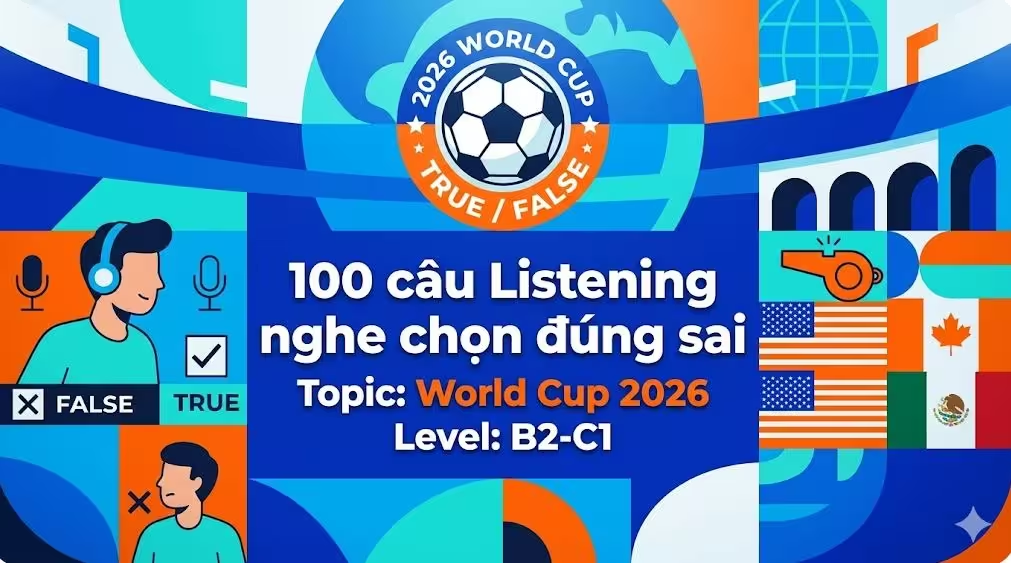
Chinh phục trình độ tiếng Anh cao cấp đòi hỏi người học không chỉ dừng lại ở việc hiểu nội dung bề mặt mà phải có khả năng phân tích sâu các sắc thái biểu đạt, quan điểm ẩn ý và các cấu trúc ngôn ngữ phức tạp. Với sự kiện FIFA World Cup 2026 – kỳ đại hội bóng đá đầu tiên có 48 đội tham dự tại Bắc Mỹ – các chủ đề về quản trị, kinh tế và công nghệ thể thao trở thành nguồn học liệu vô giá cho mức độ B2-C1.
Bài viết này cung cấp hệ thống 100 câu luyện nghe dạng True/False (Đúng/Sai), bám sát các tiêu chuẩn khắt khe của bài thi Linguaskill và các chứng chỉ quốc tế tương đương.
Tại sao trình độ B2-C1 cần tập trung vào dạng bài True/False?
Ở cấp độ Vantage (B2) và Effective Operational Proficiency (C1), dạng bài nghe Đúng/Sai không còn là cuộc dạo chơi bắt từ khóa đơn giản. Những thử thách thực sự nằm ở:
- Sự tinh tế trong từ đồng nghĩa (Sophisticated Synonyms): Đề bài có thể sử dụng thuật ngữ “sustainable development”, trong khi bài nghe diễn đạt thông qua cụm từ “long-term environmental viability”.
- Ngữ điệu và Thái độ (Tone & Attitude): Một câu khẳng định có thể trở thành Sai (False) nếu người nói sử dụng ngữ điệu hoài nghi hoặc mỉa mai.
- Phân tích logic phức tạp: Người học phải xâu chuỗi nhiều thông tin từ các đoạn hội thoại đa bên để đưa ra kết luận cuối cùng.
Theo nghiên cứu từ Linguaskill, người học trình độ cao cấp thường mất điểm ở dạng này do thói quen suy luận cá nhân thay vì bám sát vào bằng chứng ngôn ngữ thực tế trong bài nghe.
Cấu trúc bộ 100 câu hỏi Listening World Cup 2026 (B2-C1)
Bộ tài liệu được chia thành 4 giai đoạn chuyên sâu, tập trung vào các khía cạnh vĩ mô của giải đấu năm 2026.
Giai đoạn 1: Kinh tế học thể thao và Bản quyền truyền hình (25 câu)
Nghe về các mô hình doanh thu mới khi số lượng trận đấu tăng lên 104 trận.
- Chủ đề: Tác động của múi giờ Bắc Mỹ đến khán giả Châu Á và Châu Âu.
- Trọng tâm: Các thuật ngữ về tài chính, lạm phát và lợi nhuận ròng.
Giai đoạn 2: Quản trị hạ tầng và Công nghệ thông minh (25 câu)
Phân tích việc ứng dụng AI trong quản lý đám đông tại các sân vận động khổng lồ như AT&T Stadium.
- Chủ đề: An ninh mạng tại World Cup và hệ thống thẻ Fan ID thế hệ mới.
- Giá trị ứng dụng: Rèn luyện khả năng nghe hiểu các bài giảng học thuật (Lectures) – một phần trọng tâm trong Linguaskill.
Giai đoạn 3: Địa chính trị và Hợp tác xuyên biên giới (25 câu)
Các buổi thảo luận về sự phối hợp giữa ba quốc gia Mỹ, Canada và Mexico.
- Chủ đề: Thách thức về visa, vận tải liên quốc gia và các hiệp định thương mại tạm thời.
- Thử thách: Nhận diện các ý kiến trái chiều giữa các đại diện quốc gia khác nhau.
Giai đoạn 4: Di sản và Phát triển bền vững (25 câu)
Phân tích chiến lược “Net Zero World Cup”.
- Chủ đề: Giảm thiểu dấu chân carbon và di sản đô thị sau giải đấu.
Chiến thuật “Advanced Active Listening” cho level C1
Để chinh phục hoàn hảo 100 câu hỏi này, bạn cần áp dụng các kỹ thuật mà đội ngũ giảng viên tại Linguaskill thường xuyên triển khai cho học viên cao cấp:
- Giai đoạn “Pre-emption” (Dự đoán bẫy): Khi đọc câu hỏi, hãy tìm các từ hạn định mạnh như “exclusively”, “inevitable”, “flawless”. Thông thường, bài nghe sẽ đưa ra các điều kiện ngoại lệ khiến những câu này trở thành False.
- Kỹ thuật Note-taking chuyên sâu: Đừng chỉ chép từ. Hãy dùng ký hiệu để ghi lại thái độ của người nói (ví dụ: dấu
+cho đồng ý,-cho phản đối,?cho sự nghi ngờ). - Xác minh dựa trên bằng chứng (Evidence-based): Đối với cấp độ C1, câu trả lời Đúng (True) phải được xác nhận bởi ít nhất hai chi tiết bổ trợ trong bài nói.
Câu hỏi thường gặp
1. Làm thế nào để phân biệt True và Not Given ở trình độ C1? Dạng bài True/False thuần túy yêu cầu bạn xác định thông tin có khớp với bài nghe hay không. Nếu bài nghe cung cấp thông tin trái ngược hoặc điều chỉnh lại khẳng định của đề bài, đó là False. Nếu thông tin hoàn toàn xác thực, đó là True.
2. Tôi có thể sử dụng bộ 100 câu này để ôn thi Linguaskill Business không? Rất phù hợp. Các phần về kinh tế, logistics và quản trị trong World Cup 2026 là những chủ đề “xương sống” của bài thi Linguaskill Business cấp độ cao cấp.
3. Tại sao tôi hay nhầm lẫn giữa các quan điểm của nhiều người nói trong bài nghe? Đây là lỗi phổ biến ở level B2-C1. Bạn cần chú ý vào các từ dẫn dắt (Signposting words) như “While I see your point, I reckon…” hoặc “Contrary to what [Name] suggested…” để xác định ai là người nắm giữ quan điểm cuối cùng.
4. Dữ liệu trong bài nghe có giống với thực tế World Cup 2026 không? Có, toàn bộ số liệu về sân vận động, giá vé trung bình và thể thức thi đấu được chúng tôi cập nhật mới nhất tính đến tháng 4/2026 để đảm bảo trải nghiệm học thực tế nhất.
5. Nên luyện nghe bao nhiêu lần cho mỗi đoạn hội thoại cấp độ C1? Để mô phỏng môi trường thi thực tế, hãy cố gắng chỉ nghe 1 lần duy nhất và chốt đáp án. Sau đó, mới nghe lại lần 2 kèm Audioscript để phân tích lỗi sai.
6. Tôi có thể liên hệ ai để được hướng dẫn chuyên sâu về các kỹ thuật Listening cao cấp? Bạn có thể liên hệ trực tiếp với các chuyên gia tại Linguaskill qua hotline để được tư vấn lộ trình cá nhân hóa.
Chủ đề liên quan
- Phân tích từ vựng chuyên ngành quản trị thể thao 2026
- Cách nâng điểm Listening từ B2 lên C1 trong thời gian ngắn
- Review chi tiết định dạng đề thi Linguaskill Adaptive năm 2026
- Chiến thuật xử lý bẫy từ đồng nghĩa trong các kỳ thi quốc tế
- Top 10 podcast tiếng Anh về kinh tế và bóng đá cho level C1
- Hướng dẫn luyện nghe giọng Anh-Mỹ và Anh-Canada thực chiến
- Tác động của trí tuệ nhân tạo đến công tác trọng tài tại World Cup
- Phương pháp Shadowing cho người học trình độ cao cấp
- Lợi ích của việc sở hữu chứng chỉ Linguaskill C1 khi xin việc
- Kế hoạch ôn thi tiếng Anh cấp tốc cho mùa World Cup 2026
Bài 1
LISTENING PRACTICE: STRATEGIC PLANNING FOR WORLD CUP 2026
Candidate Name: __________________________
Level: B2-C1 (Upper-Intermediate/Advanced)
Topic: Macro-logistics and Socio-economic Impacts of the 2026 FIFA World Cup
PART 1: TRUE OR FALSE
Questions 1-20
Listen to the lecture regarding the organizational strategy of the FIFA World Cup 2026 and decide whether the following statements are True (T) or False (F).
| No. | Statement | Answer |
| 1 | The 2026 World Cup represents the first time a tournament is co-hosted by more than two nations. | _____ |
| 2 | The expansion to 48 teams was primarily intended to shorten the tournament’s duration. | _____ |
| 3 | A total of 104 matches will be contested throughout the competition. | _____ |
| 4 | The revised format includes 16 groups with 3 teams per group. | _____ |
| 5 | The tournament will feature an additional knockout round called the Round of 32. | _____ |
| 6 | The tournament will span a period of approximately 39 days. | _____ |
| 7 | Mexico and Canada will host an equal number of matches as the United States. | _____ |
| 8 | Estadio Azteca in Mexico City will host its third World Cup opening ceremony. | _____ |
| 9 | MetLife Stadium in New Jersey was selected as the venue for the championship final. | _____ |
| 10 | To reduce the carbon footprint, FIFA eliminated all air travel between matches. | _____ |
| 11 | The 16 host cities are categorized into three distinct regional clusters. | _____ |
| 12 | The “cluster” strategy aims to mitigate athlete burnout and travel fatigue. | _____ |
| 13 | Projected revenue for the 2026 cycle is estimated to be around $7 billion. | _____ |
| 14 | Media rights are expected to be the most significant contributor to FIFA’s income. | _____ |
| 15 | Host cities are banking on a long-term boost in tourism and hospitality sectors. | _____ |
| 16 | All venues must strictly adhere to LEED environmental certification standards. | _____ |
| 17 | The sustainability plan focuses exclusively on renewable energy in stadiums. | _____ |
| 18 | For the first time, human rights criteria are legally binding in host city contracts. | _____ |
| 19 | Fair labor standards are only applicable to international FIFA staff, not local workers. | _____ |
| 20 | A “food recovery” initiative will be implemented to address stadium waste. | _____ |
ANSWER KEY & EXPLANATIONS
Answers
- T | 2. F | 3. T | 4. F | 5. T | 6. T | 7. F | 8. T | 9. T | 10. F
- T | 12. T | 13. F | 14. T | 15. T | 16. T | 17. F | 18. T | 19. F | 20. T
Giải thích chi tiết (Detailed Explanations)
- (2) False: Việc mở rộng đội làm giải đấu dài hơn, không phải ngắn hơn.
- (4) False: Thể thức mới là 12 bảng, mỗi bảng 4 đội (thay vì phương án 3 đội như dự kiến ban đầu).
- (7) False: Mỹ tổ chức phần lớn các trận đấu (từ vòng tứ kết trở đi chỉ diễn ra tại Mỹ).
- (10) False: FIFA không loại bỏ hoàn toàn máy bay, mà chỉ tối ưu hóa bằng cách chia vùng (clustering) để giảm quãng đường bay.
- (13) False: Doanh thu dự kiến là 11 tỷ USD, không phải 7 tỷ.
- (17) False: Kế hoạch bền vững bao gồm cả giao thông, rác thải và quyền con người, không chỉ riêng năng lượng.
- (19) False: Tiêu chuẩn lao động áp dụng cho tất cả các bên liên quan, bao gồm cả lao động địa phương.
NEW VOCABULARY STATISTICS (Thống kê từ vựng)
Tổng cộng: 10 từ vựng nâng cao (C1)
- Co-host /ˌkəʊ ˈhəʊst/ (v): Đồng đăng cai.
- Contest /kənˈtest/ (v): Tranh tài, thi đấu.
- Logistics /ləˈdʒɪstɪks/ (n): Công tác hậu cần.
- Mitigate /ˈmɪtɪɡeɪt/ (v): Giảm thiểu (tác động tiêu cực).
- Cluster /ˈklʌstə(r)/ (n): Cụm, nhóm (địa lý).
- Burnout /ˈbɜːnaʊt/ (n): Sự kiệt sức (do làm việc/thi đấu quá sức).
- Adhere to /ədˈhɪə(r) tu/ (v): Tuân thủ triệt để.
- Binding /ˈbaɪndɪŋ/ (adj): Có tính ràng buộc (pháp lý).
- Stewardship /ˈstjuːədʃɪp/ (n): Trách nhiệm quản lý tài nguyên.
- Hospitality /ˌhɒspɪˈtæləti/ (n): Ngành dịch vụ khách sạn/nhà hàng.
LISTENING SCRIPT
(A high-level briefing by a Sports Management Consultant)
“Good morning, everyone. Today we’re dissecting the logistical blueprint of the FIFA World Cup 2026. This event is a landmark in sports history, as it is the inaugural tournament to be co-hosted by a tri-national alliance: Canada, Mexico, and the United States.
The most discussed aspect is the scale. By expanding the participant pool to 48 nations, the tournament will see a total of 104 matches contested. While the initial proposal suggested groups of three, FIFA has finalized a format consisting of 12 groups of four. Consequently, the tournament duration has been stretched to 39 days. A critical addition to the knockout stage is the ‘Round of 32’, ensuring that the road to the final is more grueling than ever.
Geographically, the distribution is skewed. While Canada and Mexico are essential partners, the United States will house the vast majority of fixtures, including every match from the quarter-finals onward. Historical prestige remains, however, as Estadio Azteca in Mexico City is slated to host the opening match for a record third time. On the other end of the spectrum, the championship final will culminate at MetLife Stadium in New Jersey.
To manage the immense distances of North America and reduce the carbon footprint, FIFA has adopted a ‘clustering’ logistics strategy. The 16 host cities are divided into three regional clusters: West, Central, and East. This is specifically designed to mitigate athlete burnout and travel fatigue by keeping teams within specific time zones for the group stages.
From a financial perspective, the numbers are astronomical. FIFA projects a revenue cycle of 11 billion dollars, with media rights being the primary engine of growth. Beyond FIFA’s coffers, host cities anticipate long-term economic dividends in the hospitality and tourism sectors.
Finally, we must address the ethical stewardship of the event. For 2026, environmental and social standards are not just recommendations; they are binding. All venues must adhere to LEED certification for green building. Furthermore, the host city contracts now include explicit human rights protections and fair labor standards for all workers involved in the event’s delivery. Even stadium waste is being tackled through a sophisticated food recovery initiative.
In summary, the 2026 World Cup is a test of how global sports can balance massive commercial expansion with social responsibility.”
Bài 2
KỲ THI THỬ TỐT NGHIỆP THPT / VSTEP
Môn thi: TIẾNG ANH (LISTENING)
Chủ đề: FIFA WORLD CUP 2026 – MACRO-LOGISTICS AND STRUCTURAL OVERHAUL
Thời gian: 30 phút
PART 1: TRUE OR FALSE
Questions 1-20
Directions: You will hear a lecture by a sports consultant regarding the logistical framework and tournament dynamics of the 2026 FIFA World Cup. Decide if each statement below is True (T) or False (F) based on the recording. You will hear the audio twice.
| No. | Statement | Answer |
| 1 | The 2026 World Cup represents the first tripartite hosting arrangement in FIFA history. | _____ |
| 2 | The tournament is expanding to include exactly 50 participating nations. | _____ |
| 3 | One objective of the expansion is to foster greater global inclusivity. | _____ |
| 4 | The total number of fixtures will see a minor increase from 64 to 80. | _____ |
| 5 | The tournament duration has been extended to 39 days to ensure player recovery. | _____ |
| 6 | Matches will be distributed across 16 metropolitan areas in North America. | _____ |
| 7 | Canada and Mexico have an equal number of host cities. | _____ |
| 8 | The United States will host more than double the number of cities as Mexico. | _____ |
| 9 | The opening match will be staged in the capital of Canada. | _____ |
| 10 | Estadio Azteca is significant for being the first stadium to host three World Cup openers. | _____ |
| 11 | MetLife Stadium in New Jersey was selected as the venue for the championship final. | _____ |
| 12 | The initial proposal for the group stage involved 16 groups of three teams. | _____ |
| 13 | FIFA eventually discarded the three-team group format due to fears of match-fixing. | _____ |
| 14 | In the new format, only the winners and runners-up of each group advance. | _____ |
| 15 | The “Round of 32” is a newly added phase to the knockout bracket. | _____ |
| 16 | Regional clustering is a strategy intended to exacerbate travel fatigue. | _____ |
| 17 | The “pod” system groups host cities based on their geographical proximity. | _____ |
| 18 | Total revenue for this edition is projected to surpass 10 billion dollars. | _____ |
| 19 | Sustainability goals include reaching net-zero carbon emissions. | _____ |
| 20 | All tickets must be procured through unofficial third-party resellers. | _____ |
ANSWER KEY & EXPLANATIONS
| No. | Ans | Vietnamese Explanation |
| 1 | T | Đây là lần đầu tiên 3 quốc gia (Mỹ, Canada, Mexico) cùng đăng cai. |
| 2 | F | Số lượng đội chính xác là 48, không phải 50. |
| 3 | T | Mở rộng quy mô nhằm tăng tính bao trùm (inclusivity) toàn cầu. |
| 4 | F | Số trận tăng vọt lên 104 (fixtures), không phải 80. |
| 5 | T | Thời gian tăng lên 39 ngày để đảm bảo cầu thủ hồi phục thể lực. |
| 6 | T | Đúng, có 16 thành phố (metropolitan areas) được lựa chọn. |
| 7 | F | Mexico có 3 thành phố, Canada chỉ có 2 (Toronto và Vancouver). |
| 8 | T | Mỹ (11) gấp hơn 3 lần Mexico (3), thỏa mãn điều kiện “hơn gấp đôi”. |
| 9 | F | Trận khai mạc diễn ra tại Mexico City (Mexico), không phải thủ đô Canada. |
| 10 | T | Azteca là sân vận động đầu tiên 3 lần tổ chức trận khai mạc World Cup. |
| 11 | T | Đúng, New Jersey là nơi tổ chức trận chung kết. |
| 12 | T | Ban đầu FIFA định chia 16 bảng, mỗi bảng 3 đội. |
| 13 | T | Thể thức 3 đội bị hủy bỏ để tránh nguy cơ dàn xếp tỷ số (collusion). |
| 14 | F | Ngoài 2 đội đầu bảng, 8 đội hạng 3 xuất sắc nhất cũng được đi tiếp. |
| 15 | T | Vòng 32 đội là bước bổ sung mới trong hệ thống loại trực tiếp. |
| 16 | F | Phân cụm vùng miền là để giảm thiểu (mitigate) mệt mỏi, không phải làm trầm trọng thêm. |
| 17 | T | Hệ thống “pod” nhóm các thành phố gần nhau để hạn chế di chuyển dài. |
| 18 | T | Dự báo doanh thu đạt 11 tỷ USD (vượt mức 10 tỷ). |
| 19 | T | Mục tiêu bền vững là đạt phát thải ròng bằng 0 (net-zero). |
| 20 | F | Vé phải được mua qua cổng chính thức của FIFA, không phải qua bên thứ ba. |
NEW VOCABULARY STATISTICS
Total high-level words/phrases: 10
- Tripartite /traɪˈpɑːrtaɪt/ (adj): Ba bên / Ba nước phối hợp. (Từ vựng C1-C2 về quan hệ quốc tế).
- Fixture /ˈfɪkstʃər/ (n): Trận đấu (đã được ấn định). (Chuyên nghiệp hơn từ “match”).
- Inclusivity /ˌɪnkluːˈsɪvəti/ (n): Tính bao hàm / Toàn diện. (Hay xuất hiện trong chủ đề xã hội học/giáo dục).
- Metropolitan area /ˌmetrəˈpɑːlɪtən ˈeriə/ (n): Vùng đô thị lớn. (Sử dụng thay cho “city” ở trình độ cao).
- Staged /steɪdʒd/ (v): Được tổ chức / Dàn dựng. (Dùng cho các sự kiện/vở kịch/trận đấu).
- Collusion /kəˈluːʒn/ (n): Sự thông đồng / Dàn xếp bất chính. (Từ vựng C2 về pháp luật/thể thao).
- Exacerbate /ɪɡˈzæsərbeɪt/ (v): Làm trầm trọng thêm. (Từ vựng C1-C2 để mô tả vấn đề).
- Mitigate /ˈmɪtɪɡeɪt/ (v): Giảm thiểu / Làm dịu bớt. (Trái nghĩa với exacerbate).
- Net-zero /ˌnet ˈzɪroʊ/ (n/adj): Phát thải ròng bằng không. (Thuật ngữ môi trường cực kỳ quan trọng hiện nay).
- Procured /prəˈkjʊrd/ (v): Kiếm được / Mua được (sau nhiều nỗ lực). (Dùng thay cho “buy/get” ở level cao).
LISTENING SCRIPT
(Voice: Formal, academic, measured pace typical of a C1 lecture)
“Good afternoon, class. Today’s seminar focuses on the macro-logistics of the 2026 FIFA World Cup, a tournament defined by its unprecedented scale. For the first time, we see a (1) tripartite hosting arrangement, involving the United States, Mexico, and Canada.
The structural overhaul begins with the expansion to (2) 48 nations, a move designed to foster global (3) inclusivity. This shift leads to a massive increase in the match (4) inventory, with 104 total fixtures replacing the traditional 64. To manage player fatigue, the tournament duration has been extended to (5) 39 days, allowing for adequate recovery periods between high-intensity games.
Logistically, the event spans (6) 16 metropolitan areas. While the U.S. commands 11 host cities, Mexico holds three, and Canada just two. Historically, the (10) Estadio Azteca in Mexico City will break records as the first stadium to host three World Cup (9) openers. Conversely, the championship’s apex will be (11) staged at MetLife Stadium in New Jersey.
One major academic debate involved the group stage format. FIFA’s (12) initial proposal of 16 groups of three was eventually discarded. This was primarily to avoid potential (13) collusion, where two teams could orchestrate a result to eliminate a third. Instead, we remain with groups of four. However, the progression mechanism has changed: the top two teams from each of the 12 groups, alongside the (14) eight best third-placed finishers, will advance to a newly established (15) Round of 32.
To (16) mitigate the travel fatigue associated with such a vast continent, organizers are implementing a (17) regional clustering or ‘pod’ strategy. Cities are grouped into West, Central, and East zones to keep teams within specific time zones during the early stages.
Financially, the (18) projection is robust, with revenue expected to soar past 11 billion dollars. Beyond the profit, FIFA has committed to a green legacy, targeting (19) net-zero emissions through advanced carbon offsetting. Finally, a reminder for prospective attendees: tickets must be (20) procured exclusively through official channels to maintain security and pricing integrity. Thank you.”
Bài 3
LISTENING PRACTICE: THE LOGISTICAL ARCHITECTURE OF WORLD CUP 2026
PART 1: TRUE OR FALSE
Questions 1 – 20
Listen to a lecture regarding the organizational changes for the 2026 FIFA World Cup and decide whether the following statements are True (T) or False (F).
| No. | Statement | Answer |
| 1 | The 2026 World Cup marks the first time a World Cup is hosted by more than two nations. | __________ |
| 2 | The expansion to 48 teams was a response to the declining popularity of football. | __________ |
| 3 | FIFA ultimately rejected the idea of three-team groups to avoid potential collusion. | __________ |
| 4 | Under the new format, the total number of matches has nearly doubled compared to the old system. | __________ |
| 5 | The tournament duration has been extended to approximately 50 days. | __________ |
| 6 | A new knockout stage, the Round of 32, has been introduced due to the expansion. | __________ |
| 7 | Mexico’s Estadio Azteca will become the first stadium to host three opening matches. | __________ |
| 8 | The final match is scheduled to take place exactly on the 4th of July. | __________ |
| 9 | MetLife Stadium was selected as the final venue due to its location in New York City’s center. | __________ |
| 10 | The host cities are categorized into four distinct geographical clusters. | __________ |
| 11 | The “Regional Hub” model aims to mitigate the carbon footprint of the event. | __________ |
| 12 | Travel logistics are designed to eliminate player fatigue entirely. | __________ |
| 13 | The East, Central, and West regions are designed to minimize cross-continental flights. | __________ |
| 14 | Sustainability efforts are purely focused on transport and travel. | __________ |
| 15 | The ball tracking technology involves a sensor suspended in the center of the ball. | __________ |
| 16 | The primary purpose of the new ball technology is to track player speed and distance. | __________ |
| 17 | Semi-automated offside technology will be used to reduce human error in officiating. | __________ |
| 18 | The official slogan “We Are 26” was designed to be complex and multi-layered. | __________ |
| 19 | The branding aims to reflect the unique cultural identities of the three host nations. | __________ |
| 20 | The lecturer believes the 2026 World Cup will be a significant logistical success. | __________ |
ANSWER KEY & EXPLANATIONS
1. Key
- T | 2. F | 3. T | 4. T | 5. F | 6. T | 7. T | 8. F | 9. F | 10. F
- T | 12. F | 13. T | 14. F | 15. T | 16. F | 17. T | 18. F | 19. T | 20. T
2. Giải thích chi tiết (Detailed Explanations)
- Câu 2 (F): Việc mở rộng lên 48 đội nhằm mục đích tăng tính đại diện toàn cầu (global representation), không phải do bóng đá giảm sút mức độ phổ biến.
- Câu 3 (T): “Collusion” (sự thông đồng) là lý do chính FIFA bỏ phương án bảng 3 đội để quay lại bảng 4 đội.
- Câu 4 (T): Số trận tăng từ 64 lên 104 (tăng khoảng 62.5% – gần gấp đôi).
- Câu 5 (F): Giải đấu kéo dài 39 ngày, không phải 50 ngày.
- Câu 8 (F): Trận chung kết diễn ra ngày 19/7, không phải ngày Quốc khánh Mỹ (4/7).
- Câu 9 (F): Sân MetLife nằm ở East Rutherford, New Jersey, thuộc vùng đô thị New York nhưng không phải ở trung tâm thành phố.
- Câu 10 & 13 (F/T): Chia thành 3 khu vực (West, Central, East), không phải 4.
- Câu 16 (F): Mục đích chính là hỗ trợ bắt việt vị (offside) và cung cấp dữ liệu tức thì cho trọng tài.
3. Thống kê & Phân tích từ vựng (Vocabulary Analysis)
Tổng cộng: 9 từ vựng nâng cao (Academic/C1-level).
| Từ vựng | Nghĩa | Phân tích |
| Precedent (n) | Tiền lệ | Unprecedented (adj) thường xuất hiện trong đề thi để chỉ điều gì đó chưa từng có. |
| Collusion (n) | Sự thông đồng | Thường dùng trong ngữ cảnh tiêu cực (gian lận trong thi đấu hoặc kinh doanh). |
| Fixture (n) | Trận đấu (cố định) | Từ vựng chuyên ngành thể thao thường dùng trong các bài nghe trình độ cao. |
| Culminate (v) | Lên đến đỉnh điểm/Kết thúc | Dùng để chỉ điểm cuối của một chuỗi sự kiện dài. |
| Mitigate (v) | Giảm nhẹ/Làm dịu bớt | Thay thế cho “reduce” trong văn phong học thuật. |
| Logistics (n) | Công tác hậu cần | Từ vựng cực kỳ quan trọng trong chủ đề Business và Travel. |
| Fatigue (n) | Sự mệt mỏi/Kiệt sức | Thường gặp trong các bài nghe về sức khỏe hoặc thể thao chuyên nghiệp. |
| Officiating (n) | Công tác điều hành (trọng tài) | Dùng để chỉ hành động làm nhiệm vụ của các quan chức trong trận đấu. |
| Sustainability (n) | Sự bền vững | Một trong những “keyword” hàng đầu của các đề thi năm 2024-2026. |
LISTENING SCRIPT
(Voice: A sports management professor giving a university lecture)
“Good morning, class. Today we’re examining the logistical and structural blueprint of the upcoming 2026 FIFA World Cup—an event that sets a new precedent in international sports organization.
For the first time, the tournament will be hosted across three nations: Canada, Mexico, and the United States. This expansion from 32 to 48 participating nations is not a mere marketing ploy; it is a strategic move to foster global representation. However, this growth presented a significant mathematical dilemma. FIFA initially considered three-team groups, but this was swiftly scrapped to prevent potential collusion between teams in final group matches. Instead, they settled on 12 groups of four teams. This adjustment means the total number of fixtures will surge to 104, necessitating a 39-day window.
The competitive structure will also see the introduction of a Round of 32, adding another layer to the knockout phase. Historically, Mexico’s Estadio Azteca will make history as the only stadium to host three opening matches. While the start is in the south, the tournament will culminate on July 19th at MetLife Stadium in New Jersey—a venue chosen for its massive capacity, though technically it lies just outside New York City.
Perhaps the most daunting task for the 2026 organizers is the logistics of travel. To mitigate the environmental impact and lower the carbon footprint, FIFA has implemented a regional hub model. Host cities are divided into three geographical clusters: West, Central, and East. By keeping teams within these zones for the initial stages, the organizers hope to minimize cross-continental travel and reduce player fatigue. This sustainability initiative is comprehensive, moving beyond simple waste management to address the carbon costs of aviation.
Technologically, the 2026 edition will be the most advanced yet. The official ball will feature an internal sensor to facilitate semi-automated offside technology. This high-fidelity system aims to streamline officiating, ensuring that human error is kept to an absolute minimum during critical game-changing moments.
Finally, let’s look at the branding. The official slogan, ‘We Are 26,’ is deceptively simple. It’s a minimalist approach designed to be inclusive, allowing each host city to inject its own cultural identity into the global brand. Despite the immense challenges of coordinating three governments and 16 cities, the 2026 World Cup is poised to be a landmark in logistical efficiency.”
Bài 4
KỲ THI CHỌN HỌC SINH GIỎI / VSTEP C1 PREPARATION
BÀI THI: TIẾNG ANH (KỸ NĂNG NGHE)
Chủ đề: FIFA World Cup 2026 Analysis
PART 1: TRUE/FALSE STATEMENTS
Questions 1 – 20: Listen to the presentation regarding the logistical and economic framework of the FIFA World Cup 2026. Decide whether the following statements are True (T) or False (F).
| No. | Statement | Answer |
| 1 | The 2026 World Cup represents the first tri-national hosting effort in history. | ________ |
| 2 | The primary goal of the tournament is purely focused on commercial gain. | ________ |
| 3 | The tournament has expanded to include a total of 48 participating nations. | ________ |
| 4 | The revised format will result in a total of 80 matches being played. | ________ |
| 5 | FIFA ultimately rejected the proposal for three-team groups to maintain competitiveness. | ________ |
| 6 | There will be 12 groups, with each group containing four teams. | ________ |
| 7 | Estadio Azteca in Mexico City will host its third World Cup final in 2026. | ________ |
| 8 | The tournament kicks off on June 11, 2026. | ________ |
| 9 | MetLife Stadium in New Jersey was selected as the venue for the grand finale. | ________ |
| 10 | To streamline logistics, all matches from the Round of 16 onward are held in the USA. | ________ |
| 11 | The projected gross revenue for the event stands at approximately $11 billion. | ________ |
| 12 | Most of the tournament’s budget is being spent on constructing brand-new stadiums. | ________ |
| 13 | The event is expected to generate thousands of permanent employment positions. | ________ |
| 14 | Sustainability is being addressed by implementing a regional clustering model. | ________ |
| 15 | The primary environmental objective is to achieve a carbon-neutral status. | ________ |
| 16 | Air travel mileage for teams will be increased to ensure faster transit between games. | ________ |
| 17 | The official slogan for the 2026 edition is “United as One”. | ________ |
| 18 | Security measures include the mandatory use of biometric identification for all fans. | ________ |
| 19 | 8K broadcasting technology is intended to minimize transmission latency. | ________ |
| 20 | The tournament’s long-term legacy is centered on grassroots football development. | ________ |
ANSWER KEY & DETAILED EXPLANATIONS
| Q | Ans | Detailed Explanation (Tiếng Việt) |
| 1 | T | Bài nói khẳng định đây là “unprecedented tri-national collaboration” (sự hợp tác 3 quốc gia chưa từng có tiền lệ). |
| 2 | F | Ngoài kinh tế, mục tiêu còn là “fostering continental unity” (thúc đẩy đoàn kết châu lục). |
| 3 | T | Số lượng đội tham dự chính xác là 48. |
| 4 | F | Tổng số trận đấu là 104, không phải 80. |
| 5 | T | FIFA đã từ bỏ ý định chia bảng 3 đội (“opted against three-team groups”). |
| 6 | T | Thể thức mới gồm 12 bảng, mỗi bảng 4 đội. |
| 7 | F | Estadio Azteca tổ chức trận khai mạc (opening match), không phải trận chung kết (final). |
| 8 | T | Ngày khai mạc được nhắc rõ là 11 tháng 6 năm 2026. |
| 9 | T | MetLife Stadium ở New Jersey là nơi tổ chức trận chung kết. |
| 10 | F | Chỉ từ vòng Tứ kết (Quarter-finals) trở đi mới tập trung hoàn toàn tại Mỹ. |
| 11 | T | Con số doanh thu dự kiến là 11 tỷ USD. |
| 12 | F | Trọng tâm là “revitalization of existing facilities” (tái tạo cơ sở vật chất sẵn có) chứ không phải xây mới hoàn toàn. |
| 13 | F | Bài nói đề cập đến “short-term positions” (việc làm ngắn hạn), không phải “permanent” (vĩnh viễn). |
| 14 | T | “Regional clustering” (phân cụm khu vực) giúp giảm di chuyển và tăng tính bền vững. |
| 15 | T | Mục tiêu môi trường cao nhất là “carbon-neutral status”. |
| 16 | F | Ngược lại, ban tổ chức muốn “strictly limiting air mileage” (hạn chế tối đa số dặm bay). |
| 17 | F | Khẩu hiệu chính thức là “We Are 26”. |
| 18 | T | “Biometric identification” (định danh sinh trắc học) là bắt buộc để đảm bảo an ninh. |
| 19 | T | Công nghệ 8K giúp loại bỏ “transmission latency” (độ trễ truyền dẫn). |
| 20 | T | Di sản lâu dài hướng tới “grassroots development” (phát triển bóng đá phong trào). |
VOCABULARY STATISTICS & ANALYTICS
Total advanced (B2-C1) academic words introduced: 12
| Vocabulary | Type | Meaning | Usage/Importance |
| Unprecedented | adj | Chưa từng có tiền lệ | Dùng để nhấn mạnh sự đặc biệt của sự kiện. |
| Synergy | n | Sự cộng hưởng/hiệp lực | Thường dùng trong bối cảnh hợp tác quốc tế hoặc kinh tế. |
| Staggering | adj | Gây sửng sốt (về con số) | Dùng để mô tả quy mô cực kỳ lớn. |
| Revitalization | n | Sự hồi sinh/tái tạo | Từ vựng học thuật cao cấp về hạ tầng và đô thị. |
| Mitigate | v | Giảm nhẹ/làm dịu | Hay dùng trong ngữ cảnh môi trường hoặc rủi ro. |
| Clustering | n | Sự phân cụm | Thuật ngữ chuyên môn về quản lý logistics và địa lý. |
| Latent / Latency | n | Độ trễ | Thuật ngữ kỹ thuật trong truyền dẫn dữ liệu. |
| Grassroots | n/adj | Cơ sở/Phong trào quần chúng | Dùng để nói về nền tảng ban đầu của một lĩnh vực. |
| Proprietary | adj | Độc quyền | Thường dùng cho các hệ thống công nghệ hoặc phần mềm. |
| Biometric | adj | Sinh trắc học | Từ vựng hiện đại về bảo mật (vân tay, mống mắt…). |
| Expenditure | n | Sự chi tiêu/mức chi | Từ vựng trang trọng thay thế cho “spending”. |
| Stewardship | n | Trách nhiệm quản lý | Thường dùng trong cụm “environmental stewardship”. |
LISTENING SCRIPT
(Setting: A senior university seminar focusing on Global Event Management)
Professor: Good morning, class. Today we are analyzing the complex geopolitical and economic framework of the FIFA World Cup 2026. This tournament is far more than a series of football matches; it represents an (1) unprecedented tri-national collaboration between the United States, Canada, and Mexico. While the financial incentives are obvious, the (2) core ambition of the organizing committee is fostering continental synergy across North America.
To understand the scale, we must look at the numbers. The tournament is undergoing a massive (3) expansion, welcoming 48 participating nations. This necessitates a (4) staggering total of 104 matches over 39 days. Originally, there was a proposal for three-team groups, but FIFA (5) opted against this to preserve the competitive integrity of the group stages. Instead, we will see (6) 12 groups of four teams each.
The tournament will kick off on (8) June 11, 2026, at the iconic (7) Estadio Azteca in Mexico City. While this venue is historic, it is hosting the opening match, not the final. The grand finale is scheduled for July 19 at (9) MetLife Stadium in New Jersey. Interestingly, while the initial stages are continental, all fixtures from the (10) quarter-finals onward will be centralized within the United States to streamline the logistics of the final knockout phase.
From a fiscal perspective, FIFA projects a record (11) gross revenue of $11 billion. It is important to note that the strategy for stadium use has shifted. Instead of the massive (12) expenditure usually seen in building new arenas, the focus is on the revitalization of existing, top-tier facilities. This approach is expected to create thousands of (13) short-term positions in the hospitality sector, rather than permanent industrial jobs.
Environmental stewardship is also a priority. To mitigate the environmental impact, a (14) regional clustering model is being utilized. Teams will play their early matches within specific geographic zones to strictly limit (16) air travel mileage. The ultimate goal is to achieve a (15) carbon-neutral status for the entire event.
Finally, the 2026 World Cup will be a technological pioneer. Security will be managed through (18) biometric identification systems for all stadium attendees. To enhance the viewing experience, (19) 8K technology will be integrated into broadcasts to minimize transmission latency, making the digital experience almost instantaneous. The organizers hope that beyond the matches, the tournament leaves a (20) lasting legacy for grassroots football development worldwide under the official slogan, “We Are 26.”
Are there any questions regarding the clustering model before we move on to the broadcasting rights?
Bài 5
ENGLISH LISTENING PRACTICE: STRATEGIC OVERVIEW OF WORLD CUP 2026
Level: B2-C1 (Upper-Intermediate to Advanced)
Topic: Institutional Changes, Socio-economic Impact, and Logistics
SECTION 1: TRUE / FALSE STATEMENTS
Instructions: Listen to the lecture regarding the organizational and strategic shifts of the FIFA World Cup 2026. For each statement, decide whether it is True (T) or False (F).
Part A: Structural Overhaul
- The expansion to 48 teams was primarily motivated by the desire for broader global representation. ____
- FIFA ultimately rejected the proposal of having three-team groups to preserve competitive integrity. ____
- The total number of matches will see a 50% increase compared to the 2022 tournament. ____
- The tournament window has been condensed to 39 days despite the increase in fixtures. ____
- Player welfare was a secondary concern when determining the new 104-match schedule. ____
Part B: Hosting Dynamics & Milestones
6. Mexico will set a historical precedent by hosting its third men’s World Cup. ____
7. Canada will be hosting a senior FIFA tournament for the very first time in 2026. ____
8. Estadio Azteca has been designated as the venue for the tournament’s final match. ____
9. The United States will hold exclusive hosting rights for all matches starting from the quarter-finals. ____
10. All 16 host cities are situated within the same three time zones to simplify broadcasting. ____
Part C: Fiscal & Logistical Strategies
11. The projected gross revenue for the 2026 edition is estimated at approximately $14 billion. ____
12. “Regional clustering” is a strategy intended to minimize the carbon footprint of transcontinental travel. ____
13. Travel logistics are considered the most significant non-sporting challenge for the organizers. ____
14. Teams will be required to travel across the entire continent during the group stages. ____
15. The tournament is expected to have a negative fiscal impact on the host nations’ local economies. ____
Part D: Innovation & Legacy
16. FIFA has committed to a net-zero carbon status through a combination of mitigation and offsets. ____
17. Biometric systems will be implemented to enhance the efficiency of stadium entry. ____
18. The “Legacy Program” focuses exclusively on infrastructure in major metropolitan areas. ____
19. A volunteer workforce of roughly 15,000 people will be required for the operation. ____
20. The 2026 World Cup aims to leverage digital technology to redefine the fan experience. ____
ANSWER KEY & DETAILED EXPLANATIONS
Answers
- T (Đúng – bài nói đề cập việc mở rộng để tăng sự hiện diện của các đội tuyển từ Châu Phi và Châu Á).
- T (Đúng – FIFA ban đầu định chia bảng 3 đội nhưng sau đó đổi lại bảng 4 đội để giữ tính cạnh tranh).
- F (Sai – Từ 64 trận năm 2022 lên 104 trận năm 2026 là tăng khoảng 62.5%, không phải 50%).
- F (Sai – “Extended to 39 days”, không phải “condensed” – rút ngắn).
- F (Sai – “Ensuring player welfare” là ưu tiên hàng đầu khi sắp xếp lịch thi đấu).
- T (Đúng – Mexico là nước đầu tiên 3 lần đăng cai: 1970, 1986, 2026).
- F (Sai – Canada đã từng tổ chức giải vô địch bóng đá nữ – Women’s World Cup).
- F (Sai – Estadio Azteca tổ chức trận khai mạc, trận chung kết diễn ra tại New Jersey).
- T (Đúng – Mỹ độc quyền tổ chức từ vòng tứ kết trở đi).
- F (Sai – Bắc Mỹ có nhiều múi giờ khác nhau, không chỉ 3 và bài nói không đề cập việc “đơn giản hóa” này).
- T (Đúng – Con số 14 tỷ USD được nhắc đến trong bài).
- T (Đúng – “Regional clustering” nhằm giảm di chuyển xuyên lục địa).
- T (Đúng – “Primary concern” về mặt hậu cần).
- F (Sai – Các đội sẽ thi đấu theo cụm khu vực để hạn chế di chuyển ở vòng bảng).
- F (Sai – Kỳ vọng mang lại lợi nhuận khổng lồ).
- T (Đúng – Cam kết “Net-zero” thông qua giảm thiểu và bù đắp carbon).
- T (Đúng – Sử dụng hệ thống sinh trắc học để tối ưu hóa việc vào sân).
- F (Sai – Chương trình di sản tập trung vào “underserved communities” – cộng đồng khó khăn, không chỉ đô thị lớn).
- F (Sai – Số lượng tình nguyện viên là 50,000, không phải 15,000).
- T (Đúng – Sử dụng công nghệ kỹ thuật số để tái định nghĩa trải nghiệm người hâm mộ).
Vocabulary Statistics & Analysis
Total New Academic Words/Phrases: 10
| Vocabulary | Meaning | Usage/Why it’s important |
| Precedent (n) | Tiền lệ | Dùng để chỉ các sự kiện mang tính lịch sử (B2-C1). |
| Overhaul (n/v) | Sự thay đổi toàn diện | Thay thế cho “change” để mô tả sự cải cách cấu trúc lớn. |
| Integrity (n) | Tính liêm chính, nguyên vẹn | Trong bài là “competitive integrity” (tính công bằng/hấp dẫn của giải). |
| Slated (adj) | Được dự kiến, sắp xếp | Thường dùng trong báo chí để nói về lịch trình (C1). |
| Mitigate (v) | Giảm nhẹ, làm dịu bớt | Từ vựng cực kỳ phổ biến trong các bài đọc/nghe về môi trường. |
| Net-zero (adj) | Phát thải ròng bằng 0 | Thuật ngữ chuyên ngành về biến đổi khí hậu đang rất phổ biến. |
| Logistics (n) | Công tác hậu cần | Việc tổ chức các hoạt động phức tạp với nhiều chi tiết. |
| Fiscal (adj) | Thuộc về tài chính/ngân sách | Trình độ C1 thường yêu cầu phân biệt “fiscal” và “financial”. |
| Biometric (adj) | Sinh trắc học | Từ vựng chủ đề công nghệ hiện đại. |
| Leverage (v) | Tận dụng, đòn bẩy | Dùng để chỉ việc sử dụng nguồn lực để đạt kết quả tối đa. |
LISTENING SCRIPT
(Lecture on World Cup 2026 Strategic Planning)
Good morning, everyone. Today we are analyzing the strategic and logistical framework of the FIFA World Cup 2026, an event that marks a significant paradigm shift in global sports management.
The most prominent change is the structural overhaul of the competition. By expanding the field to 48 teams, FIFA aims to foster greater global representation, particularly for emerging footballing nations in Africa and Asia. While there was an initial proposal for three-team groups, it was ultimately scrapped in favor of 12 groups of four. This decision was vital to preserve the competitive integrity of the group stage. Consequently, the fixture volume has ballooned to 104 matches, and the tournament window has been extended to 39 days. This extension is critical for ensuring player welfare, allowing sufficient recovery time between matches.
From a geographic perspective, the tournament sets several precedents. Mexico will become the first nation to host three editions of the men’s tournament. While Canada has hosted the Women’s World Cup, 2026 will be its first time hosting the senior men’s event. The opening match is slated for the historic Estadio Azteca, while the final will be held at MetLife Stadium in New Jersey. Crucially, while hosting is shared, the United States will have exclusive rights to host all matches from the quarter-finals through to the championship game.
Moving to the fiscal and environmental aspects, the projected gross revenue is expected to exceed $14 billion. However, the primary non-sporting concern is travel logistics across such a vast continent. To mitigate travel fatigue and the tournament’s carbon footprint, FIFA is implementing regional clustering. Teams will be confined to specific geographical zones during the initial stages to avoid constant transcontinental flights.
Furthermore, FIFA has committed to a net-zero carbon status, leveraging environmental offsets and green energy. On the technological front, we will see the integration of biometric systems to streamline stadium access and enhance security. Finally, the tournament’s Legacy Program aims to invest in sporting infrastructure within underserved communities, ensuring that the 2026 World Cup leaves a lasting positive impact far beyond the final whistle. To manage this behemoth of an operation, a volunteer workforce of approximately 50,000 individuals will be mobilized across North America.