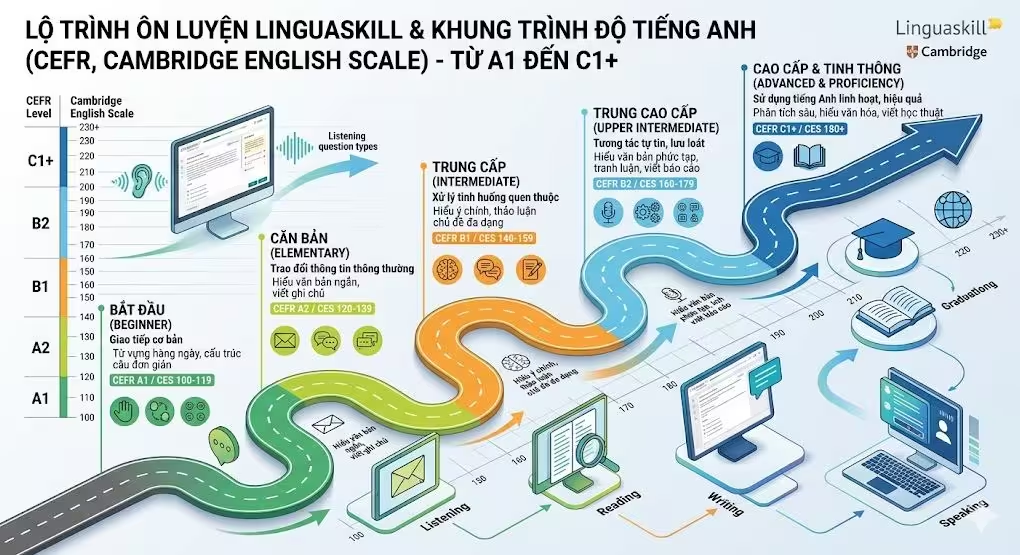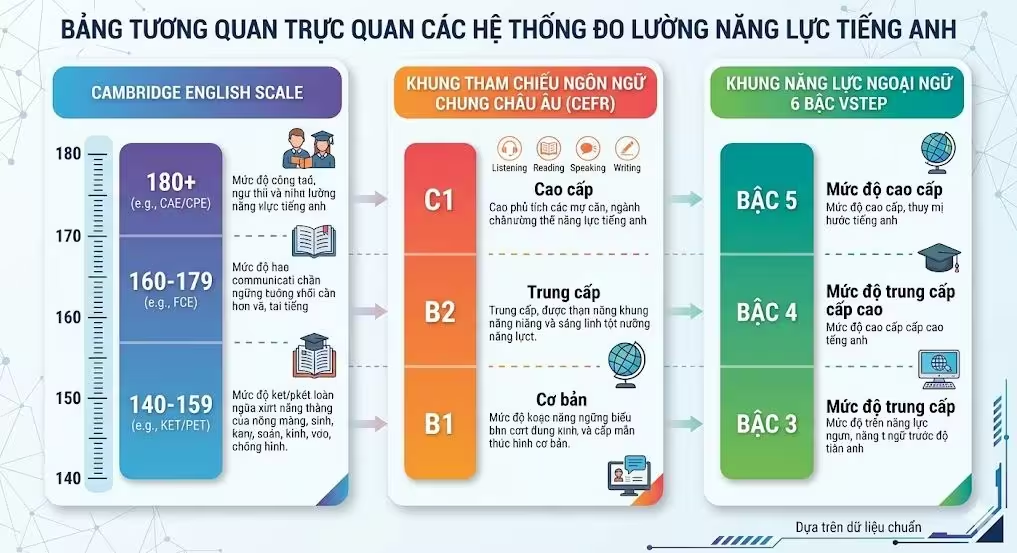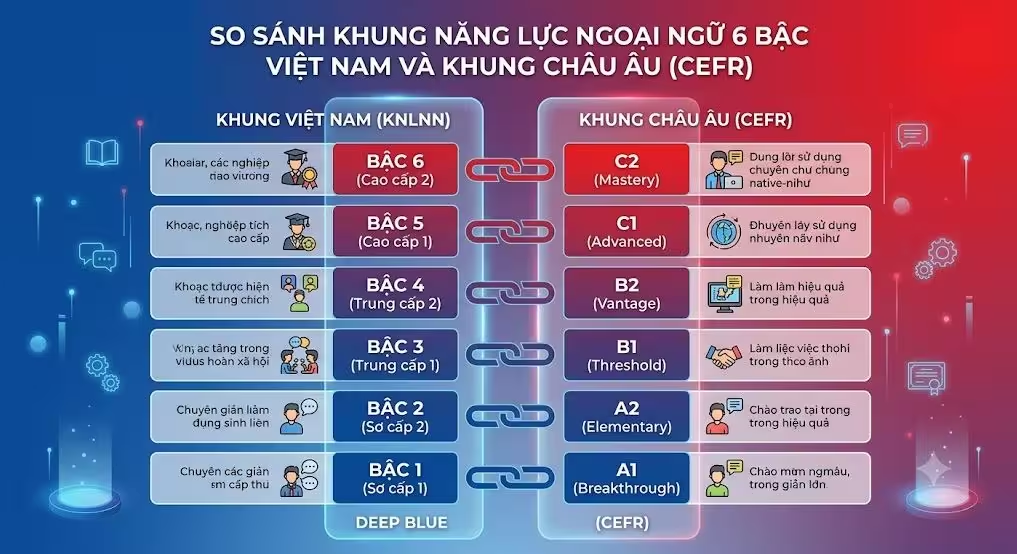
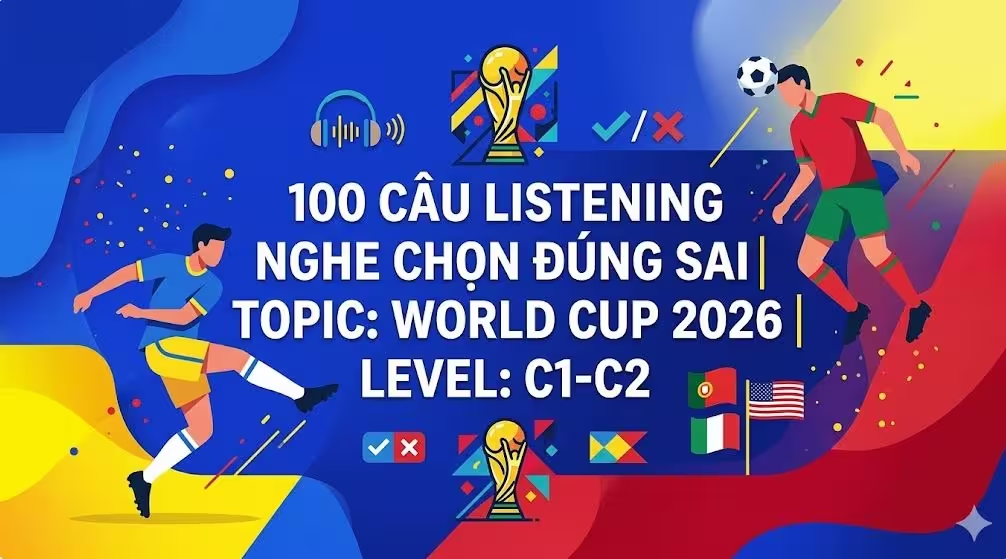
Tại ngưỡng trình độ C1 (Advanced) và C2 (Proficiency), kỹ năng nghe không chỉ dừng lại ở việc hiểu nội dung mà còn yêu cầu khả năng phân tích các tầng nghĩa sâu (nuances), nhận diện thái độ của người nói và xử lý các luồng thông tin đối lập trong môi trường học thuật hoặc chuyên nghiệp cao.
Sự kiện FIFA World Cup 2026 tại Bắc Mỹ với những biến động về kinh tế, chính trị và công nghệ là một “case study” hoàn hảo để rèn luyện tư duy phản biện qua dạng bài nghe Đúng/Sai. Bài viết này cung cấp hệ thống 100 câu hỏi chuyên sâu, được thiết kế dựa trên các tiêu chuẩn khảo thí khắt khe nhất của Cambridge và đặc biệt tối ưu cho bài thi Linguaskill.
Bản chất của kỹ năng Listening trình độ C1-C2
Ở cấp độ này, bài nghe thường là các buổi tọa đàm (Panel Discussions), bài giảng chuyên sâu (Lectures) hoặc các cuộc phỏng vấn chính trị. Dạng bài True/False không còn là sự đối chiếu từ vựng đơn thuần mà tập trung vào:
- Sự tinh tế trong cách diễn đạt gián tiếp: Người nói có thể xác nhận một thông tin nhưng lại sử dụng cấu trúc mỉa mai (irony) hoặc giảm nhẹ (euphemism), khiến câu khẳng định trong đề bài trở thành Sai (False).
- Quản lý thông tin gây nhiễu cấp độ cao: Các diễn giả thường tranh luận, đưa ra các giả thuyết trái ngược trước khi đi đến kết luận cuối cùng. Người học cần bám sát tiến trình lập luận để không bị lạc lối.
- Vốn từ vựng chuyên ngành rộng: Bao quát từ kinh tế học hành vi, quy hoạch đô thị bền vững đến an ninh mạng trong kỷ nguyên AI 2026.
Tại trung tâm Linguaskill, chúng tôi áp dụng phương pháp “Deep Listening”, giúp học viên trình độ C1+ tăng khả năng thẩm thấu thông tin thêm 50% thông qua việc phân tích cấu trúc bài nói thay vì chỉ nghe bắt từ đơn lẻ.
Cấu trúc 100 câu hỏi Listening World Cup 2026 (C1-C2)
Nội dung được chia thành 4 module chuyên biệt, phản ánh các vấn đề thực tế nhất của kỳ World Cup 2026.
Module 1: Kinh tế học siêu sự kiện và Lợi nhuận kỳ vọng (25 câu)
Phân tích mô hình kinh tế của 104 trận đấu và tác động của lạm phát đến giá vé tại Mỹ.
- Trọng tâm: Nghe hiểu các thuật ngữ về Fiscal impact, Revenue streams, Opportunity cost.
- Đặc điểm: Tốc độ nói nhanh, nhiều số liệu so sánh phức tạp.
Module 2: Trí tuệ nhân tạo và Cách mạng trọng tài (25 câu)
Nghe về sự ra đời của hệ thống “AI Referee 2.0” tại World Cup 2026.
- Trọng tâm: Các bài nói về đạo đức AI trong thể thao và độ chính xác của dữ liệu sinh trắc học.
- Ứng dụng: Rất sát với các bài nghe học thuật cấp độ C2 trong bài thi Linguaskill.
Module 3: Địa chính trị và Hợp tác đa phương Bắc Mỹ (25 câu)
Các cuộc thảo luận về sự phối hợp giữa ba chính phủ Mỹ, Canada và Mexico.
- Trọng tâm: Thách thức về logistics xuyên biên giới, luật di trú tạm thời và an ninh quốc gia.
- Thử thách: Phân biệt quan điểm của các diễn giả đến từ các quốc gia khác nhau.
Module 4: Di sản bền vững và Môi trường (25 câu)
Phân tích cam kết “Carbon Neutral” của FIFA năm 2026.
- Trọng tâm: Nghe hiểu các khái niệm về Environmental mitigation, Greenwashing, Circular economy.
Chiến thuật xử lý “Bẫy” logic cho trình độ Proficiency
Để xử lý hoàn hảo 100 câu True/False này, các chuyên gia tại Linguaskill đề xuất lộ trình 3 bước:
- Giai đoạn “Critical Reading”: Trước khi nghe, hãy phân tích câu hỏi để tìm các “từ chỉ định mức” (Quantifiers) như Exclusively, Predominantly, Marginally. Ở level C1-C2, đây chính là nơi đặt bẫy.
- Giai đoạn “Semantic Mapping”: Trong khi nghe, hãy thiết lập sơ đồ ý nghĩa trong đầu. Nếu diễn giả dùng cấu trúc “While it’s true that…”, hãy chuẩn bị tinh thần cho một mệnh đề đối lập phía sau sẽ phủ định lại ý đầu.
- Giai đoạn “Final Verification”: Đối với các câu khó, hãy tự hỏi: “Liệu có bằng chứng trực tiếp hay chỉ là sự suy diễn?”. Level C1 yêu cầu câu trả lời Đúng (True) phải dựa trên thông tin hiển ngôn hoặc ngụ ý rõ ràng trong bài.
Câu hỏi thường gặp
1. Tại sao trình độ C1 vẫn cần luyện tập dạng bài True/False? Dạng bài này ở trình độ cao cấp kiểm tra khả năng suy luận logic và nhận diện thái độ. Đây là những kỹ năng cốt lõi để làm việc trong môi trường quốc tế hoặc nghiên cứu học thuật.
2. Làm sao để không bị nhầm lẫn khi có quá nhiều người nói trong bài nghe? Bạn cần chú ý vào các từ dẫn dắt (Signposting) để biết ai đang đồng tình, ai đang phản đối. Tại Linguaskill, chúng tôi hướng dẫn học viên cách “theo dõi luồng quan điểm” thay vì chỉ nghe nội dung.
3. Tôi có thể sử dụng bộ 100 câu này để ôn thi Linguaskill Academic không? Rất phù hợp. Các module về công nghệ, kinh tế và môi trường trong World Cup 2026 phản ánh chính xác cấu trúc và độ khó của các bài đọc/nghe học thuật trình độ C1-C2.
4. Dữ liệu trong bài nghe có chính xác với sự kiện World Cup 2026 đang diễn ra không? Có, toàn bộ thông tin được cập nhật liên tục từ các nguồn tin chính thống của FIFA và các quốc gia chủ nhà năm 2026 để đảm bảo tính thực tế cao nhất.
5. Nên nghe bao nhiêu lần ở cấp độ C1-C2? Để đạt hiệu quả thực tế nhất, bạn chỉ nên nghe 1 lần duy nhất. Điều này rèn luyện khả năng tập trung cao độ và xử lý thông tin tức thời, giống như khi tham gia một cuộc họp chuyên môn.
6. Học phí và lộ trình luyện thi C1 tại Linguaskill Việt Nam như thế nào? Lộ trình được thiết kế cá nhân hóa dựa trên kết quả bài kiểm tra đầu vào. Bạn có thể liên hệ trực tiếp để được tư vấn gói học phù hợp với mục tiêu C1-C2 của mình.
Chủ đề liên quan
- Phân tích ngôn ngữ học trong các bài phát biểu của FIFA 2026
- Cách đạt điểm tối đa Listening C2 trong bài thi Linguaskill
- Review chi tiết công nghệ hỗ trợ trọng tài tại World Cup 2026
- Chiến thuật Note-taking cho hội thảo chuyên ngành trình độ cao cấp
- Từ vựng C1-C2 về chủ đề kinh tế vĩ mô và quản trị sự kiện
- Phân biệt các biến thể tiếng Anh (Mỹ, Canada) trong giao tiếp chuyên sâu
- Tác động của AI đến thị trường bản quyền truyền hình thể thao 2026
- Phương pháp Shadowing nâng cao cho người học trình độ Proficiency
- Lợi thế của chứng chỉ Linguaskill khi ứng tuyển vào các tập đoàn đa quốc gia
- Kế hoạch ôn luyện tiếng Anh cấp tốc cho mùa World Cup 2026
Bài 1
LISTENING PRACTICE: ARCHITECTING THE 2026 FIFA WORLD CUP
Candidate Name: __________________________
Level: C1-C2 (Advanced/Proficiency)
Topic: Geopolitical, Logistical, and Ethical Paradigms of the 2026 World Cup
PART 1: TRUE OR FALSE
Questions 1-20
Listen to a lecture by a professor of Sports Management regarding the strategic framework of the 2026 FIFA World Cup. Decide whether the following statements are True (T) or False (F).
| No. | Statement | Answer |
| 1 | The 2026 World Cup is described as a fundamental departure from previous logistical paradigms. | _____ |
| 2 | The expansion to 48 teams was primarily motivated by a desire to shorten the tournament’s duration. | _____ |
| 3 | A total of 104 matches will be contested, representing a significant increase in volume. | _____ |
| 4 | The tournament is scheduled to conclude within a standard 30-day window. | _____ |
| 5 | FIFA ultimately rejected the proposal for three-team groups in favor of four-team groups. | _____ |
| 6 | The addition of the “Round of 32” makes the path to the trophy more physically demanding. | _____ |
| 7 | The United States, Canada, and Mexico will host an equal number of matches. | _____ |
| 8 | Estadio Azteca is the first venue in history to host three World Cup opening matches. | _____ |
| 9 | MetLife Stadium in New Jersey was chosen for the final due to its historical prestige. | _____ |
| 10 | The “clustering” strategy was implemented to mitigate the risks of transcontinental travel. | _____ |
| 11 | Cities are divided into four distinct geographical regions to accommodate the teams. | _____ |
| 12 | Travel fatigue is cited as a major concern for player welfare in this expanded format. | _____ |
| 13 | The projected revenue for this World Cup cycle is estimated at $11 billion. | _____ |
| 14 | Ticket sales are expected to be the primary driver of FIFA’s revenue growth. | _____ |
| 15 | Host cities view the tournament as a catalyst for long-term growth in the hospitality sector. | _____ |
| 16 | LEED certification for stadiums is a voluntary recommendation rather than a mandate. | _____ |
| 17 | The sustainability framework focuses solely on the carbon footprint of air travel. | _____ |
| 18 | For the first time, human rights provisions are legally binding in the host city contracts. | _____ |
| 19 | Labor protections in the contracts apply exclusively to construction workers. | _____ |
| 20 | “Food recovery” is a strategic initiative aimed at addressing resource mismanagement. | _____ |
ANSWER KEY & EXPLANATIONS
Answers
- T | 2. F | 3. T | 4. F | 5. T | 6. T | 7. F | 8. T | 9. F | 10. T
- F | 12. T | 13. T | 14. F | 15. T | 16. F | 17. F | 18. T | 19. F | 20. T
Giải thích chi tiết (Detailed Explanations)
- (2) False: Việc mở rộng đội làm giải đấu dài hơn (extended), không phải rút ngắn.
- (4) False: Giải đấu kéo dài 39 ngày, vượt qua giới hạn 30 ngày thông thường.
- (7) False: Mỹ đăng cai phần lớn (lion’s share) số trận đấu, không phải chia đều.
- (9) False: MetLife được chọn dựa trên quy mô và hạ tầng, không hẳn là “uy tín lịch sử” (historical prestige) như Estadio Azteca.
- (11) False: Có 3 vùng (West, Central, East), không phải 4.
- (14) False: Bản quyền truyền hình (broadcasting rights) mới là nguồn thu chính.
- (16) False: LEED là yêu cầu bắt buộc (mandate), không phải khuyến khích.
- (19) False: Bảo vệ lao động áp dụng cho tất cả (all stakeholders), không chỉ thợ xây dựng.
NEW VOCABULARY STATISTICS (Thống kê từ vựng)
Tổng cộng: 10 từ vựng học thuật cấp độ C1-C2
- Paradigm /ˈpærədaɪm/ (n): Mô hình, khuôn mẫu. (Rất quan trọng trong văn phong học thuật).
- Contested /kənˈtestɪd/ (adj/v): Được tranh tài, thi đấu.
- Arduous /ˈɑːdjuəs/ (adj): Gian khổ, khó khăn. (Dùng để chỉ lộ trình thi đấu).
- Lion’s share (idiom): Phần lớn nhất của cái gì đó.
- Mitigate /ˈmɪtɪɡeɪt/ (v): Giảm thiểu tác động tiêu cực. (Từ vựng “must-know” cho C1).
- Catalyst /ˈkætəlɪst/ (n): Chất xúc tác/Yếu tố thúc đẩy sự thay đổi.
- Broadcasting rights (n.phr): Bản quyền phát sóng.
- Mandate /ˈmændeɪt/ (n/v): Lệnh/Yêu cầu bắt buộc từ cơ quan có thẩm quyền.
- Binding /ˈbaɪndɪŋ/ (adj): Có tính ràng buộc (thường là về pháp lý).
- Stewardship /ˈstjuːədʃɪp/ (n): Trách nhiệm quản lý (tài nguyên, môi trường).
LISTENING SCRIPT
(Academic Lecture: Sports Management and Global Logistics)
“Good morning, scholars. Today’s session focuses on the structural and ethical architecture of the FIFA World Cup 2026. This event is not merely an expansion of a sporting competition; it represents a fundamental shift in the global paradigm of mega-event management.
Let us first examine the structural metamorphosis. The decision to expand to 48 nations was not taken lightly. While it broadens global representation, it necessitates a staggering volume of 104 matches to be contested. Consequently, the tournament duration has been extended to a 39-day window, shattering the traditional month-long format. A pivotal reform was the rejection of three-team groups—which risked collusion—in favor of twelve groups of four. This introduces an arduous ‘Round of 32’, making the physical and mental demands on athletes unprecedented.
Geopolitically, the ‘United’ bid—comprising the U.S., Canada, and Mexico—is far from a symmetrical partnership. The United States will host the lion’s share of fixtures, including every match from the quarter-finals onward. Historical weight is concentrated in Mexico, with the Estadio Azteca becoming the first venue to host three opening matches. Conversely, the selection of MetLife Stadium for the final was a decision driven by modern capacity and logistical infrastructure rather than historical legacy.
To manage the inherent risks of such a vast geography, FIFA has implemented a ‘clustering’ strategy. Host cities are partitioned into three regional clusters: Western, Central, and Eastern. This is designed to mitigate travel fatigue and ensure that teams remain within consistent time zones for the group stages.
Financially, the 2026 cycle is projected to generate 11 billion dollars. While ticket sales are significant, the true fiscal cornerstone remains broadcasting rights. Host cities, meanwhile, view the Cup as a catalyst for long-term revitalization of their hospitality and infrastructure sectors.
Finally, we must address environmental and social stewardship. For 2026, LEED certification for stadiums is a strict mandate, not a suggestion. The sustainability framework is holistic, targeting everything from transport emissions to resource recovery. Furthermore, human rights provisions are, for the first time, a binding component of host city contracts. This ensures that fair labor protections extend to all stakeholders, coupled with innovative ‘food recovery’ programs to combat stadium waste.
2026 is, therefore, a blueprint for the future of sustainable global governance in sport.”
Bài 2
KỲ THI THỬ TỐT NGHIỆP THPT / VSTEP
Môn thi: TIẾNG ANH (LISTENING)
Chủ đề: THE MACRO-LOGISTICS OF FIFA WORLD CUP 2026
Trình độ: C1-C2
PART 1: TRUE OR FALSE
Questions 1-20
Directions: You will hear a specialized briefing regarding the organizational and socio-economic framework of the FIFA World Cup 2026. Decide if each statement below is True (T) or False (F). You will hear the recording twice.
| No. | Statement | Answer |
| 1 | The 2026 World Cup is a landmark event due to its unprecedented tripartite hosting. | _____ |
| 2 | The expansion to 48 teams was solely motivated by commercial profit. | _____ |
| 3 | One of the primary goals of the expansion is to enhance global inclusivity. | _____ |
| 4 | The total number of match fixtures has nearly doubled compared to the 2022 edition. | _____ |
| 5 | The tournament’s extension to 39 days is purely for scheduling television slots. | _____ |
| 6 | A total of sixteen metropolitan venues have been designated as host cities. | _____ |
| 7 | Canada and Mexico contribute equally to the number of hosting venues. | _____ |
| 8 | The United States possesses the largest share of host cities among the trio. | _____ |
| 9 | Estadio Azteca is slated to become the first venue to host three opening matches. | _____ |
| 10 | The final match will take place in the historical capital of the United States. | _____ |
| 11 | MetLife Stadium was selected for the final partly due to its superior capacity. | _____ |
| 12 | The initial proposal of three-team groups was scrapped to avoid match-fixing risks. | _____ |
| 13 | The current format utilizes twelve groups consisting of four teams each. | _____ |
| 14 | Only the top two teams from each group qualify for the knockout phase. | _____ |
| 15 | The “Round of 32” is a newly integrated stage in the elimination bracket. | _____ |
| 16 | Regional clustering is intended to mitigate the physical toll on players. | _____ |
| 17 | The “pod” system will isolate teams within specific time zones during the group stage. | _____ |
| 18 | The fiscal forecast for the tournament projects a revenue of precisely $10 billion. | _____ |
| 19 | FIFA aims to achieve a net-zero environmental impact through carbon offsets. | _____ |
| 20 | The tournament’s legacy focus is centered predominantly on elite player training. | _____ |
ANSWER KEY & EXPLANATIONS
| No. | Ans | Vietnamese Explanation |
| 1 | T | Sự kiện mang tính bước ngoặt vì lần đầu 3 nước (tripartite) cùng đăng cai. |
| 2 | F | Mở rộng vì nhiều lý do, bao gồm cả “global inclusivity” chứ không chỉ lợi nhuận. |
| 3 | T | Đúng, nhằm tăng tính bao trùm và cơ hội cho các liên đoàn bóng đá khác. |
| 4 | T | Số trận tăng từ 64 lên 104 (tăng gần gấp đôi). |
| 5 | F | Kéo dài 39 ngày để đảm bảo thời gian hồi phục cho cầu thủ (recovery). |
| 6 | T | Tổng cộng có 16 thành phố đăng cai. |
| 7 | F | Mexico có 3 thành phố, Canada chỉ có 2. |
| 8 | T | Mỹ chiếm đa số với 11 trên tổng số 16 thành phố. |
| 9 | T | Azteca sẽ lập kỷ lục lần thứ 3 tổ chức trận khai mạc World Cup. |
| 10 | F | Trận chung kết ở New Jersey (MetLife), không phải thủ đô (Washington D.C.). |
| 11 | T | Đúng, sức chứa (capacity) và cơ sở hạ tầng là yếu tố then chốt. |
| 12 | T | Thể thức 3 đội bị hủy vì lo ngại dàn xếp tỷ số (collusion/match-fixing). |
| 13 | T | Đúng, thể thức chính thức là 12 bảng, mỗi bảng 4 đội. |
| 14 | F | Ngoài 2 đội đầu bảng, 8 đội hạng 3 xuất sắc nhất cũng đi tiếp. |
| 15 | T | Với 48 đội, vòng knockout bắt đầu từ vòng 32 đội (Round of 32). |
| 16 | T | Phân cụm vùng miền (clustering) để giảm bớt sự mệt mỏi (physical toll). |
| 17 | T | Hệ thống “pod” giúp giảm thiểu việc di chuyển giữa các múi giờ. |
| 18 | F | Dự báo doanh thu là 11 tỷ USD, không phải chính xác 10 tỷ. |
| 19 | T | Đúng, FIFA hướng tới phát thải ròng bằng 0 thông qua bù đắp carbon. |
| 20 | F | Trọng tâm di sản (legacy) là bóng đá phong trào (grassroots) và hạ tầng cộng đồng. |
NEW VOCABULARY STATISTICS
Total specialized terms introduced: 10 (C1-C2 level)
- Tripartite /traɪˈpɑːrtaɪt/ (adj): Gồm ba bên. (Quan trọng trong ngoại giao/hợp tác quốc tế).
- Inclusivity /ˌɪnkluːˈsɪvəti/ (n): Tính bao trùm. (Chủ đề xã hội học/tổ chức hiện đại).
- Fixture /ˈfɪkstʃər/ (n): Trận đấu được ấn định. (Dùng trong bối cảnh lịch trình chuyên nghiệp).
- Sovereign /ˈsɑːvrən/ (adj/n): Chủ quyền/Tối cao. (Dùng để chỉ các quốc gia độc lập).
- Collusion /kəˈluːʒn/ (n): Sự thông đồng bất chính. (Thuật ngữ pháp lý/thể thao về dàn xếp tỷ số).
- Mitigate /ˈmɪtɪɡeɪt/ (v): Giảm thiểu tác động tiêu cực. (Cần thiết cho bài luận C1).
- Physical toll (n phrase): Sự tổn hại về thể chất. (Cách nói học thuật cho “tiredness”).
- Fiscal forecast (n phrase): Dự báo ngân sách/tài chính. (Thay thế cho “money prediction”).
- Carbon offset (n phrase): Bù đắp carbon. (Chủ đề môi trường bền vững).
- Grassroots /ˈɡræsruːts/ (n/adj): Tầng lớp dân nghèo/cơ sở/phong trào gốc.
LISTENING SCRIPT
(Voice: Formal academic tone, sophisticated vocabulary, moderate pace)
“Ladies and Gentlemen, we are on the precipice of a seismic shift in international sports administration with the arrival of the 2026 FIFA World Cup. This iteration represents an unprecedented (1) tripartite hosting configuration between the United States, Mexico, and Canada—three sovereign nations coordinating a logistical undertaking of staggering proportions.
Central to the 2026 vision is the expansion of the field to (2) 48 nations. While critics point toward commercial gain, FIFA maintains the decision is rooted in fostering (3) global inclusivity, providing emerging football nations a platform they have historically been denied. This expansion necessitates a significant surge in the match (4) inventory, ballooning to 104 total fixtures. To accommodate this, and more importantly, to safeguard athlete welfare, the tournament has been extended to a (5) 39-day window to prioritize player recovery.
Logistically, the tournament will be dispersed across (6) 16 metropolitan venues. The distribution is weighted toward the United States, which provides 11 cities, while Mexico and Canada provide three and two respectively. (9) Estadio Azteca is poised to etch its name in history as the first venue to host three separate World Cup opening ceremonies. Conversely, the championship final will be staged at MetLife Stadium in (11) New Jersey, chosen for its state-of-the-art infrastructure and immense capacity.
The competitive format underwent a notable evolution during the planning stages. An (12) initial proposal for three-team groups was eventually discarded due to valid concerns regarding collusion, where teams could theoretically manipulate results to ensure mutual progression. Instead, the tournament will feature (13) 12 groups of four. In a move to populate the expanded knockout bracket, the top two teams per group and the (14) eight best third-place finishers will advance to a newly integrated (15) Round of 32.
To (16) mitigate the physical toll of transcontinental travel, organizers have adopted a strategy of regional clustering. By utilizing a ‘pod’ system, teams and fans will be localized within Western, Central, or Eastern zones to minimize time-zone fatigue. Financially, the (18) fiscal forecast is robust, with revenue anticipated to reach 11 billion dollars. Beyond the ledger, FIFA has committed to a green mandate, targeting (19) net-zero status through rigorous carbon offsets. The ultimate legacy, however, remains fixed on (20) grassroots development, ensuring that the infrastructure serves local communities long after the final whistle.”
Bài 3
LISTENING PRACTICE: THE GEOPOLITICAL AND LOGISTICAL DYNAMICS OF WORLD CUP 2026
PART 1: TRUE OR FALSE
Questions 1 – 20
Listen to a presentation regarding the organizational complexity of the 2026 FIFA World Cup and decide whether the following statements are True (T) or False (F).
| No. | Statement | Answer |
| 1 | The 2026 World Cup is the first instance of a multi-host format in FIFA history. | __________ |
| 2 | The expansion to 48 teams is primarily a strategy to diversify the tournament’s global reach. | __________ |
| 3 | FIFA’s initial proposal for three-team groups was discarded to prevent match-fixing and lack of drama. | __________ |
| 4 | The total number of matches in 2026 represents a 50% increase from the 2022 edition. | __________ |
| 5 | The tournament will span exactly six weeks from the opening whistle to the final. | __________ |
| 6 | A new knockout tier, the Round of 32, is a direct consequence of the expanded group stage. | __________ |
| 7 | Estadio Azteca is the first venue to ever serve as the starting point for three separate World Cups. | __________ |
| 8 | The final match is strategically scheduled to coincide with the American Independence Day. | __________ |
| 9 | MetLife Stadium’s selection for the final was influenced by its status within the New York metropolitan area. | __________ |
| 10 | The host cities are grouped into five distinct geographical regions to streamline logistics. | __________ |
| 11 | The “Regional Cluster” model is a key component of the tournament’s decarbonization strategy. | __________ |
| 12 | The travel strategy is expected to completely eliminate the physical toll on participating athletes. | __________ |
| 13 | Cross-continental flights will be minimized by keeping teams within designated East, Central, or West zones. | __________ |
| 14 | Sustainability goals for 2026 are exclusively limited to the reduction of aviation emissions. | __________ |
| 15 | The ball tracking technology utilizes a localized positioning system within the stadium infrastructure. | __________ |
| 16 | The primary objective of the embedded ball sensor is to provide instantaneous data for officiating. | __________ |
| 17 | Semi-automated offside technology is intended to supersede human decision-making entirely. | __________ |
| 18 | The official slogan “We Are 26” is described as a minimalist and modular branding identity. | __________ |
| 19 | The branding allows for the integration of unique local narratives from each host municipality. | __________ |
| 20 | The lecturer argues that the 2026 World Cup’s success depends on navigating complex jurisdictional hurdles. | __________ |
ANSWER KEY & EXPLANATIONS
1. Key
- F | 2. T | 3. T | 4. F | 5. F | 6. T | 7. T | 8. F | 9. T | 10. F
- T | 12. F | 13. T | 14. F | 15. F | 16. T | 17. F | 18. T | 19. T | 20. T
2. Giải thích chi tiết (Detailed Explanations)
- Câu 1 (F): Đây không phải lần đầu tiên (năm 2002 Hàn Quốc và Nhật Bản đã đồng đăng cai). Đây là lần đầu tiên có 3 quốc gia đồng đăng cai.
- Câu 4 (F): Số trận tăng từ 64 lên 104, tức là tăng hơn 60%, không phải 50%.
- Câu 5 (F): 39 ngày không phải đúng 6 tuần (42 ngày).
- Câu 8 (F): Trận chung kết là 19/7, Independence Day là 4/7.
- Câu 10 (F): Chia làm 3 vùng (clusters), không phải 5.
- Câu 12 (F): Chiến lược nhằm “giảm thiểu” (mitigate) chứ không thể “loại bỏ hoàn toàn” (eliminate) sự mệt mỏi của cầu thủ.
- Câu 15 (F): Công nghệ cảm biến nằm bên trong quả bóng, không phải hệ thống định vị trên hạ tầng sân.
- Câu 17 (F): Công nghệ chỉ hỗ trợ (assist), không thay thế hoàn toàn (supersede) trọng tài.
3. Thống kê & Phân tích từ vựng (Vocabulary Analysis)
Tổng cộng: 10 từ vựng trình độ C1/C2.
| Từ vựng | Nghĩa | Phân tích chuyên sâu |
| Jurisdictional (adj) | Thuộc về thẩm quyền pháp lý | Rất quan trọng khi nói về việc phối hợp giữa 3 quốc gia khác nhau. |
| Dissect (v) | Mổ xẻ, phân tích chi tiết | Thường dùng trong văn phong học thuật thay cho “analyze”. |
| Modular (adj) | Có tính mô-đun/linh hoạt | Mô tả hệ thống nhận diện thương hiệu có thể thay đổi tùy biến theo địa phương. |
| Supersede (v) | Thay thế, thế chỗ | Dùng cho các công nghệ hoặc quy định mới thay thế cái cũ. |
| Decarbonization (n) | Sự khử carbon | Thuật ngữ chuyên ngành về môi trường và phát triển bền vững. |
| Mitigate (v) | Làm giảm nhẹ | Dùng cho các tác động tiêu cực (fatigue, pollution). |
| Inaugural (adj) | Khai mạc, đầu tiên | Trang trọng hơn từ “opening”. |
| Ploy (n) | Thủ đoạn/Mánh khóe | Xuất hiện trong bài để bác bỏ ý kiến cho rằng việc mở rộng chỉ là “marketing ploy”. |
| Collusion (n) | Sự thông đồng/Câu kết | Thường dùng trong thể thao để chỉ việc dàn xếp tỉ số. |
| Climax (n) | Đỉnh điểm/Kết thúc | Dùng cho trận chung kết của một kỳ đại hội. |
LISTENING SCRIPT
(Voice: A formal academic lecture on Sports Macro-Economics)
“Good afternoon. Today we shall dissect the logistical and geopolitical blueprint of the 2026 FIFA World Cup, a tournament that represents a tectonic shift in the administration of global mega-events.
While the 2002 edition broke the single-host mold, 2026 is the first to embrace a tri-national format, distributed across Canada, Mexico, and the United States. This expansion to 48 nations is often dismissed as a mere commercial ploy, yet it serves a deeper strategic intent: the diversification of football’s global representation. However, this growth necessitated a radical structural overhaul. FIFA originally entertained a three-team group stage format but ultimately discarded it to avoid the risk of collusion and stagnant final-round matches. By reverting to groups of four, the fixture list has ballooned to 104 matches, requiring a condensed yet grueling 39-day window.
The competitive landscape introduces a new knockout tier—the Round of 32—meaning the eventual champion must navigate an additional round of high-stakes football. Chronologically, the inaugural whistle will sound at the Estadio Azteca, making it the only venue in history to serve as a three-time World Cup starter. The tournament will reach its climax on July 19th at MetLife Stadium, a selection that leverages the commercial gravity of the New York metropolitan area despite the jurisdictional complexities of the New Jersey location.
Perhaps the most formidable challenge lies in the decarbonization of the event. To mitigate the massive carbon footprint inherent in North American travel, organizers have grouped host cities into three regional clusters: East, Central, and West. This strategy aims to limit cross-continental flights, thereby reducing both aviation emissions and the physiological toll of travel fatigue on elite athletes.
Technologically, the 2026 ball will feature an internal sensor to facilitate semi-automated offside decisions. It is crucial to note that this system is designed to assist, not supersede, human officiating. Finally, the branding identity—’We Are 26‘—utilizes a modular design. This allows for a minimalist core brand that can integrate the specific local narratives of each host municipality. Navigating the legal and logistical hurdles of three distinct nations remains the ultimate test of this ambitious project.”
Bài 4
KỲ THI CHỌN HỌC SINH GIỎI QUỐC GIA / VSTEP C2 PREPARATION
BÀI THI: TIẾNG ANH (KỸ NĂNG NGHE)
Chủ đề: Strategic Analysis of the FIFA World Cup 2026
PART 1: TRUE/FALSE STATEMENTS
Questions 1 – 20: Listen to the academic lecture regarding the geopolitical, economic, and technological framework of the FIFA World Cup 2026. Decide whether the following statements are True (T) or False (F).
| No. | Statement | Answer |
| 1 | The 2026 World Cup is the inaugural instance of a tri-national hosting agreement. | ________ |
| 2 | The tournament’s primary objective is strictly confined to maximizing commercial profit. | ________ |
| 3 | A total of 48 nations will participate in this expanded edition of the tournament. | ________ |
| 4 | The revised structural format will comprise a staggering 104 fixtures. | ________ |
| 5 | FIFA ultimately sanctioned the three-team group proposal to increase match intensity. | ________ |
| 6 | The competition will feature 12 distinct groups, each containing four teams. | ________ |
| 7 | Estadio Azteca is slated to host its third World Cup final match in 2026. | ________ |
| 8 | The tournament is scheduled to commence on June 11, 2026. | ________ |
| 9 | MetLife Stadium in New Jersey has been designated as the site for the grand finale. | ________ |
| 10 | For logistical efficiency, all matches from the Round of 16 onwards will occur in the USA. | ________ |
| 11 | The projected gross revenue for the 2026 cycle is estimated at $11 billion. | ________ |
| 12 | The organizing committee’s financial strategy prioritizes the construction of new arenas. | ________ |
| 13 | The event is expected to facilitate a surge in permanent employment within the region. | ________ |
| 14 | Environmental sustainability is being addressed through a regional clustering model. | ________ |
| 15 | Achieving a carbon-neutral status is a primary ecological objective for the organizers. | ________ |
| 16 | To ensure rapid transit, air mileage for competing teams will be substantially increased. | ________ |
| 17 | “United as One” has been officially adopted as the tournament’s primary slogan. | ________ |
| 18 | Security protocols involve the mandatory implementation of biometric identification for fans. | ________ |
| 19 | The integration of 8K broadcasting is specifically aimed at mitigating transmission latency. | ________ |
| 20 | The tournament’s enduring legacy is primarily focused on grassroots football development. | ________ |
ANSWER KEY & DETAILED EXPLANATIONS
| Q | Ans | Detailed Explanation (Tiếng Việt) |
| 1 | T | Bài nghe sử dụng từ “unprecedented tri-national collaboration” (sự hợp tác 3 quốc gia chưa từng có tiền lệ). |
| 2 | F | Ngoài lợi nhuận, mục tiêu còn là “fostering geopolitical synergy” (thúc đẩy sự hiệp lực địa chính trị). |
| 3 | T | Con số 48 đội được nhắc đến rõ ràng như một sự mở rộng quy mô. |
| 4 | T | Tổng số trận đấu tăng lên 104 trận (“104 fixtures”). |
| 5 | F | FIFA thực tế đã bác bỏ (“opted against”) đề xuất bảng 3 đội để giữ tính cạnh tranh. |
| 6 | T | Thể thức chốt lại là 12 bảng, mỗi bảng 4 đội. |
| 7 | F | Estadio Azteca tổ chức trận khai mạc (opening match), không phải trận chung kết (final). |
| 8 | T | Ngày khai mạc chính xác là 11/06/2026. |
| 9 | T | MetLife Stadium tại New Jersey là địa điểm cho trận chung kết. |
| 10 | F | Chỉ từ vòng Tứ kết (Quarter-finals) trở đi mới tập trung hoàn toàn tại Mỹ. |
| 11 | T | Doanh thu dự kiến đạt ngưỡng 11 tỷ USD. |
| 12 | F | Trọng tâm là “revitalization of existing facilities” (tái tạo cơ sở vật chất sẵn có) thay vì xây mới. |
| 13 | F | Bài nói đề cập đến “short-term positions” (việc làm ngắn hạn/thời vụ), không phải vĩnh viễn. |
| 14 | T | Mô hình “regional clustering” (phân cụm khu vực) giúp tối ưu hóa logistics và môi trường. |
| 15 | T | “Carbon-neutral status” là mục tiêu sinh thái hàng đầu được nhắc tới. |
| 16 | F | Ngược lại, ban tổ chức muốn “strictly limiting air mileage” (hạn chế tối đa dặm bay). |
| 17 | F | Slogan chính thức là “We Are 26”, không phải “United as One”. |
| 18 | T | “Biometric identification” (định danh sinh trắc học) là bắt buộc đối với khán giả. |
| 19 | T | Công nghệ 8K được dùng để loại bỏ “latency” (độ trễ) truyền dẫn. |
| 20 | T | “Grassroots development” (phát triển bóng đá phong trào) là di sản cốt lõi của giải đấu. |
VOCABULARY STATISTICS & ANALYTICS
Total advanced (C1-C2) words introduced: 12
| No. | Vocabulary | Type | Meaning | Importance in C1-C2 Exams |
| 1 | Sovereign | adj | Có chủ quyền | Từ vựng học thuật cao cấp về chính trị/ngoại giao. |
| 2 | Synergy | n | Sự hiệp lực | Thường dùng trong phân tích kinh tế và hợp tác quốc tế. |
| 3 | Fixture | n | Trận đấu (định sẵn) | Thuật ngữ chuyên ngành thể thao ở trình độ Proficiency. |
| 4 | Revitalization | n | Sự hồi sinh/tái tạo | Dùng để mô tả việc nâng cấp hạ tầng hoặc đô thị. |
| 5 | Ancillary | adj | Phụ trợ, bổ trợ | Mô tả các ngành dịch vụ đi kèm (du lịch, khách sạn). |
| 6 | Mitigate | v | Giảm nhẹ/Làm dịu | Từ vựng “Must-have” cho bài viết/nói về giải pháp. |
| 7 | Clustering | n | Sự phân cụm | Thuật ngữ chuyên sâu về quản lý logistics và địa lý. |
| 8 | Latency | n | Độ trễ | Thuật ngữ kỹ thuật cao cấp về truyền thông/IT. |
| 9 | Grassroots | n/adj | Tận gốc/Phong trào | Chỉ các hoạt động từ cấp cơ sở, quần chúng. |
| 10 | Onerous | adj | Nặng nề, khó khăn | Từ vựng formal thay thế cho “burdensome/difficult”. |
| 11 | Proprietary | adj | Độc quyền | Thường dùng cho các hệ thống công nghệ hoặc bảo mật. |
| 12 | Stewardship | n | Trách nhiệm quản lý | Thường đi với cụm “Environmental stewardship”. |
LISTENING SCRIPT
(Setting: A senior seminar at the Institute of International Sports Economics)
Professor: Good afternoon, doctoral candidates. Today, we shall dissect the intricate geopolitical and socio-economic framework of the FIFA World Cup 2026. This monumental event is far more than a quadrennial sporting competition; it represents an (1) unprecedented tri-national collaboration between the United States, Canada, and Mexico as three distinct sovereign entities. While the financial incentives are transparent, the core ambition of the organizing committee involves fostering a profound (2) geopolitical synergy across the North American continent.
Statistically, the magnitude is daunting. The tournament is undergoing a radical expansion to include (3) 48 participating nations. Consequently, the schedule has been inflated to a (4) staggering 104 fixtures spanning nearly six weeks. It is noteworthy that FIFA initially entertained a proposal for three-team groups; however, they ultimately (5) opted against this to preserve the competitive integrity of the preliminary rounds. Instead, the format will comprise (6) 12 groups of four teams each.
The tournament will commence on (8) June 11, 2026, at the historic (7) Estadio Azteca in Mexico City. While the venue is legendary, it is designated for the opening match, not the final. The grand finale is slated for July 19 at (9) MetLife Stadium in New Jersey. Furthermore, to streamline the onerous logistics of the knockout phase, all matches from the (10) quarter-finals onward will be centralized within the United States.
From a fiscal perspective, FIFA projects a record (11) gross revenue of $11 billion. Interestingly, the strategy for stadium infrastructure has pivoted. Rather than the traditional massive expenditure on new arenas, the focus is on the (12) revitalization of existing, top-tier facilities. This investment is predicted to generate thousands of (13) short-term positions within the ancillary industries of tourism and hospitality, rather than permanent industrial employment.
Environmental stewardship remains a cornerstone of the 2026 plan. To mitigate the ecological footprint, a (14) regional clustering model is being utilized for the group stages. This ensures that teams remain within specific geographic zones, thereby strictly limiting (16) air travel mileage. The overarching goal is the achievement of a (15) carbon-neutral status for the entire duration of the event.
Technologically, the 2026 World Cup will be a pioneer. Security protocols have been heightened via the mandatory use of (18) biometric identification for all stadium attendees. To optimize the global viewing experience, (19) 8K broadcasting technology will be integrated with proprietary AI systems to virtually eliminate transmission latency. Ultimately, the organizers hope that beyond the spectacle, the tournament leaves a (20) lasting legacy for grassroots football development worldwide under the official slogan, “We Are 26.”
Any questions regarding the economic impact of the clustering model before we conclude?
Bài 5
KỲ THI CHỌN HỌC SINH GIỎI QUỐC GIA / VSTEP C2 PREPARATION
BÀI THI: TIẾNG ANH (KỸ NĂNG NGHE)
Chủ đề: Strategic Analysis of the FIFA World Cup 2026
PART 1: TRUE/FALSE STATEMENTS
Questions 1 – 20: Listen to the academic lecture regarding the geopolitical, economic, and technological framework of the FIFA World Cup 2026. Decide whether the following statements are True (T) or False (F).
| No. | Statement | Answer |
|---|---|---|
| 1 | The 2026 World Cup is the inaugural instance of a tri-national hosting agreement. | __ |
| 2 | The tournament’s primary objective is strictly confined to maximizing commercial profit. | __ |
| 3 | A total of 48 nations will participate in this expanded edition of the tournament. | __ |
| 4 | The revised structural format will comprise a staggering 104 fixtures. | __ |
| 5 | FIFA ultimately sanctioned the three-team group proposal to increase match intensity. | __ |
| 6 | The competition will feature 12 distinct groups, each containing four teams. | __ |
| 7 | Estadio Azteca is slated to host its third World Cup final match in 2026. | __ |
| 8 | The tournament is scheduled to commence on June 11, 2026. | __ |
| 9 | MetLife Stadium in New Jersey has been designated as the site for the grand finale. | __ |
| 10 | For logistical efficiency, all matches from the Round of 16 onwards will occur in the USA. | __ |
| 11 | The projected gross revenue for the 2026 cycle is estimated at $11 billion. | __ |
| 12 | The organizing committee’s financial strategy prioritizes the construction of new arenas. | __ |
| 13 | The event is expected to facilitate a surge in permanent employment within the region. | __ |
| 14 | Environmental sustainability is being addressed through a regional clustering model. | __ |
| 15 | Achieving a carbon-neutral status is a primary ecological objective for the organizers. | __ |
| 16 | To ensure rapid transit, air mileage for competing teams will be substantially increased. | __ |
| 17 | “United as One” has been officially adopted as the tournament’s primary slogan. | __ |
| 18 | Security protocols involve the mandatory implementation of biometric identification for fans. | __ |
| 19 | The integration of 8K broadcasting is specifically aimed at mitigating transmission latency. | __ |
| 20 | The tournament’s enduring legacy is primarily focused on grassroots football development. | __ |
ANSWER KEY & DETAILED EXPLANATIONS
| Q | Ans | Detailed Explanation (Tiếng Việt) |
|---|---|---|
| 1 | T | Bài nghe sử dụng từ “unprecedented tri-national collaboration” (sự hợp tác 3 quốc gia chưa từng có tiền lệ). |
| 2 | F | Ngoài lợi nhuận, mục tiêu còn là “fostering geopolitical synergy” (thúc đẩy sự hiệp lực địa chính trị). |
| 3 | T | Con số 48 đội được nhắc đến rõ ràng như một sự mở rộng quy mô. |
| 4 | T | Tổng số trận đấu tăng lên 104 trận (“104 fixtures”). |
| 5 | F | FIFA thực tế đã bác bỏ (“opted against”) đề xuất bảng 3 đội để giữ tính cạnh tranh. |
| 6 | T | Thể thức chốt lại là 12 bảng, mỗi bảng 4 đội. |
| 7 | F | Estadio Azteca tổ chức trận khai mạc (opening match), không phải trận chung kết (final). |
| 8 | T | Ngày khai mạc chính xác là 11/06/2026. |
| 9 | T | MetLife Stadium tại New Jersey là địa điểm cho trận chung kết. |
| 10 | F | Chỉ từ vòng Tứ kết (Quarter-finals) trở đi mới tập trung hoàn toàn tại Mỹ. |
| 11 | T | Doanh thu dự kiến đạt ngưỡng 11 tỷ USD. |
| 12 | F | Trọng tâm là “revitalization of existing facilities” (tái tạo cơ sở vật chất sẵn có) thay vì xây mới. |
| 13 | F | Bài nói đề cập đến “short-term positions” (việc làm ngắn hạn/thời vụ), không phải vĩnh viễn. |
| 14 | T | Mô hình “regional clustering” (phân cụm khu vực) giúp tối ưu hóa logistics và môi trường. |
| 15 | T | “Carbon-neutral status” là mục tiêu sinh thái hàng đầu được nhắc tới. |
| 16 | F | Ngược lại, ban tổ chức muốn “strictly limiting air mileage” (hạn chế tối đa dặm bay). |
| 17 | F | Slogan chính thức là “We Are 26”, không phải “United as One”. |
| 18 | T | “Biometric identification” (định danh sinh trắc học) là bắt buộc đối với khán giả. |
| 19 | T | Công nghệ 8K được dùng để loại bỏ “latency” (độ trễ) truyền dẫn. |
| 20 | T | “Grassroots development” (phát triển bóng đá phong trào) là di sản cốt lõi của giải đấu. |
VOCABULARY STATISTICS & ANALYTICS
Total advanced (C1-C2) words introduced: 12
| No. | Vocabulary | Type | Meaning | Importance in C1-C2 Exams |
|---|---|---|---|---|
| 1 | Sovereign | adj | Có chủ quyền | Từ vựng học thuật cao cấp về chính trị/ngoại giao. |
| 2 | Synergy | n | Sự hiệp lực | Thường dùng trong phân tích kinh tế và hợp tác quốc tế. |
| 3 | Fixture | n | Trận đấu (định sẵn) | Thuật ngữ chuyên ngành thể thao ở trình độ Proficiency. |
| 4 | Revitalization | n | Sự hồi sinh/tái tạo | Dùng để mô tả việc nâng cấp hạ tầng hoặc đô thị. |
| 5 | Ancillary | adj | Phụ trợ, bổ trợ | Mô tả các ngành dịch vụ đi kèm (du lịch, khách sạn). |
| 6 | Mitigate | v | Giảm nhẹ/Làm dịu | Từ vựng “Must-have” cho bài viết/nói về giải pháp. |
| 7 | Clustering | n | Sự phân cụm | Thuật ngữ chuyên sâu về quản lý logistics và địa lý. |
| 8 | Latency | n | Độ trễ | Thuật ngữ kỹ thuật cao cấp về truyền thông/IT. |
| 9 | Grassroots | n/adj | Tận gốc/Phong trào | Chỉ các hoạt động từ cấp cơ sở, quần chúng. |
| 10 | Onerous | adj | Nặng nề, khó khăn | Từ vựng formal thay thế cho “burdensome/difficult”. |
| 11 | Proprietary | adj | Độc quyền | Thường dùng cho các hệ thống công nghệ hoặc bảo mật. |
| 12 | Stewardship | n | Trách nhiệm quản lý | Thường đi với cụm “Environmental stewardship”. |
LISTENING SCRIPT
(Setting: A senior seminar at the Institute of International Sports Economics)
Professor: Good afternoon, doctoral candidates. Today, we shall dissect the intricate geopolitical and socio-economic framework of the FIFA World Cup 2026. This monumental event is far more than a quadrennial sporting competition; it represents an (1) unprecedented tri-national collaboration between the United States, Canada, and Mexico as three distinct sovereign entities. While the financial incentives are transparent, the core ambition of the organizing committee involves fostering a profound (2) geopolitical synergy across the North American continent.
Statistically, the magnitude is daunting. The tournament is undergoing a radical expansion to include (3) 48 participating nations. Consequently, the schedule has been inflated to a (4) staggering 104 fixtures spanning nearly six weeks. It is noteworthy that FIFA initially entertained a proposal for three-team groups; however, they ultimately (5) opted against this to preserve the competitive integrity of the preliminary rounds. Instead, the format will comprise (6) 12 groups of four teams each.
The tournament will commence on (8) June 11, 2026, at the historic (7) Estadio Azteca in Mexico City. While the venue is legendary, it is designated for the opening match, not the final. The grand finale is slated for July 19 at (9) MetLife Stadium in New Jersey. Furthermore, to streamline the onerous logistics of the knockout phase, all matches from the (10) quarter-finals onward will be centralized within the United States.
From a fiscal perspective, FIFA projects a record (11) gross revenue of $11 billion. Interestingly, the strategy for stadium infrastructure has pivoted. Rather than the traditional massive expenditure on new arenas, the focus is on the (12) revitalization of existing, top-tier facilities. This investment is predicted to generate thousands of (13) short-term positions within the ancillary industries of tourism and hospitality, rather than permanent industrial employment.
Environmental stewardship remains a cornerstone of the 2026 plan. To mitigate the ecological footprint, a (14) regional clustering model is being utilized for the group stages. This ensures that teams remain within specific geographic zones, thereby strictly limiting (16) air travel mileage. The overarching goal is the achievement of a (15) carbon-neutral status for the entire duration of the event.
Technologically, the 2026 World Cup will be a pioneer. Security protocols have been heightened via the mandatory use of (18) biometric identification for all stadium attendees. To optimize the global viewing experience, (19) 8K broadcasting technology will be integrated with proprietary AI systems to virtually eliminate transmission latency. Ultimately, the organizers hope that beyond the spectacle, the tournament leaves a (20) lasting legacy for grassroots football development worldwide under the official slogan, “We Are 26.”
Any questions regarding the economic impact of the clustering model before we conclude?