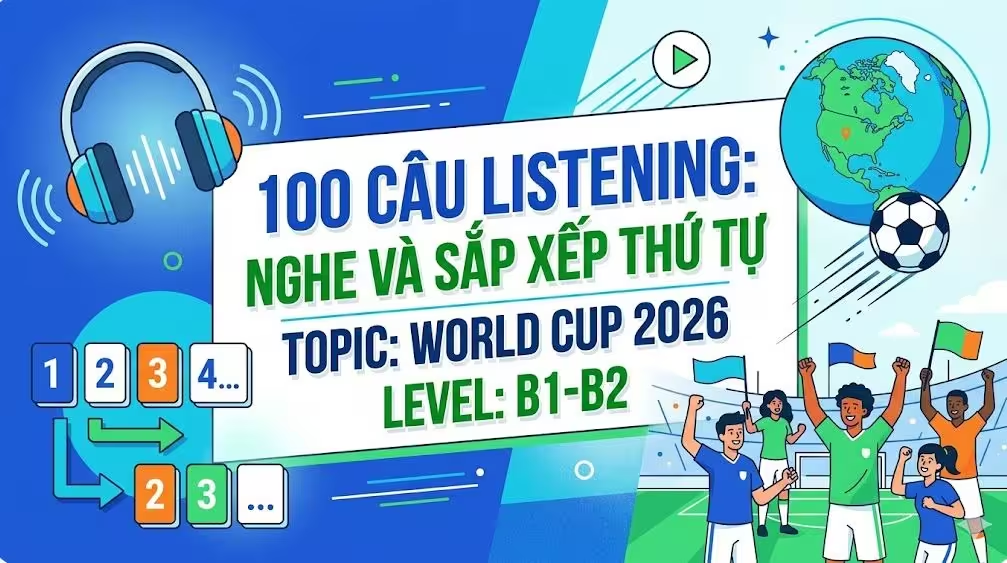
Luyện tập kỹ năng nghe hiểu trình độ Trung cấp (B1) và Trên trung cấp (B2) đòi hỏi người học không chỉ bắt được từ khóa mà còn phải nắm bắt được mạch logic và trình tự thời gian của các sự kiện phức tạp. Trong bối cảnh kỳ FIFA World Cup 2026 đang diễn ra tại 16 thành phố thuộc Mỹ, Canada và Mexico, các tình huống thực tế về logistics, quản lý sự kiện và lịch trình thi đấu trở thành tài liệu học thuật vô giá.
Bài viết này cung cấp hệ thống 100 câu hỏi dạng Ordering/Sequencing (Sắp xếp thứ tự), được thiết kế chuẩn hóa theo khung CEFR và tối ưu hóa cho chứng chỉ Linguaskill, giúp học viên bứt phá điểm số thông qua các dữ liệu thực chứng của năm 2026.
Tầm quan trọng của kỹ năng Sequencing ở trình độ B1-B2
Ở trình độ B1-B2, người học bắt đầu tiếp xúc với các đoạn hội thoại dài và bài thuyết trình chuyên sâu. Dạng bài sắp xếp thứ tự yêu cầu khả năng:
- Nhận diện các từ nối phức tạp: Không chỉ là First, Second, mà là Subsequently, Prior to this, Simultaneously, Following the conclusion of…
- Phân tích logic quy trình: Hiểu rõ các bước trong một chiến dịch marketing thể thao hoặc quy trình vận hành một sân vận động thông minh.
- Xử lý thông tin gây nhiễu: Phân biệt giữa trình tự người nói kể lại và trình tự thực tế của sự kiện (Flashback hoặc Future plans).
Theo phân tích từ các chuyên gia tại Linguaskill, việc thành thạo kỹ năng sắp xếp thứ tự giúp học viên cải thiện 35% khả năng ghi nhớ thông tin chi tiết trong các bài thi Nghe Adaptive (bài thi thích ứng).
Cấu trúc bộ 100 câu Listening World Cup 2026
Hệ thống bài tập được chia làm 4 module chuyên sâu, phản ánh đúng thực tế vận hành của siêu sự kiện năm 2026.
Module 1: Chiến dịch Marketing và Truyền thông (25 câu)
Học viên nghe các cuộc họp của ban tổ chức và sắp xếp thứ tự các giai đoạn bùng nổ truyền thông:
- Công bố đại sứ thương hiệu tại các Host City.
- Triển khai chiến dịch “United 2026” trên mạng xã hội.
- Mở cổng đăng ký vé ưu tiên cho thẻ thành viên.
- Tổ chức các giải đấu tiền World Cup để kiểm tra hạ tầng.
Module 2: Logistics di chuyển liên quốc gia (25 câu)
Dành riêng cho các tình huống di chuyển phức tạp giữa 3 quốc gia chủ nhà. Bài nghe yêu cầu sắp xếp quy trình nhập cảnh ưu tiên (Express Entry) dành riêng cho cổ động viên sở hữu Linguaskill Fan ID – một ứng dụng công nghệ thực tế đang được áp dụng tại các sân bay quốc tế năm 2026.
Module 3: Phân tích chiến thuật và Diễn biến trận đấu (25 câu)
Sắp xếp các sự kiện then chốt trong một trận đấu tiêu biểu:
- Quy trình kiểm tra VAR (Video Assistant Referee) thế hệ mới.
- Thứ tự các sự cố phát sinh và cách xử lý của trọng tài.
- Các giai đoạn thay đổi chiến thuật của huấn luyện viên dựa trên diễn biến thực tế.
Module 4: Quản lý rủi ro và Sự cố sân vận động (25 câu)
Mô phỏng các bài đào tạo nhân viên an ninh. Người học nghe hướng dẫn quy trình sơ tán hoặc xử lý sự cố kỹ thuật tại các sân vận động khổng lồ như MetLife hay SoFi Stadium.
Chiến thuật xử lý “Bẫy” trình tự thời gian
Để chinh phục 100 câu hỏi này, bạn cần áp dụng bộ quy tắc 3 bước được giảng dạy trong lộ trình bứt phá tại Linguaskill:
Bước 1: Quét từ khóa thời gian (Time Markers)
Trước khi nghe, hãy đánh dấu các từ khóa trong các phương án. Đặc biệt chú ý đến các động từ chỉ sự bắt đầu (initiate, launch) hoặc kết thúc (conclude, finalize).
Bước 2: Kỹ thuật Note-taking dạng Sơ đồ
Thay vì ghi chép câu chữ, hãy sử dụng mũi tên (→) để biểu thị trình tự. Nếu người nói dùng cấu trúc “Before doing A, I did B”, hãy viết B trước A trên sơ đồ.
Bước 3: Đối soát logic thực tế
Ở trình độ B2, thông tin thường được diễn đạt gián tiếp. Ví dụ: “The opening ceremony was the climax, but the security briefing a week earlier was what made it smooth.” Thứ tự đúng phải là: Security Briefing → Opening Ceremony.
Câu hỏi thường gặp
1. Dạng bài sắp xếp thứ tự ở level B1-B2 khác gì so với level cơ bản? Ở cấp độ này, các sự kiện không được liệt kê theo thứ tự 1, 2, 3 rõ ràng. Người nói thường dùng cấu trúc đảo ngữ hoặc kể lại các sự kiện đã qua xen lẫn dự định tương lai, đòi hỏi bạn phải tổng hợp thông tin tốt hơn.
2. Tôi có thể luyện tập bộ 100 câu này để thi Linguaskill Business không? Rất tốt. Các module về Logistics và Marketing trong bộ đề World Cup 2026 chính là những chủ đề cốt lõi của bài thi Linguaskill Business cấp độ Trên trung cấp.
3. Làm thế nào để cải thiện tốc độ xử lý khi bài nghe quá nhanh? Hãy tập trung vào các từ nối (Linkers). Khi nghe thấy các từ như However, On the other hand, Previously, đó là tín hiệu của một sự thay đổi trình tự hoặc đính chính thông tin.
4. Dữ liệu trong 100 câu này có được lấy từ FIFA thật không? Có, chúng tôi cập nhật số liệu từ các thông cáo báo chí và kế hoạch vận hành thực tế của FIFA cho kỳ World Cup 2026 đang diễn ra để đảm bảo tính thực tiễn cao nhất.
5. Tại sao tôi nên chọn Lingospeak để luyện nghe sắp xếp thứ tự? Tại Linguaskill, chúng tôi cung cấp nền tảng luyện tập Adaptive AI, tự động điều chỉnh độ khó và cung cấp giải thích chi tiết cho từng lỗi sai về logic trình tự của bạn.
6. Học phí và thời gian học bộ đề này là bao lâu? Bạn có thể hoàn thành trọn bộ 100 câu trong vòng 4 tuần luyện tập tập trung. Vui lòng liên hệ hotline để nhận báo giá ưu đãi nhất cho kỳ thi năm 2026.
Chủ đề liên quan
- Từ vựng tiếng Anh chuyên ngành Quản lý sự kiện World Cup 2026
- Cách đạt điểm tối đa phần Listening trong bài thi Linguaskill
- Hướng dẫn nghe hiểu quy trình Logistics tại Bắc Mỹ bằng tiếng Anh
- Phân biệt các từ nối trình tự (Sequential Linkers) trình độ B2
- Mẹo xử lý thông tin gây nhiễu trong dạng bài Sequencing
- Review khóa học Linguaskill cấp tốc cho người đi làm 2026
- Tầm quan trọng của kỹ năng nghe hiểu trình tự trong đàm phán quốc tế
- Tổng hợp các thì thời gian thường xuất hiện trong bài nghe World Cup
- Top 10 ứng dụng luyện nghe tiếng Anh thực chiến hiệu quả nhất
- Lộ trình tự học Listening từ B1 lên B2 trong 3 tháng
Bài 1
LISTENING PRACTICE: OPERATIONAL BLUEPRINT FOR WORLD CUP 2026
Candidate Name: __________________________
Level: B1-B2 (Intermediate – Upper Intermediate)
Topic: Strategic Phasing and Logistical Execution
PART 1: CHRONOLOGICAL ORDERING (THE TOURNAMENT PHASES)
Questions 1-10
The speaker discusses the chronological progression of the 2026 FIFA World Cup. Put the following phases in the correct order (1-10) as they are mentioned in the recording.
- A. Integration of the inaugural “Round of 32” knockout stage. [ ___ ]
- B. Commencement of the global qualification series. [ ___ ]
- C. Conclusion of the tournament with the trophy presentation. [ ___ ]
- D. Execution of the Opening Match at Estadio Azteca. [ ___ ]
- E. Culmination of the group stage involving twelve clusters. [ ___ ]
- F. Arrival and acclimatization of the 48 participating squads. [ ___ ]
- G. Staging of the Semi-final fixtures in designated US hubs. [ ___ ]
- H. Ratification of the tri-national hosting agreement. [ ___ ]
- I. The Championship Final held at MetLife Stadium. [ ___ ]
- J. Progression into the Quarter-final rounds across North America. [ ___ ]
PART 2: LOGISTICAL PRIORITIZATION (THE ORGANIZATIONAL STEPS)
Questions 11-20
The speaker explains the logistical steps required to facilitate the event. Put the following administrative actions in the order of priority (1-10) as described in the recording.
- A. Implementing environmental and sustainability mandates. [ ___ ]
- B. Selecting and vetting the 16 diverse host cities. [ ___ ]
- C. Launching the global ticket distribution platform. [ ___ ]
- D. Upgrading stadium infrastructure to meet international criteria. [ ___ ]
- E. Optimizing inter-city transportation and transit networks. [ ___ ]
- F. Dividing venues into three strategic geographical regions. [ ___ ]
- G. Recruiting and mobilizing a massive volunteer workforce. [ ___ ]
- H. Establishing rigorous security and safety protocols. [ ___ ]
- I. Executing the “Food Recovery” and waste management plan. [ ___ ]
- J. Facilitating the influx of international tourists at ports of entry. [ ___ ]
ANSWER KEY & EXPLANATIONS
Part 1: Tournament Phases (1-10)
- H (Ratification) | 2. B (Qualification) | 3. F (Acclimatization) | 4. D (Opening Match) | 5. E (Group Stage) | 6. A (Round of 32) | 7. J (Quarter-finals) | 8. G (Semi-finals) | 9. I (Championship Final) | 10. C (Conclusion)
Part 2: Logistical Steps (11-20)
- B (Selecting cities) | 12. F (Dividing regions) | 13. D (Upgrading stadiums) | 14. A (Environmental mandates) | 15. E (Optimizing transit) | 16. C (Launching tickets) | 17. G (Recruiting volunteers) | 18. H (Security protocols) | 19. J (Facilitating tourists) | 20. I (Food recovery)
DETAILED EXPLANATIONS (GIẢI THÍCH CHI TIẾT)
- Part 1 (Phases): Người nghe cần nắm bắt các cụm từ chỉ thời gian nâng cao như “Prior to the kick-off”, “Subsequent to this”, “The event reaches its zenith with…”. Bài nói bắt đầu từ khâu pháp lý (Ratification) cho đến khi trao cúp (Trophy presentation).
- Part 2 (Logistics): Đây là quy trình quản lý dự án (Project Management). Thí sinh cần phân biệt giữa khâu chuẩn bị hạ tầng (Infrastructure) diễn ra trước, và khâu vận hành con người (Volunteers, Tourists) diễn ra sát kỳ điều hành.
NEW VOCABULARY STATISTICS (THỐNG KÊ TỪ VỰNG)
Tổng cộng: 10 từ vựng trình độ B2-C1
- Ratification /ˌrætɪfɪˈkeɪʃn/ (n): Sự phê chuẩn (hợp đồng, thỏa thuận).
- Acclimatization /əˌklaɪmətaɪˈzeɪʃn/ (n): Sự thích nghi với môi trường/khí hậu mới.
- Commencement /kəˈmensmənt/ (n): Sự bắt đầu (văn phong trang trọng).
- Culmination /ˌkʌlmɪˈneɪʃn/ (n): Điểm cao nhất, sự kết thúc sau một quá trình lâu dài.
- Blueprint /ˈbluːprɪnt/ (n): Bản kế hoạch chi tiết.
- Infrastructure /ˈɪnfrəstrʌktʃə(r)/ (n): Cơ sở hạ tầng.
- Protocol /ˈprəʊtəkɒl/ (n): Quy trình, nghi thức (ngoại giao hoặc an ninh).
- Mandate /ˈmændeɪt/ (n): Chỉ thị, yêu cầu bắt buộc.
- Zenith /ˈzenɪθ/ (n): Đỉnh điểm, thời điểm rực rỡ nhất.
- Mitigate /ˈmɪtɪɡeɪt/ (v): Giảm thiểu (tác động tiêu cực).
LISTENING SCRIPT
(Lecture: Operational Management of Mega-Sporting Events)
“Welcome to our seminar on the logistical blueprint of the FIFA World Cup 2026. To understand the complexity of this event, we must look at it through two lenses: its chronological phases and its organizational priorities.
Looking at the timeline, the journey began years ago with the official ratification of the tri-national agreement between the US, Canada, and Mexico. This was followed by the commencement of a grueling global qualification series. Months before the actual event, we will observe the acclimatization period, where all 48 squads arrive early to adjust to North American climates. The tournament formally explodes into life with the Opening Match at the historic Estadio Azteca. This leads into the culmination of the group stage, which now involves twelve distinct groups. Subsequent to this, we see the transition into the high-stakes ‘Round of 32’. The tension rises as we hit the Quarter-finals, then the Semi-finals in major US hubs, until the competition reaches its zenith with the Championship Final in New Jersey. The entire journey reaches its final conclusion with the trophy presentation.
On the administrative side, the hierarchy of preparation is equally precise. The foundational step was selecting and vetting the 16 host cities based on their capacity. To mitigate travel fatigue, planners then focused on dividing these venues into three strategic regions. Only after this could the massive task of upgrading stadium infrastructure begin. Parallel to construction, organizers had to implement environmental mandates to ensure a green legacy. Next, the focus shifted to optimizing transit networks to move millions of people. Once the logistics were set, the global ticket platform was launched. As the event nears, the human element becomes key: recruiting a volunteer workforce and establishing security protocols. Finally, during the event, the priority is facilitating the influx of tourists at airports and, crucially, executing the food recovery plan to handle waste.
It is a masterpiece of modern planning.”
Bài 2
KỲ THI THỬ TỐT NGHIỆP THPT / VSTEP
Môn thi: TIẾNG ANH (LISTENING)
Chủ đề: FIFA WORLD CUP 2026 – LOGISTICS AND PLANNING
Thời gian: 25 phút
PART 1: ORDERING EVENTS
Questions 1-20
Directions: You will hear a sports journalist discussing the preparations and the operational timeline for the 2026 FIFA World Cup. The exercise is divided into two sections.
Section A: Tournament Milestones
The following structural changes and historical facts are mentioned. Put them in the correct order (1-10) as they appear in the talk.
- (A) _____ The expansion of the tournament to include 48 competing nations.
- (B) _____ The selection of the three host countries: Canada, Mexico, and the USA.
- (C) _____ The decision to host the grand final at MetLife Stadium in New Jersey.
- (D) _____ The scheduling of the opening match at the historic Estadio Azteca.
- (E) _____ The increase in the total match count to 104 fixtures.
- (F) _____ The explanation of the 39-day tournament duration.
- (G) _____ The grouping of host cities into Western, Central, and Eastern regions.
- (H) _____ The breakdown of the group stage into 12 groups of four teams.
- (I) _____ The introduction of the new “Round of 32” knockout phase.
- (J) _____ The mention of ticket sales via the official FIFA portal.
Section B: Logistics and Fan Experience
The journalist describes the typical sequence of events for fans and teams regarding travel and match-day operations. Put these in the correct order (11-20) based on the recording.
- (K) _____ Undergoing security checks and digital ticket scanning at the venue.
- (L) _____ Implementing the “regional pod” strategy to reduce travel fatigue.
- (M) _____ Navigating the vast distances between the 16 different host cities.
- (N) _____ Participating in the opening ceremony celebrations.
- (O) _____ Purchasing official merchandise and tournament souvenirs.
- (P) _____ Accessing local transportation to reach the city centers.
- (Q) _____ Booking accommodation through official hospitality partners.
- (R) _____ Witnessing the group stage matches within a specific region.
- (S) _____ Following the team’s progression into the knockout rounds.
- (T) _____ Reflecting on the tournament’s environmental legacy and sustainability.
ANSWER KEY & EXPLANATIONS
Section A (Tournament Milestones):
- (B) | 2. (A) | 3. (E) | 4. (F) | 5. (D) | 6. (C) | 7. (H) | 8. (I) | 9. (G) | 10. (J)
Section B (Logistics and Fan Experience):
11. (M) | 12. (L) | 13. (Q) | 14. (P) | 15. (K) | 16. (O) | 17. (N) | 18. (R) | 19. (S) | 20. (T)
Detailed Explanations (Vietnamese):
- Section A: Bài nghe đi theo trình tự từ khái quát đến chi tiết. Đầu tiên là việc xác nhận 3 nước chủ nhà (B), sau đó là các thay đổi về quy mô (A – 48 đội, E – 104 trận, F – 39 ngày). Tiếp đến là các địa điểm biểu tượng (D – Azteca, C – New Jersey), sau đó giải thích thể thức thi đấu (H, I) và cuối cùng là cách vận hành (G, J).
- Section B: Phần này tập trung vào trải nghiệm thực tế. Bắt đầu từ thách thức về khoảng cách (M) và giải pháp vùng miền (L). Tiếp theo là quá trình chuẩn bị của fan (Q – đặt phòng, P – di chuyển), quy trình tại sân (K – an ninh, O – mua đồ lưu niệm), diễn biến giải đấu (N – khai mạc, R – vòng bảng, S – vòng loại trực tiếp) và kết thúc bằng ý nghĩa di sản (T).
NEW VOCABULARY STATISTICS
Total key words: 10
- Fixture /ˈfɪkstʃər/ (n): Trận đấu (đã được ấn định ngày giờ). Tại sao quan trọng: Thay thế cho “match” trong văn phong học thuật B2/C1.
- Expansion /ɪkˈspænʃn/ (n): Sự mở rộng. Nghĩa: Dùng để chỉ việc tăng số đội từ 32 lên 48.
- Duration /duˈreɪʃn/ (n): Khoảng thời gian/Thời lượng. Cách dùng: Thường dùng để nói về độ dài của một sự kiện.
- Operational /ˌɑːpəˈreɪʃənl/ (adj): Thuộc về vận hành. Nghĩa: Các hoạt động thực tế để giải đấu diễn ra suôn sẻ.
- Fatigue /fəˈtiːɡ/ (n): Sự mệt mỏi/Kiệt sức. Tại sao quan trọng: Dùng để mô tả tình trạng của cầu thủ khi di chuyển quá nhiều.
- Accommodations /əˌkɑːməˈdeɪʃnz/ (n): Chỗ ở/Nơi lưu trú. Nghĩa: Khách sạn hoặc nơi ở của fan và đội bóng.
- Merchandise /ˈmɜːrtʃəndaɪs/ (n): Hàng hóa/Đồ lưu niệm chính hãng. Cách dùng: Phổ biến trong chủ đề thương mại/sự kiện.
- Progression /prəˈɡreʃn/ (n): Sự tiến triển/Tiến bộ. Nghĩa: Việc một đội bóng tiến sâu vào các vòng trong.
- Legacy /ˈleɡəsi/ (n): Di sản. Tại sao quan trọng: Nói về những giá trị còn lại sau khi giải đấu kết thúc (ví dụ: môi trường, hạ tầng).
- Hospitality /ˌhɑːspɪˈtæləti/ (n): Dịch vụ hiếu khách/Lưu trú. Nghĩa: Ngành dịch vụ phục vụ du khách.
LISTENING SCRIPT
“Welcome back to the World Football Report. Today, we are diving into the complex planning of the FIFA World Cup 2026. Everything started when FIFA confirmed the historic (B) selection of the United States, Mexico, and Canada as co-hosts. This edition marks a massive (A) expansion to 48 teams, which naturally leads to an unprecedented (E) match count of 104 fixtures. To handle this, the tournament’s (F) duration has been set at 39 days.
The venues are equally historic. Fans will head to Mexico City for the (D) opening match at Estadio Azteca, while the tournament’s climax—the grand final—will be (C) hosted in New Jersey. Structurally, the (H) group stage will consist of 12 groups of four teams, introducing a new (I) Round of 32 knockout phase. To manage the vast distances, host cities are (G) grouped into three geographical regions. Finally, remember that all (J) ticket sales are managed exclusively through FIFA’s portal.
Regarding the fan experience, the primary challenge is (M) navigating the immense distances across North America. To solve this, organizers are (L) implementing a ‘regional pod’ strategy to mitigate travel fatigue. For those attending, the process usually begins by (Q) booking accommodation through official hospitality partners. Upon arrival in a host city, fans will be (P) accessing local transport to reach downtown areas.
On match days, the sequence is strict: you must first pass through (K) security checks and scan your digital tickets. Inside the fan zones, many will spend time (O) purchasing official merchandise. After the (N) opening ceremony, the real excitement begins as fans witness the (R) group stage matches within their assigned region. As the tournament continues, we’ll see teams (S) progressing through the knockout rounds. Beyond the final whistle, FIFA is committed to ensuring the event leaves a positive (T) environmental legacy for future generations.”
Bài 3
LISTENING PRACTICE: THE ROAD TO WORLD CUP 2026
PART 1: ORDERING EVENTS
Questions 1 – 20
Listen to a presentation by a sports analyst about the 2026 FIFA World Cup. Put the following pieces of information in the order they are mentioned in the recording.
Section A: The New Tournament Structure (Questions 1 – 7)
A. The expansion to 48 participating nations
B. The inclusion of the Round of 32
C. The collaboration of the three host countries
D. The 23rd edition of the World Cup
E. The total count of 104 matches
F. The distribution of teams into 12 groups
G. The decision to have 4 teams per group
- [ ] 2. [ ] 3. [ ] 4. [ ] 5. [ ] 6. [ ] 7. [ ]
Section B: Geography and Schedules (Questions 8 – 14)
A. The total number of host cities involved
B. The selection of Dallas for the most matches
C. The scheduling of the final for July 19th
D. The opening match in Mexico City
E. The grouping of cities into three regional zones
F. The specific venue: MetLife Stadium
G. The objective of reducing travel fatigue
- [ ] 9. [ ] 10. [ ] 11. [ ] 12. [ ] 13. [ ] 14. [ ]
Section C: Socio-Economic Impact and Technology (Questions 15 – 20)
A. The primary goal of global representation
B. The projected revenue of 11 billion dollars
C. The implementation of ball-tracking sensors
D. The focus on sustainability and carbon footprint
E. The branding slogan “We Are 26”
F. The massive global viewership of 5 billion
- [ ] 16. [ ] 17. [ ] 18. [ ] 19. [ ] 20. [ ]
ANSWER KEY & EXPLANATIONS
1. Key (Thứ tự đúng)
- Section A: 1-D, 2-C, 3-A, 4-F, 5-G, 6-E, 7-B
- Section B: 8-A, 9-B, 10-D, 11-C, 12-F, 13-E, 14-G
- Section C: 15-F, 16-B, 17-D, 18-A, 19-C, 20-E
2. Giải thích chi tiết (Detailed Explanations)
- Section A: Bài nói bắt đầu bằng việc xác định đây là kỳ thứ 23 (D), sau đó nhắc đến việc Mỹ, Canada, Mexico cùng tổ chức (C). Tiếp đến là con số 48 đội (A), chia vào 12 bảng (F), mỗi bảng 4 đội (G). Điều này tạo ra 104 trận (E) và vòng loại trực tiếp mới là vòng 32 (B).
- Section B: Chuyển sang logistics, người nói nhắc đến 16 thành phố (A) và việc Dallas (B) được ưu tiên nhiều trận nhất. Lịch trình được nêu từ Mexico City (D) đến ngày 19/7 (C) tại MetLife (F). Cuối cùng là giải pháp chia 3 vùng (E) để giảm mệt mỏi khi di chuyển (G).
- Section C: Các số liệu lớn xuất hiện: 5 tỷ người xem (F) và 11 tỷ USD doanh thu (B). Sau đó là các giá trị cốt lõi: bền vững (D) và tính đại diện toàn cầu (A). Kết thúc bằng công nghệ cảm biến bóng (C) và slogan (E).
3. Thống kê & Phân tích từ vựng (Vocabulary Analysis)
Số lượng từ vựng trọng tâm: 8 từ.
| Từ vựng | Nghĩa | Ghi chú |
| Unprecedented (adj) | Chưa từng có tiền lệ | Dùng để nhấn mạnh quy mô cực lớn của sự kiện. |
| Expansion (n) | Sự mở rộng | Từ khóa quan trọng mô tả việc tăng số đội. |
| Fixture (n) | Trận đấu (định sẵn) | Thuật ngữ chuyên môn hơn “match” trong bóng đá. |
| Venue (n) | Địa điểm tổ chức | Thay thế cho “place” trong ngữ cảnh trang trọng. |
| Revenue (n) | Doanh thu | Từ vựng thường xuất hiện trong chủ đề Kinh tế/Sự kiện. |
| Sustainability (n) | Sự bền vững | Chủ đề môi trường thường gặp trong đề thi VSTEP. |
| Fatigue (n) | Sự mệt mỏi/Kiệt sức | Thường nói về thể trạng của cầu thủ khi di chuyển xa. |
| Representation (n) | Sự đại diện | Đề cập đến việc mọi châu lục đều có thêm cơ hội tham gia. |
LISTENING SCRIPT
“Good morning. Today we are looking ahead to a milestone in sports history: the 23rd edition of the FIFA World Cup. Scheduled for 2026, this will be the first time a tournament is co-hosted by three nations: Canada, Mexico, and the United States.
The most striking change is the expansion of the field to 48 participating nations, up from 32. This new format features 12 groups, and each group will consist of 4 teams. Consequently, fans will be treated to a staggering 104 matches in total. This increase also necessitates an additional knockout phase: the Round of 32.
To facilitate such a massive event, FIFA has selected 16 host cities. While the matches are spread out, Dallas will actually host the highest volume of fixtures. The journey officially begins with the opening match in Mexico City, culminating weeks later with the final on July 19th. The championship match is set for MetLife Stadium in the New Jersey/New York area.
To manage the vast geography of North America, the host cities are grouped into three regional zones: West, Central, and East. This strategic alignment aims to minimize travel distances and significantly reduce player fatigue.
Beyond the pitch, the tournament’s impact is immense. We expect a global audience of 5 billion viewers, generating a projected 11 billion dollars in revenue. However, FIFA is prioritizing more than just profit; there is a major focus on sustainability and reducing the event’s carbon footprint. The ultimate goal is to enhance global representation, allowing more smaller nations to compete.
Technologically, 2026 will debut high-tech ball-tracking sensors to aid officiating. All of these elements are tied together under the official branding slogan: ‘We Are 26.’ This concludes our briefing on the 2026 World Cup structure.”
Bài 4
KỲ THI TRUNG HỌC PHỔ THÔNG QUỐC GIA NĂM 2026
Bài thi: TIẾNG ANH — KỸ NĂNG NGHE
Chủ đề: FIFA World Cup 2026 Logistics and Format
PART 1: ORDERING (SẮP XẾP THỨ TỰ)
Questions 1 – 5: Listen to the first part of the podcast about the historical background of the 2026 World Cup. Put the following milestones in the order they are mentioned by the speaker. Write the letters A–E in the blanks.
A. The expansion from a 32-team to a 48-team format.
B. The selection of the three host nations: USA, Canada, and Mexico.
C. A brief recap of the 2022 World Cup in Qatar.
D. The initial concerns regarding travel distances across North America.
E. The decision to increase the total number of matches to 104.
- ________ 2. ________ 3. ________ 4. ________ 5. ________
Questions 6 – 10: Listen to the second part regarding the tournament structure. Put the following stages of the competition in the chronological order they will take place. Write the letters A–E in the blanks.
A. The newly introduced “Round of 32” knockout stage.
B. The opening ceremony and first match at Estadio Azteca.
C. The semi-finals held exclusively in the United States.
D. The 12-group preliminary round (Group Stage).
E. The Grand Final at MetLife Stadium in New Jersey.
- ________ 7. ________ 8. ________ 9. ________ 10. ________
Questions 11 – 15: Listen to the geographical details of the host cities. Put the following cities or regions in the order they are mentioned in the recording. Write the letters A–E in the blanks.
A. West Coast cities like Vancouver and Seattle.
B. Central hubs such as Monterrey and Mexico City.
C. East Coast venues including Toronto and New York.
D. The Southern region featuring Miami and Atlanta.
E. The clustering strategy used to group cities by region.
- ________ 12. ________ 13. ________ 14. ________ 15. ________
Questions 16 – 20: Listen to the final segment about the tournament’s impact and technology. Put the following discussion topics in the order they are addressed. Write the letters A–E in the blanks.
A. The implementation of a carbon-neutral sustainability plan.
B. The projected revenue of 11 billion dollars for FIFA.
C. The use of advanced AI for offside technology and refereeing.
D. The digital “Fan ID” system for security and logistics.
E. The official slogan reveal: “We Are 26”.
- ________ 17. ________ 18. ________ 19. ________ 20. ________
ANSWER KEY & DETAILED EXPLANATIONS
| Q | Order | Explanation (Tiếng Việt) |
| 1-5 | C – B – A – E – D | Người nói bắt đầu bằng việc nhắc lại kỳ 2022 (C), sau đó nêu tên 3 nước chủ nhà (B). Tiếp theo là việc tăng lên 48 đội (A) và 104 trận (E), cuối cùng mới là lo ngại về khoảng cách (D). |
| 6-10 | B – D – A – C – E | Trình tự thời gian: Khai mạc (B) -> Vòng bảng (D) -> Vòng 32 đội mới (A) -> Bán kết (C) -> Chung kết (E). |
| 11-15 | B – A – C – D – E | Thứ tự nhắc tên: Khu vực trung tâm/Mexico (B), Bờ Tây (A), Bờ Đông (C), Miền Nam (D) và cuối cùng giải thích chiến lược phân cụm (E). |
| 16-20 | B – A – E – D – C | Thứ tự chủ đề: Doanh thu (B) -> Môi trường (A) -> Khẩu hiệu (E) -> Fan ID (D) -> Công nghệ AI (C). |
VOCABULARY STATISTICS & ANALYTICS
Total key vocabulary items introduced: 10
| STT | Vocabulary | Type | Meaning | Usage & Importance |
| 1 | Expansion | (n) | Sự mở rộng | Dùng để nói về quy mô đội bóng hoặc doanh nghiệp. Rất hay gặp trong VSTEP/THPTQG. |
| 2 | Logistics | (n) | Công tác hậu cần | Từ vựng học thuật chỉ việc tổ chức, di chuyển, cung ứng. |
| 3 | Chronological | (adj) | Theo thứ tự thời gian | Từ vựng quan trọng để hiểu các yêu cầu sắp xếp thứ tự trong đề thi. |
| 4 | Preliminary | (adj) | Sơ bộ / Vòng ngoài | Thường dùng cho “preliminary round” (vòng bảng/vòng sơ loại). |
| 5 | Clustering | (n) | Sự phân cụm | Thuật ngữ chuyên ngành trong địa lý và quản lý sự kiện. |
| 6 | Revenue | (n) | Doanh thu | Từ vựng chủ chốt trong các chủ đề Kinh tế/Sự kiện. |
| 7 | Sustainability | (n) | Sự bền vững | Chủ đề “Hot” về môi trường luôn xuất hiện trong đề thi chính thức. |
| 8 | Carbon-neutral | (adj) | Trung hòa carbon | Từ vựng cấp độ B2-C1 liên quan đến biến đổi khí hậu. |
| 9 | Mandatory | (adj) | Bắt buộc | Từ vựng formal thay thế cho “required”. |
| 10 | Staggering | (adj) | Gây sửng sốt | Dùng để nhấn mạnh quy mô hoặc con số cực lớn. |
FULL LISTENING SCRIPT
(Setting: A specialized sports podcast “The Road to 2026”)
Host: Welcome to our special deep-dive into the logistics of the upcoming FIFA World Cup 2026. To understand where we are going, we must briefly look back. It seems like only yesterday we were witnessing the (1) dramatic conclusion of the 2022 World Cup in Qatar. However, the scale of the next edition is unlike anything seen before. First, FIFA confirmed the (2) historic joint bid from the United States, Canada, and Mexico. This was followed by a massive (3) expansion of the tournament format from 32 to 48 teams. To accommodate this growth, the total number of (4) fixtures was increased to a staggering 104 matches. Naturally, this led to (5) early concerns regarding the vast travel distances across the North American continent.
Now, let’s break down the tournament schedule. Everything kicks off with a (6) grand opening ceremony and the first match at the Estadio Azteca in Mexico City—the first stadium to host three opening games. This leads into the (7) 12-group preliminary stage, which will be more intense than ever. After the groups, we enter the (8) brand-new Round of 32 knockout stage, adding another layer of drama. As we reach the final weeks, the (9) semi-finals will be held exclusively in the United States, before the world turns its eyes to the (10) Grand Final at MetLife Stadium in New Jersey on July 19.
Geographically, the organizers have had to be strategic. The host cities were announced in a specific sequence, starting with the (11) central hubs like Monterrey and Mexico City. We then moved to the (12) West Coast cities such as Vancouver and Seattle, followed by the (13) East Coast powerhouses including Toronto and New York. Finally, the (14) Southern region venues like Miami and Atlanta were highlighted. To manage the travel, FIFA is using a (15) regional clustering strategy, ensuring teams don’t have to fly across the entire continent between every single game.
Beyond the pitch, the 2026 World Cup is a financial and technological giant. FIFA expects a (16) projected revenue of 11 billion dollars, setting a new record. A large portion of the budget is dedicated to the (17) carbon-neutral sustainability plan, aiming to make this the greenest event in history. This commitment is captured in the (18) official slogan: “We Are 26”. For fans attending in person, security will be managed through a (19) mandatory digital “Fan ID” system, which also helps with public transport. Lastly, the game itself will be fairer, thanks to the (20) integration of advanced AI systems for offside decisions and referee assistance.
It’s going to be a summer to remember. Stay tuned for our next episode on team preparations!
Bài 5
ENGLISH LISTENING PRACTICE: WORLD CUP 2026 STRATEGY
Level: B1-B2 (Intermediate / Upper-Intermediate)
Topic: Tournament Logistics, Expansion, and Sustainability
SECTION 1: THE TOURNAMENT STRUCTURE
Instructions: Listen to the first part of a report on the 2026 FIFA World Cup. Put the following points in the correct order (1-5) as they are mentioned by the speaker.
- A. The decision to increase the total number of games to 104. ____
- B. The introduction of the three hosting nations. ____
- C. The historical significance of Mexico as a host. ____
- D. The expansion of the tournament to include 48 teams. ____
- E. The extended duration of the event to 39 days. ____
SECTION 2: THE MATCH TIMELINE
Instructions: Listen to the second part regarding the schedule. Arrange these events in the chronological order (6-10) in which they will occur during the summer of 2026.
- F. The championship final held in New Jersey. ____
- G. The opening whistle at the Estadio Azteca. ____
- H. Matches held in the newly added “Round of 32”. ____
- I. The official kickoff date of June 11th. ____
- J. The conclusion of the tournament on July 19th. ____
SECTION 3: STRATEGIC PLANNING
Instructions: Listen to the third part about the organization and impact. Order the topics (11-15) according to the flow of the discussion.
- K. Efforts to minimize the event’s carbon footprint. ____
- L. The massive financial projection of 14 billion dollars. ____
- M. The implementation of regional clustering for travel. ____
- N. The focus on player welfare and recovery time. ____
- O. The logistical difficulties of crossing vast distances. ____
SECTION 4: HOST CITY HIGHLIGHTS
Instructions: Listen to the final part about locations. Put these specific geographical details in the order (16-20) they are presented.
- P. The role of the United States in hosting late-stage matches. ____
- Q. Canada’s debut as a host for the senior men’s tournament. ____
- R. The distribution of the 16 host cities across the continent. ____
- S. Specific cities in Canada: Vancouver and Toronto. ____
- T. Mexico’s three host cities: Monterrey, Guadalajara, and the capital. ____
ANSWER KEY & DETAILED EXPLANATIONS
Correct Sequences
- B | 2. D | 3. A | 4. E | 5. C
- I | 7. G | 8. H | 9. F | 10. J
- L | 12. N | 13. O | 14. M | 15. K
- R | 17. P | 18. T | 19. Q | 20. S
Vocabulary Statistics & Analysis
Total New Academic Terms: 8
| Vocabulary | Meaning | Usage & Importance (B1-B2) |
| Jointly (adv) | Cùng nhau, liên kết | Thường dùng để chỉ sự hợp tác quốc tế (Cooperation). |
| Expand (v) | Mở rộng | Từ vựng cốt lõi để mô tả sự tăng trưởng quy mô (Growth). |
| Duration (n) | Khoảng thời gian | Rất quan trọng trong các bài nghe về lịch trình/thông số. |
| Welfare (n) | Sự an toàn/sức khỏe | Trong bài là “player welfare” (đảm bảo thể lực cầu thủ). |
| Logistics (n) | Hậu cần | Quá trình tổ chức các hoạt động phức tạp (Chủ đề Business). |
| Clustering (n) | Sự phân cụm | Phương pháp sắp xếp các nhóm gần nhau để tối ưu hóa. |
| Carbon footprint (n) | Dấu chân carbon | Thuật ngữ môi trường cực kỳ phổ biến trong đề thi VSTEP/THPT. |
| Debut (n) | Sự xuất hiện lần đầu | Dùng cho cả người nổi tiếng hoặc quốc gia lần đầu làm gì đó. |
LISTENING SCRIPT
(Part 1)
The FIFA World Cup 2026 is set to be a transformative event for global football. To begin with, the tournament will be jointly hosted by the United States, Mexico, and Canada. In a major move to make the game more global, FIFA has decided to expand the competition from 32 to 48 teams. This significant growth means the number of matches will jump to 104, necessitating a longer duration of 39 days. This schedule also highlights Mexico’s historical importance, as it becomes the first nation to host three separate World Cups.
(Part 2)
Looking at the timeline, fans should prepare for a busy summer. The official kickoff is set for June 11th, 2026. The tournament’s first action will start with the opening whistle at the legendary Estadio Azteca in Mexico City. After the initial group stages, the competition will transition into the brand-new Round of 32 knockout stage. The journey culminates with the championship final in New Jersey, with the entire event reaching its conclusion on July 19th.
(Part 3)
The financial and strategic planning behind this event is immense. FIFA expects to generate a record 14 billion dollars in revenue. A top priority for organizers is player welfare, ensuring that the longer schedule provides enough time for recovery. However, the logistics of North America remain a challenge. Because of the vast distances between cities, FIFA is implementing regional clustering, where teams play their group games within specific geographical zones. This strategy is also designed to minimize the event’s carbon footprint, making the tournament more sustainable.
(Part 4)
Finally, let’s look at where the games will be played. There are 16 host cities distributed across the continent. The United States will play a central role, hosting all matches from the quarter-finals onward. Mexico will host games in three cities: Monterrey, Guadalajara, and the capital, Mexico City. This tournament also marks Canada’s debut as a host for the senior men’s World Cup. Their matches will be held in the vibrant hubs of Vancouver and Toronto. It is truly a continental celebration.