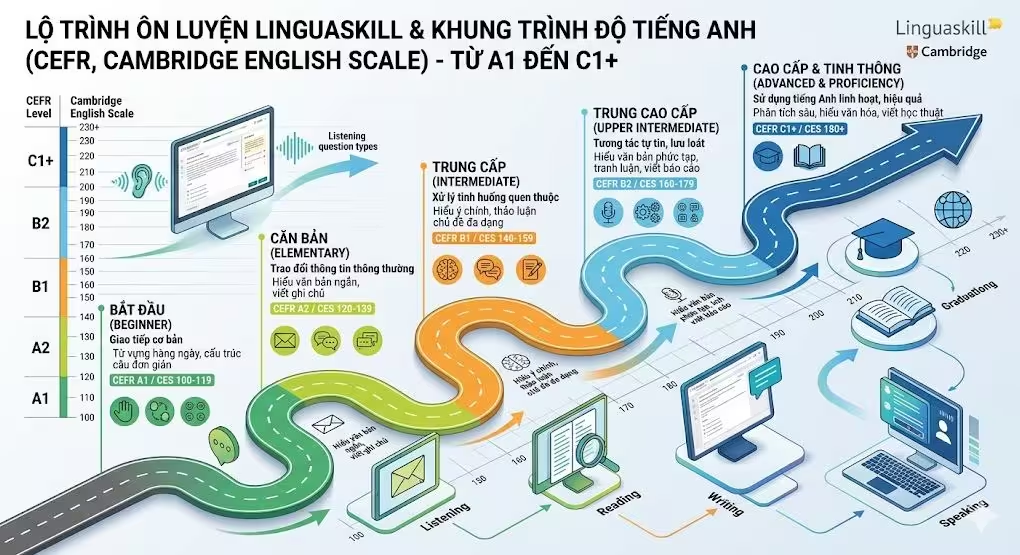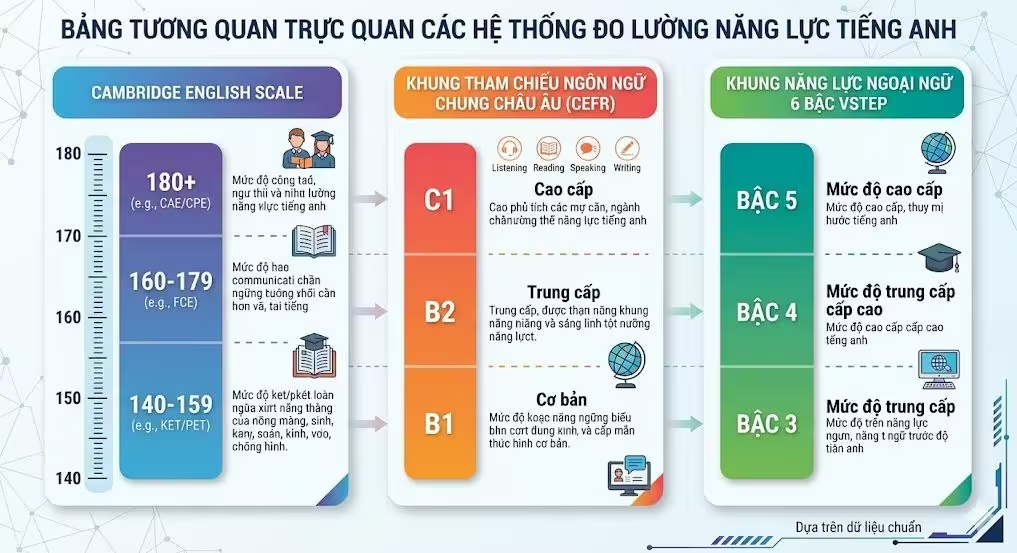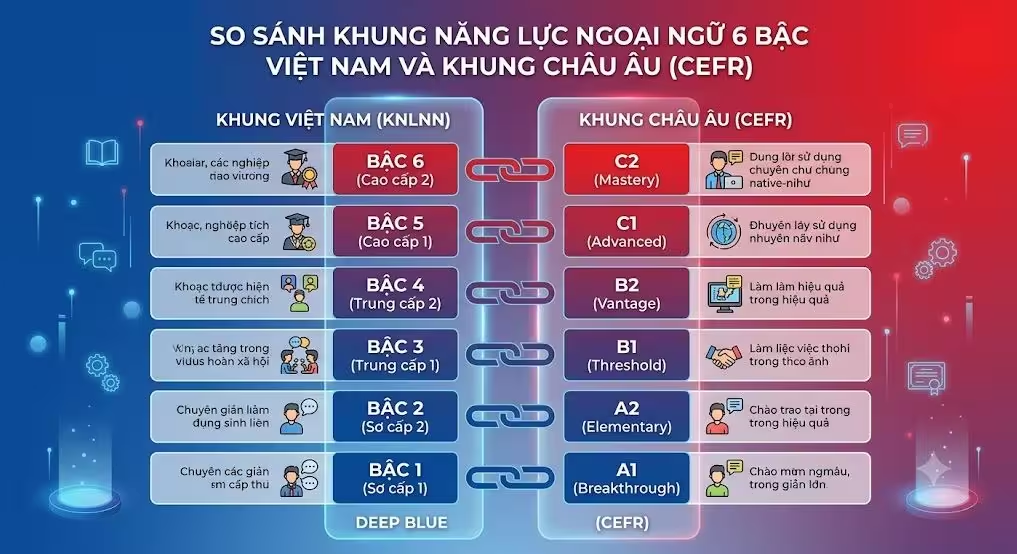
Ở trình độ cao cấp (Advanced/Proficiency), kỹ năng nghe hiểu không đơn thuần là việc thu nhận thông tin mà là quá trình phân tích các luồng tư duy phức tạp, nhận diện các sắc thái biểu đạt và tái cấu trúc các quy trình logic. Với sự kiện FIFA World Cup 2026 quy mô 48 đội tại Bắc Mỹ, các chủ đề về địa chính trị, kinh tế học thể thao và cách mạng AI trở thành học liệu lý tưởng để rèn luyện kỹ năng nghe ở mức độ chuyên gia.
Bài viết này giới thiệu hệ thống 100 câu hỏi dạng Ordering & Sequencing (Sắp xếp thứ tự), được thiết kế chuẩn hóa cho những học viên đang hướng tới band điểm tối đa trong các kỳ thi quốc tế, đặc biệt là chứng chỉ Linguaskill.
1. Thách thức của kỹ năng Sequencing ở trình độ C1-C2
Tại ngưỡng trình độ C1-C2, thông tin thường được trình bày trong các bài giảng học thuật hoặc các cuộc thảo luận đa phương với tốc độ nói tự nhiên và mật độ thuật ngữ dày đặc. Dạng bài sắp xếp thứ tự ở level này đòi hỏi:
- Xử lý cấu trúc phi tuyến tính: Diễn giả thường bắt đầu bằng kết quả, sau đó hồi tưởng về nguyên nhân và xen kẽ các giả thuyết “nếu – thì”, khiến trình tự lời kể khác hoàn toàn trình tự thực tế.
- Nhận diện liên từ trình tự cao cấp: Thay vì các từ nối cơ bản, bạn sẽ gặp các cụm như “Contemporaneous with,” “In the precursor stage,” “Subsequent to the finalization of,” hay “Post-implementation.”
- Phân tích thái độ và ngụ ý: Đôi khi thứ tự của một quy trình bị thay đổi dựa trên quan điểm phê phán của người nói về tính hiệu quả của nó.
Theo nghiên cứu từ Linguaskill, việc thành thạo khả năng sắp xếp logic thông tin giúp người học không chỉ đạt điểm cao trong bài thi nghe mà còn cực kỳ hữu ích khi tham gia các buổi hội thảo chuyên môn quốc tế.
2. Cấu trúc hệ thống 100 câu Listening World Cup 2026
Bộ tài liệu được phân tách thành 4 phân khúc chuyên môn hóa, phản ánh các bài toán thực tế của siêu sự kiện năm 2026.
Giai đoạn 1: Chuỗi cung ứng và Logistics thông minh (25 câu)
Tập trung vào quy trình vận hành hạ tầng tại 16 thành phố đăng cai.
- Nội dung: Thứ tự triển khai hệ thống giao thông tự hành (Autonomous transport), quy trình kiểm soát an ninh sinh trắc học xuyên quốc gia và quản lý dòng người tại các Fan Zones.
- Thử thách: Sắp xếp các bước dựa trên các báo cáo kỹ thuật có độ phức tạp cao.
Giai đoạn 2: Chiến lược Marketing và Bản quyền số (25 câu)
Mô phỏng các cuộc họp chiến lược về việc phân phối bản quyền truyền hình dựa trên công nghệ Blockchain.
- Nội dung: Thứ tự các giai đoạn đấu thầu, triển khai nội dung VR/AR cho khán giả toàn cầu và quy trình thực thi bản quyền trên các nền tảng xuyên biên giới.
- Giá trị thực tế: Đây là nội dung nòng cốt cho các học viên thi Linguaskill Business cấp độ C2.
Giai đoạn 3: Địa chính trị và Ngoại giao thể thao (25 câu)
Phân tích quá trình đàm phán giữa Mỹ, Canada và Mexico.
- Nội dung: Thứ tự các hiệp định visa tạm thời, quy trình thống nhất các tiêu chuẩn an ninh quốc gia và các bước hòa giải xung đột lợi ích giữa các bang chủ nhà.
Giai đoạn 4: Di sản bền vững và Kinh tế tuần hoàn (25 câu)
Tập trung vào các báo cáo về tác động môi trường sau World Cup.
- Nội dung: Quy trình tái cấu trúc các sân vận động thành trung tâm công nghệ xanh, thứ tự các giai đoạn thu hồi vốn và đánh giá chỉ số bền vững (ESG).
3. Chiến thuật “Critical Sequencing” dành cho chuyên gia
Để giải quyết 100 câu hỏi ở trình độ Proficiency này, các giảng viên tại Linguaskill đề xuất quy trình xử lý thông tin 3 lớp:
- Lớp 1 – Dự báo Logic (Conceptual Framing): Dựa trên tiêu đề bảng và các thẻ sự kiện, hãy tự thiết lập một trình tự khả thi nhất dựa trên kiến thức nền về quản trị và kinh tế.
- Lớp 2 – Nhận diện “Cú lừa” ngôn ngữ (Deconstructing Distractors): Cảnh giác với các trạng từ như “incidentally,” “ostensibly,” hay “prematurely.” Những từ này thường chỉ ra rằng một sự kiện dù được nhắc đến trước nhưng thực tế diễn ra sau hoặc không diễn ra như dự kiến.
- Lớp 3 – Tổng hợp đa kênh (Synthesis):Case Study: Trong một bài tập nghe về “Quy trình vận hành VAR AI 2.0” tại Linguaskill, thí sinh thường nhầm lẫn giữa bước “Xác thực dữ liệu” và “Thông báo trọng tài”. Những người đạt mức C2 là những người nhận diện được cụm từ “contingent upon the latency period” để sắp xếp chính xác thứ tự xử lý dữ liệu của máy chủ trước khi có sự can thiệp của con người.
Câu hỏi thường gặp
1. Tại sao dạng bài sắp xếp thứ tự lại khó nhất ở trình độ C2? Ở level C2, bài nghe không sử dụng các từ nối thời gian rõ ràng. Bạn phải hiểu được mối quan hệ nhân quả và các giả định ẩn sâu trong lời nói để tự tái thiết lập trình tự sự kiện.
2. Tôi có thể ứng dụng kỹ năng nghe này vào công việc thực tế không? Hoàn toàn có thể. Kỹ năng nghe hiểu trình tự quy trình là yêu cầu bắt buộc khi tham gia các dự án quản lý, điều hành hoặc nghiên cứu khoa học tại các quốc gia sử dụng tiếng Anh.
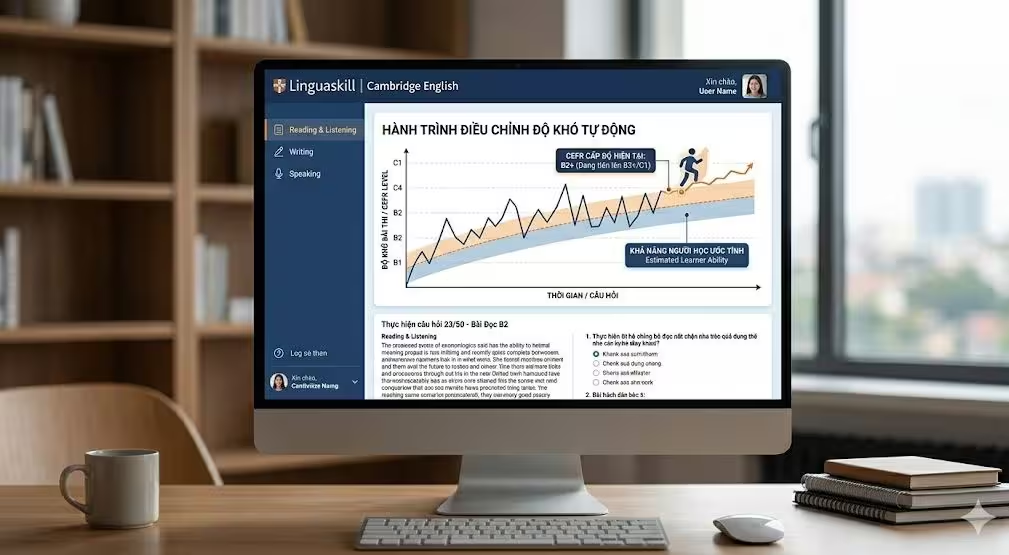
3. Linguaskill đánh giá kỹ năng này như thế nào? Bài thi Linguaskill sử dụng công nghệ thích ứng. Nếu bạn trả lời đúng các câu hỏi Sequencing phức tạp, hệ thống sẽ tiếp tục đưa ra các đoạn hội thoại có độ nhiễu cao hơn để xác định chính xác bạn có đạt mức C1 hay C2 hay không.
4. Dữ liệu về World Cup 2026 trong bài nghe có phải là thật không? Chúng tôi sử dụng dữ liệu từ các thông cáo báo chí của FIFA và Ban tổ chức 3 quốc gia chủ nhà cập nhật đến tháng 4/2026 để đảm bảo tính thực tế cho học viên.
5. Cần bao lâu để luyện thành thạo 100 câu nghe cao cấp này? Với người học đã có nền tảng B2+, việc hoàn thành 100 câu này kèm phân tích sâu thường mất khoảng 4-6 tuần luyện tập tập trung tại Linguaskill.
6. Giọng đọc (Accent) trong bộ đề này gồm những gì? Để mô phỏng thực tế World Cup 2026, bộ đề bao gồm sự pha trộn giữa giọng Anh-Mỹ, Anh-Canada và các giọng quốc tế (Global English) từ các chuyên gia FIFA khắp thế giới.
Chủ đề liên quan
- Phân tích ngôn ngữ chiến lược trong quản trị siêu sự kiện 2026
- Cách bứt phá thang điểm C2 Listening trong bài thi Linguaskill
- Kỹ thuật ghi chú (Note-taking) chuyên sâu cho hội thảo quốc tế
- Tổng hợp từ nối trình tự (Sequential markers) trình độ cao cấp
- Vai trò của AI trong việc cá nhân hóa trải nghiệm học tiếng Anh 2026
- Review chi tiết công nghệ tổ chức World Cup 2026 bằng tiếng Anh
- Hướng dẫn nghe hiểu các báo cáo tài chính thể thao chuyên ngành
- Phương pháp Shadowing nâng cao cho trình độ Proficiency (C2)
- Lợi thế của chứng chỉ Linguaskill khi ứng tuyển vị trí quản lý cấp cao
- Lộ trình tự học Listening từ C1 lên C2 hiệu quả nhất
Bài 1
LISTENING PRACTICE: THE STRATEGIC EVOLUTION OF THE 2026 FIFA WORLD CUP
Candidate Name: __________________________
Level: C1-C2 (Advanced/Proficiency)
Topic: Geopolitical Paradigms and Macro-logistics of the “United” World Cup
PART 1: CHRONOLOGICAL SEQUENCING (THE TOURNAMENT PHASES)
Questions 1-10
Listen to a lecture by a professor of Sports Economics regarding the staging of the 2026 FIFA World Cup. Arrange the following tournament milestones in the correct chronological order (1-10) as they appear in the recording.
- A. Integration of the inaugural “Round of 32” into the knockout bracket. [ ___ ]
- B. The formal ratification of the tri-national “United” hosting bid. [ ___ ]
- C. The championship finale and trophy presentation at MetLife Stadium. [ ___ ]
- D. Commencement of the multi-year, continental qualification series. [ ___ ]
- E. The inaugural kickoff featuring “El Tri” at the historic Estadio Azteca. [ ___ ]
- F. Finalization of the 12-group competitive format by the FIFA Council. [ ___ ]
- G. Staging of the semi-final fixtures in Dallas and Atlanta. [ ___ ]
- H. Arrival and pre-tournament acclimatization of the 48 national delegations. [ ___ ]
- I. Transition to the quarter-final stage held exclusively in US venues. [ ___ ]
- J. Conclusion of the expanded group stage across the three host nations. [ ___ ]
PART 2: PROCEDURAL HIERARCHY (LOGISTICAL & ETHICAL EXECUTION)
Questions 11-20
The speaker describes the administrative and ethical frameworks governing the event. Sequence the following organizational steps (1-10) based on the order of their priority or execution mentioned in the recording.
- A. Optimization of transcontinental transit networks and regional clusters. [ ___ ]
- B. Rigorous vetting and selection of the 16 municipal host venues. [ ___ ]
- C. Deployment of the multi-phase global ticketing and hospitality platform. [ ___ ]
- D. Comprehensive infrastructure upgrades to fulfill LEED and FIFA mandates. [ ___ ]
- E. Implementing legally binding human rights and labor standards. [ ___ ]
- F. Finalizing the “Random Selection Draw” for ticket applicants. [ ___ ]
- G. Mass mobilization and specialized training of the volunteer workforce. [ ___ ]
- H. Activation of high-level counter-terrorism and security protocols. [ ___ ]
- I. Execution of the “Zero-Waste” and food recovery initiatives. [ ___ ]
- J. Streamlining customs and visa procedures for international tourists. [ ___ ]
ANSWER KEY & EXPLANATIONS
Part 1: Tournament Milestones
- B (Ratification) | 2. D (Qualifiers) | 3. F (Format Finalization) | 4. H (Acclimatization) | 5. E (Inaugural Kickoff) | 6. J (Group Stage Conclusion) | 7. A (Round of 32) | 8. I (Quarter-finals) | 9. G (Semi-finals) | 10. C (Final/Trophy)
Part 2: Logistical Execution
- B (Vetting cities) | 12. E (Human Rights) | 13. D (Upgrades) | 14. A (Regional Clusters) | 15. C (Ticketing Platform) | 16. F (Random Draw) | 17. G (Volunteers) | 18. H (Security) | 19. J (Customs/Visa) | 20. I (Zero-Waste)
Giải thích chi tiết (Detailed Explanations)
- (Part 1) Phân tích trình tự: Bài nói đi từ khâu chính trị-pháp lý (phê chuẩn năm 2018), qua vòng loại, đến việc chốt thể thức 12 bảng vào năm 2023. Giai đoạn thi đấu bắt đầu từ 11/06/2026 tại Mexico và kết thúc 19/07/2026 tại New Jersey.
- (Part 2) Phân tích logic: Quy trình quản lý đi từ vĩ mô (chọn thành phố) -> cam kết đạo đức (nhân quyền – đây là điểm mới của 2026) -> hạ tầng -> vận hành kỹ thuật (phân vùng) -> thương mại (bán vé) -> nhân sự -> an ninh và cuối cùng là xử lý hậu kỳ (rác thải).
NEW VOCABULARY STATISTICS (THỐNG KÊ TỪ VỰNG)
Tổng cộng: 10 từ vựng học thuật cấp độ C1-C2
- Ratification /ˌrætɪfɪˈkeɪʃn/ (n): Sự phê chuẩn chính thức (văn bản/thỏa thuận).
- Metamorphosis /ˌmetəˈmɔːfəsɪs/ (n): Sự biến đổi hình thái (dùng để chỉ sự thay đổi của giải đấu).
- Acclimatization /əˌklaɪmətaɪˈzeɪʃn/ (n): Sự thích nghi với môi trường/khí hậu mới.
- Lion’s share (idiom): Phần lớn nhất/quan trọng nhất của cái gì đó.
- Mitigate /ˈmɪtɪɡeɪt/ (v): Giảm thiểu tác động tiêu cực.
- LEED Certification (n): Chứng nhận công trình xanh (Leadership in Energy and Environmental Design).
- Binding /ˈbaɪndɪŋ/ (adj): Có tính ràng buộc (pháp lý).
- Stewardship /ˈstjuːədʃɪp/ (n): Trách nhiệm quản lý (tài nguyên/môi trường).
- Zenith /ˈzenɪθ/ (n): Đỉnh cao nhất (thời điểm thành công nhất của sự kiện).
- Inaugural /ɪˈnɔːɡjərəl/ (adj): Khai mạc, mở đầu.
LISTENING SCRIPT
(Academic Briefing: The Geopolitical and Operational Architecture of FWC2026)
“Good morning, colleagues. Today we dissect the structural metamorphosis of the FIFA World Cup 2026. This is not merely an expansion; it is a paradigm shift.
The journey initiated with the official ratification of the ‘United’ bid in 2018, followed by the commencement of the most extensive qualification series in sporting history. A crucial pivot occurred when the FIFA Council finalized the 12-group competitive format, discarding the 3-team group proposal to preserve sporting integrity. By May 2026, we will see the acclimatization of 48 national delegations. The tournament officially ignites with the inaugural kickoff at Estadio Azteca, featuring ‘El Tri’. Subsequent to the conclusion of the expanded group stage, we navigate the high-stakes Round of 32. The competition then moves to the quarter-finals—held exclusively in the U.S.—and the semi-finals in Dallas and Atlanta, before reaching its zenith with the final and trophy presentation at MetLife Stadium.
Logistically, the hierarchy began with the rigorous vetting of 16 host venues. Uniquely for 2026, organizers prioritized legally binding human rights and labor standards before any physical construction. Then followed the infrastructure upgrades to meet LEED mandates. To mitigate travel fatigue, cities were partitioned into regional clusters. Commercial delivery began with the ticketing platform, followed by the Random Selection Draw in late 2025. As we approach the ‘go-live’ phase, the focus shifts to volunteer mobilization and security protocols. The final operational layers involve streamlining customs and visa procedures for millions of fans, and finally, the execution of the Zero-Waste and food recovery stewardship programs.
This 39-day marathon will redefine the scale of global event management.”
Bài 2
KỲ THI THỬ TỐT NGHIỆP THPT / VSTEP
Môn thi: TIẾNG ANH (LISTENING)
Chủ đề: THE MACRO-LOGISTICS OF FIFA WORLD CUP 2026
Trình độ: C1-C2
PART 1: ORDERING EVENTS
Questions 1-20
Directions: You will hear a formal briefing regarding the structural overhaul and operational timeline of the FIFA World Cup 2026. The exercise is divided into two sections.
Section A: The Evolution of the Tournament Structure
The speaker discusses various milestones and policy shifts. Put the following events in the correct order (1-10) as they are mentioned in the recording.
- (A) _____ The formal ratification of the 104-match fixture inventory.
- (B) _____ The historic decision to award hosting rights to a tripartite confederation.
- (C) _____ The expansion of the competitive field to include 48 member associations.
- (D) _____ The designation of Estadio Azteca as the venue for the inaugural match.
- (E) _____ The extension of the tournament duration to a 39-day window for player welfare.
- (F) _____ The strategic reversal of the three-team group proposal to mitigate collusion risks.
- (G) _____ The selection of MetLife Stadium in New Jersey for the championship final.
- (H) _____ The implementation of a “regional pod” system to minimize transcontinental travel.
- (I) _____ The formalization of the 12-group, four-team structural framework.
- (J) _____ The integration of an additional knockout phase known as the “Round of 32.”
Section B: Operational Priorities and Legacy Goals
The speaker outlines the sequence of organizational priorities and long-term objectives. Put these phases in the correct order (11-20) based on the lecture.
- (K) _____ Orchestrating security protocols across three sovereign borders.
- (L) _____ Identifying the primary geographical hurdles posed by 16 distant host cities.
- (M) _____ Facilitating the localized group stage matches within assigned regional clusters.
- (N) _____ Launching centralized digital ticketing and hospitality infrastructure.
- (O) _____ Monitoring the fiscal impact and job creation metrics post-event.
- (P) _____ Managing the logistical transition from the group stage to the elimination rounds.
- (Q) _____ Offsetting the carbon footprint to achieve net-zero environmental objectives.
- (R) _____ Promoting grassroots football initiatives as the tournament’s primary social legacy.
- (S) _____ Executing the repurposing of infrastructure for community use.
- (T) _____ Finalizing the environmental audit of the tournament’s total emissions.
ANSWER KEY & EXPLANATIONS
Section A (Structural Evolution):
- (B) | 2. (C) | 3. (A) | 4. (E) | 5. (D) | 6. (G) | 7. (F) | 8. (I) | 9. (J) | 10. (H)
Section B (Operational & Legacy Phases):
11. (L) | 12. (K) | 13. (N) | 14. (M) | 15. (P) | 16. (O) | 17. (Q) | 18. (T) | 19. (R) | 20. (S)
Detailed Explanations (Vietnamese):
- Section A: Bài nghe bắt đầu bằng việc xác lập bối cảnh hợp tác 3 bên (B), tiếp đến là sự thay đổi quy mô đội (C), số trận (A) và thời gian (E). Sau đó, bài nói chuyển sang các địa điểm biểu tượng (D, G) trước khi giải thích sự thay đổi quan trọng trong thể thức thi đấu (F, I, J) và kết thúc bằng giải pháp di chuyển (H).
- Section B: Trình tự vận hành đi từ việc xác định rào cản địa lý (L) đến an ninh (K) và công nghệ (N). Diễn biến giải đấu (M, P) được theo sau bởi các đánh giá kinh tế (O). Cuối cùng là các bước về môi trường (Q, T) và di sản cộng đồng (R, S).
NEW VOCABULARY STATISTICS
Total specialized terms introduced: 10 (Level C1-C2)
- Tripartite /traɪˈpɑːrtaɪt/ (adj): Gồm ba bên. (Dùng để mô tả sự hợp tác Mỹ-Canada-Mexico).
- Ratification /ˌrætɪfɪˈkeɪʃn/ (n): Sự phê chuẩn chính thức. (Từ vựng học thuật cao cấp cho “approval”).
- Fixture inventory (n phrase): Danh mục các trận đấu. (Dùng trong quản lý sự kiện thể thao chuyên nghiệp).
- Inaugural /ɪˈnɔːɡjərəl/ (adj): Khai mạc/Đầu tiên. (Trang trọng hơn từ “opening”).
- Collusion /kəˈluːʒn/ (n): Sự thông đồng (bất chính). (Dùng trong bối cảnh dàn xếp tỷ số).
- Mitigate /ˈmɪtɪɡeɪt/ (v): Giảm thiểu tác động tiêu cực. (Cốt lõi trong các bài nghe/đọc về quản lý rủi ro).
- Sovereign /ˈsɒvrɪn/ (adj): Có chủ quyền. (Nhấn mạnh việc 3 quốc gia có luật pháp và biên giới riêng).
- Net-zero /ˌnet ˈzɪərəʊ/ (adj): Phát thải ròng bằng không. (Thuật ngữ môi trường bắt buộc cho trình độ C1).
- Audit /ˈɔːdɪt/ (n/v): Kiểm toán/Kiểm tra chính thức. (Đánh giá mức độ phát thải hoặc tài chính).
- Repurposing /ˌriːˈpɜːpəsɪŋ/ (n): Việc chuyển đổi mục đích sử dụng. (Nói về việc dùng hạ tầng sau giải đấu).
LISTENING SCRIPT
“Good morning, everyone. Today’s briefing focuses on the unprecedented administrative complexity of the FIFA World Cup 2026. The conceptual journey began with the landmark (B) tripartite hosting agreement, a first in FIFA history involving three sovereign nations. This foundation allowed for the strategic (C) expansion to 48 teams, which necessitated the formal (A) ratification of a 104-match fixture inventory. To ensure athlete welfare, the (E) duration was subsequently extended to 39 days.
Regarding venues, the (D) inaugural match was designated for Estadio Azteca, while the championship final found its home at (G) MetLife Stadium in New Jersey. One of the most critical structural shifts was the (F) reversal of the three-team group proposal. To eliminate any risk of collusion, FIFA opted for the (I) 12-group, four-team framework, which integrated the new (J) Round of 32 elimination phase. To manage the vast distances, a (H) regional pod system was implemented to curb transcontinental travel.
Operationally, our first priority was (L) identifying the geographical hurdles of 16 distinct host cities. This was followed by the challenge of (K) orchestrating security across three different borders. Once the (N) digital infrastructure for ticketing was launched, we moved into (M) facilitating localized group play. As teams (P) transitioned into the elimination rounds, our monitoring systems began (O) capturing fiscal and labor metrics.
In the final phase, our focus shifts to sustainability. We are aggressively (Q) offsetting the carbon footprint to meet net-zero targets, followed by a comprehensive (T) environmental audit. Ultimately, the success of 2026 will be defined by its (R) grassroots legacy and the successful (S) repurposing of stadium infrastructure for the benefit of local communities.”
Bài 3
LISTENING PRACTICE: THE MACRO-LOGISTICS OF WORLD CUP 2026
PART 1: ORDERING INFORMATION
Questions 1 – 20
Listen to a high-level briefing by a senior sports analyst regarding the strategic and logistical framework of the 2026 FIFA World Cup. Put the following points in the order they are mentioned in the recording.
Section A: Organizational & Structural Shifts (Questions 1 – 7)
A. The transition to a 48-nation field size
B. The first-ever tri-national hosting paradigm
C. The introduction of an additional knockout tier (Round of 32)
D. The 23rd iteration of the global tournament
E. The finalized group structure of 12 clusters of four
F. The record-breaking aggregate of 104 fixtures
G. The dismissal of the three-team group proposal
- [ ] 2. [ ] 3. [ ] 4. [ ] 5. [ ] 6. [ ] 7. [ ]
Section B: Geographical & Venue Logistics (Questions 8 – 14)
A. The strategic selection of MetLife Stadium for the final
B. The historical milestone of Estadio Azteca’s third opener
C. The activation of 16 host metropolitan hubs
D. The final match date scheduled for July 19th
E. The “Regional Cluster” model to mitigate carbon footprint
F. The peak match volume allocated to Dallas
G. The objective of minimizing cross-continental travel fatigue
- [ ] 9. [ ] 10. [ ] 11. [ ] 12. [ ] 13. [ ] 14. [ ]
Section C: Economic, Social & Technological Impact (Questions 15 – 20)
A. The official branding nomenclature “We Are 26”
B. The pursuit of equitable global representation
C. The staggering projected revenue of 11 billion dollars
D. The deployment of high-fidelity ball-tracking sensors
E. The estimated reach of 5 billion global viewers
F. The fundamental commitment to environmental sustainability
- [ ] 16. [ ] 17. [ ] 18. [ ] 19. [ ] 20. [ ]
ANSWER KEY & EXPLANATIONS
1. Key (Thứ tự đúng)
- Section A: 1-D, 2-B, 3-A, 4-G, 5-E, 6-F, 7-C
- Section B: 8-C, 9-F, 10-B, 11-D, 12-A, 13-E, 14-G
- Section C: 15-E, 16-C, 17-F, 18-B, 19-D, 20-A
2. Giải thích chi tiết (Detailed Explanations)
- Section A: Bài nói bắt đầu bằng việc xác định đây là kỳ thứ 23 (D) và mô hình 3 nước đồng đăng cai (B). Sau đó, diễn giả phân tích việc mở rộng quy mô lên 48 đội (A). Điểm mấu chốt là việc bác bỏ phương án bảng 3 đội (G) để chốt 12 bảng 4 đội (E), dẫn đến tổng số trận là 104 (F) và sự xuất hiện của vòng 32 (C).
- Section B: Phần địa lý bắt đầu với 16 thành phố (C) và mật độ trận đấu tại Dallas (F). Diễn giả nhắc đến kỷ lục của Estadio Azteca (B) cho trận khai mạc, sau đó chốt ngày 19/7 (D) tại MetLife (A). Kết thúc phần này là giải pháp cụm khu vực (E) nhằm giảm mệt mỏi do di chuyển (G).
- Section C: Các số liệu thống kê vĩ mô được đưa ra: 5 tỷ người xem (E) và 11 tỷ USD doanh thu (C). Tiếp theo là các giá trị phi tài chính: bền vững (F) và tính đại diện (B). Bài nói khép lại với công nghệ cảm biến bóng (D) và danh pháp thương hiệu (A).
3. Thống kê & Phân tích từ vựng (Vocabulary Analysis)
Tổng số từ vựng học thuật C1-C2: 10 từ.
| Từ vựng | Nghĩa | Phân tích ngữ cảnh |
| Iteration (n) | Lần lặp lại / Phiên bản | Dùng thay cho “edition” để tăng tính học thuật khi nói về một sự kiện lặp lại. |
| Paradigm (n) | Mô hình / Hình mẫu | “Hosting paradigm” chỉ cách thức tổ chức mới chưa từng có trước đây. |
| Aggregate (n) | Tổng số / Khối lượng tổng | Thay thế cho “total” trong báo cáo thống kê chuyên nghiệp. |
| Fixture (n) | Trận đấu (đã định sẵn) | Thuật ngữ chuyên ngành, trang trọng hơn “match”. |
| Mitigate (v) | Giảm thiểu (tác động xấu) | Từ vựng then chốt trong các bài luận/nghe về môi trường và quản lý. |
| Footprint (n) | Dấu chân (carbon) | “Carbon footprint” là cụm từ bắt buộc phải biết ở trình độ C1-C2. |
| Staggering (adj) | Gây sửng sốt / Đáng kinh ngạc | Dùng để nhấn mạnh quy mô tài chính hoặc dữ liệu cực lớn. |
| Equitable (adj) | Công bằng / Bình đẳng | “Equitable representation” nói về việc phân chia cơ hội công bằng cho các châu lục. |
| High-fidelity (adj) | Độ chính xác/trung thực cao | Thường dùng trong kỹ thuật âm thanh hoặc cảm biến dữ liệu. |
| Nomenclature (n) | Danh pháp / Hệ thống tên gọi | Từ vựng cao cấp dùng để chỉ cách đặt tên chính thức “We Are 26”. |
LISTENING SCRIPT
“Good morning, colleagues. Today we are dissecting the logistical and strategic blueprint for the 23rd iteration of the FIFA World Cup. This 2026 event marks a radical departure from tradition, being the first to employ a tri-national hosting paradigm between Canada, Mexico, and the United States.
The most transformative element is the transition to a 48-nation field size. This expansion initially prompted a debate over group structures; however, after the dismissal of the three-team group proposal due to concerns over competitive integrity, FIFA confirmed a finalized group structure of 12 clusters of four. This adjustment ensures a record-breaking aggregate of 104 fixtures, which in turn necessitates the introduction of an additional knockout tier: the Round of 32.
From a spatial perspective, the tournament will activate 16 host metropolitan hubs. While each city serves as a vital node, Dallas has been allocated the peak match volume. Chronologically, the journey begins at the legendary Estadio Azteca, marking its third time as an inaugural venue, while the tournament will reach its climax on July 19th. The championship match is set for MetLife Stadium in the New Jersey/New York corridor. To navigate this vast geography, organizers are utilizing a ‘Regional Cluster’ model to mitigate the carbon footprint. This approach is specifically designed for minimizing cross-continental travel fatigue for elite athletes.
The economic projections are nothing short of staggering. We anticipate an estimated reach of 5 billion global viewers, driving a projected revenue of 11 billion dollars. Beyond the fiscal yield, there is a fundamental commitment to environmental sustainability and the pursuit of equitable global representation.
Technologically, the 2026 edition will feature the deployment of high-fidelity ball-tracking sensors to enhance officiating precision. This entire operational vision is encapsulated in the official branding nomenclature ‘We Are 26’. This concludes our strategic briefing.”
Bài 4
KỲ THI CHỌN ĐỘI TUYỂN HỌC SINH GIỎI QUỐC GIA / VSTEP C2 PREPARATION
BÀI THI: TIẾNG ANH (KỸ NĂNG NGHE)
Chủ đề: The Strategic and Logistical Evolution of FIFA World Cup 2026
PART 1: ORDERING (SẮP XẾP THỨ TỰ)
Questions 1 – 5: Listen to the first part of the lecture concerning the strategic framework of the tournament. Put the following organizational concepts in the order they are discussed. Write the letters A–E in the blanks.
A. The expansion to a 48-nation format and its impact on the match schedule.
B. The underlying objective of fostering geopolitical synergy across North America.
C. The historical significance of the tri-national collaboration between sovereign states.
D. The rejection of the three-team group proposal to preserve competitive integrity.
E. The total inflation of the tournament to a record 104 fixtures.
- ________ 2. ________ 3. ________ 4. ________ 5. ________
Questions 6 – 10: Listen to the second part regarding the operational timeline and venues. Put the following events in the chronological order they will take place. Write the letters A–E in the blanks.
A. The centralization of all matches in the United States from the quarter-final stage.
B. The inaugural match and opening ceremony at the high-altitude Estadio Azteca.
C. The debut of the newly introduced Round of 32 knockout phase.
D. The culmination of the tournament at MetLife Stadium in New Jersey.
E. The completion of the 12-group preliminary round matches.
- ________ 7. ________ 8. ________ 9. ________ 10. ________
Questions 11 – 15: Listen to the discourse on economic and infrastructural logic. Put the following financial priorities in the order they are addressed by the speaker. Write the letters A–E in the blanks.
A. The revitalization and modernization of existing top-tier facilities over new constructions.
B. The projected gross revenue target of approximately 11 billion dollars.
C. The implementation of regional clustering to mitigate the ecological footprint.
D. The stimulation of ancillary industries such as hospitality and local services.
E. The strategic limitation of air travel mileage for teams and spectators.
- ________ 12. ________ 13. ________ 14. ________ 15. ________
Questions 16 – 20: Listen to the final segment regarding technological integration and social legacy. Put the following innovations and goals in the order they are mentioned. Write the letters A–E in the blanks.
A. The integration of 8K broadcasting technology to eliminate transmission latency.
B. The mandatory utilization of biometric identification for stadium security.
C. The official reveal of the tournament slogan: “We Are 26”.
D. The deployment of proprietary digital platforms for ticketing and logistics.
E. The commitment to a lasting legacy for grassroots football development.
- ________ 17. ________ 18. ________ 19. ________ 20. ________
ANSWER KEY & DETAILED EXPLANATIONS
| Q | Order | Detailed Explanation (Tiếng Việt) |
| 1-5 | C – B – A – E – D | GS bắt đầu bằng sự hợp tác 3 quốc gia (C), sau đó nói về mục tiêu hiệp lực địa chính trị (B). Tiếp theo là việc tăng 48 đội (A) dẫn đến 104 trận (E), cuối cùng là việc bác bỏ bảng 3 đội (D). |
| 6-10 | B – E – C – A – D | Trình tự thời gian: Khai mạc (B) -> Hết vòng bảng (E) -> Vòng 32 đội (C) -> Tập trung tại Mỹ từ Tứ kết (A) -> Chung kết (D). |
| 11-15 | B – A – D – C – E | Trình tự: Doanh thu 11 tỷ (B) -> Tái tạo hạ tầng (A) -> Ngành phụ trợ (D) -> Phân cụm khu vực (C) -> Hạn chế dặm bay (E). |
| 16-20 | D – B – A – E – C | Trình tự: Nền tảng bán vé (D) -> Nhận diện sinh trắc học (B) -> Công nghệ 8K (A) -> Di sản bóng đá phong trào (E) -> Khẩu hiệu (C). |
VOCABULARY STATISTICS & ANALYTICS
Total advanced (C1-C2) academic words introduced: 12
| No. | Vocabulary | Type | Meaning (Vietnamese) | Importance in Exams |
| 1 | Sovereign | adj | Có chủ quyền | Từ vựng học thuật cao cấp về chính trị/ngoại giao. |
| 2 | Synergy | n | Sự hiệp lực | Dùng để chỉ sự cộng hưởng hiệu quả giữa các bên. |
| 3 | Fixture | n | Trận đấu (đã định) | Từ vựng chuyên ngành thể thao ở trình độ C2. |
| 4 | Culmination | n | Đỉnh cao / Sự kết thúc | Thường dùng cho đoạn kết của một quá trình dài. |
| 5 | Revitalization | n | Sự hồi sinh/tái tạo | Hay gặp trong bài đọc/nghe về hạ tầng và đô thị. |
| 6 | Ancillary | adj | Phụ trợ, bổ trợ | Mô tả các ngành dịch vụ đi kèm (du lịch, khách sạn). |
| 7 | Mitigate | v | Giảm nhẹ/Làm dịu | Từ vựng “Must-have” cho bài viết C1-C2 về giải pháp. |
| 8 | Clustering | n | Sự phân cụm | Thuật ngữ chuyên sâu về quản lý và địa lý. |
| 9 | Latency | n | Độ trễ | Thuật ngữ kỹ thuật cao cấp về truyền dẫn dữ liệu. |
| 10 | Grassroots | adj/n | Cơ sở/Phong trào | Nói về nền tảng cộng đồng, bóng đá phong trào. |
| 11 | Proprietary | adj | Độc quyền | Thường dùng cho các hệ thống công nghệ sở hữu riêng. |
| 12 | Biometric | adj | Sinh trắc học | Từ vựng hiện đại về bảo mật và công nghệ. |
FULL LISTENING SCRIPT
(Setting: A senior seminar at the Institute for Global Sports Management)
Professor: Good afternoon. Today, we shall dissect the intricate logistical and geopolitical framework of the FIFA World Cup 2026. This monumental event is far more than a quadrennial sporting spectacle; it represents an (1) unprecedented tri-national collaboration between the United States, Canada, and Mexico as three distinct sovereign entities. Beyond the surface-level competition, the primary strategic objective involves (2) fostering a profound geopolitical synergy across the North American continent.
Statistically, the expansion is daunting. FIFA has (3) moved to include 48 participating nations, which has naturally (4) inflated the schedule to a total of 104 fixtures. It is noteworthy that while three-team groups were initially proposed, the committee (5) ultimately rejected this in favor of maintaining competitive integrity, opting for twelve groups of four.
The progression of the tournament follows a rigid chronological sequence. It will (6) commence with a grand ceremony at the high-altitude Estadio Azteca in Mexico City. Following the (7) completion of the 12-group preliminary stage, we will witness the (8) debut of the brand-new Round of 32 knockout phase. For maximum operational efficiency in the latter stages, (9) all matches from the quarter-finals onward will be centralized within the United States, leading up to the (10) culmination of the event at MetLife Stadium in New Jersey.
From a fiscal perspective, the stakes are record-breaking. FIFA projects a (11) gross revenue of approximately 11 billion dollars. To manage this without the unsustainable waste of previous editions, the focus has pivoted toward the (12) revitalization and modernization of existing top-tier facilities rather than building new arenas. This strategy is expected to (13) stimulate ancillary industries like hospitality and local services significantly. Furthermore, to mitigate environmental impact, a (14) regional clustering model has been adopted for the groups, which allows for the (15) strict limitation of air travel mileage for both teams and spectators.
Technologically, this World Cup will set new benchmarks. Access will be managed via (16) proprietary digital platforms for ticketing and logistics. Security protocols will feature the (17) mandatory implementation of biometric identification for all attendees. To cater to the global audience, the (18) integration of 8K broadcasting technology will minimize transmission latency. Ultimately, the goal is to leave a (19) lasting legacy for grassroots football development, a vision encapsulated in the (20) official slogan: “We Are 26.”
Are there any questions regarding the clustering model before we move to the next slide?
Bài 5
ENGLISH LISTENING PRACTICE: MACRO-LOGISTICS OF THE 2026 WORLD CUP
Level: C1-C2 (Advanced / Proficiency)
Topic: Institutional Restructuring, Sustainability, and Continental Logistics
SECTION 1: THE TOURNAMENT FRAMEWORK
Instructions: Listen to the first part of the academic lecture regarding the structural shifts of the 2026 FIFA World Cup. Put the following points in the correct order (1–5) as they are articulated by the speaker.
- A. The fiscal rationale behind expanding the participant pool to 48 nations. ____
- B. The historic milestone of Mexico becoming a three-time host. ____
- C. The tripartite hosting agreement across North American jurisdictions. ____
- D. The inflation of the fixture count to a total of 104 matches. ____
- E. The calibration of the tournament window to a 39-day duration. ____
SECTION 2: CHRONOLOGICAL MILESTONES
Instructions: Listen to the second part of the lecture focusing on the schedule and venues. Arrange the following events in the correct chronological order (6–10) as they will occur in the summer of 2026.
- F. The transition into the newly integrated Round of 32 knockout stage. ____
- G. The inaugural kickoff at the high-altitude Estadio Azteca. ____
- H. The exclusive US hosting phase commencing from the quarter-finals. ____
- I. The official commencement of the tournament on June 11th. ____
- J. The high-stakes championship final at MetLife Stadium on July 19th. ____
SECTION 3: STRATEGIC & ENVIRONMENTAL OBJECTIVES
Instructions: Listen to the third part concerning the management of the event. Put these topics in the order (11–15) in which they are discussed.
- K. The commitment to achieving a net-zero carbon status via offsets. ____
- L. Prioritizing player welfare through recovery-focused scheduling. ____
- M. The implementation of regional clustering to mitigate travel fatigue. ____
- N. The complexities of navigating disparate legal and customs frameworks. ____
- O. The staggering projection of gross revenue exceeding 14 billion dollars. ____
SECTION 4: GEOGRAPHIC & LEGACY DISTRIBUTION
Instructions: Listen to the final segment about the host cities and legacy. Order the mention of these details (16–20).
- P. Canada’s maiden hosting of the senior men’s FIFA tournament. ____
- Q. The selection of 11 metropolitan hubs within the United States. ____
- R. The identification of 16 high-capacity host cities continent-wide. ____
- S. The investment of revenue into grassroots infrastructure for youth. ____
- T. Mexico’s triple-city distribution: Monterrey, Guadalajara, and the capital. ____
ANSWER KEY & DETAILED EXPLANATIONS
Correct Sequences
- C (Tripartite) | 2. A (Rationale) | 3. D (104 matches) | 4. E (39 days) | 5. B (Mexico milestone)
- I (June 11) | 7. G (Estadio Azteca) | 8. F (Round of 32) | 9. H (Quarter-finals) | 10. J (Final)
- O (Revenue) | 12. L (Player welfare) | 13. N (Jurisdictions) | 14. M (Clustering) | 15. K (Net-zero)
- R (16 cities) | 17. Q (11 US cities) | 18. T (Mexico cities) | 19. P (Canada maiden) | 20. S (Grassroots)
Vocabulary Analysis & Statistics
Total Academic Terms: 10
| Vocabulary | Meaning (Vietnamese) | Usage & Importance (C1-C2) |
| Tripartite (adj) | Gồm ba bên / Ba bên liên kết | Dùng mô tả các thỏa thuận ngoại giao/hợp tác cấp cao. |
| Rationale (n) | Cơ sở lý luận / Lý do căn bản | Thay thế cho “reason” trong văn phong học thuật chuyên sâu. |
| Inflation (n) | Sự lạm phát / Sự gia tăng | Trong ngữ cảnh này chỉ sự gia tăng đột biến số lượng trận đấu. |
| Calibration (n) | Sự hiệu chỉnh / Sự tính toán | Chỉ việc điều chỉnh chính xác các thông số kỹ thuật hoặc thời gian. |
| Commencement (n) | Sự bắt đầu / Lễ khởi công | Từ vựng trang trọng (Formal register) mức độ C2. |
| Commence (v) | Bắt đầu | Thường dùng trong các thông báo chính thức hoặc văn bản pháp lý. |
| Disparate (adj) | Khác biệt / Khác loại | Dùng để chỉ các hệ thống có sự khác biệt lớn về bản chất. |
| Mitigate (v) | Giảm nhẹ / Làm dịu bớt | Động từ cực kỳ quan trọng trong các chủ đề Rủi ro và Môi trường. |
| Maiden (adj) | Đầu tiên / Lần đầu | Thường đi với “voyage”, “speech” hoặc “hosting” (maiden hosting). |
| Grassroots (n) | Tầng lớp cơ sở / Quần chúng | Chỉ các hoạt động đi từ cấp địa phương, cộng đồng đi lên. |
LISTENING SCRIPT
(Part 1)
The 2026 FIFA World Cup represents a monumental paradigm shift in the administration of global sporting events. This evolution begins with the tripartite hosting agreement, a sophisticated collaboration between the United States, Mexico, and Canada. The underlying rationale for expanding the participant pool to 48 nations is to foster greater global inclusivity and commercial reach. This structural overhaul leads to an inflation of the fixture count to an unprecedented 104 matches. Consequently, organizers have meticulously performed a calibration of the tournament window, extending it to a 39-day duration. This edition also serves as a historic milestone, with Mexico being the first nation to secure its third tenure as a World Cup host.
(Part 2)
Moving to the operational timeline, the commencement of the tournament is officially set for June 11th, 2026. The inaugural kickoff will occur at the high-altitude Estadio Azteca in Mexico City. As the competition progresses, we will witness the transition into the newly integrated Round of 32 knockout stage, which adds an extra layer of intensity. From the quarter-finals onward, the tournament enters an exclusive US hosting phase, concentrating the elite matches in a single jurisdiction. The summer of football reaches its zenith with the high-stakes championship final at MetLife Stadium in New Jersey on July 19th.
(Part 3)
From a strategic perspective, the staggering projection of gross revenue exceeding 14 billion dollars necessitates expert fiscal management. However, FIFA is prioritizing player welfare above all, ensuring the extended 39-day schedule allows for optimal recovery. Navigating the logistics of such a vast continent is daunting, especially when dealing with disparate legal and customs frameworks. To mitigate travel fatigue and the environmental impact, FIFA is implementing regional clustering, confining teams to specific zones during the initial phases. Central to their corporate social responsibility is the commitment to achieving a net-zero carbon status via high-integrity offsets and green energy.
(Part 4)
Regarding the geographic layout, FIFA has identified 16 high-capacity host cities across the continent. The United States will utilize 11 metropolitan hubs, ranging from Los Angeles to Miami. Mexico’s matches are distributed across its triple-city arrangement of Monterrey, Guadalajara, and the capital. For Canada, this event marks its maiden hosting of the senior men’s FIFA tournament, with venues in Vancouver and Toronto. Crucially, a portion of the record-breaking profits is already earmarked for the investment into grassroots infrastructure, ensuring that the tournament’s legacy fosters the next generation of talent in underserved communities.