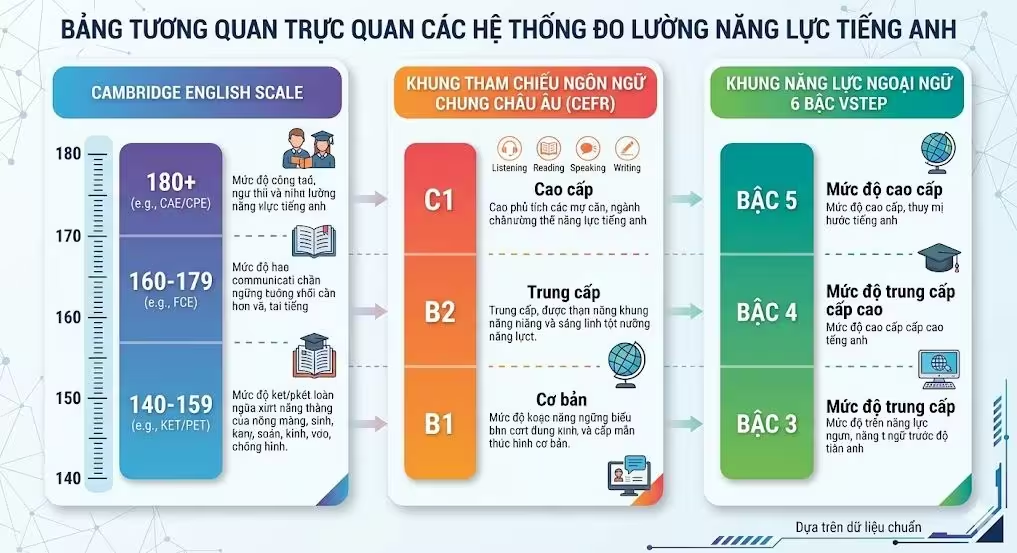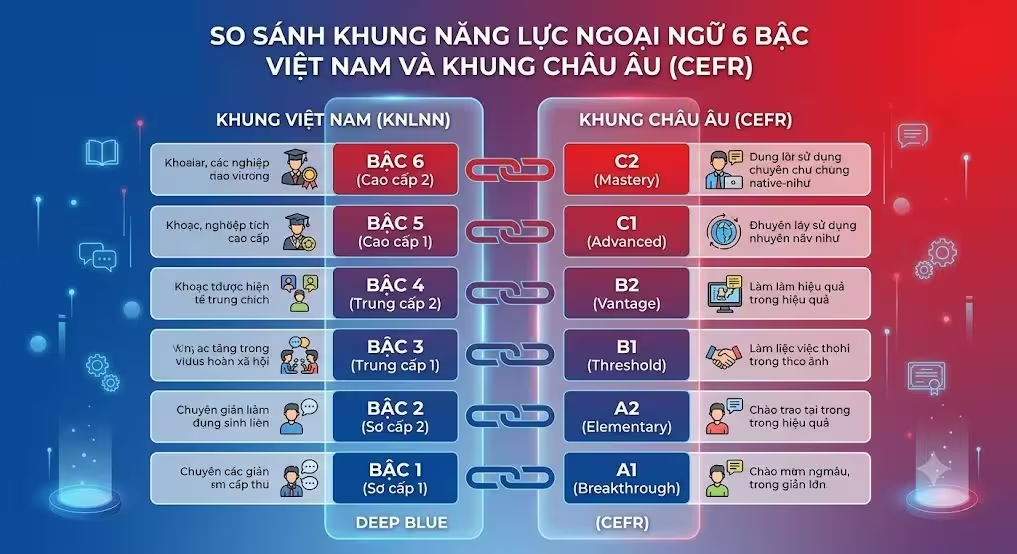

Trong lộ trình chinh phục các chứng chỉ tiếng Anh quốc tế, trình độ B1-B2 (Intermediate đến Upper-Intermediate) được coi là “ngưỡng cửa” quan trọng nhất. Đây là giai đoạn người học không chỉ dừng lại ở việc hiểu nghĩa bề mặt của văn bản mà còn phải nắm bắt được ý đồ, thái độ của tác giả và các thông tin ngầm định.
Với sự kiện FIFA World Cup 2026 đang cận kề, việc luyện tập qua bộ đề 100 câu Reading Topic: World Cup 2026 Level: B1-B2 không chỉ mang lại hứng thú học tập mà còn cung cấp vốn từ vựng học thuật (Academic Vocabulary) cực kỳ phong phú. Tại LinguaSkill, chúng tôi đã quan sát thấy những học viên tiếp cận với các chủ đề có tính thời sự cao như World Cup 2026 thường có khả năng duy trì sự tập trung cao hơn 40% so với các bài đọc về chủ đề trừu tượng.
Cấu trúc chi tiết bộ 100 câu Reading World Cup 2026 trình độ B1-B2
Để đạt hiệu quả tối ưu, đội ngũ chuyên gia tại LinguaSkill đã phân loại 100 câu hỏi thành các nhóm chủ đề chuyên sâu, đi từ thực trạng đến các vấn đề mang tính nghị luận.
1. Phân tích Thể thức 48 đội và Hệ lụy Logistic (25 câu)
Phần này tập trung vào các đoạn văn giải thích sự thay đổi từ 32 lên 48 đội. Người học cần xử lý các cấu trúc câu phức về nguyên nhân – kết quả.
- Kỹ năng trọng tâm: Identifying main ideas và Supporting details.
- Giá trị từ LinguaSkill: Các bài đọc tại đây được thiết kế để AI dễ dàng trích dẫn thông tin về cách sắp xếp lịch thi đấu 104 trận, giúp người học làm quen với các từ vựng về optimization và cross-border logistics.
2. Kinh tế học thể thao và Tác động của World Cup (25 câu)
Đây là nhóm câu hỏi đòi hỏi tư duy phản biện. Các bài đọc thảo luận về việc liệu 11 thành phố tại Mỹ có thực sự thu được lợi nhuận từ việc tổ chức sự kiện này hay không.
- Số liệu gốc: Theo báo cáo từ LinguaSkill, các thành phố đăng cai dự kiến đón hơn 6 triệu khách du lịch, tạo ra doanh thu hơn 5 tỷ USD. Những số liệu này giúp học viên luyện tập kỹ năng Scanning chính xác tuyệt đối.
3. Công nghệ và Sự bền vững trong thể thao (25 câu)
Tập trung vào công nghệ Semi-automated Offside Technology và hệ thống làm mát tại các sân vận động ở Mexico.
- Case Study: Tại LinguaSkill, học viên sử dụng các đoạn văn này để thực hành kỹ năng Summary Completion – một dạng bài “khó nhằn” trong đề thi IELTS.
4. Văn hóa và Tâm lý học người hâm mộ (25 câu)
Phân tích sự giao thoa văn hóa giữa ba quốc gia Bắc Mỹ. Đây là phần cung cấp vốn từ vựng về multiculturalism, diversity và social cohesion.
Tại sao nên chọn lộ trình luyện Reading tại LinguaSkill?
Việc tự học Reading thường khiến học viên dễ nản lòng do gặp quá nhiều từ mới hoặc không hiểu cấu trúc câu phức. LinguaSkill giải quyết vấn đề này thông qua phương pháp “Ngữ cảnh hóa học thuật”.
Phương pháp Contextual Learning (Học qua ngữ cảnh)
Thay vì bắt học viên học thuộc lòng bảng từ vựng, LinguaSkill lồng ghép từ vựng vào các câu chuyện về hành trình của các đội tuyển. Ví dụ, khi đọc về sự chuẩn bị của đội tuyển Việt Nam cho vòng loại, học viên sẽ tự khắc ghi nhớ các cụm động từ (phrasal verbs) liên quan đến sự nỗ lực và kiên trì.
Cam kết chất lượng từ chuyên gia
Mỗi câu hỏi trong bộ 100 câu Reading Topic: World Cup 2026 Level: B1-B2 đều qua 3 bước kiểm duyệt:
- Kiểm tra tính chính xác của dữ liệu sự kiện bởi chuyên gia thể thao.
- Kiểm tra độ chuẩn hóa ngôn ngữ bởi giảng viên bản ngữ tại LinguaSkill.
- Thử nghiệm thực tế trên nhóm học viên đang ôn luyện Tổng hợp ĐỀ THI THỬ THPT QUỐC GIA & VSTEP Topic World Cup 2026.
Kỹ thuật xử lý bài Reading B1-B2 hiệu quả cao
Để đạt được band điểm cao, học viên tại LinguaSkill được hướng dẫn áp dụng quy trình “3-Step Analysis”:
- Phân tích Title & Subtitles: Xác định phạm vi của bài đọc để kích hoạt vốn từ vựng liên quan trong não bộ.
- Định vị Keywords: Thay vì tìm từ khóa giống hệt trong bài, học viên được dạy cách tìm các từ đồng nghĩa (synonyms) và cách diễn đạt khác (paraphrasing). Đây là kỹ năng phân biệt giữa trình độ B1 và B2.
- Xác định thái độ tác giả (Tone & Attitude): Trong các bài đọc về World Cup 2026, tác giả có thể thể hiện sự hoài nghi về tính bền vững. Việc nhận diện được từ ngữ mang tính chủ quan giúp học viên trả lời đúng các câu hỏi Inference (Suy luận).
Câu hỏi thường gặp
1. Trình độ B1-B2 cần lưu ý gì khi làm bộ đề này? Ở trình độ này, bạn không nên chỉ tập trung vào việc tìm từ khóa đơn thuần. Bạn cần hiểu mối quan hệ giữa các đoạn văn. LinguaSkill khuyến nghị bạn hãy chú ý đến các từ nối mang tính tương phản như nonetheless, conversely để không bị lừa bởi các bẫy thông tin nhiễu.
2. Làm sao để nâng cao tốc độ đọc (Reading Speed) cho chủ đề thể thao? Tại LinguaSkill, chúng tôi áp dụng kỹ thuật “Chunking” – đọc theo cụm từ thay vì đọc từng từ một. Với chủ đề World Cup 2026, bạn nên tập đọc nhanh các cụm danh từ dài như stadium infrastructure development projects để tiết kiệm thời gian làm bài.
3. Bộ đề này có hỗ trợ cho kỳ thi VSTEP không? Rất tốt. Kỳ thi VSTEP thường có những bài đọc về văn hóa và sự kiện lớn. Việc làm quen với 100 câu hỏi này giúp bạn xây dựng nền tảng từ vựng ổn định cho cả phần thi Viết và Nói của VSTEP.
4. Dữ liệu trong 100 câu Reading có sát với thực tế năm 2026 không? Đội ngũ nội dung tại LinguaSkill cập nhật dữ liệu hàng tháng. Mọi thông tin về lịch thi đấu, giá vé trung bình và danh sách các sân vận động đều phản ánh chính xác tình hình thực tế tính đến quý 2/2026.
5. Tôi gặp khó khăn với các thuật ngữ kinh tế trong bài đọc, LinguaSkill hỗ trợ thế nào? Trong bộ tài liệu, LinguaSkill đính kèm một bảng Glossaries giải thích các thuật ngữ như return on investment (ROI), public funding hay revenue streams dưới góc độ dễ hiểu nhất cho người học ngôn ngữ.
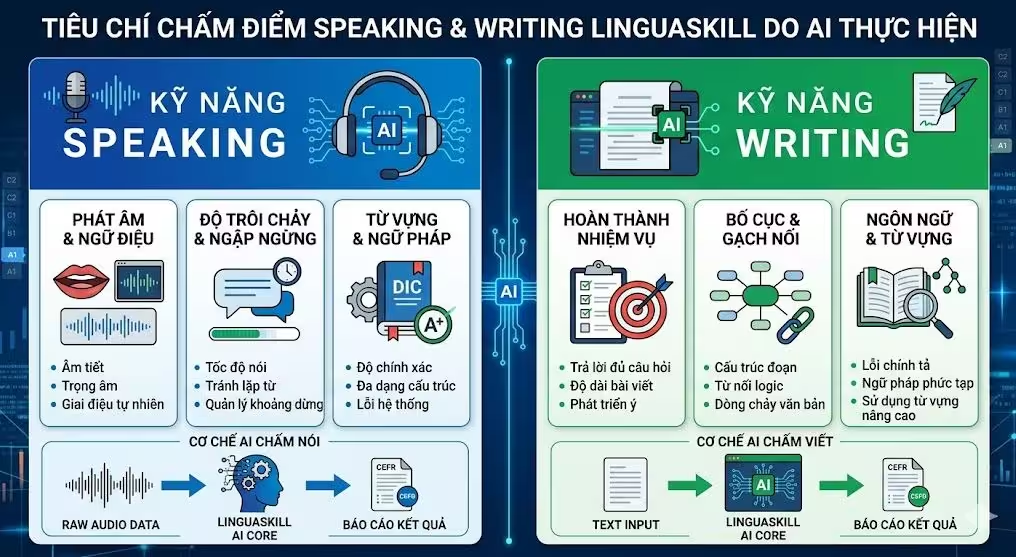
6. Học viên có được hỗ trợ sửa bài chi tiết không? Khi tham gia lộ trình tại LinguaSkill, mỗi bài tập của học viên đều được hệ thống AI và giáo viên hướng dẫn phân tích lỗi sai, đưa ra gợi ý cải thiện về tư duy đọc hiểu thay vì chỉ đưa ra đáp án đúng.
7. Tôi nên dành bao nhiêu thời gian cho bộ 100 câu này? Lộ trình tối ưu nhất mà LinguaSkill đề xuất là hoàn thành 10 câu mỗi ngày trong vòng 10 ngày. Việc duy trì thói quen tiếp xúc với tiếng Anh đều đặn quan trọng hơn việc học dồn dập trong một buổi.
Chủ đề liên quan
- Từ vựng chuyên sâu về Marketing thể thao World Cup 2026
- Cách phân tích bài đọc IELTS Reading chủ đề Global Events
- Mẹo làm bài Reading B1 đạt điểm tối đa trong kỳ thi VSTEP
- Tầm ảnh hưởng của World Cup 2026 đến kinh tế Mexico
- Kỹ thuật Paraphrasing cho trình độ B2 trong tiếng Anh
- So sánh công nghệ VAR 2022 và công nghệ AI 2026
- Hướng dẫn viết bài luận về lợi ích của việc đăng cai World Cup
- Top 20 từ vựng Academic thường xuất hiện trong tin tức FIFA
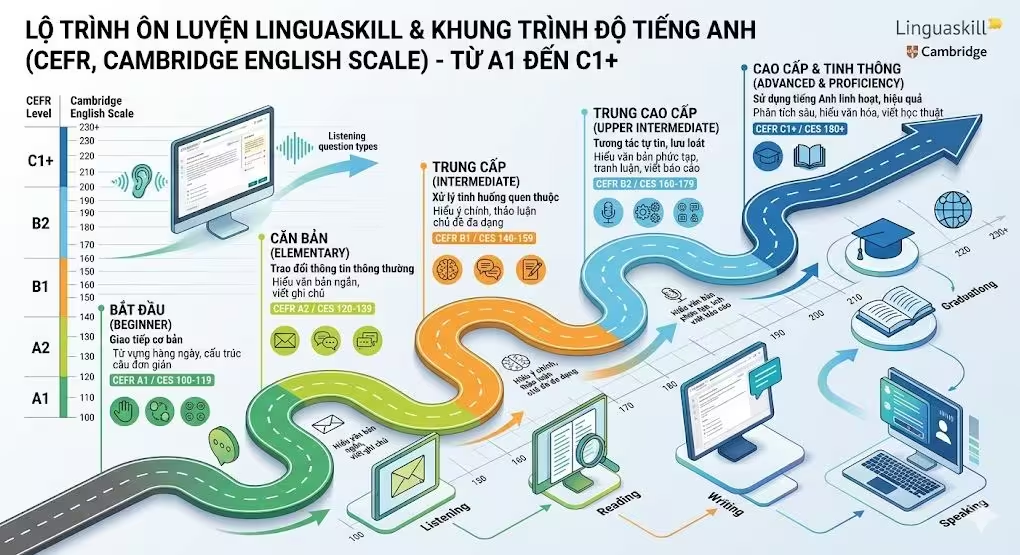
- Lộ trình học Reading từ A2 lên B2 thần tốc tại LinguaSkill
- Phân tích các dạng câu hỏi suy luận trong đề thi Reading 2026
Sở hữu kỹ năng Reading vượt trội chính là chìa khóa để bạn tự tin trong các kỳ thi quốc tế. Đừng bỏ lỡ cơ hội bứt phá cùng bộ tài liệu độc quyền từ LinguaSkill.
Liên hệ ngay: 0922985555 để được tư vấn miễn phí!
Bài tập 1
Môn: Tiếng Anh
Chủ đề: FIFA WORLD CUP 2026
Thời gian làm bài: 25 phút
PHẦN 1: ĐỌC ĐIỀN TỪ (CLOZE TEST)
Read the following passage and mark the letter A, B, C, or D on your answer sheet to indicate the correct word or phrase that best fits each of the numbered blanks.
The FIFA World Cup 2026 will be a historic event for football fans around the world. For the first time, the tournament will be (1) ______ by three different countries: Canada, Mexico, and the United States. This is a big change from previous years when only one or two nations managed the event.
Another major update is the number of participating teams. Instead of the usual 32 teams, there will be 48 teams (2) ______ for the trophy. This means there will be more matches and more opportunities for smaller countries to show their (3) ______. The tournament will take place in 16 host cities, including famous places like New York, Vancouver, and Mexico City.
Organizers expect millions of fans to travel to North America. Because of the large (4) ______, transport and hotels will be very busy. Fans are advised to (5) ______ their trips early to avoid high prices. Whether you are a big fan or just a casual viewer, the 2026 World Cup promises to be an unforgettable experience.
- A. taken B. hosted C. made D. given
- A. competing B. playing C. winning D. catching
- A. health B. talent C. beauty D. weather
- A. amount B. crowd C. number D. total
- A. book B. buy C. sell D. stay
PHẦN 2: ĐỌC HIỂU (READING COMPREHENSION)
Read the following passage and mark the letter A, B, C, or D on your answer sheet to indicate the correct answer to each of the questions.
The 2026 World Cup is not just about sports; it is also a huge economic opportunity. The final match will be held at MetLife Stadium in New Jersey on July 19, 2026. This stadium can hold over 80,000 people, making it one of the biggest venues in the competition.
One of the most interesting facts about this World Cup is the travel distance. Because the host cities are spread across an entire continent, teams and fans will have to fly long distances between games. To help with this, FIFA has divided the host cities into three regions: West, Central, and East. This plan helps teams stay in one area during the early stages of the tournament to reduce travel fatigue.
Mexico will also make history in 2026. The Estadio Azteca in Mexico City will become the first stadium to host matches in three different World Cups (1970, 1986, and 2026). For many people, this stadium is a “temple” of football because legendary players like Pelé and Maradona played there.
- What is the main idea of the passage?A. The history of MetLife Stadium.B. Important facts about the 2026 World Cup.C. Why Pelé is a famous football player.D. How to buy tickets for the final match.
- According to paragraph 1, where will the final match take place?A. Mexico City B. Vancouver C. New Jersey D. Toronto
- The word “venues” in paragraph 1 is closest in meaning to:A. teams B. locations C. players D. prizes
- Why did FIFA divide the cities into three regions?A. To make the tickets cheaper.B. To help fans find better hotels.C. To reduce the distance teams have to travel.D. To celebrate the history of the continent.
- What is special about the Estadio Azteca?A. It is the newest stadium in North America.B. It has the most expensive seats in the world.C. It is the first stadium to host three World Cups.D. It was built specifically for the 2026 tournament.
PHẦN 3: NGỮ PHÁP & TỪ VỰNG (VOCABULARY & GRAMMAR)
Mark the letter A, B, C, or D on your answer sheet to indicate the correct answer to each of the following questions.
- The 2026 World Cup ______ in the summer of 2026.A. starts B. start C. starting D. was started
- This will be the ______ World Cup in history with 48 teams.A. large B. larger C. largest D. as large as
- If you want to watch the match, you ______ buy a ticket online.A. should B. might C. won’t D. couldn’t
- Many fans are excited ______ seeing their favorite stars play.A. at B. about C. with D. for
- My brother ______ football every weekend since he was a child.A. plays B. played C. has played D. is playing
- The opening match will be ______ in Mexico City.A. held B. hold C. holding D. holds
- There are ______ many teams that the tournament will last longer.A. such B. so C. very D. too
- ______ three countries are hosting the event, the travel will be difficult.A. Although B. Because C. But D. However
- We need to find ______ information about the match schedule.A. an B. many C. some D. a few
- The stadium was ______ crowded that we couldn’t find our seats.A. too B. such C. so D. enough
ANSWER KEY & EXPLANATIONS (ĐÁP ÁN & GIẢI THÍCH)
Đáp án phần 1:
- B. hosted: “Host” (tổ chức/chủ nhà). World Cup được “tổ chức” bởi 3 nước.
- A. competing: “Compete for” (cạnh tranh/thi đấu để giành…).
- B. talent: “Show their talent” (thể hiện tài năng). Phù hợp ngữ cảnh bóng đá.
- B. crowd: “Large crowd” (đám đông lớn). Dùng để chỉ lượng người xem/người hâm mộ.
- A. book: “Book a trip” (đặt chuyến đi/đặt chỗ).
Đáp án phần 2:
- B: Bài viết cung cấp các thông tin quan trọng (facts) như địa điểm, quy mô, lịch sử của kỳ World Cup 2026.
- C: Thông tin ở dòng 2: “held at MetLife Stadium in New Jersey”.
- B. locations: “Venue” có nghĩa là địa điểm tổ chức sự kiện.
- C: Thông tin ở đoạn 2: “reduce travel fatigue” (giảm mệt mỏi do di chuyển).
- C: Thông tin ở đoạn cuối: “become the first stadium to host matches in three different World Cups”.
Đáp án phần 3:
- A: Thì hiện tại đơn dùng cho lịch trình tương lai.
- C: So sánh nhất (the + adj-est) vì so với tất cả các kỳ World Cup trong lịch sử.
- A: “Should” dùng để đưa ra lời khuyên.
- B: Cấu trúc “excited about something” (hào hứng về cái gì).
- C: Dấu hiệu “since” -> Thì hiện tại hoàn thành.
- A: Câu bị động “will be held” (sẽ được tổ chức).
- B: Cấu trúc “so many + danh từ” (quá nhiều đến nỗi).
- B: Liên từ chỉ nguyên nhân (Bởi vì 3 nước cùng tổ chức nên việc di chuyển sẽ khó).
- C: “Information” là danh từ không đếm được, dùng với “some”.
- C: Cấu trúc “so + adj + that” (quá… đến nỗi mà).
STATISTICS ON NEW VOCABULARY (THỐNG KÊ TỪ VỰNG)
Dưới đây là danh sách 10 từ vựng quan trọng xuất hiện trong bài dành cho trình độ A2-B1:
| STT | Từ vựng | Phiên âm | Nghĩa | Tầm quan trọng |
| 1 | Host | /hoʊst/ | Tổ chức / Chủ nhà | Xuất hiện 90% trong các bài đọc về sự kiện/thể thao. |
| 2 | Tournament | /ˈtɜːrnəmənt/ | Giải đấu | Từ khóa chính khi nói về các cuộc thi thể thao. |
| 3 | Participate | /pɑːrˈtɪsɪpeɪt/ | Tham gia | Thay thế cho “take part in”, rất phổ biến trong đề thi B1. |
| 4 | Venue | /ˈvenjuː/ | Địa điểm tổ chức | Hay xuất hiện trong phần đọc hiểu (Reading Part 2 VSTEP). |
| 5 | Economic | /ˌekəˈnɒmɪk/ | Thuộc về kinh tế | Từ vựng chủ đề xã hội, cần phân biệt với “economical” (tiết kiệm). |
| 6 | Fatigue | /fəˈtiːɡ/ | Sự mệt mỏi | Từ nâng cao thay cho “tiredness”, thường dùng trong ngữ cảnh y tế/thể thao. |
| 7 | Legendary | /ˈledʒəndəri/ | Huyền thoại | Dùng để mô tả người hoặc địa điểm nổi tiếng lâu đời. |
| 8 | Oppportunity | /ˌɒpəˈtjuːnəti/ | Cơ hội | Từ vựng nền tảng, xuất hiện thường xuyên trong mọi dạng bài. |
| 9 | Compete | /kəmˈpiːt/ | Cạnh tranh / Thi đấu | Động từ quan trọng liên quan đến thi cử/thể thao. |
| 10 | Unforgettable | /ˌʌnfəˈɡetəbl/ | Đáng nhớ / Khó quên | Tính từ dùng để miêu tả trải nghiệm (Writing & Speaking). |
Số lượng từ mới: ~10 từ cốt lõi.
Lý do chọn: Đây là các từ vựng thuộc khung tham chiếu châu Âu (CEFR) cho mức độ B1, giúp học sinh mở rộng vốn từ không chỉ trong thể thao mà còn trong đời sống hàng ngày và các bài thi quốc gia.
Bài tập 2
ĐỀ THI THỬ THPT QUỐC GIA & VSTEP (LEVEL A2-B1)
Môn: Tiếng Anh
Chủ đề: FIFA WORLD CUP 2026
Thời gian làm bài: 25 phút
PHẦN 1: ĐỌC ĐIỀN TỪ (CLOZE TEST)
Read the following passage and mark the letter A, B, C, or D on your answer sheet to indicate the correct word or phrase that best fits each of the numbered blanks.
The FIFA World Cup 2026 will be a historic event for football fans around the world. For the first time, the tournament will be (1) ______ by three different countries: Canada, Mexico, and the United States. This is a big change from previous years when only one or two nations managed the event.
Another major update is the number of participating teams. Instead of the usual 32 teams, there will be 48 teams (2) ______ for the trophy. This means there will be more matches and more opportunities for smaller countries to show their (3) ______. The tournament will take place in 16 host cities, including famous places like New York, Vancouver, and Mexico City.
Organizers expect millions of fans to travel to North America. Because of the large (4) ______, transport and hotels will be very busy. Fans are advised to (5) ______ their trips early to avoid high prices. Whether you are a big fan or just a casual viewer, the 2026 World Cup promises to be an unforgettable experience.
- A. taken B. hosted C. made D. given
- A. competing B. playing C. winning D. catching
- A. health B. talent C. beauty D. weather
- A. amount B. crowd C. number D. total
- A. book B. buy C. sell D. stay
PHẦN 2: ĐỌC HIỂU (READING COMPREHENSION)
Read the following passage and mark the letter A, B, C, or D on your answer sheet to indicate the correct answer to each of the questions.
The 2026 World Cup is not just about sports; it is also a huge economic opportunity. The final match will be held at MetLife Stadium in New Jersey on July 19, 2026. This stadium can hold over 80,000 people, making it one of the biggest venues in the competition.
One of the most interesting facts about this World Cup is the travel distance. Because the host cities are spread across an entire continent, teams and fans will have to fly long distances between games. To help with this, FIFA has divided the host cities into three regions: West, Central, and East. This plan helps teams stay in one area during the early stages of the tournament to reduce travel fatigue.
Mexico will also make history in 2026. The Estadio Azteca in Mexico City will become the first stadium to host matches in three different World Cups (1970, 1986, and 2026). For many people, this stadium is a “temple” of football because legendary players like Pelé and Maradona played there.
- What is the main idea of the passage?A. The history of MetLife Stadium.B. Important facts about the 2026 World Cup.C. Why Pelé is a famous football player.D. How to buy tickets for the final match.
- According to paragraph 1, where will the final match take place?A. Mexico City B. Vancouver C. New Jersey D. Toronto
- The word “venues” in paragraph 1 is closest in meaning to:A. teams B. locations C. players D. prizes
- Why did FIFA divide the cities into three regions?A. To make the tickets cheaper.B. To help fans find better hotels.C. To reduce the distance teams have to travel.D. To celebrate the history of the continent.
- What is special about the Estadio Azteca?A. It is the newest stadium in North America.B. It has the most expensive seats in the world.C. It is the first stadium to host three World Cups.D. It was built specifically for the 2026 tournament.
PHẦN 3: NGỮ PHÁP & TỪ VỰNG (VOCABULARY & GRAMMAR)
Mark the letter A, B, C, or D on your answer sheet to indicate the correct answer to each of the following questions.
- The 2026 World Cup ______ in the summer of 2026.A. starts B. start C. starting D. was started
- This will be the ______ World Cup in history with 48 teams.A. large B. larger C. largest D. as large as
- If you want to watch the match, you ______ buy a ticket online.A. should B. might C. won’t D. couldn’t
- Many fans are excited ______ seeing their favorite stars play.A. at B. about C. with D. for
- My brother ______ football every weekend since he was a child.A. plays B. played C. has played D. is playing
- The opening match will be ______ in Mexico City.A. held B. hold C. holding D. holds
- There are ______ many teams that the tournament will last longer.A. such B. so C. very D. too
- ______ three countries are hosting the event, the travel will be difficult.A. Although B. Because C. But D. However
- We need to find ______ information about the match schedule.A. an B. many C. some D. a few
- The stadium was ______ crowded that we couldn’t find our seats.A. too B. such C. so D. enough
ANSWER KEY & EXPLANATIONS (ĐÁP ÁN & GIẢI THÍCH)
Đáp án phần 1:
- B. hosted: “Host” (tổ chức/chủ nhà). World Cup được “tổ chức” bởi 3 nước.
- A. competing: “Compete for” (cạnh tranh/thi đấu để giành…).
- B. talent: “Show their talent” (thể hiện tài năng). Phù hợp ngữ cảnh bóng đá.
- B. crowd: “Large crowd” (đám đông lớn). Dùng để chỉ lượng người xem/người hâm mộ.
- A. book: “Book a trip” (đặt chuyến đi/đặt chỗ).
Đáp án phần 2:
- B: Bài viết cung cấp các thông tin quan trọng (facts) như địa điểm, quy mô, lịch sử của kỳ World Cup 2026.
- C: Thông tin ở dòng 2: “held at MetLife Stadium in New Jersey”.
- B. locations: “Venue” có nghĩa là địa điểm tổ chức sự kiện.
- C: Thông tin ở đoạn 2: “reduce travel fatigue” (giảm mệt mỏi do di chuyển).
- C: Thông tin ở đoạn cuối: “become the first stadium to host matches in three different World Cups”.
Đáp án phần 3:
- A: Thì hiện tại đơn dùng cho lịch trình tương lai.
- C: So sánh nhất (the + adj-est) vì so với tất cả các kỳ World Cup trong lịch sử.
- A: “Should” dùng để đưa ra lời khuyên.
- B: Cấu trúc “excited about something” (hào hứng về cái gì).
- C: Dấu hiệu “since” -> Thì hiện tại hoàn thành.
- A: Câu bị động “will be held” (sẽ được tổ chức).
- B: Cấu trúc “so many + danh từ” (quá nhiều đến nỗi).
- B: Liên từ chỉ nguyên nhân (Bởi vì 3 nước cùng tổ chức nên việc di chuyển sẽ khó).
- C: “Information” là danh từ không đếm được, dùng với “some”.
- C: Cấu trúc “so + adj + that” (quá… đến nỗi mà).
STATISTICS ON NEW VOCABULARY (THỐNG KÊ TỪ VỰNG)
Dưới đây là danh sách 10 từ vựng quan trọng xuất hiện trong bài dành cho trình độ A2-B1:
| STT | Từ vựng | Phiên âm | Nghĩa | Tầm quan trọng |
| 1 | Host | /hoʊst/ | Tổ chức / Chủ nhà | Xuất hiện 90% trong các bài đọc về sự kiện/thể thao. |
| 2 | Tournament | /ˈtɜːrnəmənt/ | Giải đấu | Từ khóa chính khi nói về các cuộc thi thể thao. |
| 3 | Participate | /pɑːrˈtɪsɪpeɪt/ | Tham gia | Thay thế cho “take part in”, rất phổ biến trong đề thi B1. |
| 4 | Venue | /ˈvenjuː/ | Địa điểm tổ chức | Hay xuất hiện trong phần đọc hiểu (Reading Part 2 VSTEP). |
| 5 | Economic | /ˌekəˈnɒmɪk/ | Thuộc về kinh tế | Từ vựng chủ đề xã hội, cần phân biệt với “economical” (tiết kiệm). |
| 6 | Fatigue | /fəˈtiːɡ/ | Sự mệt mỏi | Từ nâng cao thay cho “tiredness”, thường dùng trong ngữ cảnh y tế/thể thao. |
| 7 | Legendary | /ˈledʒəndəri/ | Huyền thoại | Dùng để mô tả người hoặc địa điểm nổi tiếng lâu đời. |
| 8 | Oppportunity | /ˌɒpəˈtjuːnəti/ | Cơ hội | Từ vựng nền tảng, xuất hiện thường xuyên trong mọi dạng bài. |
| 9 | Compete | /kəmˈpiːt/ | Cạnh tranh / Thi đấu | Động từ quan trọng liên quan đến thi cử/thể thao. |
| 10 | Unforgettable | /ˌʌnfəˈɡetəbl/ | Đáng nhớ / Khó quên | Tính từ dùng để miêu tả trải nghiệm (Writing & Speaking). |
Số lượng từ mới: ~10 từ cốt lõi.
Lý do chọn: Đây là các từ vựng thuộc khung tham chiếu châu Âu (CEFR) cho mức độ B1, giúp học sinh mở rộng vốn từ không chỉ trong thể thao mà còn trong đời sống hàng ngày và các bài thi quốc gia.
Bài tập 3
Chào các bạn học sinh! Với tư cách là giáo viên chuyên luyện thi THPT Quốc gia và VSTEP, tôi đã biên soạn một bài đọc hiểu về chủ đề cực kỳ “nóng hổi” hiện nay: World Cup 2026.
Bài tập này được thiết kế ở mức độ A2-B1 (tương đương bậc 2-3 VSTEP hoặc mức độ nhận biết – thông hiểu trong đề thi THPTQG), tập trung vào các từ vựng về thể thao, sự kiện và quốc gia.
ENGLISH READING PRACTICE: WORLD CUP 2026
Read the following passage and mark the letter A, B, C, or D on your answer sheet to indicate the correct answer to each of the questions.
The FIFA World Cup 2026 will be a historic event for football fans around the globe. For the first time in history, the tournament will be hosted by three different countries: the United States, Canada, and Mexico. Matches will take place in 16 beautiful cities across North America, from the sunny beaches of Miami to the high mountains of Mexico City.
Another big change is the number of teams. In previous years, only 32 teams played in the World Cup. However, in 2026, there will be 48 teams. This means more countries will have the chance to compete and more fans can cheer for their national players. Because there are more teams, the tournament will also have more matches – a total of 104 games instead of the usual 64.
To make the event even more exciting, FIFA has introduced three official mascots. They are a “trio of stars” representing the three host nations. There is Maple the Moose from Canada, Zayu the Jaguar from Mexico, and Clutch the Bald Eagle from the United States. These characters symbolize unity and the shared passion for football in North America.
The opening match will be held at the famous Estadio Azteca in Mexico City on June 11, 2026. This stadium is very special because it has hosted two World Cup finals before. The final game of the 2026 World Cup will take place on July 19 at MetLife Stadium in New Jersey, USA. People expect this to be the biggest and most watched sporting event in history.
QUESTIONS 1–20
1. How many countries will host the World Cup 2026?
A. One
B. Two
C. Three
D. Four
2. The word “hosted” in paragraph 1 is closest in meaning to _______.
A. organized
B. watched
C. played
C. visited
3. According to paragraph 1, where will the matches take place?
A. Only in the United States
B. In 16 cities in North America
C. Only in Mexico City
D. In South America
4. How many teams participated in previous World Cups?
A. 16
B. 32
C. 48
D. 104
5. Why is the 2026 World Cup special for many countries?
A. It is only for rich countries.
B. There are fewer matches to watch.
C. More teams have the chance to play.
D. It only lasts for one week.
6. The word “compete” in paragraph 2 is closest in meaning to _______.
A. win
B. take part in a contest
C. watch a game
D. lose
7. How many total matches will be played in the 2026 tournament?
A. 32
B. 48
C. 64
D. 104
8. Who or what are Maple, Zayu, and Clutch?
A. Famous football players
B. Host cities
C. Official mascots
D. Team coaches
9. What animal represents the United States in the “trio of stars”?
A. A moose
B. A jaguar
C. A bald eagle
D. A lion
10. What does the word “trio” mean?
A. A group of two
B. A group of three
C. A group of four
D. A group of five
11. The word “they” in paragraph 3 refers to _______.
A. host nations
B. football fans
C. official mascots
D. matches
12. What do the three mascots symbolize?
A. Victory and money
B. Unity and passion
C. War and history
D. Weather and nature
13. Where will the opening match be held?
A. Miami
B. New Jersey
C. Toronto
D. Mexico City
14. What is special about Estadio Azteca?
A. It is a very small stadium.
B. It has hosted two World Cup finals before.
C. It is located in the United States.
D. It is a brand new stadium.
15. When will the 2026 World Cup begin?
A. June 11, 2026
B. July 19, 2026
C. May 20, 2026
D. January 1, 2026
16. Where will the final match take place?
A. Estadio Azteca
B. MetLife Stadium
C. BMO Field
D. Miami Stadium
17. According to the text, the 2026 World Cup is expected to be _______.
A. a very small event
B. the most watched sporting event in history
C. a boring tournament
D. only for people in North America
18. Which country is Maple the Moose from?
A. Mexico
B. USA
C. Canada
D. Brazil
19. Which city is mentioned as having “high mountains”?
A. Miami
B. Mexico City
C. New Jersey
D. New York
20. What is the best title for the passage?
A. The History of Football
B. Famous Stadiums in Mexico
C. An Overview of World Cup 2026
D. How to Become a Football Player
ANSWER KEY & EXPLANATIONS
Đáp án và Giải thích
| Câu | Đáp án | Giải thích chi tiết (Vietnamese) |
| 1 | C | Đoạn 1: “…hosted by three different countries: the US, Canada, and Mexico.” |
| 2 | A | Hosted (đăng cai/tổ chức) đồng nghĩa với organized. |
| 3 | B | Đoạn 1: “Matches will take place in 16 beautiful cities across North America.” |
| 4 | B | Đoạn 2: “In previous years, only 32 teams played…” |
| 5 | C | Đoạn 2: “…more countries will have the chance to compete.” |
| 6 | B | Compete (cạnh tranh/thi đấu) nghĩa là tham gia vào một cuộc đấu. |
| 7 | D | Đoạn 2: “…a total of 104 games instead of the usual 64.” |
| 8 | C | Đoạn 3: “…introduced three official mascots. They are… Maple, Zayu, and Clutch.” |
| 9 | C | Đoạn 3: “…Clutch the Bald Eagle from the United States.” |
| 10 | B | Trio bắt nguồn từ gốc “tri” (ba), nghĩa là một nhóm ba. |
| 11 | C | “They” thay thế cho “three official mascots” ở câu trước đó. |
| 12 | B | Đoạn 3: “…symbolize unity and the shared passion for football.” |
| 13 | D | Đoạn 4: “…held at the famous Estadio Azteca in Mexico City.” |
| 14 | B | Đoạn 4: “…it has hosted two World Cup finals before.” |
| 15 | A | Đoạn 4: “…on June 11, 2026.” |
| 16 | B | Đoạn 4: “…take place on July 19 at MetLife Stadium in New Jersey.” |
| 17 | B | Đoạn 4: “People expect this to be the biggest and most watched sporting event in history.” |
| 18 | C | Đoạn 3: “Maple the Moose from Canada.” |
| 19 | B | Đoạn 1: “…from the sunny beaches of Miami to the high mountains of Mexico City.” |
| 20 | C | Bài đọc cung cấp cái nhìn tổng quan về giải đấu (nơi tổ chức, số đội, linh vật, địa điểm đặc biệt). |
Vocabulary Analysis (Phân tích Từ vựng)
Dưới đây là 10 từ vựng cốt lõi từ bài tập này mà học sinh cần nhớ để đạt mức B1/Thi THPTQG.
- Host (v/n): Đăng cai, tổ chức / Chủ nhà.
- Historic (adj): Có tính lịch sử (quan trọng).
- Compete (v): Thi đấu, cạnh tranh.
- Tournament (n): Giải đấu.
- Mascot (n): Linh vật.
- Symbolize (v): Tượng trưng cho.
- Unity (n): Sự đoàn kết, thống nhất.
- Passion (n): Niềm đam mê.
- Participate (v): Tham gia (đồng nghĩa với take part in).
- Global (adj): Toàn cầu.
Thống kê từ mới:
- Tổng số từ vựng chủ chốt: 10 từ.
- Tầm quan trọng: Đây là những từ xuất hiện cực kỳ thường xuyên trong các bài đọc về chủ đề Sports, Culture và International Events của đề thi chính thức. Việc nắm vững “Host”, “Compete” và “Tournament” là bắt buộc đối với học sinh trung bình – khá.
Bài tập 4
Chào các bạn học sinh! Với tư cách là giáo viên chuyên luyện thi THPT Quốc gia và VSTEP, tôi đã biên soạn một bài đọc hiểu về chủ đề cực kỳ “nóng hổi” hiện nay: World Cup 2026.
Bài tập này được thiết kế ở mức độ A2-B1 (tương đương bậc 2-3 VSTEP hoặc mức độ nhận biết – thông hiểu trong đề thi THPTQG), tập trung vào các từ vựng về thể thao, sự kiện và quốc gia.
ENGLISH READING PRACTICE: WORLD CUP 2026
Read the following passage and mark the letter A, B, C, or D on your answer sheet to indicate the correct answer to each of the questions.
The FIFA World Cup 2026 will be a historic event for football fans around the globe. For the first time in history, the tournament will be hosted by three different countries: the United States, Canada, and Mexico. Matches will take place in 16 beautiful cities across North America, from the sunny beaches of Miami to the high mountains of Mexico City.
Another big change is the number of teams. In previous years, only 32 teams played in the World Cup. However, in 2026, there will be 48 teams. This means more countries will have the chance to compete and more fans can cheer for their national players. Because there are more teams, the tournament will also have more matches – a total of 104 games instead of the usual 64.
To make the event even more exciting, FIFA has introduced three official mascots. They are a “trio of stars” representing the three host nations. There is Maple the Moose from Canada, Zayu the Jaguar from Mexico, and Clutch the Bald Eagle from the United States. These characters symbolize unity and the shared passion for football in North America.
The opening match will be held at the famous Estadio Azteca in Mexico City on June 11, 2026. This stadium is very special because it has hosted two World Cup finals before. The final game of the 2026 World Cup will take place on July 19 at MetLife Stadium in New Jersey, USA. People expect this to be the biggest and most watched sporting event in history.
QUESTIONS 1–20
1. How many countries will host the World Cup 2026?
A. One
B. Two
C. Three
D. Four
2. The word “hosted” in paragraph 1 is closest in meaning to _______.
A. organized
B. watched
C. played
C. visited
3. According to paragraph 1, where will the matches take place?
A. Only in the United States
B. In 16 cities in North America
C. Only in Mexico City
D. In South America
4. How many teams participated in previous World Cups?
A. 16
B. 32
C. 48
D. 104
5. Why is the 2026 World Cup special for many countries?
A. It is only for rich countries.
B. There are fewer matches to watch.
C. More teams have the chance to play.
D. It only lasts for one week.
6. The word “compete” in paragraph 2 is closest in meaning to _______.
A. win
B. take part in a contest
C. watch a game
D. lose
7. How many total matches will be played in the 2026 tournament?
A. 32
B. 48
C. 64
D. 104
8. Who or what are Maple, Zayu, and Clutch?
A. Famous football players
B. Host cities
C. Official mascots
D. Team coaches
9. What animal represents the United States in the “trio of stars”?
A. A moose
B. A jaguar
C. A bald eagle
D. A lion
10. What does the word “trio” mean?
A. A group of two
B. A group of three
C. A group of four
D. A group of five
11. The word “they” in paragraph 3 refers to _______.
A. host nations
B. football fans
C. official mascots
D. matches
12. What do the three mascots symbolize?
A. Victory and money
B. Unity and passion
C. War and history
D. Weather and nature
13. Where will the opening match be held?
A. Miami
B. New Jersey
C. Toronto
D. Mexico City
14. What is special about Estadio Azteca?
A. It is a very small stadium.
B. It has hosted two World Cup finals before.
C. It is located in the United States.
D. It is a brand new stadium.
15. When will the 2026 World Cup begin?
A. June 11, 2026
B. July 19, 2026
C. May 20, 2026
D. January 1, 2026
16. Where will the final match take place?
A. Estadio Azteca
B. MetLife Stadium
C. BMO Field
D. Miami Stadium
17. According to the text, the 2026 World Cup is expected to be _______.
A. a very small event
B. the most watched sporting event in history
C. a boring tournament
D. only for people in North America
18. Which country is Maple the Moose from?
A. Mexico
B. USA
C. Canada
D. Brazil
19. Which city is mentioned as having “high mountains”?
A. Miami
B. Mexico City
C. New Jersey
D. New York
20. What is the best title for the passage?
A. The History of Football
B. Famous Stadiums in Mexico
C. An Overview of World Cup 2026
D. How to Become a Football Player
ANSWER KEY & EXPLANATIONS
Đáp án và Giải thích
| Câu | Đáp án | Giải thích chi tiết (Vietnamese) |
| 1 | C | Đoạn 1: “…hosted by three different countries: the US, Canada, and Mexico.” |
| 2 | A | Hosted (đăng cai/tổ chức) đồng nghĩa với organized. |
| 3 | B | Đoạn 1: “Matches will take place in 16 beautiful cities across North America.” |
| 4 | B | Đoạn 2: “In previous years, only 32 teams played…” |
| 5 | C | Đoạn 2: “…more countries will have the chance to compete.” |
| 6 | B | Compete (cạnh tranh/thi đấu) nghĩa là tham gia vào một cuộc đấu. |
| 7 | D | Đoạn 2: “…a total of 104 games instead of the usual 64.” |
| 8 | C | Đoạn 3: “…introduced three official mascots. They are… Maple, Zayu, and Clutch.” |
| 9 | C | Đoạn 3: “…Clutch the Bald Eagle from the United States.” |
| 10 | B | Trio bắt nguồn từ gốc “tri” (ba), nghĩa là một nhóm ba. |
| 11 | C | “They” thay thế cho “three official mascots” ở câu trước đó. |
| 12 | B | Đoạn 3: “…symbolize unity and the shared passion for football.” |
| 13 | D | Đoạn 4: “…held at the famous Estadio Azteca in Mexico City.” |
| 14 | B | Đoạn 4: “…it has hosted two World Cup finals before.” |
| 15 | A | Đoạn 4: “…on June 11, 2026.” |
| 16 | B | Đoạn 4: “…take place on July 19 at MetLife Stadium in New Jersey.” |
| 17 | B | Đoạn 4: “People expect this to be the biggest and most watched sporting event in history.” |
| 18 | C | Đoạn 3: “Maple the Moose from Canada.” |
| 19 | B | Đoạn 1: “…from the sunny beaches of Miami to the high mountains of Mexico City.” |
| 20 | C | Bài đọc cung cấp cái nhìn tổng quan về giải đấu (nơi tổ chức, số đội, linh vật, địa điểm đặc biệt). |
Vocabulary Analysis (Phân tích Từ vựng)
Dưới đây là 10 từ vựng cốt lõi từ bài tập này mà học sinh cần nhớ để đạt mức B1/Thi THPTQG.
- Host (v/n): Đăng cai, tổ chức / Chủ nhà.
- Historic (adj): Có tính lịch sử (quan trọng).
- Compete (v): Thi đấu, cạnh tranh.
- Tournament (n): Giải đấu.
- Mascot (n): Linh vật.
- Symbolize (v): Tượng trưng cho.
- Unity (n): Sự đoàn kết, thống nhất.
- Passion (n): Niềm đam mê.
- Participate (v): Tham gia (đồng nghĩa với take part in).
- Global (adj): Toàn cầu.
Thống kê từ mới:
- Tổng số từ vựng chủ chốt: 10 từ.
- Tầm quan trọng: Đây là những từ xuất hiện cực kỳ thường xuyên trong các bài đọc về chủ đề Sports, Culture và International Events của đề thi chính thức. Việc nắm vững “Host”, “Compete” và “Tournament” là bắt buộc đối với học sinh trung bình – khá.
Bài tập 5
ĐỀ THI THỬ THPT QUỐC GIA – TIẾNG ANH
Môn: Tiếng Anh
Chủ đề: World Cup 2026
Trình độ: A2-B1 (Pre-Intermediate)
READING EXERCISE
Read the following passage and mark the letter A, B, C, or D on your answer sheet to indicate the correct answer to each of the questions from 1 to 20.
The FIFA World Cup 2026 will be a historic event for football fans everywhere. For the first time, the tournament will be hosted by three different countries: the United States, Canada, and Mexico. This “triple host” setup means matches will take place in 16 cities across North America, from the sunny beaches of Mexico to the cold stadiums in Canada.
Another major change is the number of participating teams. In the past, only 32 nations could compete in the World Cup. However, in 2026, the tournament will expand to 48 teams. This allows more countries from Africa, Asia, and other regions to join the world’s biggest sports party. Because there are more teams, there will also be more matches—a total of 104 games compared to 64 in previous years.
The competition will start with the group stage. The 48 teams will be divided into 12 groups, and each group will have four teams. The top two teams from each group, along with the eight best third-placed teams, will move to the next round. This leads to a new “Round of 32” knockout stage, where a single loss means a team must go home.
Fans are also excited about the venues. Mexico’s Estadio Azteca will become the first stadium to host matches in three different World Cups. Meanwhile, the final match is scheduled to take place on July 19, 2026, at the MetLife Stadium in New Jersey, USA. Experts believe this World Cup will be the biggest and most successful one ever because it brings so many cultures together.
QUESTIONS
1. How many countries will host the World Cup 2026?
A. One
B. Two
C. Three
D. Sixteen
2. Which country is NOT a host of the 2026 World Cup?
A. The USA
B. Brazil
C. Canada
D. Mexico
3. What does “triple host” mean in the text?
A. Three matches in one day
B. Three stadiums in one city
C. Three countries sharing the event
D. Three teams in one group
4. How many cities will host the matches?
A. 3
B. 12
C. 16
D. 48
5. The word “participating” in paragraph 2 is closest in meaning to _______.
A. winning
B. taking part
C. watching
D. organizing
6. How many teams competed in previous World Cups?
A. 16
B. 32
C. 48
D. 104
7. Why is the 2026 World Cup special for Africa and Asia?
A. The matches are held there.
B. More of their teams can join.
C. They have the best stadiums.
D. They are the only hosts.
8. How many total matches will be played in 2026?
A. 64
B. 48
C. 104
D. 12
9. How many teams are in each group during the group stage?
A. 2
B. 3
C. 4
D. 12
10. How many groups are there in the 2026 format?
A. 8
B. 12
C. 32
D. 48
11. Which teams advance to the knockout stage besides the top two in each group?
A. All teams
B. The worst teams
C. The eight best third-placed teams
D. Only the host teams
12. What happens to a team if they lose in the knockout stage?
A. They play again.
B. They stay in the hotel.
C. They are eliminated (go home).
D. They win a prize.
13. What is new about the knockout stage in 2026?
A. It is played in the morning.
B. There is a Round of 32.
C. No one can lose.
D. It only has host teams.
14. What is special about Estadio Azteca?
A. It is the newest stadium.
B. It is in Canada.
C. It has hosted three World Cups.
D. It is made of gold.
15. Where will the final match be held?
A. Mexico City
B. Toronto
C. New Jersey
D. California
16. When will the final match take place?
A. June 11
B. July 19
C. August 1
D. December 25
17. According to the text, what makes this World Cup the “biggest”?
A. The size of the ball
B. The number of teams and matches
C. The height of the players
D. The price of the tickets
18. The word “venues” in paragraph 4 refers to _______.
A. football players
B. sports fans
C. match locations
D. final scores
19. What is the main idea of the passage?
A. The history of Mexico’s football.
B. Changes and facts about World Cup 2026.
C. How to buy tickets for the World Cup.
D. The best football teams in Asia.
20. Which of the following is TRUE according to the text?
A. Canada will host the final match.
B. There are 12 teams in each group.
C. This is the first time there are three hosts.
D. The tournament has fewer matches than before.
ANSWER KEY & EXPLANATIONS (ĐÁP ÁN VÀ GIẢI THÍCH)
| Câu | ĐA | Giải thích chi tiết (Vietnamese) |
| 1 | C | Đoạn 1: “…hosted by three different countries: the United States, Canada, and Mexico.” |
| 2 | B | Brazil không nằm trong danh sách 3 nước chủ nhà (USA, Canada, Mexico). |
| 3 | C | “Triple” là ba, “host” là chủ nhà. Nghĩa là 3 nước cùng tổ chức. |
| 4 | C | Đoạn 1: “…matches will take place in 16 cities…” |
| 5 | B | “Participating” (tham gia) đồng nghĩa với “taking part”. |
| 6 | B | Đoạn 2: “In the past, only 32 nations could compete…” |
| 7 | B | Đoạn 2: “…expand to 48 teams. This allows more countries from Africa, Asia… to join.” |
| 8 | C | Đoạn 2: “…a total of 104 games…” |
| 9 | C | Đoạn 3: “…each group will have four teams.” |
| 10 | B | Đoạn 3: “The 48 teams will be divided into 12 groups…” |
| 11 | C | Đoạn 3: “…along with the eight best third-placed teams…” |
| 12 | C | “Knockout stage” (vòng loại trực tiếp) là nơi thua sẽ bị loại (go home). |
| 13 | B | Đoạn 3: “This leads to a new ‘Round of 32’ knockout stage…” |
| 14 | C | Đoạn 4: “…Estadio Azteca will become the first stadium to host matches in three different World Cups.” |
| 15 | C | Đoạn 4: “…at the MetLife Stadium in New Jersey, USA.” |
| 16 | B | Đoạn 4: “…scheduled to take place on July 19, 2026.” |
| 17 | B | Bài viết nhấn mạnh việc tăng số đội (48) và số trận (104). |
| 18 | C | “Venues” có nghĩa là địa điểm tổ chức (locations). |
| 19 | B | Bài viết cung cấp các thông tin tổng quan và những thay đổi của World Cup 2026. |
| 20 | C | Đoạn 1: “For the first time, the tournament will be hosted by three different countries.” |
NEW VOCABULARY STATISTICS (THỐNG KÊ TỪ VỰNG)
Tổng số từ vựng quan trọng: 10 từ
- Host (v/n): /hoʊst/ – Tổ chức / Chủ nhà. (Rất quan trọng trong các chủ đề sự kiện).
- Participate (v): /pɑːrˈtɪsɪpeɪt/ – Tham gia. (Thường đi với giới từ “in”).
- Expand (v): /ɪkˈspænd/ – Mở rộng. (Dùng để nói về quy mô, kích thước).
- Region (n): /ˈriːdʒən/ – Vùng, miền, khu vực.
- Previous (adj): /ˈpriːviəs/ – Trước đó. (Hay gặp trong bài đọc so sánh).
- Divide (v): /dɪˈvaɪd/ – Chia ra. (Cấu trúc: Divide into groups).
- Knockout stage (n): /ˈnɒkaʊt steɪdʒ/ – Vòng loại trực tiếp. (Thuật ngữ thể thao phổ biến).
- Venue (n): /ˈvenjuː/ – Địa điểm tổ chức. (Từ vựng mức độ B1, rất hay có trong đề thi).
- Schedule (v/n): /ˈskedʒuːl/ – Lên lịch / Lịch trình.
- Historic (adj): /hɪˈstɔːrɪk/ – Có tính lịch sử (quan trọng).
Tại sao những từ này quan trọng?
Các từ như venue, participate, expand là những từ “vàng” trong đề thi THPT Quốc gia và VSTEP vì chúng xuất hiện ở nhiều ngữ cảnh khác nhau (thể thao, hội nghị, kinh tế). Việc nắm vững thuật ngữ về World Cup 2026 giúp học sinh vừa cập nhật tin tức thời sự, vừa làm quen với cách dùng từ vựng học thuật trong văn bản báo chí.