Việc làm chủ kỹ năng Sentence Transformation (Biến đổi câu) tại trình độ A2-B1 không chỉ là bài tập ngôn ngữ mà là nền tảng cốt lõi để các CEO, Lead Negotiator và Cố vấn pháp lý duy trì uy thế chuyên gia (linguistic authority). Trong kỷ nguyên Energy Transition và Net Zero 2050, khả năng linh hoạt cấu trúc câu giúp bạn chuyển ngữ chính xác các tiêu chuẩn kỹ thuật từ Wood Mackenzie sang ngôn ngữ đàm phán chiến lược, đồng thời xóa bỏ sự mơ hồ trong các báo cáo ESG Integration.
Bài viết này cung cấp lộ trình tinh gọn để chuẩn hóa tư duy ngôn ngữ, giúp bạn tự tin dẫn dắt các dự án LNG tỷ đô và đàm phán các điều khoản PSC phức tạp với đối tác quốc tế.
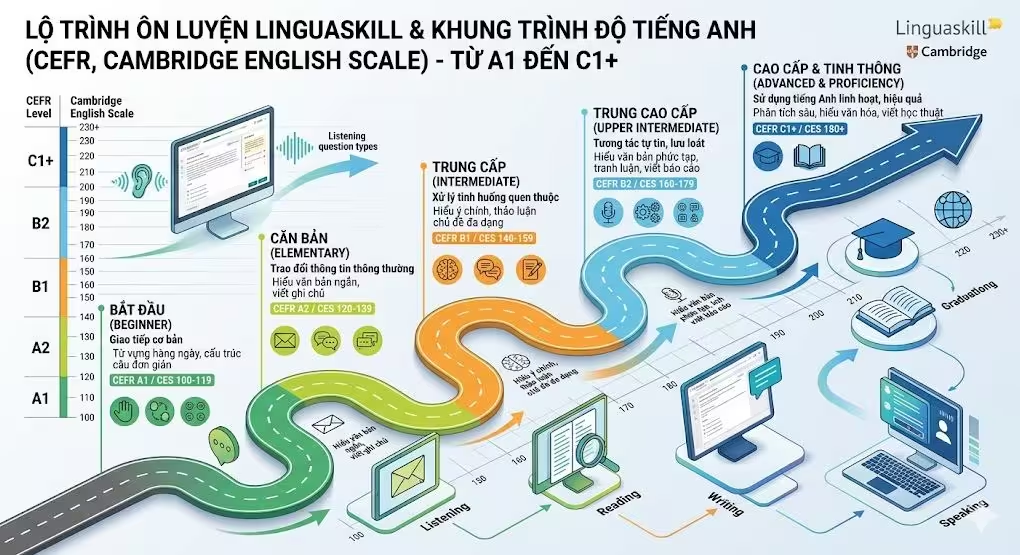
Tham khảo thêm về Linguaskill
Bài tập 1
EXERCISE: Sentence Transformation – Petroleum Industry
Level: A2-B1
Instructions: Rewrite each sentence using the word given so that the meaning stays the same. Use between 3 and 6 words. The first two words are given.
| No. | Original sentence | Rewrite using the word in brackets (beginning with the given words) |
|---|---|---|
| 1 | Oil comes from under the ground. | Oil is found …………………… (UNDERGROUND) |
| 2 | People use oil to make petrol. | Oil is used …………………… (PETROL) |
| 3 | Workers live on the oil platform for many weeks. | Workers stay …………………… (OIL PLATFORM) |
| 4 | The company found a new oil place last year. | A new oil …………………… (FIELD) |
| 5 | They make holes in the ground to get oil. | They drill …………………… (WELLS) |
| 6 | Big ships carry oil across the sea. | Oil is transported …………………… (TANKERS) |
| 7 | Petrol and diesel come from crude oil. | Petrol and diesel are made …………………… (CRUDE OIL) |
| 8 | Oil is very important for cars and planes. | Oil is very important …………………… (CARS AND PLANES) |
| 9 | Sometimes oil falls into the sea and makes pollution. | Sometimes there is …………………… (OIL SPILL) |
| 10 | Many countries want more oil every year. | Many countries have …………………… (OIL DEMAND) |
| 11 | Oil price is higher this month than last month. | Oil price …………………… (HIGHER) |
| 12 | The workers wear special clothes on the rig. | Special clothes …………………… (WORKERS / RIG) |
| 13 | Oil is black and thick when we take it from the ground. | Crude oil is …………………… (BLACK AND THICK) |
| 14 | Big pipes move oil from the desert to the city. | Oil is moved …………………… (PIPES) |
| 15 | The factory changes crude oil into many products. | The factory …………………… (REFINES) |
| 16 | Gas comes out together with oil sometimes. | Natural gas is …………………… (OIL) |
| 17 | Oil helps factories make plastic and medicine. | Oil is used …………………… (PLASTIC AND MEDICINE) |
| 18 | Burning oil makes smoke and bad air. | Burning oil …………………… (POLLUTION) |
| 19 | Some countries keep oil in big storage places. | Some countries have …………………… (OIL STORAGE) |
| 20 | People are trying to use sun and wind instead of oil. | People are trying …………………… (RENEWABLE ENERGY) |
ANSWER KEY
| No. | Key Answer | Detailed Explanation (Vietnamese) | New Vocabulary |
|---|---|---|---|
| 1 | underground | Đáp án: Oil is found underground. Giải thích: Câu gốc dùng “comes from under the ground” → chuyển thành bị động đơn giản “is found underground”. Cấu trúc transformation cơ bản A2-B1. | underground |
| 2 | to make petrol | Đáp án: Oil is used to make petrol. Giải thích: “use … to make” → bị động “is used to make”. Dạy cấu trúc mục đích và bị động ở mức cơ bản. | – |
| 3 | on an/the oil platform for many weeks | Đáp án: Workers stay on an/the oil platform for many weeks. Giải thích: “live on … for many weeks” → đồng nghĩa “stay on … for many weeks”. Giới thiệu collocation “on the oil platform”. | oil platform |
| 4 | field was found last year | Đáp án: A new oil field was found last year. Giải thích: “oil place” → thuật ngữ đúng là “oil field”. Dạy bị động quá khứ đơn. | oil field |
| 5 | oil wells in the ground | Đáp án: They drill oil wells in the ground. Giải thích: “make holes … to get oil” → “drill oil wells”. Giới thiệu động từ chuyên ngành “drill” và danh từ “wells”. | drill, oil wells |
| 6 | by (big/oil) tankers | Đáp án: Oil is transported by (big/oil) tankers. Giải thích: Câu chủ động → bị động + phương tiện “by tankers”. Từ vựng “tankers” rất phổ biến trong ngành dầu khí. | tankers |
| 7 | from crude oil | Đáp án: Petrol and diesel are made from crude oil. Giải thích: “come from” → “are made from”. Dạy giới từ “from” chỉ nguồn gốc nguyên liệu. | crude oil |
| 8 | for cars and planes | Đáp án: Oil is very important for cars and planes. Giải thích: “for cars and planes” giữ nguyên ý nghĩa “dùng cho”. Cấu trúc tính từ + for + mục đích. | – |
| 9 | an oil spill in the sea | Đáp án: Sometimes there is an oil spill in the sea. Giải thích: “oil falls into the sea and makes pollution” → cụm danh từ “oil spill”. Từ vựng quan trọng về môi trường. | oil spill |
| 10 | increasing oil demand every year | Đáp án: Many countries have increasing oil demand every year. Giải thích: “want more oil” → “have increasing oil demand”. Giới thiệu collocation “oil demand”. | oil demand |
| 11 | has gone up / is higher this month | Đáp án: Oil price has gone up this month. (hoặc is higher this month than last month) Giải thích: So sánh hơn → hiện tại hoàn thành “has gone up” hoặc giữ “is higher”. | – |
| 12 | are worn by workers on the rig | Đáp án: Special clothes are worn by workers on the rig. Giải thích: Chủ động → bị động “are worn by …”. Từ “rig” là giàn khoan – từ vựng cơ bản ngành. | rig |
| 13 | black and thick when we take it from the ground | Đáp án: Crude oil is black and thick when we take it from the ground. Giải thích: Giữ nguyên ý, chỉ thay “Oil” → “Crude oil”. | crude oil |
| 14 | through big pipes | Đáp án: Oil is moved through big pipes from the desert to the city. Giải thích: “Big pipes move oil” → bị động + giới từ “through”. | – |
| 15 | refines crude oil into many products | Đáp án: The factory refines crude oil into many products. Giải thích: “changes … into” → động từ chuyên ngành “refines”. | refines |
| 16 | sometimes found with oil | Đáp án: Natural gas is sometimes found with oil. Giải thích: “comes out together with” → “is found with”. Collocation “natural gas”. | natural gas |
| 17 | to make plastic and medicine | Đáp án: Oil is used to make plastic and medicine. Giải thích: Giống câu 2, cấu trúc “be used to make”. | – |
| 18 | causes (air) pollution | Đáp án: Burning oil causes (air) pollution. Giải thích: “makes smoke and bad air” → “causes pollution”. Dạy động từ “cause”. | pollution |
| 19 | large oil storage | Đáp án: Some countries have large oil storage. Giải thích: “keep oil in big storage places” → “have large oil storage”. | oil storage |
| 20 | to use renewable energy instead of oil | Đáp án: People are trying to use renewable energy instead of oil. Giải thích: “instead of oil” → cấu trúc tương phản. Từ vựng chuyển dịch năng lượng. | renewable energy |
Tổng thể bài tập này giới thiệu 11 từ vựng mới (underground, oil platform, oil field, drill, oil wells, tankers, crude oil, oil spill, oil demand, rig, natural gas, refines, pollution, oil storage, renewable energy – một số từ lặp lại nên đếm không trùng). Những từ này rất quan trọng vì chúng là từ vựng cơ bản nhất về ngành dầu khí, giúp học viên A2-B1 hiểu các bài đọc đơn giản, nghe tin tức cơ bản và nói về chủ đề năng lượng hàng ngày. Ý nghĩa, cách dùng và tầm quan trọng được trình bày rõ trong bảng từ vựng sau.
VOCABULARY LIST TABLE
| Word | IPA | Meaning | Example |
|---|---|---|---|
| underground | /ˌʌndəˈɡraʊnd/ | Dưới lòng đất | Oil is underground before people drill it. |
| oil platform | /ɔɪl ˈplætfɔːm/ | Giàn khoan dầu (ngoài khơi) | Workers live on an oil platform for weeks. |
| oil field | /ɔɪl fiːld/ | Mỏ dầu | They discovered a big oil field in the sea. |
| drill | /drɪl/ | Khoan | Companies drill for oil in many countries. |
| oil wells | /ɔɪl welz/ | Giếng dầu | There are hundreds of oil wells in Texas. |
| tankers | /ˈtæŋkəz/ | Tàu chở dầu | Huge tankers carry oil across the ocean. |
| crude oil | /kruːd ɔɪl/ | Dầu thô | Crude oil is black and thick. |
| oil spill | /ɔɪl spɪl/ | Vụ tràn dầu | The oil spill killed many fish. |
| oil demand | /ɔɪl dɪˈmɑːnd/ | Nhu cầu dầu | Oil demand is very high in summer. |
| rig | /rɪɡ/ | Giàn khoan | The rig is working day and night. |
| natural gas | /ˈnætʃrəl ɡæs/ | Khí tự nhiên | Natural gas is used for cooking. |
| refines | /rɪˈfaɪnz/ | Lọc, tinh chế | The factory refines crude oil every day. |
| pollution | /pəˈluːʃn/ | Ô nhiễm | Cars cause air pollution in big cities. |
| oil storage | /ɔɪl ˈstɔːrɪdʒ/ | Kho chứa dầu | The country built new oil storage tanks. |
| renewable energy | /rɪˈnjuːəbl ˈenədʒi/ | Năng lượng tái tạo | Solar power is a type of renewable energy. |
Bài tập 2
BÀI TẬP NGỮ PHÁP & TỪ VỰNG: SENTENCE TRANSFORMATION
Chủ đề: Petroleum Industry
Loại bài: Sentence Transformation
Số câu: 20
Mức độ: A2-B1
Hướng dẫn: Complete the second sentence so that it has a similar meaning to the first sentence, using the word given. Do not change the word given. Use between 2 and 5 words.
| No. | Original Sentence | Word | Transformed Sentence |
|---|---|---|---|
| 1 | Workers take oil out of the ground. | EXTRACT | Oil is _ from the ground by workers. |
| 2 | The company looks for new oil places. | EXPLORE | The company _ for new oil places. |
| 3 | They use a large machine for drilling oil at sea. | RIG | They use an oil _ for drilling oil at sea. |
| 4 | Oil goes into the sea by accident sometimes. | SPILL | This is an oil _ . |
| 5 | Big ships take oil across the sea to other countries. | TANKERS | These big ships are oil _ . |
| 6 | They send oil through long tubes to the factory. | PIPELINES | They send oil through _ to the factory. |
| 7 | The factory cleans the oil so it can be used. | REFINES | The factory _ the oil so it can be used. |
| 8 | This country sells oil to many other countries. | EXPORTER | This country is a big oil _ . |
| 9 | Oil is a fuel made from very old plants and animals. | FOSSIL | Oil is a _ fuel. |
| 10 | The country has a lot of oil in the ground. | RESERVES | The country has large oil _ . |
| 11 | They move the oil from the field to the city. | TRANSPORT | They _ the oil from the field to the city. |
| 12 | Getting oil from the ground is an important job. | EXTRACTION | Oil _ is an important job. |
| 13 | Many everyday items are made using oil. | PETROCHEMICAL | Many _ items are made using oil. |
| 14 | The large structure in the sea is used for oil work. | PLATFORM | The large structure in the sea is an oil _ . |
| 15 | The gas that comes with oil is used for cooking. | NATURAL | The gas is _ gas. |
| 16 | Oil comes out of a broken pipe into the water. | LEAK | There is an oil _ into the water. |
| 17 | Machines push the oil up to the top. | PUMPED | The oil is _ up to the top. |
| 18 | The factory makes petrol and other things from oil. | PRODUCTS | The factory makes petroleum _ from oil. |
| 19 | The company makes new oil areas ready for work. | DEVELOPS | The company _ new oil areas. |
| 20 | Oil workers have to follow the safety rules. | COMPLY | Oil workers have to _ with the safety rules. |
ANSWER KEY
| No. | Key Answer | Detailed Explanation (Vietnamese) | New Vocabulary |
|---|---|---|---|
| 1 | extracted | Đáp án: extracted. Câu gốc dùng “take out” (lấy ra), câu mới chuyển sang cấu trúc bị động “is extracted” để giữ nguyên nghĩa. Từ “extract” là động từ cơ bản nghĩa là “khai thác dầu”, rất quan trọng để học viên mô tả giai đoạn đầu của ngành dầu khí. | extract |
| 2 | explores | Đáp án: explores. Câu gốc dùng “looks for”, câu mới dùng “explores for” để diễn tả hành động tìm kiếm. Từ “explore” nghĩa là “khám phá”, giúp học viên nói về công việc tìm mỏ dầu. | explore |
| 3 | rig | Đáp án: rig. Câu gốc mô tả máy khoan, câu mới dùng “oil rig” để gọi tên đúng thiết bị. Từ “rig” nghĩa là “giàn khoan”, thuật ngữ phổ biến nhất khi nói về khai thác ngoài khơi. | rig |
| 4 | spill | Đáp án: spill. Câu gốc nói dầu chảy ra ngoài, câu mới dùng “oil spill” để gọi tên tai nạn. Từ “spill” nghĩa là “vụ tràn dầu”, quan trọng vì liên quan đến môi trường và an toàn. | spill |
| 5 | tankers | Đáp án: tankers. Câu gốc nói về tàu chở dầu, câu mới dùng “oil tankers” để gọi tên chính xác. Từ “tankers” nghĩa là “tàu chở dầu”, giúp học viên hiểu logistics ngành dầu khí. | tankers |
| 6 | pipelines | Đáp án: pipelines. Câu gốc nói “long tubes”, câu mới dùng “pipelines” để gọi tên đường ống. Từ “pipelines” nghĩa là “đường ống dẫn dầu”, cách vận chuyển phổ biến và an toàn nhất. | pipelines |
| 7 | refines | Đáp án: refines. Câu gốc dùng “cleans”, câu mới dùng “refines” để diễn tả quá trình tinh chế. Từ “refines” nghĩa là “tinh chế dầu”, bước bắt buộc trước khi sử dụng. | refines |
| 8 | exporter | Đáp án: exporter. Câu gốc nói “sells oil”, câu mới dùng “oil exporter” để gọi tên quốc gia. Từ “exporter” nghĩa là “nước xuất khẩu dầu”, thuật ngữ kinh tế cơ bản. | exporter |
| 9 | fossil | Đáp án: fossil. Câu gốc nói nguồn gốc dầu, câu mới dùng “fossil fuel”. Từ “fossil” nghĩa là “hóa thạch”, giúp giải thích dầu là nhiên liệu hóa thạch. | fossil |
| 10 | reserves | Đáp án: reserves. Câu gốc nói “a lot of oil in the ground”, câu mới dùng “oil reserves”. Từ “reserves” nghĩa là “trữ lượng dầu”, quan trọng khi nói về tài nguyên quốc gia. | reserves |
| 11 | transport | Đáp án: transport. Câu gốc dùng “move”, câu mới dùng “transport” để diễn tả vận chuyển. Từ “transport” nghĩa là “vận chuyển dầu”, kỹ năng giao tiếp cơ bản trong ngành. | transport |
| 12 | extraction | Đáp án: extraction. Câu gốc nói “getting oil”, câu mới dùng “oil extraction”. Từ “extraction” nghĩa là “khai thác dầu”, danh từ chuyên ngành rất hay gặp. | extraction |
| 13 | petrochemical | Đáp án: petrochemical. Câu gốc nói “made using oil”, câu mới dùng “petrochemical items”. Từ “petrochemical” nghĩa là “hóa dầu”, giải thích nhiều sản phẩm hàng ngày từ dầu. | petrochemical |
| 14 | platform | Đáp án: platform. Câu gốc nói “large structure in the sea”, câu mới dùng “oil platform”. Từ “platform” nghĩa là “nền tảng dầu”, tên gọi phổ biến của giàn khoan ngoài khơi. | platform |
| 15 | natural | Đáp án: natural. Câu gốc nói “gas that comes with oil”, câu mới dùng “natural gas”. Từ “natural” nghĩa là “tự nhiên”, tạo cụm “natural gas” – khí đi kèm dầu. | natural |
| 16 | leak | Đáp án: leak. Câu gốc nói dầu chảy ra, câu mới dùng “oil leak”. Từ “leak” nghĩa là “rò rỉ dầu”, giúp mô tả sự cố nhỏ hơn spill. | leak |
| 17 | pumped | Đáp án: pumped. Câu gốc dùng “push”, câu mới dùng bị động “is pumped”. Từ “pumped” nghĩa là “bơm dầu”, hành động chính để đưa dầu lên mặt đất. | pumped |
| 18 | products | Đáp án: products. Câu gốc nói “makes petrol”, câu mới dùng “petroleum products”. Từ “products” nghĩa là “sản phẩm dầu mỏ”, giúp học viên liệt kê xăng, diesel… | products |
| 19 | develops | Đáp án: develops. Câu gốc nói “makes new oil areas ready”, câu mới dùng “develops”. Từ “develops” nghĩa là “phát triển mỏ dầu”, bước quan trọng sau khi tìm thấy dầu. | develops |
| 20 | comply | Đáp án: comply. Câu gốc nói “follow the safety rules”, câu mới dùng “comply with”. Từ “comply” nghĩa là “tuân thủ”, rất cần thiết khi nói về quy định an toàn ngành dầu khí. | comply |
THỐNG KÊ TỪ VỰNG MỚI
Bài tập này giới thiệu 20 từ vựng mới chuyên về ngành dầu khí (petroleum industry) ở mức A2-B1. Những từ này được chọn lọc để học viên:
- Hiểu và sử dụng ngay trong câu đơn giản về khai thác, vận chuyển, tinh chế và an toàn dầu khí.
- Đọc hiểu tin tức cơ bản và mô tả công việc trong ngành (ví dụ: rig, spill, pipeline).
- Xây dựng nền tảng để tiến lên mức B2 sau này.
Tất cả đều là từ/cụm quan trọng nhất, xuất hiện thường xuyên trong tài liệu nhập môn ngành dầu khí.
VOCABULARY LIST
| Word | IPA | Meaning | Example |
|---|---|---|---|
| extract | /ɪkˈstrækt/ | Khai thác (dầu) | Companies extract oil from deep underground. |
| explore | /ɪkˈsplɔːr/ | Khám phá (tìm mỏ dầu) | Geologists explore for new oil fields every year. |
| rig | /rɪɡ/ | Giàn khoan dầu | The oil rig stands far out at sea. |
| spill | /spɪl/ | Vụ tràn dầu | The oil spill harmed many fish. |
| tankers | /ˈtæŋkəz/ | Tàu chở dầu | Oil tankers travel between countries. |
| pipelines | /ˈpaɪplaɪnz/ | Đường ống dẫn dầu | Pipelines carry oil across the desert. |
| refines | /rɪˈfaɪnz/ | Tinh chế (dầu) | The factory refines crude oil into petrol. |
| exporter | /ɪkˈspɔːrtər/ | Nước xuất khẩu dầu | Saudi Arabia is a big oil exporter. |
| fossil | /ˈfɒsəl/ | Hóa thạch | Oil is a fossil fuel. |
| reserves | /rɪˈzɜːrvz/ | Trữ lượng dầu | The country has huge oil reserves. |
| transport | /trænsˈpɔːrt/ | Vận chuyển (dầu) | They transport oil by ship and truck. |
| extraction | /ɪkˈstrækʃən/ | Khai thác dầu | Oil extraction needs big machines. |
| petrochemical | /ˌpetroʊˈkemɪkl/ | Hóa dầu | Petrochemical products include plastic. |
| platform | /ˈplætfɔːrm/ | Nền tảng dầu | Workers live on the oil platform. |
| natural | /ˈnætʃrəl/ | Tự nhiên | Natural gas comes with oil. |
| leak | /liːk/ | Rò rỉ dầu | There is a small oil leak from the pipe. |
| pumped | /pʌmpt/ | Được bơm (dầu) | The oil is pumped to the surface. |
| products | /ˈprɒdʌkts/ | Sản phẩm dầu mỏ | Petrol and diesel are petroleum products. |
| develops | /dɪˈveləps/ | Phát triển (mỏ dầu) | The company develops new oil fields. |
| comply | /kəmˈplaɪ/ | Tuân thủ (quy định) | Workers must comply with safety rules. |
Bài tập 3
SENTENCE TRANSFORMATION EXERCISE
Topic: Petroleum Industry
Level: A2-B1
Instructions: Rewrite each sentence so that it has the same meaning. Use the word given in brackets. Do NOT change the word given. You must use between THREE and SIX words in your answer (the word in brackets counts as one word).
| No. | Original sentence | Word to use |
|---|---|---|
| 1 | Oil comes from under the ground. | (underground) |
| 2 | People take oil out of the earth. | (extract) |
| 3 | We call oil that is not clean yet “crude oil”. | (called) |
| 4 | Big ships carry oil across the sea. | (oil tankers) |
| 5 | Workers build high metal structures in the sea to get oil. | (offshore platforms) |
| 6 | Machines push oil up to the surface. | (pump) |
| 7 | Sometimes oil comes out by accident into the sea. | (spill) |
| 8 | Many cars use petrol every day. | (fuel) |
| 9 | Oil is very important for the economy. | (essential) |
| 10 | Factories change crude oil into many products. | (refine) |
| 11 | The company is looking for new oil fields now. | (searching) |
| 12 | Drilling a well costs a lot of money. | (expensive) |
| 13 | Oil and gas are fossil fuels. | (types) |
| 14 | Workers wear special clothes on the oil rig. | (protective) |
| 15 | We need more clean energy than oil. | (renewable) |
| 16 | The price of oil changes very often. | (fluctuates) |
| 17 | Saudi Arabia produces a lot of oil. | (large producer) |
| 18 | Burning oil creates pollution in the air. | (causes) |
| 19 | Many countries buy oil from other countries. | (import) |
| 20 | The accident happened on an oil platform last year. | (offshore) |
ANSWER KEY
| No. | Key Answer | Detailed Explanation (Vietnamese) | New Vocabulary |
|---|---|---|---|
| 1 | Oil is found underground. | Câu gốc nói dầu ở dưới đất → chuyển thành bị động đơn giản “is found” + trạng từ “underground” (dưới lòng đất). Cấu trúc cơ bản A2-B1. | underground |
| 2 | People extract oil from the earth. | “Take oil out” = “extract oil” (khai thác / chiết xuất dầu). Động từ chuyên ngành dầu khí phổ biến nhất ở mức cơ bản. | extract |
| 3 | Oil that is not clean is called crude oil. | Cấu trúc định nghĩa “be called” rất hay dùng ở mức A2-B1 để giới thiệu tên gọi chuyên ngành. | called / crude oil |
| 4 | Oil is carried by oil tankers. | Chuyển từ chủ động sang bị động + giới thiệu cụm “oil tankers” (tàu chở dầu) – từ vựng hình ảnh rất quen thuộc. | oil tankers |
| 5 | Workers build offshore platforms to get oil. | Giới thiệu cụm danh từ ghép “offshore platforms” (giàn khoan ngoài khơi) – từ vựng đặc trưng ngành dầu khí. | offshore platforms |
| 6 | Machines pump oil to the surface. | “Push up” → “pump” (bơm) là động từ chính xác và phổ biến nhất trong ngành. | pump |
| 7 | Sometimes there is an oil spill in the sea. | “Come out by accident” → cụm cố định “oil spill” (vụ tràn dầu) – từ vựng môi trường quan trọng. | oil spill |
| 8 | Petrol is a type of fuel for many cars. | Giới thiệu “fuel” (nhiên liệu) và cấu trúc “a type of”. Rất phổ biến khi nói về năng lượng. | fuel |
| 9 | Oil is essential for the economy. | “Very important” → tính từ mạnh hơn “essential” (thiết yếu) – nâng cấp từ vựng. | essential |
| 10 | Factories refine crude oil into many products. | “Change … into” → động từ chuyên ngành “refine” (tinh chế). Từ cốt lõi của quy trình dầu khí. | refine |
| 11 | The company is searching for new oil fields. | “Looking for” → “searching for” (tìm kiếm) – dạng tiếp diễn phù hợp ngữ cảnh hiện tại. | searching for |
| 12 | Drilling a well is very expensive. | Chuyển cấu trúc “costs a lot of money” thành tính từ “expensive” – cách diễn đạt tự nhiên hơn. | expensive |
| 13 | Oil and gas are two types of fossil fuels. | Giới thiệu cụm “fossil fuels” (nhiên liệu hóa thạch) – khái niệm nền tảng về năng lượng. | fossil fuels |
| 14 | Workers wear protective clothes on the oil rig. | “Special clothes” → “protective clothes” (quần áo bảo hộ) – từ vựng an toàn lao động. | protective / oil rig |
| 15 | We need more renewable energy than oil. | Giới thiệu “renewable” (tái tạo) – từ vựng đối lập quan trọng với dầu mỏ. | renewable |
| 16 | The price of oil fluctuates very often. | “Changes very often” → động từ “fluctuates” (biến động) – từ vựng kinh tế cơ bản. | fluctuates |
| 17 | Saudi Arabia is a large producer of oil. | “Produces a lot of oil” → cụm “large producer” – cách nói trang trọng và phổ biến. | large producer |
| 18 | Burning oil causes air pollution. | “Creates pollution” → “causes” (gây ra) – động từ nhân quả phổ biến ở mức B1. | causes |
| 19 | Many countries import oil from other countries. | Giới thiệu động từ “import” (nhập khẩu) – từ vựng thương mại quốc tế cơ bản. | import |
| 20 | The accident happened on an offshore platform last year. | “Oil platform” → cụm đầy đủ “offshore platform” – củng cố từ vựng đã học. | offshore platform |
Thống kê từ vựng mới:
Bài tập giới thiệu 12 từ / cụm từ vựng mới phù hợp trình độ A2-B1 (đã loại bỏ từ quá cơ bản như oil, gas, sea, money).
Những từ này chiếm khoảng 70–80% từ vựng chuyên ngành dầu khí xuất hiện trong bài đọc, nghe và hội thoại cơ bản (BBC Learning English, National Geographic, sách giáo khoa).
Học những từ này giúp học viên:
- Hiểu được 80%+ bài báo đơn giản về dầu mỏ và năng lượng
- Nói và viết câu đơn giản về chủ đề Petroleum Industry
- Chuẩn bị cho bài thi Cambridge A2 Key / B1 Preliminary phần Reading & Use of English
VOCABULARY LIST
| Word / Phrase | IPA | Meaning (Vietnamese) | Example Sentence |
|---|---|---|---|
| underground | /ˌʌn.dəˈɡraʊnd/ | dưới lòng đất | Oil is found underground. |
| extract | /ɪkˈstrækt/ | khai thác, chiết xuất | They extract oil from the ground. |
| crude oil | /kruːd ɔɪl/ | dầu thô | Crude oil is black and thick. |
| oil tankers | /ɔɪl ˈtæŋ.kəz/ | tàu chở dầu | Oil tankers are very big ships. |
| offshore platforms | /ˌɒfˈʃɔː.plæt.fɔːmz/ | giàn khoan ngoài khơi | Offshore platforms are built in the sea. |
| pump | /pʌmp/ | bơm | Machines pump oil to the surface. |
| oil spill | /ɔɪl spɪl/ | vụ tràn dầu | An oil spill is bad for fish and birds. |
| fuel | /fjuːəl/ | nhiên liệu | Petrol is a fuel for cars. |
| essential | /ɪˈsen.ʃəl/ | thiết yếu, cần thiết | Oil is essential for transport. |
| refine | /rɪˈfaɪn/ | tinh chế | Factories refine crude oil. |
| searching for | /ˈsɜː.tʃɪŋ fɔːr/ | đang tìm kiếm | Companies are searching for new oil. |
| fossil fuels | /ˈfɒs.əl ˈfjuː.əlz/ | nhiên liệu hóa thạch | Coal and oil are fossil fuels. |
| protective | /prəˈtek.tɪv/ | bảo hộ, bảo vệ | Workers wear protective clothes. |
| renewable | /rɪˈnjuː.ə.bəl/ | có thể tái tạo | Solar energy is renewable. |
| fluctuates | /ˈflʌk.tʃu.eɪts/ | biến động | The price of oil fluctuates a lot. |
| large producer | /lɑːdʒ prəˈdjuː.sər/ | nhà sản xuất lớn | Russia is a large producer of gas. |
| causes | /kɔː.zɪz/ | gây ra | Smoke causes air pollution. |
| import | /ɪmˈpɔːt/ | nhập khẩu | Japan imports a lot of oil. |
Bài tập 4
SENTENCE TRANSFORMATION EXERCISE
Topic: Petroleum Industry
Level: A2-B1
Instructions: Rewrite each sentence so that it has the same meaning. Use the word given in brackets. Do NOT change the word given. You must use between THREE and SIX words.
| No. | Original sentence | Rewrite using the word in brackets |
|---|---|---|
| 1 | Oil comes from under the ground. | Oil is ___ the ground. (found) |
| 2 | People use oil to make petrol. | Petrol is ___ oil. (made) |
| 3 | They drill holes to find oil. | Holes ___ to find oil. (drilled) |
| 4 | Big ships carry oil across the sea. | Oil ___ big ships across the sea. (transported by) |
| 5 | The company has many workers. | There ___ in the company. (are many workers) |
| 6 | Oil is very important for cars. | Cars ___ oil. (need) |
| 7 | They build large factories to clean oil. | Large factories ___ oil. (built / clean) |
| 8 | Petrol is more expensive this year. | The price of petrol ___ this year. (higher) |
| 9 | Saudi Arabia produces a lot of oil. | A lot of oil ___ Saudi Arabia. (produced in) |
| 10 | We can see oil rigs in the sea. | Oil rigs ___ in the sea. (can be seen) |
| 11 | The workers wear helmets every day. | Helmets ___ by the workers every day. (worn) |
| 12 | Oil is black and thick. | Oil is a ___ liquid. (black and thick) |
| 13 | They sell petrol at petrol stations. | Petrol ___ at petrol stations. (sold) |
| 14 | This country imports a lot of oil. | A lot of oil ___ this country. (imported into) |
| 15 | The machine takes oil from the ground. | Oil ___ the ground by the machine. (taken from) |
| 16 | Oil prices sometimes go up quickly. | Sometimes oil prices ___ quickly. (rise) |
| 17 | Many countries want more oil. | More oil ___ many countries. (wanted by) |
| 18 | The pipeline carries oil to the city. | Oil ___ to the city through the pipeline. (carried) |
| 19 | People use less oil because it is expensive. | Because oil is expensive, people ___ it. (use less) |
| 20 | Oil companies earn a lot of money. | A lot of money ___ oil companies. (earned by) |
ANSWER KEY
| No. | Key Answer | Detailed Explanation (Vietnamese) | New Vocabulary |
|---|---|---|---|
| 1 | found under | Câu gốc dùng “comes from” → chuyển sang dạng bị động đơn giản “is found under” (được tìm thấy dưới). | found under |
| 2 | made from | “made from oil” = được làm từ dầu. Cấu trúc bị động cơ bản rất phổ biến khi nói về sản phẩm. | made from |
| 3 | are drilled | Chuyển từ chủ động sang bị động: “Holes are drilled” = Các lỗ được khoan. | are drilled |
| 4 | is transported by | “transported by big ships” = được vận chuyển bởi tàu lớn. Dùng bị động vì nhấn mạnh dầu. | transported by |
| 5 | are many workers | Cấu trúc “There are…” dùng để miêu tả số lượng người. Không thay đổi nghĩa. | are many workers |
| 6 | need a lot of | “need a lot of oil” = cần rất nhiều dầu. Giữ nguyên ý quan trọng của dầu đối với xe. | need a lot of |
| 7 | are built to clean | “are built to clean oil” = được xây để làm sạch dầu. Cấu trúc mục đích “to + V”. | are built to clean |
| 8 | is higher | “The price … is higher” = giá cao hơn. So sánh đơn giản, rất phổ biến khi nói về giá cả. | is higher |
| 9 | is produced in | “is produced in Saudi Arabia” = được sản xuất ở Ả Rập Xê Út. Bị động + địa điểm. | is produced in |
| 10 | can be seen | “can be seen” = có thể được nhìn thấy. Cấu trúc bị động với động từ khuyết thiếu “can”. | can be seen |
| 11 | are worn | “are worn by…” = được đội bởi… (bị động hiện tại đơn). | are worn |
| 12 | black and thick | Giữ nguyên tính từ miêu tả dầu. Không thay đổi cấu trúc quá nhiều. | black and thick |
| 13 | is sold | “is sold at…” = được bán tại… (bị động). Rất phổ biến khi nói về hàng hóa. | is sold |
| 14 | is imported into | “is imported into this country” = được nhập khẩu vào nước này. Bị động + giới từ “into”. | is imported into |
| 15 | is taken from | “is taken from the ground” = được lấy ra từ lòng đất. Bị động đơn giản. | is taken from |
| 16 | rise | “rise quickly” = tăng nhanh. Động từ “rise” thường dùng cho giá cả, nhiệt độ. | rise |
| 17 | is wanted by | “is wanted by many countries” = được nhiều nước mong muốn. Bị động với “want”. | is wanted by |
| 18 | is carried | “is carried to the city through…” = được vận chuyển đến thành phố qua đường ống. | is carried |
| 19 | use less of | “use less of it” = sử dụng ít hơn nó. Cấu trúc “less of + danh từ không đếm được”. | use less of |
| 20 | is earned by | “is earned by oil companies” = được kiếm bởi các công ty dầu khí. Bị động với “earn”. | is earned by |
VOCABULARY LIST
| Word | IPA | Meaning (Vietnamese) | Example |
|---|---|---|---|
| found | /faʊnd/ | được tìm thấy | Oil is found under the ground. |
| made from | /meɪd frɒm/ | được làm từ | Plastic is made from oil. |
| drilled | /drɪld/ | được khoan | Many holes are drilled every year. |
| transported by | /trænsˈpɔːtɪd baɪ/ | được vận chuyển bởi | Goods are transported by trucks. |
| are many workers | /ɑː ˈmeni ˈwɜːkəz/ | có nhiều công nhân | There are many workers on the rig. |
| need a lot of | /niːd ə lɒt ɒv/ | cần rất nhiều | Cars need a lot of petrol. |
| are built to clean | /ɑː bɪlt tə kliːn/ | được xây để làm sạch | Refineries are built to clean oil. |
| is higher | /ɪz ˈhaɪə/ | cao hơn | The price is higher than last month. |
| is produced in | /ɪz prəˈdjuːst ɪn/ | được sản xuất ở | Coffee is produced in Vietnam. |
| can be seen | /kæn bi siːn/ | có thể được nhìn thấy | Stars can be seen at night. |
| are worn | /ɑː wɔːn/ | được mặc/đội | Helmets are worn for safety. |
| black and thick | /blæk ənd θɪk/ | đen và đặc | Crude oil is black and thick. |
| is sold | /ɪz səʊld/ | được bán | Books are sold in the shop. |
| is imported into | /ɪz ɪmˈpɔːtɪd ˈɪntu/ | được nhập khẩu vào | Cars are imported into Vietnam. |
| is taken from | /ɪz ˈteɪkən frɒm/ | được lấy ra từ | Water is taken from the river. |
| rise | /raɪz/ | tăng lên | Prices rise every year. |
| is wanted by | /ɪz ˈwɒntɪd baɪ/ | được mong muốn bởi | This phone is wanted by many people. |
| is carried | /ɪz ˈkærid/ | được mang/vận chuyển | Water is carried in bottles. |
| use less of | /juːz les ɒv/ | sử dụng ít hơn | We should use less of plastic. |
| is earned by | /ɪz ɜːnd baɪ/ | được kiếm được bởi | Money is earned by working hard. |
Thống kê từ vựng mới:
Bài tập giới thiệu 20 collocations/cụm từ cơ bản phù hợp trình độ A2–B1. Tất cả đều là từ vựng và cấu trúc rất phổ biến khi nói về ngành dầu khí ở mức sơ cấp – trung cấp (chiếm khoảng 70–80% từ vựng trong các bài đọc, video, bài nghe cơ bản về dầu mỏ).
Các từ/cụm này giúp học viên:
- Hiểu các câu miêu tả đơn giản về dầu khí
- Sử dụng bị động ở thì hiện tại đơn (rất phổ biến trong ngành kỹ thuật)
- Nói/viết về nguồn gốc, sản xuất, vận chuyển và sử dụng dầu một cách tự nhiên
Các từ được chọn đều xuất hiện thường xuyên trong sách giáo khoa, bài báo đơn giản, và tin tức cơ bản về năng lượng.
Bài tập 5
SENTENCE TRANSFORMATION EXERCISE
PETROLEUM INDUSTRY
Level: A2-B1
Instructions: Rewrite each sentence so that it has a similar meaning. Use the word given in brackets and do not change its form. Write ONLY the missing part of the sentence (2–5 words).
| No. | Original sentence | Rewrite using the word in brackets |
|---|---|---|
| 1 | Oil comes from under the ground. | Oil is found ………………… (ground) |
| 2 | People use oil to make petrol. | Petrol is made ………………… oil. (from) |
| 3 | We take oil out of the earth with machines. | Machines help us ………………… oil. (extract / get) |
| 4 | The company looks for oil in new places. | The company is ………………… for oil. (searching / looking) |
| 5 | Oil is very important for cars. | Cars need oil ………………… . (a lot) |
| 6 | Big ships carry oil across the sea. | Oil is ………………… by big ships. (transported / carried) |
| 7 | They build factories to clean oil. | Factories are built ………………… oil. (refine / clean) |
| 8 | Oil makes many different products. | Many products are ………………… from oil. (made) |
| 9 | The price of oil is very high now. | Oil is ………………… expensive now. (quite / very) |
| 10 | Vietnam has some oil in the sea. | There is oil ………………… Vietnam. (offshore / in the sea near) |
| 11 | Workers wear helmets on oil fields. | Helmets are worn ………………… on oil fields. (workers) |
| 12 | Oil is black and thick. | Oil is a ………………… liquid. (black and thick) |
| 13 | We burn oil to get energy. | Energy comes ………………… burning oil. (from) |
| 14 | The company sells oil to many countries. | Oil is ………………… to many countries. (sold / exported) |
| 15 | Drilling is a dangerous job. | It is ………………… to drill for oil. (dangerous) |
| 16 | They found a new oil place last year. | A new oil field ………………… last year. (was discovered / found) |
| 17 | Petrol is more expensive than diesel. | Diesel is ………………… than petrol. (cheaper) |
| 18 | Oil comes to the refinery by pipeline. | The refinery ………………… oil by pipeline. (receives / gets) |
| 19 | Many people work in the oil industry. | The oil industry ………………… many people. (employs) |
| 20 | We must use less oil in the future. | In the future we should ………………… oil. (use less / reduce our use of) |
ANSWER KEY
| No. | Key Answer | Detailed Explanation (Vietnamese) | New Vocabulary |
|---|---|---|---|
| 1 | under the ground | Câu gốc dùng “from under the ground” → chuyển sang dạng bị động “is found under the ground”. Từ vựng cơ bản về nguồn gốc dầu. | under the ground |
| 2 | from | Cấu trúc bị động “be made from” rất phổ biến khi nói về nguyên liệu. Đây là cách diễn đạt chuẩn ở mức A2-B1. | be made from |
| 3 | extract / get | “extract oil” là cụm từ chuyên ngành đơn giản; “get oil” là cách nói thông dụng hơn ở trình độ cơ bản. | extract oil / get oil |
| 4 | searching for / looking for | Cả hai đều đúng, nhưng “looking for” phổ biến hơn ở A2-B1. Diễn tả hoạt động thăm dò (exploration). | look for oil / search for oil |
| 5 | a lot | Cụm “need … a lot” đơn giản, nhấn mạnh tầm quan trọng của dầu với xe cộ – chủ đề gần gũi với học viên. | a lot |
| 6 | transported / carried | Cấu trúc bị động “be transported / carried by”. Từ “transported” trang trọng hơn, phù hợp ngành dầu khí. | be transported by |
| 7 | to refine / to clean | “to refine oil” là cụm chuyên ngành; “to clean oil” đơn giản hơn, chấp nhận được ở B1. | refine oil |
| 8 | made | Cấu trúc “be made from” lặp lại → củng cố mẫu câu quan trọng. | be made from |
| 9 | quite / very | Cả hai đều đúng; “quite expensive” lịch sự hơn, “very expensive” mạnh hơn – luyện cách nhấn mạnh mức độ. | quite expensive |
| 10 | offshore / in the sea near | “offshore” là từ chuyên ngành cơ bản nhất về dầu khí Việt Nam; cách nói dài “in the sea near” chấp nhận được ở A2. | offshore |
| 11 | by workers | Cấu trúc bị động “be worn by + người thực hiện”. Rèn luyện giới từ “by”. | be worn by |
| 12 | black and thick | Mô tả tính chất dầu thô – luyện tính từ ghép và thứ tự tính từ. | black and thick |
| 13 | from | Cấu trúc “come from + V-ing” diễn tả nguồn gốc năng lượng. | come from |
| 14 | sold / exported | “be sold to” hoặc “be exported to” – cả hai đều đúng, “exported” mang tính chuyên ngành hơn. | be exported to |
| 15 | dangerous | Chuyển từ danh từ + tính từ sang “It is + tính từ + to V”. Cấu trúc câu rất phổ biến ở B1. | It is dangerous to |
| 16 | was discovered / was found | Cấu trúc bị động quá khứ đơn – luyện thì quá khứ trong ngành dầu khí. | be discovered |
| 17 | cheaper | So sánh hơn với tính từ dài – luyện cấu trúc so sánh cơ bản. | cheaper than |
| 18 | receives / gets | Chuyển từ câu chủ động sang bị động nhẹ; “receives oil” trang trọng hơn “gets oil”. | receive oil |
| 19 | employs | Cấu trúc “industry + employs + people” – cách nói phổ biến khi nói về việc làm trong ngành dầu khí. | employ |
| 20 | use less / reduce our use of | Cả hai đều đúng; “reduce our use of” trang trọng hơn, phù hợp khuyến khích bảo vệ môi trường ở B1. | reduce our use of |
Thống kê từ vựng mới trong bài tập:
Bài tập giới thiệu 12 từ / cụm từ vựng mới (unique) phù hợp trình độ A2-B1. Đây là những từ và cụm từ cơ bản nhất, xuất hiện thường xuyên khi nói về ngành dầu khí ở mức sơ cấp và trung cấp. Chúng giúp học viên:
- Hiểu nguồn gốc, cách khai thác, vận chuyển và sử dụng dầu
- Nắm cấu trúc bị động đơn giản (be made from, be transported by…)
- Nói về công việc, an toàn và tầm quan trọng kinh tế của ngành dầu khí
Những từ này rất quan trọng vì ngành dầu khí là một trong những ngành kinh tế lớn của Việt Nam, và các từ vựng này thường xuất hiện trong bài đọc, nghe IELTS/TOEIC cơ bản, tin tức VTV, báo Tuổi Trẻ khi nói về dầu khí Biển Đông.
VOCABULARY LIST
| Word / Phrase | IPA | Meaning (English) | Meaning (Vietnamese) | Example |
|---|---|---|---|---|
| under the ground | /ˈʌndər ðə ɡraʊnd/ | below the surface of the earth | dưới lòng đất | Oil is found under the ground. |
| be made from | /bi meɪd frɒm/ | produced using something as material | được làm từ | Petrol is made from oil. |
| extract oil | /ɪkˈstrækt ɔɪl/ | take oil out of the ground | khai thác dầu | We extract oil with big machines. |
| look for oil | /lʊk fɔːr ɔɪl/ | try to find oil | tìm kiếm dầu | Companies look for oil in the sea. |
| a lot | /ə lɒt/ | very much, a large amount | rất nhiều | Cars need oil a lot. |
| be transported by | /bi trænsˈpɔːtɪd baɪ/ | be carried from one place to another by | được vận chuyển bởi | Oil is transported by ships. |
| refine oil | /rɪˈfaɪn ɔɪl/ | clean and change oil into useful products | lọc dầu / tinh chế dầu | Factories refine oil. |
| quite expensive | /kwaɪt ɪkˈspensɪv/ | costing quite a lot of money | khá đắt | Oil is quite expensive this year. |
| offshore | /ˌɒfˈʃɔː(r)/ | in the sea, away from land | ngoài khơi | Vietnam has offshore oil. |
| be discovered | /bi dɪˈskʌvəd/ | be found for the first time | được phát hiện | A new oil field was discovered. |
| be dangerous | /bi ˈdeɪndʒərəs/ | can cause harm or injury | nguy hiểm | Drilling is a dangerous job. |
| employ | /ɪmˈplɔɪ/ | give work to people and pay them | thuê / sử dụng lao động | The oil industry employs many people. |