Trong ngành Dầu khí, một lỗi sai ngữ pháp hay dùng từ không chuẩn xác trong quy trình vận hành có thể dẫn đến những thiệt hại kinh tế khổng lồ, thậm chí là rủi ro an toàn. Bạn đã thực sự làm chủ kỹ năng Error correction để kiểm soát hoàn toàn các văn bản kỹ thuật phức tạp? Việc nhận diện lỗi sai (Error correction) ở trình độ B1-B2 đòi hỏi sự nhạy bén không chỉ về cấu trúc câu mà còn về thuật ngữ chuyên môn đặc thù.
Nhiều kỹ sư và chuyên viên thường xuyên “mất điểm” trong mắt đối tác quốc tế chỉ vì những lỗi chia thì, câu bị động hay từ vựng chuyên ngành dùng sai ngữ cảnh. Bài viết này sẽ cung cấp cho bạn 100 câu hỏi bài tập thực tế, giúp bạn “bắt bệnh” nhanh chóng các lỗi sai kinh điển, củng cố tư duy ngôn ngữ và tự tin hơn khi soạn thảo báo cáo hay giao tiếp trong môi trường năng lượng toàn cầu. Hãy cùng khám phá ngay!
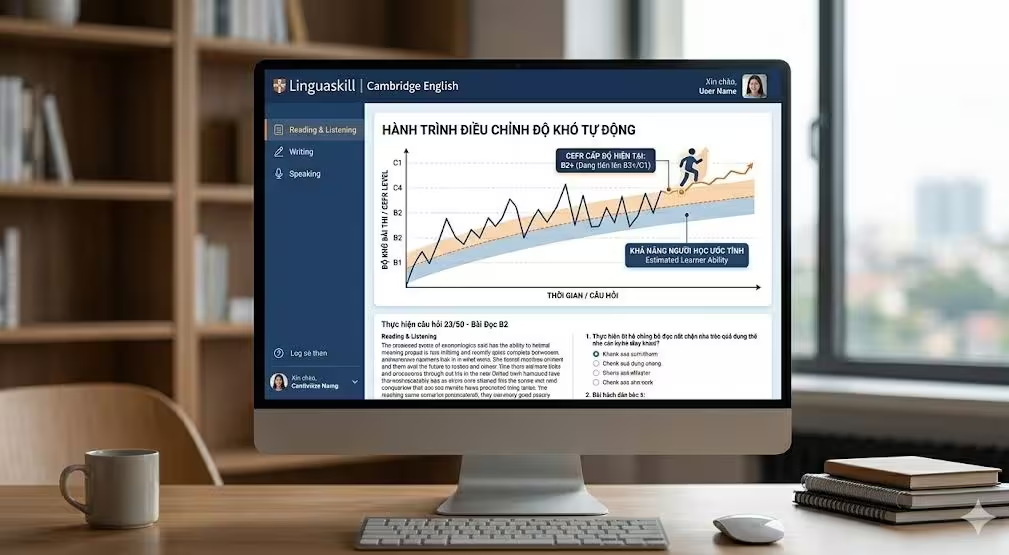
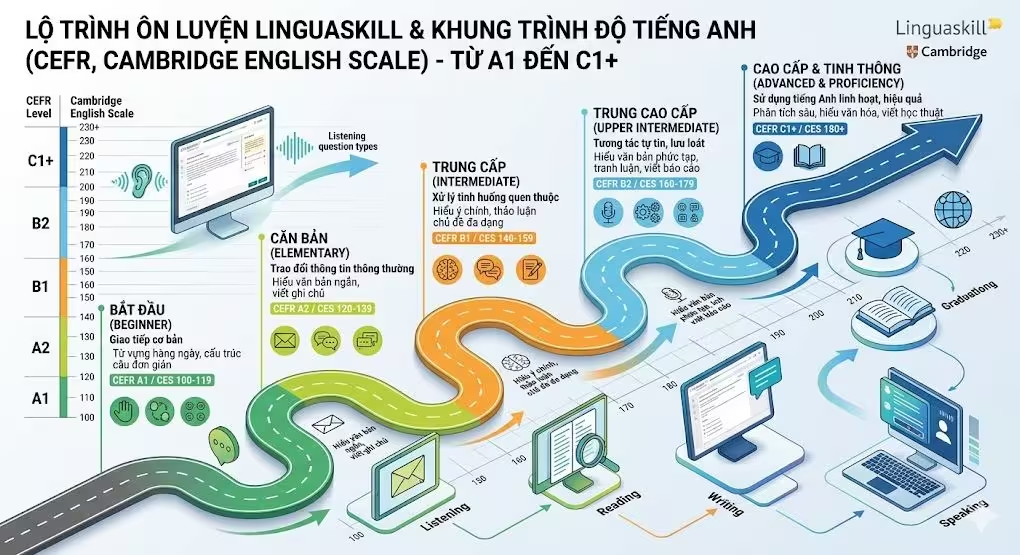
Tham khảo thêm về Linguaskill
Bài tập 1
ERROR CORRECTION
PETROLEUM INDUSTRY
Level: B1-B2
Instructions: Each of the following 50 sentences contains exactly one error (grammar or vocabulary). Identify the error and rewrite the sentence correctly in your notebook.
| No. | Sentence |
|---|---|
| 1 | The upstream sector of the petroleum industry include exploration and production activities. |
| 2 | Downstream operations involves the refining and distribution of oil products. |
| 3 | Fossil fuels such as petroleum is non-renewable energy sources. |
| 4 | The price of oil have fluctuated due the recent geopolitical tensions. |
| 5 | By 2040, the world will have reduce its reliance on fossil fuels. |
| 6 | Companies must invest for enhanced oil recovery to maximize production. |
| 7 | Offshore platforms must to withstand extreme weather conditions. |
| 8 | The exploration team have found new oil reserves in the North Sea. |
| 9 | Liquefied natural gas are shipped to Europe from the United States. |
| 10 | Its important for oil companies to reduce their carbon footprint. |
| 11 | Seismic surveys is used to locate underground oil deposits. |
| 12 | The midstream sector is responsible to transport oil and gas. |
| 13 | OPEC have a significant influence on global oil prices. |
| 14 | The reserves is estimated at 1.7 trillion barrels worldwide. |
| 15 | Fracking technology have allowed the extraction of shale gas efficiently. |
| 16 | Carbon capture and storage are a promising technology for reducing emissions. |
| 17 | The transition to sustainable energy are a global priority. |
| 18 | Geopolitical factors often affects oil supply and demand. |
| 19 | The refinery capacity of the plant are 150,000 barrels per day. |
| 20 | Sustainable practices in the industry helps to protect the environment. |
| 21 | Hydrocarbons is the main component of petroleum. |
| 22 | The Arctic region contain large untapped oil reserves. |
| 23 | Energy companies is investing heavily in research and development. |
| 24 | The use of biofuels can helps reduce greenhouse gas emissions. |
| 25 | Pipeline leaks can causes serious environmental damage. |
| 26 | The global oil supply are expected to meet demand in the coming years. |
| 27 | Shale gas production have increased dramatically in recent years. |
| 28 | Environmental regulations is becoming stricter in the petroleum sector. |
| 29 | The price volatility affect the economy of oil-exporting countries. |
| 30 | Advanced drilling techniques allows companies to access deeper reservoirs. |
| 31 | The industry is adapting due climate change policies. |
| 32 | Natural gas are a cleaner alternative to coal. |
| 33 | The global reserves of petroleum is decreasing rapidly. |
| 34 | Fracking involve injecting high-pressure fluids into the rock. |
| 35 | The demand for petroleum products have decreased in some markets. |
| 36 | Environmental impact assessments is required before drilling new wells. |
| 37 | The price volatility can affects investment decisions. |
| 38 | LNG terminals is built to receive imported gas. |
| 39 | The company have invested billions in offshore projects. |
| 40 | Sustainable practices helps to minimize environmental damage. |
| 41 | The midstream sector include pipelines and storage facilities. |
| 42 | Geologists uses advanced tools for seismic exploration. |
| 43 | The transition will requires massive investment in infrastructure. |
| 44 | Oil sands is a source of unconventional oil. |
| 45 | Carbon capture technology are still in its early stages. |
| 46 | The reserves in Venezuela is among the largest in the world. |
| 47 | Biofuels is considered a renewable alternative to fossil fuels. |
| 48 | The Arctic drilling pose significant environmental risks. |
| 49 | Energy security are a major concern for many nations. |
| 50 | The petroleum industry are undergoing a major transformation due to the energy transition. |
ANSWER KEY
| No. | Key Answer | Detailed Explanation (Vietnamese) | New Vocabulary |
|---|---|---|---|
| 1 | The upstream sector of the petroleum industry includes exploration and production activities. | Lỗi hòa hợp chủ-ngữ (Subject-Verb Agreement). “Sector” là danh từ số ít nên động từ phải thêm “-s” (includes). Quy tắc: Chủ ngữ số ít + động từ số ít. | upstream sector |
| 2 | Downstream operations involve the refining and distribution of oil products. | Lỗi hòa hợp chủ-ngữ. “Operations” là số nhiều nên dùng “involve” (không thêm -s). | downstream |
| 3 | Fossil fuels such as petroleum are non-renewable energy sources. | Lỗi hòa hợp chủ-ngữ. “Fossil fuels” số nhiều → “are”. | fossil fuel |
| 4 | The price of oil has fluctuated due to the recent geopolitical tensions. | Lỗi thì (Present Perfect) và giới từ. “Have” sai với chủ ngữ số ít “price”; “due” phải là “due to”. | geopolitical |
| 5 | By 2040, the world will have reduced its reliance on fossil fuels. | Lỗi thì Future Perfect. Sau “will have” phải dùng past participle “reduced”. | fossil fuel |
| 6 | Companies must invest in enhanced oil recovery to maximize production. | Lỗi giới từ collocation. “Invest in” (đầu tư vào) là cách dùng đúng, không phải “for”. | enhanced oil recovery |
| 7 | Offshore platforms must withstand extreme weather conditions. | Lỗi sau modal “must”. Động từ phải ở dạng nguyên thể (không “to”). | offshore |
| 8 | The exploration team has found new oil reserves in the North Sea. | Lỗi hòa hợp chủ-ngữ. “Team” số ít → “has”. | exploration, reserves |
| 9 | Liquefied natural gas is shipped to Europe from the United States. | Lỗi hòa hợp chủ-ngữ. “Liquefied natural gas” (LNG) là danh từ không đếm được → “is”. | liquefied natural gas (LNG) |
| 10 | It’s important for oil companies to reduce their carbon footprint. | Lỗi sở hữu (its/it’s). “It’s” = “It is” (quan trọng là…). | carbon footprint |
| 11 | Seismic surveys are used to locate underground oil deposits. | Lỗi hòa hợp chủ-ngữ. “Surveys” số nhiều → “are”. | seismic survey |
| 12 | The midstream sector is responsible for transporting oil and gas. | Lỗi giới từ. “Responsible for + V-ing” là cấu trúc đúng. | midstream |
| 13 | OPEC has a significant influence on global oil prices. | Lỗi hòa hợp chủ-ngữ. “OPEC” (tổ chức) được xem là số ít → “has”. | OPEC |
| 14 | The reserves are estimated at 1.7 trillion barrels worldwide. | Lỗi hòa hợp chủ-ngữ. “Reserves” số nhiều → “are”. | reserves |
| 15 | Fracking technology has allowed the extraction of shale gas efficiently. | Lỗi hòa hợp chủ-ngữ. “Technology” số ít → “has”. | fracking, shale gas |
| 16 | Carbon capture and storage is a promising technology for reducing emissions. | Lỗi hòa hợp chủ-ngữ. Cụm danh từ số ít → “is”. | carbon capture |
| 17 | The transition to sustainable energy is a global priority. | Lỗi hòa hợp chủ-ngữ. “Transition” số ít → “is”. | sustainable, energy transition |
| 18 | Geopolitical factors often affect oil supply and demand. | Lỗi hòa hợp chủ-ngữ. “Factors” số nhiều → “affect”. | geopolitical |
| 19 | The refinery capacity of the plant is 150,000 barrels per day. | Lỗi hòa hợp chủ-ngữ. “Capacity” số ít → “is”. | refinery capacity |
| 20 | Sustainable practices in the industry help to protect the environment. | Lỗi hòa hợp chủ-ngữ. “Practices” số nhiều → “help”. | sustainable |
| 21 | Hydrocarbons are the main component of petroleum. | Lỗi hòa hợp chủ-ngữ. “Hydrocarbons” số nhiều → “are”. | hydrocarbon |
| 22 | The Arctic region contains large untapped oil reserves. | Lỗi hòa hợp chủ-ngữ. “Region” số ít → “contains”. | reserves |
| 23 | Energy companies are investing heavily in research and development. | Lỗi hòa hợp chủ-ngữ. “Companies” số nhiều → “are”. | energy transition |
| 24 | The use of biofuels can help reduce greenhouse gas emissions. | Lỗi động từ sau modal “can”. Phải dùng nguyên thể “help”. | biofuel, greenhouse gas |
| 25 | Pipeline leaks can cause serious environmental damage. | Lỗi động từ sau modal “can”. Phải dùng nguyên thể “cause”. | pipeline |
| 26 | The global oil supply is expected to meet demand in the coming years. | Lỗi hòa hợp chủ-ngữ. “Supply” số ít → “is”. | reserves |
| 27 | Shale gas production has increased dramatically in recent years. | Lỗi hòa hợp chủ-ngữ. “Production” số ít → “has”. | shale gas |
| 28 | Environmental regulations are becoming stricter in the petroleum sector. | Lỗi hòa hợp chủ-ngữ. “Regulations” số nhiều → “are”. | emission |
| 29 | The price volatility affects the economy of oil-exporting countries. | Lỗi hòa hợp chủ-ngữ. “Volatility” số ít → “affects”. | geopolitical |
| 30 | Advanced drilling techniques allow companies to access deeper reservoirs. | Lỗi hòa hợp chủ-ngữ. “Techniques” số nhiều → “allow”. | exploration |
| 31 | The industry is adapting due to climate change policies. | Lỗi giới từ. “Due to” = vì (đúng collocation). | energy transition |
| 32 | Natural gas is a cleaner alternative to coal. | Lỗi hòa hợp chủ-ngữ. “Natural gas” không đếm được → “is”. | fossil fuel |
| 33 | The global reserves of petroleum are decreasing rapidly. | Lỗi hòa hợp chủ-ngữ. “Reserves” số nhiều → “are”. | reserves |
| 34 | Fracking involves injecting high-pressure fluids into the rock. | Lỗi hòa hợp chủ-ngữ. “Fracking” số ít → “involves”. | fracking |
| 35 | The demand for petroleum products has decreased in some markets. | Lỗi hòa hợp chủ-ngữ. “Demand” số ít → “has”. | production |
| 36 | Environmental impact assessments are required before drilling new wells. | Lỗi hòa hợp chủ-ngữ. “Assessments” số nhiều → “are”. | emission |
| 37 | The price volatility can affect investment decisions. | Lỗi động từ sau modal “can”. Phải dùng nguyên thể “affect”. | geopolitical |
| 38 | LNG terminals are built to receive imported gas. | Lỗi hòa hợp chủ-ngữ. “Terminals” số nhiều → “are”. | liquefied natural gas (LNG) |
| 39 | The company has invested billions in offshore projects. | Lỗi hòa hợp chủ-ngữ. “Company” số ít → “has”. | offshore |
| 40 | Sustainable practices help to minimize environmental damage. | Lỗi hòa hợp chủ-ngữ. “Practices” số nhiều → “help”. | sustainable |
| 41 | The midstream sector includes pipelines and storage facilities. | Lỗi hòa hợp chủ-ngữ. “Sector” số ít → “includes”. | midstream |
| 42 | Geologists use advanced tools for seismic exploration. | Lỗi hòa hợp chủ-ngữ. “Geologists” số nhiều → “use”. | seismic survey |
| 43 | The transition will require massive investment in infrastructure. | Lỗi thì tương lai đơn. Sau “will” dùng nguyên thể “require”. | energy transition |
| 44 | Oil sands are a source of unconventional oil. | Lỗi hòa hợp chủ-ngữ. “Oil sands” số nhiều → “are”. | oil sands, unconventional |
| 45 | Carbon capture technology is still in its early stages. | Lỗi hòa hợp chủ-ngữ. “Technology” số ít → “is”. | carbon capture |
| 46 | The reserves in Venezuela are among the largest in the world. | Lỗi hòa hợp chủ-ngữ. “Reserves” số nhiều → “are”. | reserves |
| 47 | Biofuels are considered a renewable alternative to fossil fuels. | Lỗi hòa hợp chủ-ngữ. “Biofuels” số nhiều → “are”. | biofuel |
| 48 | The Arctic drilling poses significant environmental risks. | Lỗi hòa hợp chủ-ngữ. “Drilling” số ít → “poses”. | offshore |
| 49 | Energy security is a major concern for many nations. | Lỗi hòa hợp chủ-ngữ. “Security” số ít → “is”. | energy security |
| 50 | The petroleum industry is undergoing a major transformation due to the energy transition. | Lỗi hòa hợp chủ-ngữ. “Industry” số ít → “is”. | energy transition |
VOCABULARY LIST
| Word | IPA | Meaning | Example |
|---|---|---|---|
| upstream | /ˈʌpstriːm/ | phần thượng nguồn (khai thác & thăm dò) | The upstream sector focuses on finding and drilling new oil fields. |
| downstream | /ˈdaʊnstriːm/ | phần hạ nguồn (lọc dầu & phân phối) | Downstream operations turn crude oil into gasoline and diesel. |
| fossil fuel | /ˈfɒsəl fjuːəl/ | nhiên liệu hóa thạch | Fossil fuels like petroleum cause greenhouse gas emissions. |
| geopolitical | /ˌdʒiːəʊpəˈlɪtɪkl/ | thuộc địa chính trị | Geopolitical tensions often raise oil prices. |
| enhanced oil recovery | /ɪnˈhɑːnst ɔɪl rɪˈkʌvəri/ | thu hồi dầu tăng cường | Enhanced oil recovery helps extract more oil from old fields. |
| offshore | /ˌɒfˈʃɔː(r)/ | ngoài khơi | Offshore platforms operate in deep ocean waters. |
| liquefied natural gas (LNG) | /ˈlɪkwɪfaɪd ˈnætʃrəl ɡæs/ | khí tự nhiên hóa lỏng | LNG is transported by special ships to Europe. |
| carbon footprint | /ˈkɑːbən ˈfʊtprɪnt/ | dấu chân carbon | Companies work to reduce their carbon footprint. |
| seismic survey | /ˈsaɪzmɪk ˈsɜːveɪ/ | khảo sát địa chấn | Seismic surveys help locate underground oil deposits. |
| midstream | /ˈmɪdstriːm/ | phần trung nguồn (vận chuyển & lưu trữ) | The midstream sector uses pipelines and tankers. |
| OPEC | /ˈəʊpek/ | Tổ chức Các nước Xuất khẩu Dầu mỏ | OPEC has influence on global oil prices. |
| reserves | /rɪˈzɜːvz/ | trữ lượng dầu/khí | Global oil reserves are estimated at trillions of barrels. |
| fracking | /ˈfrækɪŋ/ | khai thác thủy lực (fracking) | Fracking has increased shale gas production in the US. |
| shale gas | /ʃeɪl ɡæs/ | khí đá phiến | Shale gas is an important unconventional resource. |
| carbon capture | /ˈkɑːbən ˈkæptʃə(r)/ | thu giữ carbon | Carbon capture technology reduces emissions from factories. |
| sustainable | /səˈsteɪnəbl/ | bền vững | Sustainable practices protect the environment. |
| hydrocarbon | /ˌhaɪdrəˈkɑːbən/ | hydrocarbon | Petroleum is mainly made of hydrocarbons. |
| energy transition | /ˈenədʒi trænˈzɪʃən/ | chuyển đổi năng lượng | The energy transition is moving away from fossil fuels. |
| refinery capacity | /rɪˈfaɪnəri kəˈpæsəti/ | công suất nhà máy lọc dầu | The refinery capacity is 150,000 barrels per day. |
| greenhouse gas | /ˈɡriːnhaʊs ɡæs/ | khí nhà kính | Greenhouse gas emissions contribute to climate change. |
| biofuel | /ˈbaɪəʊfjuːəl/ | nhiên liệu sinh học | Biofuels are a renewable alternative to petroleum. |
| oil sands | /ɔɪl sændz/ | cát dầu | Oil sands provide unconventional oil in Canada. |
| unconventional | /ˌʌnkənˈvenʃənl/ | phi truyền thống | Unconventional oil includes shale and oil sands. |
| energy security | /ˈenədʒi sɪˈkjʊərəti/ | an ninh năng lượng | Energy security is a major concern for many nations. |
| exploration | /ˌekspləˈreɪʃən/ | thăm dò | Exploration involves risky and expensive surveys. |
| production | /prəˈdʌkʃən/ | sản xuất | Oil production has increased thanks to new technology. |
| emission | /ɪˈmɪʃən/ | phát thải | Strict rules control carbon emissions from oil. |
Thống kê từ vựng mới: Bài tập giới thiệu 28 từ vựng mới chuyên ngành Petroleum Industry (đã liệt kê đầy đủ ở bảng trên). Những từ này rất quan trọng vì: (1) chúng là thuật ngữ cốt lõi xuất hiện thường xuyên trong báo cáo ngành, tin tức kinh tế và tài liệu chuyên môn (upstream/downstream, LNG, fracking, carbon capture, energy transition…); (2) giúp học viên B1-B2 đọc hiểu bài báo, tham gia thảo luận về chuyển đổi năng lượng và bền vững; (3) theo IEA Global Energy Review 2025, dầu mỏ chiếm dưới 30% tổng nhu cầu năng lượng toàn cầu lần đầu tiên trong lịch sử (sau khi từng đạt đỉnh 46%), nhưng ngành vẫn đang chuyển đổi mạnh mẽ – nắm vững từ vựng này sẽ hỗ trợ giao tiếp chuyên nghiệp và học thuật trong lĩnh vực năng lượng toàn cầu.
Bài tập 2
BÀI TẬP NGỮ PHÁP & TỪ VỰNG: ERROR CORRECTION
Chủ đề: Petroleum Industry
Level: B1-B2
Số câu: 50
Hướng dẫn: Mỗi câu dưới đây có đúng một lỗi ngữ pháp hoặc từ vựng. Hãy tìm lỗi và sửa cho đúng.
| No. | Sentence |
|---|---|
| 1 | Upstream activities in the petroleum industry includes exploration and production. |
| 2 | Oil companies has been investing heavily in offshore drilling platforms. |
| 3 | The downstream sector are responsible for refining and marketing petroleum products. |
| 4 | Seismic surveys is conducted to locate underground oil reserves. |
| 5 | A reservoir is a underground rock formation containing hydrocarbons. |
| 6 | If the well pressure rises too high, a blowout can occurs. |
| 7 | Fracking involve pumping high-pressure fluid into shale rock. |
| 8 | Oil prices fluctuates due to changes in global supply and demand. |
| 9 | The OPEC countries decides on production quotas each month. |
| 10 | Petrochemicals are derived from petroleum and used to manufacturing plastics. |
| 11 | The petroleum industry are transitioning to more sustainable practices. |
| 12 | Greenhouse gas emissions from oil operations contributes to climate change. |
| 13 | Onshore drilling are usually cheaper than offshore drilling. |
| 14 | The carbon footprint of the petroleum industry are very large. |
| 15 | Refinery capacity have increased significantly in recent years. |
| 16 | Subsea pipelines are laying on the ocean floor. |
| 17 | Hydraulic fracturing have revolutionized the oil industry in the US. |
| 18 | The environmental impact of an oil spill can be devastated. |
| 19 | Exploration wells is drilled to test for oil presence. |
| 20 | Midstream involve transportation and storage of crude oil. |
| 21 | The price of crude oil have risen dramatically. |
| 22 | Sustainability are becoming a key priority for oil companies. |
| 23 | Workers on drilling platforms must wear protective equipments. |
| 24 | The blowout preventer are a critical safety device. |
| 25 | Renewable energy sources is gradually replacing fossil fuels. |
| 26 | The transition from fossil fuels to renewables are challenging. |
| 27 | OPEC is a cartel that control oil prices. |
| 28 | Quotas on production helps stabilize the market. |
| 29 | Petrochemical products includes fertilizers and synthetic fibers. |
| 30 | The reservoir pressure must be maintain for efficient extraction. |
| 31 | Offshore rigs operates in harsh sea conditions. |
| 32 | Seismic datas is analyzed to determine drilling locations. |
| 33 | A blowout can leads to environmental disasters. |
| 34 | Fracking has been controversially in many countries. |
| 35 | The industry face strict environmental regulations. |
| 36 | Crude oil are transported via tankers or pipelines. |
| 37 | Downstream companies refines crude into fuels. |
| 38 | Upstream companies focuses on finding and extracting oil. |
| 39 | The global demand for petroleum products continue to grow. |
| 40 | Sustainability reports is published annually by major companies. |
| 41 | Greenhouse emissions must be reduced to meet Paris Agreement. |
| 42 | Onshore facilities is easier to access than offshore. |
| 43 | The fluctuation in oil prices affect the economy. |
| 44 | Hydraulic fracturing use high-pressure water to crack rock. |
| 45 | The subsea equipment are very expensive. |
| 46 | Reservoir engineers calculates the amount of recoverable oil. |
| 47 | The cartel members agrees on production levels. |
| 48 | The petrochemical industry are closely linked to petroleum. |
| 49 | Transitioning to low-carbon energy require huge investments. |
| 50 | Environmental regulations has become stricter worldwide. |
ANSWER KEY
| No. | Key Answer | Detailed Explanation (Vietnamese) | New Vocabulary |
|---|---|---|---|
| 1 | Upstream activities in the petroleum industry include exploration and production. | Lỗi: “includes” → “include”. Chủ ngữ “activities” là số nhiều nên động từ phải chia số nhiều theo quy tắc subject-verb agreement. | upstream |
| 2 | Oil companies have been investing heavily in offshore drilling platforms. | Lỗi: “has” → “have”. Chủ ngữ “companies” là số nhiều nên động từ chia số nhiều (present perfect continuous). | offshore |
| 3 | The downstream sector is responsible for refining and marketing petroleum products. | Lỗi: “are” → “is”. Chủ ngữ “sector” là số ít nên động từ chia số ít. | downstream |
| 4 | Seismic surveys are conducted to locate underground oil reserves. | Lỗi: “is” → “are”. Chủ ngữ “surveys” là số nhiều nên động từ chia số nhiều. | seismic |
| 5 | A reservoir is an underground rock formation containing hydrocarbons. | Lỗi: “a” → “an”. “Underground” bắt đầu bằng nguyên âm /ʌ/ nên dùng “an”. | reservoir |
| 6 | If the well pressure rises too high, a blowout can occur. | Lỗi: “occurs” → “occur”. Sau động từ khuyết thiếu “can” phải dùng động từ nguyên thể. | blowout |
| 7 | Fracking involves pumping high-pressure fluid into shale rock. | Lỗi: “involve” → “involves”. Chủ ngữ “Fracking” là danh từ số ít không đếm được. | fracking |
| 8 | Oil prices fluctuate due to changes in global supply and demand. | Lỗi: “fluctuates” → “fluctuate”. Chủ ngữ “prices” là số nhiều nên động từ nguyên thể. | fluctuation |
| 9 | The OPEC countries decide on production quotas each month. | Lỗi: “decides” → “decide”. Chủ ngữ “countries” là số nhiều. | cartel |
| 10 | Petrochemicals are derived from petroleum and used to manufacture plastics. | Lỗi: “manufacturing” → “manufacture”. Sau “used to” cần động từ nguyên thể (không phải danh động từ). | petrochemical |
| 11 | The petroleum industry is transitioning to more sustainable practices. | Lỗi: “are” → “is”. Chủ ngữ “industry” là số ít. | sustainable |
| 12 | Greenhouse gas emissions from oil operations contribute to climate change. | Lỗi: “contributes” → “contribute”. Chủ ngữ “emissions” là số nhiều. | emission |
| 13 | Onshore drilling is usually cheaper than offshore drilling. | Lỗi: “are” → “is”. Chủ ngữ “drilling” là danh từ không đếm được (số ít). | onshore |
| 14 | The carbon footprint of the petroleum industry is very large. | Lỗi: “are” → “is”. Chủ ngữ “footprint” là số ít. | carbon footprint |
| 15 | Refinery capacity has increased significantly in recent years. | Lỗi: “have” → “has”. Chủ ngữ “capacity” là số ít. | refinery capacity |
| 16 | Subsea pipelines are laid on the ocean floor. | Lỗi: “are laying” → “are laid”. Cấu trúc bị động cần dạng quá khứ phân từ “laid”. | subsea |
| 17 | Hydraulic fracturing has revolutionized the oil industry in the US. | Lỗi: “have” → “has”. Chủ ngữ “Hydraulic fracturing” là số ít. | hydraulic fracturing |
| 18 | The environmental impact of an oil spill can be devastating. | Lỗi: “devastated” → “devastating”. Cần tính từ mô tả trạng thái sau “can be”. | oil spill |
| 19 | Exploration wells are drilled to test for oil presence. | Lỗi: “is” → “are”. Chủ ngữ “wells” là số nhiều. | exploration |
| 20 | Midstream involves transportation and storage of crude oil. | Lỗi: “involve” → “involves”. Chủ ngữ “Midstream” là số ít. | midstream |
| 21 | The price of crude oil has risen dramatically. | Lỗi: “have” → “has”. Chủ ngữ “price” là số ít (present perfect). | crude oil |
| 22 | Sustainability is becoming a key priority for oil companies. | Lỗi: “are” → “is”. Chủ ngữ “Sustainability” là số ít. | sustainability |
| 23 | Workers on drilling platforms must wear protective equipment. | Lỗi: “equipments” → “equipment”. “Equipment” là danh từ không đếm được, không có dạng số nhiều. | equipment |
| 24 | The blowout preventer is a critical safety device. | Lỗi: “are” → “is”. Chủ ngữ “preventer” là số ít. | blowout |
| 25 | Renewable energy sources are gradually replacing fossil fuels. | Lỗi: “is” → “are”. Chủ ngữ “sources” là số nhiều. | renewable |
| 26 | The transition from fossil fuels to renewables is challenging. | Lỗi: “are” → “is”. Chủ ngữ “transition” là số ít. | transition |
| 27 | OPEC is a cartel that controls oil prices. | Lỗi: “control” → “controls”. Mệnh đề quan hệ chủ ngữ “that” chỉ “cartel” (số ít). | cartel |
| 28 | Quotas on production help stabilize the market. | Lỗi: “helps” → “help”. Chủ ngữ “Quotas” là số nhiều. | quota |
| 29 | Petrochemical products include fertilizers and synthetic fibers. | Lỗi: “includes” → “include”. Chủ ngữ “products” là số nhiều. | petrochemical |
| 30 | The reservoir pressure must be maintained for efficient extraction. | Lỗi: “maintain” → “maintained”. Cấu trúc bị động sau “must be” cần quá khứ phân từ. | reservoir |
| 31 | Offshore rigs operate in harsh sea conditions. | Lỗi: “operates” → “operate”. Chủ ngữ “rigs” là số nhiều. | offshore |
| 32 | Seismic data is analyzed to determine drilling locations. | Lỗi: “datas” → “data”. “Data” là danh từ không đếm được (không có “datas”). | seismic |
| 33 | A blowout can lead to environmental disasters. | Lỗi: “leads” → “lead”. Sau “can” phải dùng động từ nguyên thể. | blowout |
| 34 | Fracking has been controversial in many countries. | Lỗi: “controversially” → “controversial”. Cần tính từ sau “has been”. | fracking |
| 35 | The industry faces strict environmental regulations. | Lỗi: “face” → “faces”. Chủ ngữ “industry” là số ít. | environmental |
| 36 | Crude oil is transported via tankers or pipelines. | Lỗi: “are” → “is”. “Crude oil” là danh từ không đếm được. | crude oil |
| 37 | Downstream companies refine crude into fuels. | Lỗi: “refines” → “refine”. Chủ ngữ “companies” là số nhiều. | downstream |
| 38 | Upstream companies focus on finding and extracting oil. | Lỗi: “focuses” → “focus”. Chủ ngữ “companies” là số nhiều. | upstream |
| 39 | The global demand for petroleum products continues to grow. | Lỗi: “continue” → “continues”. Chủ ngữ “demand” là số ít. | demand |
| 40 | Sustainability reports are published annually by major companies. | Lỗi: “is” → “are”. Chủ ngữ “reports” là số nhiều. | sustainability |
| 41 | Greenhouse emissions must be reduced to meet the Paris Agreement. | Lỗi: “Paris Agreement” → “the Paris Agreement”. Tên riêng “Paris Agreement” cần mạo từ “the”. | emission |
| 42 | Onshore facilities are easier to access than offshore. | Lỗi: “is” → “are”. Chủ ngữ “facilities” là số nhiều. | onshore |
| 43 | The fluctuation in oil prices affects the economy. | Lỗi: “affect” → “affects”. Chủ ngữ “fluctuation” là số ít. | fluctuation |
| 44 | Hydraulic fracturing uses high-pressure water to crack rock. | Lỗi: “use” → “uses”. Chủ ngữ “Hydraulic fracturing” là số ít. | hydraulic fracturing |
| 45 | The subsea equipment is very expensive. | Lỗi: “are” → “is”. “Equipment” là danh từ không đếm được (số ít). | subsea |
| 46 | Reservoir engineers calculate the amount of recoverable oil. | Lỗi: “calculates” → “calculate”. Chủ ngữ “engineers” là số nhiều. | reservoir |
| 47 | The cartel members agree on production levels. | Lỗi: “agrees” → “agree”. Chủ ngữ “members” là số nhiều. | cartel |
| 48 | The petrochemical industry is closely linked to petroleum. | Lỗi: “are” → “is”. Chủ ngữ “industry” là số ít. | petrochemical |
| 49 | Transitioning to low-carbon energy requires huge investments. | Lỗi: “require” → “requires”. Chủ ngữ “Transitioning” (danh động từ) là số ít. | low-carbon |
| 50 | Environmental regulations have become stricter worldwide. | Lỗi: “has” → “have”. Chủ ngữ “regulations” là số nhiều. | environmental |
Thống kê từ vựng mới
Bài tập giới thiệu 25 từ vựng mới chuyên ngành dầu khí (cấp độ B1-B2).
Tổng số từ mới: 25.
Các từ này rất quan trọng vì:
- Giúp học viên B1-B2 đọc hiểu báo cáo ngành dầu khí, tham gia thảo luận về chuyển đổi năng lượng, bền vững và tác động môi trường.
- Tăng khả năng sử dụng collocations chuyên sâu (ví dụ: upstream activities, carbon footprint, hydraulic fracturing, subsea pipelines) và hiểu ngữ cảnh thực tế trong ngành công nghiệp dầu mỏ toàn cầu.
Danh sách chi tiết (nghĩa, cách dùng, lý do quan trọng) được trình bày đầy đủ trong bảng từ vựng dưới đây.
VOCABULARY LIST
| Word | IPA | Meaning | Example |
|---|---|---|---|
| upstream | /ˈʌpstriːm/ | thượng nguồn (khai thác & thăm dò) | Upstream activities include exploration and production. |
| downstream | /ˈdaʊnstriːm/ | hạ nguồn (lọc dầu & phân phối) | The downstream sector refines crude oil into fuels. |
| offshore | /ˌɒfˈʃɔː(r)/ | ngoài khơi | Offshore drilling platforms are very expensive. |
| onshore | /ˌɒnˈʃɔː(r)/ | trên bờ | Onshore drilling is usually cheaper than offshore. |
| seismic | /ˈsaɪzmɪk/ | địa chấn | Seismic surveys help locate underground reserves. |
| reservoir | /ˈrezəvwɑː(r)/ | tầng chứa dầu | A reservoir contains hydrocarbons. |
| blowout | /ˈbləʊaʊt/ | phun trào giếng dầu | A blowout can lead to environmental disasters. |
| fracking | /ˈfrækɪŋ/ | nứt vỡ thủy lực | Fracking involves high-pressure fluid. |
| petrochemical | /ˌpetrəʊˈkemɪkl/ | hóa dầu | Petrochemicals are used to manufacture plastics. |
| sustainable | /səˈsteɪnəbl/ | bền vững | Sustainable practices are becoming more important. |
| emission | /ɪˈmɪʃən/ | khí thải | Emissions contribute to climate change. |
| carbon footprint | /ˈkɑːbən ˈfʊtprɪnt/ | dấu chân carbon | The carbon footprint of the industry is large. |
| refinery capacity | /rɪˈfaɪnəri kəˈpæsəti/ | công suất nhà máy lọc dầu | Refinery capacity has increased in Asia. |
| subsea | /ˈsʌbsiː/ | dưới đáy biển | Subsea pipelines are laid on the ocean floor. |
| hydraulic fracturing | /haɪˈdrɒlɪk ˈfræktʃərɪŋ/ | nứt vỡ thủy lực | Hydraulic fracturing has revolutionized extraction. |
| midstream | /ˈmɪdstriːm/ | trung nguồn | Midstream involves transportation and storage. |
| cartel | /kɑːˈtel/ | cartel (liên minh kiểm soát) | OPEC is a cartel that controls oil prices. |
| quota | /ˈkwəʊtə/ | hạn ngạch sản xuất | Quotas help stabilize the global market. |
| fluctuation | /ˌflʌktʃuˈeɪʃən/ | biến động | The fluctuation in oil prices affects the economy. |
| sustainability | /səˌsteɪnəˈbɪləti/ | tính bền vững | Sustainability is a key priority for companies. |
| renewable | /rɪˈnjuːəbl/ | tái tạo (năng lượng) | Renewable energy sources are replacing fossil fuels. |
| transition | /trænˈzɪʃən/ | chuyển đổi | The transition to low-carbon energy is challenging. |
| low-carbon | /ˌləʊ ˈkɑːbən/ | ít carbon | Transitioning to low-carbon energy requires huge investments. |
| hydrocarbons | /ˌhaɪdrəˈkɑːbənz/ | hydrocarbon | Reservoirs contain hydrocarbons. |