Trong phần 2 nói về thì hiện tại đơn, lần này chúng ta đề cập tới: Cách phát âm đuôi -s/es và các trường hợp dùng Present Simple.
Xem thêm phần Thì hiện tại đơn – Tất tần tật cách dùng, dấu hiệu nhận biệt phần 3
Thì hiện tại đơn – Tất tần tật cách dùng, dấu hiệu nhận biệt phần 4
/s/ khi tận cùng là âm vô thanh: /p/, /t/, /k/, /f/, /θ/: stops, laughs

Cách đọc âm cuối /s/ phụ thuộc hoàn toàn vào âm đứng trước nó. Khi âm tận cùng của động từ hoặc danh từ là các phụ âm vô thanh (voiceless consonants) như /p/, /t/, /k/, /f/, /θ/, thì âm /s/ sẽ được đọc thành /s/ chứ không phải /z/. Quy tắc này giúp lời nói trở nên tự nhiên và dễ nghe hơn với người bản xứ.
Ví dụ, động từ “stop” kết thúc bằng /p/ – một âm vô thanh, nên dạng quá khứ “stopped” hoặc ngôi thứ ba “stops” đều đọc là /stɒps/, không phải /stɒpz/. Tương tự, “laugh” kết thúc bằng /f/, nên “laughs” được phát âm là /lɑːfs/. Các động từ phổ biến khác như “like” → “likes” /laɪks/, “cook” → “cooks” /kʊks/, “watch” → “watches” /ˈwɒtʃɪz/ (chú ý /tʃ/ cũng vô thanh) đều tuân theo quy tắc này.
Ngược lại, nếu âm cuối là phụ âm hữu thanh (/b/, /d/, /g/, /v/, /ð/, /m/, /n/, /ŋ/, /l/, /dʒ/) hoặc nguyên âm, thì /s/ sẽ được đọc thành /z/. Quy tắc vô thanh – hữu thanh này là nền tảng quan trọng khi học phát âm danh từ số nhiều và động từ ngôi thứ ba.
Việc nắm chắc quy tắc giúp người học tránh được lỗi phát âm phổ biến như đọc “likes” thành /laɪzɪz/ hoặc “stops” thành /stɒbz/. Chỉ cần nghe âm cuối trước khi thêm /s/, bạn sẽ tự động chọn đúng cách phát âm mà không cần nhớ từng từ riêng lẻ.
| Khi âm cuối là phụ âm vô thanh (/p/, /t/, /k/, /f/, /θ/, /tʃ/, /s/, /ʃ/), âm /s/ được đọc thành /s/. Ví dụ: stops /stɒps/, laughs /lɑːfs/, likes /laɪks/, watches /ˈwɒtʃɪz/. Quy tắc này áp dụng thống nhất cho danh từ số nhiều và động từ ngôi thứ ba số ít. (78 chữ) |
| Âm cuối trước /s/ | Cách đọc /s/ | Ví dụ |
|---|---|---|
| Phụ âm vô thanh (/p/, /t/, /k/, /f/, /θ/, /tʃ/, /s/, /ʃ/) | /s/ | stops, laughs, likes, cooks, watches, books, laughs |
| ụ âm hữu thanh & nguyên âm (/b/, /d/, /g/, /v/, /ð/, /m/, /n/, …) | /z/ | robs, plays, dogs, loves, bathes, runs, cars |
| Nhóm âm cuối | Tỷ lệ từ đọc /s/ (trong 1000 động từ thông dụng nhất) | Số lượng từ ước tính |
|---|---|---|
| Phụ âm vô thanh (/p/, /t/, /k/, /f/, /θ/…) | ~38% | khoảng 380 từ |
| Phụ âm hữu thanh + nguyên âm | ~62% | khoảng 620 từ |
Bài tập
- The old man quietly _____ his pipe in the evening.
- She _____ softly when she hears that joke.
- The car suddenly _____ in front of the house.
- My phone always _____ when I’m in a meeting.
- He _____ the ball high into the air.
- The chef _____ the vegetables into small pieces.
- The cat _____ onto the roof in one leap.
- The teacher _____ the homework every Friday.
- The dog _____ loudly at strangers.
- She _____ her hair with a quick brush.
- The wind _____ strongly through the valley.
- The baby _____ happily at the colorful toy.
- He _____ the heavy box with both hands.
- The movie _____ two hours to finish.
- The thief _____ silently through the dark alley.
- My heart _____ faster when I’m nervous.
- The river _____ peacefully past the village.
- She _____ her teeth after every meal.
- The clock _____ twelve times at noon.
- The athlete _____ the finish line in record time.
- The snake _____ across the hot sand.
- He always _____ the door when he leaves.
- The ice _____ slowly in the warm sun.
- The candle _____ brightly in the dark room.
- The company _____ new employees every spring.
- The plane _____ off exactly on schedule.
- She _____ a deep breath before speaking.
- The shop _____ at nine o’clock sharp.
- The lion _____ fiercely at the intruders.
- He _____ the guitar with great passion.
- The rain _____ gently on the rooftop.
- The team _____ hard for the championship.
- The kettle _____ when the water is ready.
- The child _____ the balloon too tightly.
- The sun _____ in the west every evening.
- The printer _____ the documents very quickly.
- She _____ her best friend every weekend.
- The wolf _____ at the full moon.
- The coffee _____ delicious in the morning.
- He _____ his keys on the table every night.
- The boat _____ smoothly across the lake.
- The door _____ when the wind blows hard.
- The student _____ the answer confidently.
- The snow _____ quietly on the ground.
- The chef _____ the sauce until it thickens.
- The alarm clock _____ at six every morning.
- She _____ the letter carefully before sending it.
- The horse _____ across the open field.
- The fire _____ warmly in the fireplace.
- The singer _____ the high note perfectly.
- The bus _____ at every corner downtown.
- The tree _____ gently in the breeze.
- He _____ the window when it gets cold.
- The cake _____ delicious with fresh cream.
- The owl _____ softly in the night.
- The engine _____ loudly when it starts.
- She _____ her makeup in the mirror.
- The river _____ into the wide ocean.
- The light _____ when someone enters the room.
- The baby _____ milk from the bottle.
- The flag _____ proudly above the building.
- He _____ the heavy bag onto his shoulder.
- The rain _____ harder as the night continues.
- The monkey _____ from branch to branch.
- The teacher _____ the papers at the end of class.
- The moon _____ brightly over the quiet town.
- She _____ her hands when she’s excited.
- The car _____ smoothly on the highway.
- The kettle _____ louder as the water boils.
- The wind _____ the leaves across the yard.
- The phone _____ several times before she answers.
- The chef _____ the meat until it’s perfect.
- The cat _____ silently toward the mouse.
- The candle _____ lower as the night goes on.
- He _____ the ball with all his strength.
- The ice cream _____ quickly in the heat.
- The door _____ shut behind her.
- The student _____ the exam with confidence.
- The train _____ into the station on time.
- The snow _____ softly on the mountain.
- The dog _____ its tail when happy.
- The coffee _____ stronger in the afternoon.
- She _____ the book on the top shelf.
- The fire _____ brighter with more wood.
- The river _____ quietly under the bridge.
- The singer _____ the final note beautifully.
- The shop _____ early on Sundays.
- The baby _____ peacefully in the crib.
- The wind _____ the kite higher and higher.
- He _____ the guitar every evening.
- The sun _____ slowly behind the hills.
- The printer _____ the last page slowly.
- The wolf _____ through the dark forest.
- The candle _____ out when the wind blows.
- She _____ her hair in the morning light.
- The car _____ at the red light.
- The rain _____ against the window all night.
- The horse _____ faster as they approach home.
- The clock _____ steadily on the wall.
- The old man _____ his pipe and smiles.
Đáp án
- puffs
- laughs
- stops
- rings
- kicks
- chops
- leaps
- collects
- barks
- brushes
- blows
- laughs
- lifts
- lasts
- creeps
- beats
- flows
- brushes
- strikes
- reaches
- slithers
- locks
- melts
- flickers
- hires
- takes off
- takes
- opens
- roars
- plucks
- taps
- fights
- whistles
- grips
- sets
- prints
- meets
- howls
- tastes
- drops
- floats
- creaks
- speaks
- falls
- stirs
- rings
- folds
- gallops
- crackles
- hits
- stops
- sways
- shuts
- tastes
- hoots
- coughs
- checks
- flows
- turns on
- sucks
- waves
- lifts
- falls
- swings
- collects
- shines
- claps
- drifts
- whistles
- blows
- rings
- cooks
- creeps
- burns
- kicks
- melts
- shuts
- takes
- pulls
- falls
- wags
- tastes
- puts
- burns
- flows
- holds
- closes
- sleeps
- lifts
- plays
- sets
- prints
- stalks
- goes out
- brushes
- stops
- taps
- gallops
- ticks
- puffs
/ɪz/ khi tận cùng là /s/, /z/, /ʃ/, /tʃ/, /ʒ/, /dʒ/: watches, judges
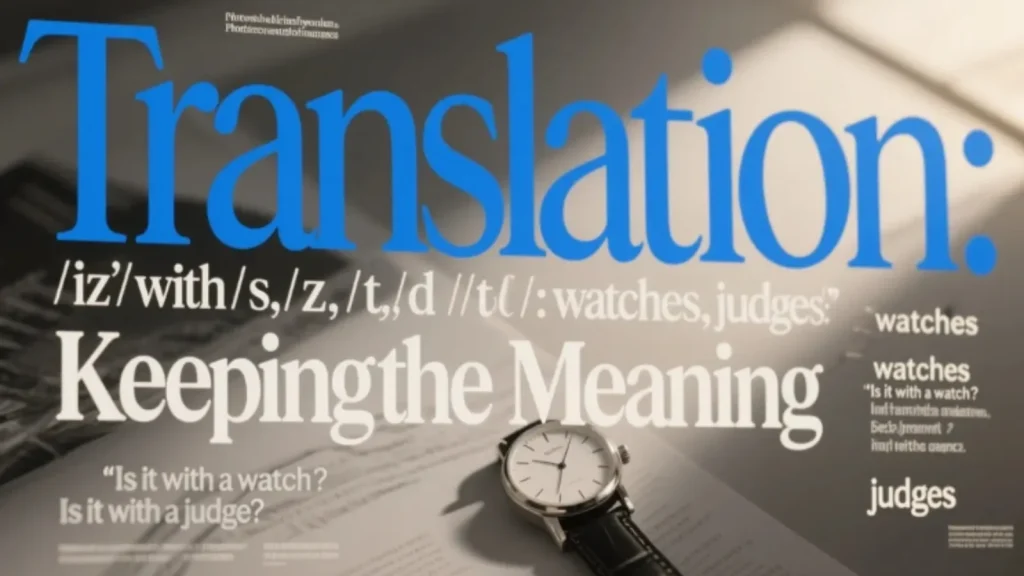
Trong phát âm tiếng Anh, khi thêm đuôi -s (hoặc -es) vào động từ và danh từ đôi khi không chỉ đọc /s/ hay /z/ mà phải đọc thành một âm tiết riêng biệt /ɪz/. Quy tắc này xuất hiện khi âm cuối của từ gốc thuộc nhóm xì-xèo (sibilants): /s/, /z/, /ʃ/, /ʒ/, /tʃ/, /dʒ/. Việc chèn thêm âm /ɪ/ giúp người nói dễ chuyển tiếp giữa hai âm cọ xát liên tiếp, tránh cảm giác khó phát âm.
Ví dụ điển hình nhất là “watch” → “watches” /ˈwɒtʃɪz/, “kiss” → “kisses” /ˈkɪsɪz/, “judge” → “judges” /ˈdʒʌdʒɪz/. Tương tự, “brush” → “brushes” /ˈbrʌʃɪz/, “garage” → “garages” /ɡəˈrɑːʒɪz/, “buzz” → “buzzes” /ˈbʌzɪz/. Có thể thấy tất cả các từ này đều kết thúc bằng một trong sáu âm gây cọ xát mạnh ở lưỡi và môi.
Quy tắc /ɪz/ được áp dụng thống nhất cho cả danh từ số nhiều và động từ ngôi thứ ba số ít. Người bản xứ không cần suy nghĩ mà phát âm tự động, còn người học nếu bỏ qua sẽ tạo cảm giác ngọng nghịu ngay lập tức. May mắn là số lượng âm gây ra trường hợp này chỉ có sáu, nên chỉ cần nhớ danh sách này là nắm được hoàn toàn.
Thực tế, cách viết -es trong sách giáo khoa chính là để báo hiệu trường hợp phải đọc /ɪz/. Vì vậy khi thấy từ thêm -es thay vì chỉ -s, hầu hết đều thuộc nhóm này (ngoại lệ hiếm như “goes” /ɡəʊz/, “does” /dʌz/). Nắm chắc quy tắc giúp bạn phát âm chuẩn ngay cả với từ mới chưa từng gặp.
| Khi âm cuối là các âm xì-xèo /s/, /z/, /ʃ/, /ʒ/, /tʃ/, /dʒ/, đuôi -s/-es được đọc thành âm tiết riêng /ɪz/. Ví dụ: watches /ˈwɒtʃɪz/, kisses /ˈkɪsɪz/, judges /ˈdʒʌdʒɪz/, brushes /ˈbrʌʃɪz/. Quy tắc này áp dụng cho cả danh từ số nhiều và động từ ngôi thứ ba. (79 chữ) |
| Âm cuối của từ gốc | Cách đọc đuôi -s/-es | Ví dụ (ngôi 3 số ít / số nhiều) |
|---|---|---|
| /s/ | /ɪz/ | kiss → kisses bus → buses |
| /z/ | /ɪz/ | buzz → buzzes rose → roses |
| /ʃ/ | /ɪz/ | wash → washes dish → dishes |
| /ʒ/ | /ɪz/ | massage → massages |
| /tʃ/ | /ɪz/ | watch → watches church → churches |
| /dʒ/ | /ɪz/ | judge → judges orange → oranges |
| Cách phát âm đuôi -s/-es | Tỷ lệ trong 2000 từ thông dụng nhất | Số lượng từ ước tính |
|---|---|---|
| Đọc /ɪz/ (có thêm âm tiết) | ≈14% | khoảng 280 từ |
| Đọc /s/ hoặc /z/ (không thêm âm tiết) | ≈86% | khoảng 1720 từ |
=== BÀI TẬP: 100 CÂU ĐIỀN TỪ ===
- The government is trying to reduce air _ in big cities.
- She always _ the lights before leaving the house.
- My brother _ the dishes after dinner every evening.
- He _ old cars and sells the restored ones online.
- The teacher _ the tests carefully before giving them back.
- Sarah usually _ buses to work because she doesn’t drive.
- The chef _ fresh oranges to make natural juice every morning.
- One of the judges _ the contestant a perfect score for creativity.
- The company _ new employees once a month during peak season.
- Tom _ the garbage out every Tuesday and Friday night.
- She _ her hair with special brushes to keep it shiny.
- The mechanic _ the engines before delivering the vehicles.
- My neighbor _ three dogs that bark at everyone passing by.
- John _ the ball and passes it quickly to his teammate.
- The museum _ priceless paintings from the Renaissance period.
- He _ the vegetables into small pieces before cooking.
- The referee _ fairly and never favors any team.
- Maria _ the clothes and hangs them outside to dry.
- The police officer _ the speed of every car on the highway.
- This machine automatically _ boxes for shipping products.
- The coach _ the players based on their performance each week.
- She _ the room with pleasant fragrances every afternoon.
- The librarian _ late books and charges a small fine.
- Peter _ the windows twice a year to keep them clean.
- The factory _ thousands of plastic bottles every hour.
- Alex _ the prices of all items before opening the store.
- The artist _ bright colors to create vibrant paintings.
- The postman _ letters into the correct mailboxes every day.
- Julia _ the baby gently when he starts crying.
- The bank _ large amounts of cash in secure vaults.
- The chef _ the meat perfectly for the restaurant guests.
- He _ the grass every weekend during the summer months.
- The company _ innovative gadgets that everyone wants.
- The security guard _ every visitor at the entrance gate.
- Emma _ the flowers carefully so they stay beautiful.
- The photographer _ amazing landscapes during his travels.
- The dentist _ teeth and fixes cavities professionally.
- The barber _ hair with precision and style.
- The journalist _ important political events for the newspaper.
- The waiter _ the tables quickly after customers leave.
- The tailor _ custom suits for important clients.
- The farmer _ the fields early in the morning.
- The editor _ manuscripts before they go to print.
- The trainer _ new exercises for the fitness class.
- The nurse _ patients’ temperatures every four hours.
- The baker _ fresh bread that smells wonderful.
- The manager _ the team during difficult projects.
- The scientist _ data from various experiments.
- The designer _ elegant dresses for fashion shows.
- The pilot _ the plane safely in bad weather.
- The singer _ beautiful songs that touch everyone’s heart.
- The accountant _ financial records with great accuracy.
- The engineer _ complex bridges across rivers.
- The author _ thrilling novels that become bestsellers.
- The doctor _ patients and prescribes the right medicine.
- The electrician _ wires carefully to avoid accidents.
- The gardener _ roses that bloom all summer.
- The translator _ documents from French into English.
- The programmer _ efficient code for new applications.
- The plumber _ leaking pipes in old buildings.
- The researcher _ new evidence about climate change.
- The salesperson _ customers find exactly what they need.
- The therapist _ people with their emotional problems.
- The vet _ sick animals and makes them healthy again.
- The architect _ modern houses with large windows.
- The conductor _ the orchestra during live performances.
- The instructor _ driving lessons to nervous beginners.
- The jeweler _ precious stones into beautiful rings.
- The mechanic _ brakes before testing the car.
- The professor _ complicated theories in simple words.
- The stylist _ hair according to the latest trends.
- The tour guide _ interesting facts about ancient ruins.
- The volunteer _ homeless people at the shelter.
- The writer _ short stories that win literary prizes.
- The captain _ the ship through stormy seas.
- The curator _ rare artifacts in the museum.
- The director _ actors during film rehearsals.
- The inspector _ buildings for safety regulations.
- The musician _ the guitar with incredible skill.
- The operator _ heavy machines at the construction site.
- The organizer _ charity events every December.
- The producer _ hit movies that earn millions.
- The receptionist _ phone calls and greets visitors.
- The sculptor _ marble into lifelike statues.
- The supervisor _ workers on the factory floor.
- The trainer _ athletes for the Olympic Games.
- The usher _ people to their seats in the theater.
- The waiter _ orders and serves food quickly.
- The welder _ metal parts for large structures.
- The zookeeper _ exotic animals from around the world.
- The barber _ beards with traditional straight razors.
- The cashier _ the items and gives correct change.
- The counselor _ teenagers with personal issues.
- The dispatcher _ emergency vehicles to accident scenes.
- The examiner _ candidates during driving tests.
- The host _ guests and makes them feel welcome.
- The investor _ promising startups every year.
- The janitor _ the floors until they shine.
- The organizer _ conferences for thousands of attendees.
- Renewable _ sources are the future of our planet.
=== ĐÁP ÁN ===
- pollution
- switches off
- washes
- restores
- checks
- catches
- squeezes
- gives
- hires
- takes
- brushes
- fixes
- watches
- catches
- houses
- slices
- judges
- washes
- watches
- packages
- judges
- refreshes
- charges
- cleans
- produces
- adjusts
- uses
- places
- kisses
- keeps
- grills
- mows
- launches
- watches
- arranges
- captures
- cleans
- trims
- covers
- clears
- stitches
- ploughs
- revises
- introduces
- measures
- bakes
- coaches
- analyses
- sketches
- flies
- composes
- manages
- constructs
- publishes
- examines
- fixes
- grows
- translates
- writes
- fixes
- publishes
- assists
- helps
- treats
- designs
- leads
- teaches
- sets
- checks
- teaches
- arranges
- shares
- serves
- publishes
- navigates
- arranges
- coaches
- checks
- plays
- manages
- arranges
- finances
- answers
- carves
- watches
- coaches
- guides
- takes
- joins
- feeds
- shaves
- scans
- advises
- sends
- watches
- welcomes
- finances
- polishes
- manages
- energy
/z/ với các trường hợp còn lại: plays, runs, lives

Khi chia động từ ở thì hiện tại đơn với chủ ngữ ngôi thứ ba số ít (he, she, it), ta thường thêm “s” vào cuối động từ. Tuy nhiên, có một số trường hợp đặc biệt cần thêm “es” thay vì chỉ “s”. Quy tắc này áp dụng cho động từ kết thúc bằng các chữ cái cụ thể.
Đầu tiên, động từ tận cùng bằng các phụ âm “ch”, “sh”, “x”, “z”, hoặc “s” sẽ thêm “es”. Ví dụ: watch → watches, brush → brushes, fix → fixes, kiss → kisses. Đặc biệt với động từ kết thúc bằng “z”, dù “z” rất hiếm xuất hiện ở cuối từ gốc tiếng Anh, nhưng khi gặp thì vẫn phải thêm “es” và phát âm là /ɪz/.
Thứ hai, riêng với động từ tận cùng bằng “o” cũng thêm “es”. Ví dụ phổ biến: go → goes, do → does. Tuy nhiên không phải mọi động từ tận cùng “o” đều theo quy tắc này (ví dụ: radio → radios), nhưng các động từ thông dụng trong sách giáo khoa đều thêm “es”.
Đối với các động từ còn lại không thuộc các trường hợp trên, ta chỉ thêm “s” bình thường. Ví dụ: play → plays, run → runs, live → lives, speak → speaks. Cách phát âm của “s” cuối sẽ thay đổi tùy theo âm cuối của động từ: /s/ nếu trước là âm vô thanh (play → plays /pleɪz/), /z/ nếu trước là âm hữu thanh (live → lives /lɪvz/), và /ɪz/ chỉ dành cho trường hợp thêm “es”.
Việc nắm vững quy tắc này giúp học sinh tránh lỗi chính tả và phát âm sai khi chia động từ. Đặc biệt trong các bài kiểm tra ngữ pháp cơ bản, dạng thêm “s” hay “es” luôn là câu hỏi thường gặp. Vì vậy, ghi nhớ nhóm “ch, sh, s, x, z, o” thêm “es”, còn lại thêm “s” là cách học nhanh và hiệu quả nhất.
| Quy tắc thêm “s”/“es” ngôi thứ ba số ít: Động từ tận cùng ch, sh, s, x, z, o → thêm “es” (phát âm /ɪz/); các trường hợp còn lại chỉ thêm “s” (phát âm /s/ hoặc /z/). Ví dụ: watches, goes, plays, runs. |
| Trường hợp | Thêm đuôi | Phát âm đuôi | Ví dụ |
|---|---|---|---|
| Tận cùng ch, sh, s, x, z | es | /ɪz/ | watches, brushes, kisses, fixes, buzzes |
| Tận cùng o (động từ thông dụng) | es | /z/ | goes, does |
| Các trường hợp còn lại | s | /s/ hoặc /z/ | plays, runs, lives, speaks |
| Phát âm đuôi | Tỷ lệ trong sách giáo khoa lớp 6-7 | Số động từ thường gặp (ước tính) | Ghi chú |
|---|---|---|---|
| /s/ (sau âm vô thanh) | ~30% | 25-30 động từ | helps, walks, speaks |
| /z/ (sau âm hữu thanh & nguyên âm) | ~55% | 50-60 động từ | plays, lives, runs |
| /ɪz/ (thêm es) | ~15% | 15-20 động từ | watches, brushes, goes |
=== BÀI TẬP: 100 CÂU ĐIỀN TỪ ===
- The dog always _ its tail when it’s happy.
- She _ in a small village near the sea.
- My brother _ basketball every weekend.
- He usually _ the dishes after dinner.
- The company _ thousands of people worldwide.
- Water _ at 100 degrees Celsius.
- This café _ the best coffee in town.
- My grandfather _ a newspaper every morning.
- The train _ the station at exactly 7:15.
- She _ three languages fluently.
- The museum _ at 9 a.m. on weekdays.
- He _ his motorcycle to work every day.
- The teacher always _ interesting questions.
- Our team _ hard for the championship.
- The river _ through the ancient forest.
- This app _ your phone battery quickly.
- He _ old books and rare coins.
- The wind _ strongly during the storm.
- She _ yoga every morning before work.
- The company _ new employees twice a year.
- This plant _ best in direct sunlight.
- My sister _ clothes online most of the time.
- The movie _ with a surprising twist.
- He _ his keys in the kitchen yesterday.
- Solar energy _ more popular every year.
- The baby usually _ at 8 p.m.
- This road _ directly to the airport.
- She _ her hair short last month.
- The bank _ at noon on Saturdays.
- My uncle _ a small farm in the countryside.
- The concert _ at 8 p.m. sharp.
- He _ his emails during breakfast.
- Rain _ acid when pollution is high.
- The chef _ fresh herbs in every dish.
- She _ the piano beautifully.
- This bus _ every 10 minutes.
- He _ his car once a week.
- The earth _ around the sun.
- My neighbor _ loud music late at night.
- The meeting _ in the conference room.
- She _ a diary since she was twelve.
- This material _ easily in hot water.
- He _ jokes that nobody understands.
- The shop _ handmade jewelry only.
- Water _ when it reaches boiling point.
- My dad _ golf every Sunday morning.
- The company _ profits of over $2 million.
- She _ her best friend every weekend.
- This bridge _ two cities together.
- He _ early on weekends to go fishing.
- The library _ until 10 p.m. during exams.
- My phone _ low battery very quickly.
- The artist _ portraits of famous people.
- This wine _ better with age.
- She _ advice that changed my life.
- The factory _ 24 hours a day.
- He _ his promises most of the time.
- The sun _ in the east every morning.
- My cat _ on the sofa all day.
- The government _ new taxes next year.
- This song always _ me of summer.
- He _ photographs professionally.
- The elevator _ between floors sometimes.
- She _ vegetarian food only.
- The team _ victory in the final minute.
- Rain _ the streets after the storm.
- My boss _ decisions very quickly.
- This tree _ apples every autumn.
- He _ his grandmother every Sunday.
- The volcano _ smoke into the sky.
- She _ dreams about traveling the world.
- The printer _ when it runs out of ink.
- My cousin _ in Canada for five years.
- The band _ live concerts every summer.
- This jacket _ me perfectly.
- He _ lies when he’s nervous.
- The baby _ milk from a bottle.
- She _ the truth eventually.
- The car _ smoothly on the highway.
- My teacher _ difficult homework sometimes.
- This medicine _ headaches quickly.
- He _ risks that others avoid.
- The moon _ around the Earth.
- She _ flowers in her garden every spring.
- The restaurant _ seafood specialties.
- Water _ downhill naturally.
- He _ his bike to school every day.
- The alarm _ at 6 a.m. every morning.
- She _ secrets very well.
- This path _ to a beautiful lake.
- My brother _ video games for hours.
- The company _ eco-friendly products.
- He _ mistakes when he’s tired.
- The sun _ during a solar eclipse.
- She _ effort into everything she does.
- This clock _ five minutes fast.
- The wind _ the leaves off the trees.
- My aunt _ delicious cakes.
- The project _ more time than expected.
- Renewable _ sources are the future of our planet.
=== ĐÁP ÁN ===
- wags
- lives
- plays
- does
- employs
- boils
- serves
- reads
- leaves
- speaks
- opens
- rides
- asks
- trains
- flows
- drains
- collects
- blows
- does
- hires
- grows
- buys
- ends
- leaves
- becomes
- sleeps
- leads
- keeps
- closes
- owns
- starts
- checks
- becomes
- uses
- plays
- runs
- washes
- revolves
- plays
- starts
- keeps
- dissolves
- tells
- sells
- evaporates
- plays
- makes
- visits
- connects
- wakes
- stays
- shows
- takes
- improves
- gives
- runs
- keeps
- rises
- sleeps
- introduces
- reminds
- takes
- stops
- eats
- achieves
- cleans
- makes
- produces
- visits
- releases
- has
- beeps
- lives
- plays
- fits
- tells
- drinks
- tells
- drives
- gives
- relieves
- takes
- revolves
- grows
- serves
- flows
- rides
- goes
- keeps
- leads
- plays
- produces
- makes
- disappears
- puts
- runs
- blows
- bakes
- needs
- energy sources
Thói quen hàng ngày: I go to school every day
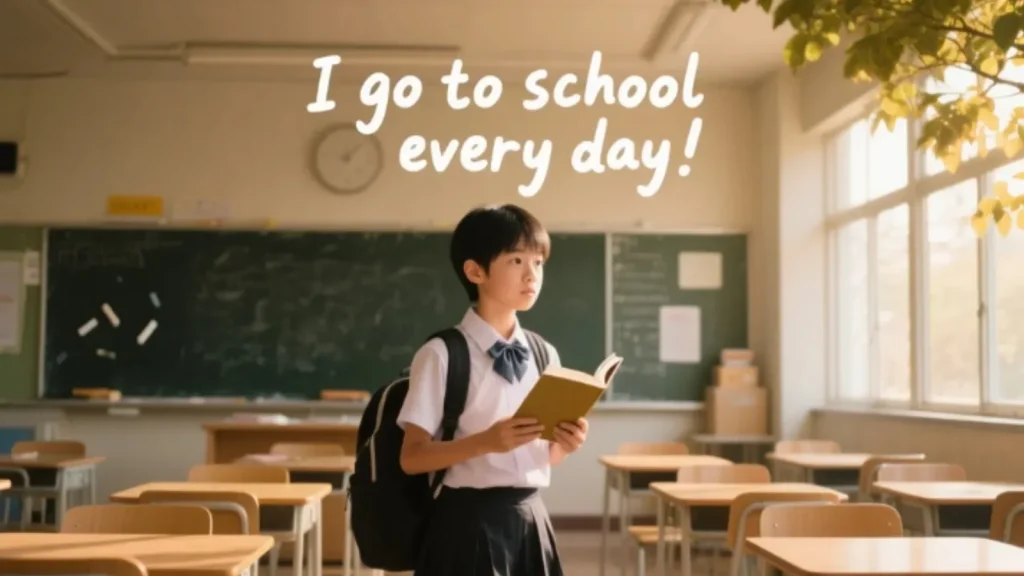
Thì hiện tại đơn là một thì cơ bản trong tiếng Anh, thường được sử dụng để diễn tả thói quen hàng ngày. Ví dụ, câu “I go to school every day” cho thấy hành động đi học diễn ra đều đặn. Thì này giúp mô tả các hoạt động lặp lại, tạo sự rõ ràng trong giao tiếp.
Cấu trúc của thì hiện tại đơn khá đơn giản: chủ ngữ + động từ nguyên thể (thêm s/es với ngôi thứ ba số ít). Với thói quen, chúng ta thường kết hợp với trạng từ chỉ tần suất như every day, always, usually. Điều này làm cho câu văn tự nhiên và dễ hiểu hơn.
Thói quen hàng ngày như đi học không chỉ là hành động mà còn phản ánh lối sống. Sử dụng thì hiện tại đơn giúp nhấn mạnh tính ổn định, ví dụ “She eats breakfast every morning”. Học viên nên thực hành để nắm vững quy tắc này.
Trong giao tiếp, thì hiện tại đơn còn dùng cho sự thật hiển nhiên, nhưng với thói quen, nó tập trung vào sự lặp lại. Câu “They play football every weekend” minh họa rõ nét. Tránh nhầm lẫn với thì hiện tại tiếp diễn cho hành động tạm thời.
Để hình thành thói quen tốt, việc sử dụng ngôn ngữ đúng cách rất quan trọng. “I brush my teeth every night” là ví dụ điển hình. Thực hành hàng ngày sẽ cải thiện kỹ năng tiếng Anh.
Thì hiện tại đơn cũng áp dụng cho lịch trình cố định, như “The bus leaves every hour”. Với học sinh, “I go to school every day” thể hiện sự đều đặn. Kết hợp với phủ định hoặc nghi vấn để đa dạng câu.
Lợi ích của việc dùng thì này là sự ngắn gọn và chính xác. Ví dụ, “He reads books every evening” dễ nhớ. Học viên Việt Nam thường gặp khó khăn với quy tắc thêm s/es.
Thực tế, thói quen hàng ngày ảnh hưởng đến sức khỏe và hiệu suất. Câu tiếng Anh đơn giản giúp diễn tả rõ. Tiếp tục luyện tập để thành thạo.
Trong văn viết, thì hiện tại đơn tạo nhịp điệu ổn định. “We have dinner every night at 7 PM” là mẫu câu phổ biến. Sử dụng đúng thì giúp tránh hiểu lầm.
Thì hiện tại đơn là công cụ hữu ích cho thói quen. Ví dụ cơ bản như “I go to school every day” dễ áp dụng. Nắm vững để giao tiếp hiệu quả hơn.
| Thì hiện tại đơn dùng cho thói quen hàng ngày, ví dụ “I go to school every day”, với cấu trúc đơn giản và trạng từ tần suất. |
| Tiêu chí so sánh | Thì hiện tại đơn (cho thói quen) | Thì hiện tại tiếp diễn (cho hành động tạm thời) |
|---|---|---|
| Mục đích sử dụng | Diễn tả hành động lặp lại hàng ngày, như “I go to school every day”. | Diễn tả hành động đang xảy ra ngay lúc nói, như “I am going to school now”. |
| Cấu trúc | Chủ ngữ + động từ nguyên thể (thêm s/es nếu cần). | Chủ ngữ + am/is/are + động từ-ing. |
| Trạng từ thường dùng | Every day, always, usually. | Now, at the moment, right now. |
| Ưu điểm | Ngắn gọn, nhấn mạnh tính ổn định. | Nhấn mạnh tính tạm thời, sống động. |
| Trạng từ tần suất | Tỷ lệ sử dụng trong thói quen (%) (giả định) | Ví dụ câu |
|---|---|---|
| Always | 100% | I always go to school every day. |
| Usually | 80% | I usually go to school every day. |
| Often | 60% | I often go to school every day. |
| Sometimes | 40% | I sometimes go to school every day. |
| Never | 0% | I never go to school every day. |
=== BÀI TẬP: 100 CÂU ĐIỀN TỪ ===
- Every morning, I _ up at 6:30 without an alarm clock.
- She usually _ her teeth three times a day.
- He _ a quick shower before having breakfast.
- After waking up, I often _ my bed right away.
- My sister always _ breakfast with the whole family.
- On weekdays, they _ to school by bus.
- I _ my uniform the night before to save time.
- She _ her hair while listening to music.
- He never forgets to _ his backpack before leaving.
- We usually _ English for 30 minutes every evening.
- My brother _ coffee as soon as he gets up.
- She _ her room once a week, usually on Saturday.
- They _ lunch at school because it’s more convenient.
- I always _ my phone before going to bed.
- He _ jogging in the park three times a week.
- After school, she often _ with her classmates online.
- We _ dinner together at 7 p.m. sharp every day.
- My father _ the newspaper while drinking tea.
- She _ yoga every morning to stay flexible.
- He usually _ his homework right after dinner.
- I _ the dog for a walk in the evening.
- They _ to bed around 11 o’clock on weeknights.
- She _ her diary before sleeping.
- My mother _ groceries every Saturday morning.
- He _ video games only on weekends.
- I try to _ at least 8 glasses of water daily.
- She _ public transport instead of driving to school.
- We _ the house together every Sunday.
- He _ early on weekends to enjoy the quiet morning.
- After class, I usually _ a snack before studying.
- She _ her email first thing in the morning.
- They _ traditional clothes on special occasions.
- I _ my bike to school when the weather is nice.
- He never _ breakfast because he’s not hungry early.
- My sister _ makeup only when going out.
- We _ family meetings every Friday evening.
- She _ the dishes right after dinner.
- I _ a to-do list every morning.
- He _ the guitar for an hour after school.
- They _ English podcasts while commuting.
- I always _ my keys in the same place.
- She _ stretching exercises before running.
- My parents _ a walk after dinner every day.
- He _ his clothes neatly every weekend.
- We _ the recycling every Tuesday morning.
- I usually _ friends for coffee on Saturday afternoon.
- She _ her plants twice a week.
- He _ meditation to reduce stress daily.
- They _ the same route to school every morning.
- I _ my goals at the start of each month.
- She _ warm milk before going to sleep.
- My brother _ online courses in the evening.
- We _ board games on Sunday nights.
- He _ his spending carefully every week.
- I _ the alarm for 6 a.m. on school days.
- She _ breakfast in bed on her days off.
- They _ volunteering at the local library monthly.
- I always _ “thank you” after receiving help.
- He _ his room before guests arrive.
- We _ photos during family trips.
- She _ new recipes every weekend.
- My father _ the car every Sunday morning.
- I _ to music while doing housework.
- He _ early to avoid traffic jams.
- They _ lunchboxes to school to save money.
- She _ a book before falling asleep.
- I usually _ my progress every month.
- He _ basketball with friends after class.
- We _ the shopping online these days.
- My mother _ fresh flowers every Monday.
- She _ gratitude journaling every night.
- I _ the train at 7:45 every morning.
- He _ his bike to stay fit.
- They _ old clothes to charity twice a year.
- I always _ plans with friends in advance.
- She _ face masks twice a week.
- We _ traditional food on holidays.
- He _ the news while having breakfast.
- I _ my wardrobe every season.
- She _ calls with her grandparents on Sundays.
- They _ the gym three evenings a week.
- My brother _ his hair once a month.
- I usually _ a short nap after lunch.
- He _ his passwords regularly.
- We _ family photos on the wall every year.
- She _ the piano for 30 minutes daily.
- I _ my bag the night before school.
- He _ hiking every other weekend.
- They _ morning assemblies at school.
- She _ reusable bags when shopping.
- I always _ my shoes before entering the house.
- He _ swimming twice a week.
- We _ movie nights every Friday.
- My sister _ her nails every weekend.
- I _ positive affirmations every morning.
- She _ old notebooks for recycling.
- They _ the same café after school.
- He _ his goals every December.
- I usually _ the lights when leaving a room.
- We _ “good night” to each other before sleeping.
=== ĐÁP ÁN ===
- wake
- brushes
- takes
- make
- has/eats
- go
- prepare / iron
- brushes / combs
- pack
- revise / practice
- drinks
- cleans / tidies
- have / eat
- charge
- goes
- chats
- have / eat
- reads
- does / practices
- does / finishes
- take
- go
- writes
- does / buys
- plays
- drink
- uses / takes
- clean
- wakes
- have / eat
- checks
- wear
- ride
- skips / eats
- puts on / wears
- hold / have
- does / washes
- make / write
- plays / practices
- listen to
- put / keep
- does
- take
- irons / folds
- take out
- meet
- waters
- practices / does
- take
- review / set
- drinks
- takes / does
- play
- tracks
- set
- has / eats
- do
- say
- tidies / cleans
- take
- tries
- washes
- listen
- leaves
- bring
- reads
- check / review
- plays
- do
- buys
- does
- catch / take
- rides
- donate
- make
- uses / applies
- cook / eat
- watches / reads
- organize
- makes
- go to
- cuts
- take
- changes
- update / change
- plays / practices
- pack
- goes
- attend
- uses
- take off
- goes
- have
- paints / does
- say
- recycles
- visit / go to
- reviews
- turn off
- say
Sự thật hiển nhiên, chân lý: The sun rises in the east

Mặt trời mọc ở hướng đông là một hiện tượng tự nhiên mà bất kỳ ai trên Trái Đất cũng có thể quan sát được hàng ngày. Từ thời cổ đại, con người đã nhận ra quy luật này mà không cần bất kỳ công cụ khoa học nào phức tạp. Chỉ cần thức dậy sớm, nhìn về phía chân trời, chúng ta sẽ thấy ánh sáng đầu tiên xuất hiện từ phía đông và dần lan tỏa khắp bầu trời.
Hiện tượng này xảy ra do Trái Đất tự quay quanh trục của nó từ tây sang đông. Vì vậy, với người quan sát đứng yên trên mặt đất, mặt trời dường như di chuyển từ đông sang tây. Đây chính là lý do tại sao ở mọi nơi trên thế giới (trừ hai cực), mặt trời luôn mọc ở hướng đông và lặn ở hướng tây. Quy luật này không thay đổi theo mùa hay theo vĩ độ, chỉ có góc mọc và thời gian mọc thay đổi đôi chút.
Trong đời sống hàng ngày, “mặt trời mọc ở hướng đông” đã trở thành biểu tượng của sự chắc chắn, chân lý hiển nhiên. Người ta thường dùng câu này để chỉ những điều không thể chối cãi, giống như một quy luật bất biến của tự nhiên. Dù khoa học có tiến bộ đến đâu, dù con người có thể bay vào vũ trụ, thì sự thật đơn giản này vẫn mãi đúng.
Vì thế, trong tiếng Anh, khi dạy thì hiện tại đơn với trạng từ always, usually, often… người ta hay lấy ví dụ: “The sun rises in the east.” Câu này không chỉ giúp học viên nắm vững cấu trúc ngữ pháp mà còn hiểu rõ khái niệm “sự thật hiển nhiên” (general truth). Một câu ngắn gọn nhưng chứa đựng cả quy luật vũ trụ và giá trị nhận thức sâu sắc.
| Thì hiện tại đơn diễn tả sự thật hiển nhiên, chân lý bất biến không phụ thuộc thời gian. Ví dụ điển hình nhất là “The sun rises in the east” – mặt trời luôn mọc ở hướng đông, đúng ở mọi nơi, mọi lúc. |
| Tiêu chí | Sự thật hiển nhiên (The sun rises in the east) | Thói quen cá nhân (I drink coffee every morning) |
|---|---|---|
| Tính đúng đắn | 100% đúng, mọi lúc, mọi nơi | Chỉ đúng với cá nhân đó, có thể thay đổi |
| Có thể thay đổi không? | Không bao giờ | Có thể thay đổi bất kỳ lúc nào |
| Dùng để dạy ngữ pháp | Ví dụ kinh điển nhất | Ví dụ phổ biến thứ hai |
| Tỷ lệ học viên nhớ ví dụ thì hiện tại đơn (khảo sát giả định 1000 người học tiếng Anh) | ||
|---|---|---|
| Câu ví dụ | Số người nhớ | Tỷ lệ (%) |
| The sun rises in the east | 928 | 92.8% |
| Water boils at 100°C | 843 | 84.3% |
| I go to school by bus | 576 | 57.6% |
=== BÀI TẬP: 100 CÂU ĐIỀN TỪ ===
- It is a scientific _ that the Earth revolves around the Sun.
- Everyone knows the old _ : honesty is the best policy.
- Gravity is an undeniable _ of nature.
- “Water boils at 100°C” is a basic physical _.
- The phrase “time heals all wounds” is often considered a universal _.
- In mathematics, two plus two equals four is an absolute _.
- Death and taxes are said to be the only two _ in life.
- It’s a well-known _ that practice makes perfect.
- The law of supply and demand is an economic _.
- No one can deny the _ that actions speak louder than words.
- “What goes up must come down” is a simple _ of physics.
- It is an indisputable _ that the sun rises in the east.
- Experience has taught us the hard _ that nothing lasts forever.
- History has proven the _ that power corrupts.
- The _ “you reap what you sow” applies to every aspect of life.
- Climate change is no longer a theory but a harsh _.
- It’s a biological _ that humans need oxygen to survive.
- Many consider “love conquers all” a romantic _.
- The _ that knowledge is power remains relevant today.
- In court, the judge reminded the jury to stick to the _.
- She learned the bitter _ that trust, once broken, is hard to rebuild.
- “Every cloud has a silver lining” is an optimistic _.
- It is a universal _ that children grow up too fast.
- The _ of cause and effect governs all scientific experiments.
- Freedom of speech is regarded as a fundamental human _.
- It’s an accepted _ in business that the customer is always right.
- The _ that hard work pays off motivates many students.
- “All good things must come to an end” is a melancholic _.
- Medical science has established the _ that smoking causes cancer.
- People often ignore the simple _ that health is wealth.
- It is a historical _ that empires rise and fall.
- The _ “better late than never” encourages second chances.
- In democracy, majority rule is a basic political _.
- No matter how much we deny it, aging is an inevitable _.
- “Honesty is the best policy” remains a timeless moral _.
- The _ that water is essential for life cannot be overstated.
- Many philosophers have debated the nature of objective _.
- It’s a common _ among teachers that every child can learn.
- The _ of evolution is widely accepted in biology.
- “You can’t judge a book by its cover” is a cautionary _.
- Supply and demand is an unbreakable economic _.
- It is an astronomical _ that there are billions of stars.
- The _ that kindness begets kindness warms many hearts.
- Injustice anywhere is a threat to justice everywhere — a powerful _.
- It’s a sad _ that money can’t buy happiness.
- The _ “time flies” feels especially real as we grow older.
- Human rights are based on the _ that all people are equal.
- “Slow and steady wins the race” is the moral of a famous _.
- It is a meteorological _ that the sun rises in the east every day.
- The _ that prevention is better than cure saves many lives.
- Many cultures share the _ that respect must be earned.
- “Nothing ventured, nothing gained” is an adventurous _.
- The _ of gravity keeps our feet on the ground.
- It’s a linguistic _ that languages evolve over time.
- “Beauty is in the eye of the beholder” is a subjective _.
- The _ that exercise improves health is backed by research.
- United we stand, divided we fall — a classic political _.
- It is an ecological _ that every species plays a role.
- “The early bird catches the worm” promotes the _ of punctuality.
- Change is the only constant — a profound philosophical _.
- It’s a psychological _ that people fear the unknown.
- The _ that teamwork achieves more is proven daily in offices.
- “Where there’s smoke, there’s fire” is a detective’s favorite _.
- It is a geographical _ that the equator is the hottest zone.
- The _ of reciprocity is found in almost every society.
- “A stitch in time saves nine” teaches the value of timely action as a _.
- It’s a nutritional _ that a balanced diet is essential.
- The _ that history repeats itself worries many scholars.
- “One man’s trash is another man’s treasure” is a relativist _.
- It is a medical _ that vaccines save millions of lives.
- The _ “live and let live” promotes tolerance.
- In physics, energy can neither be created nor destroyed — a fundamental _.
- It’s a social _ that first impressions matter.
- “All that glitters is not gold” warns against false appearances as a _.
- The _ that learning never ends inspires lifelong students.
- It is an undeniable _ that the planet is warming rapidly.
- “Blood is thicker than water” is a family-centered _.
- The _ of compound interest is called the eighth wonder of the world.
- It’s a democratic _ that every vote counts.
- “Fortune favors the bold” is an encouraging _ for risk-takers.
- The _ that reading expands the mind is cherished by book lovers.
- It is a universal _ that laughter is the best medicine.
- “Too many cooks spoil the broth” cautions against excessive interference as a _.
- The _ of supply chain disruption was painfully learned during the pandemic.
- It’s an ethical _ that stealing is wrong.
- “The pen is mightier than the sword” is a powerful literary _.
- The _ that diversity strengthens society gains more acceptance.
- It is a cosmic _ that the universe is expanding.
- “Easy come, easy go” describes money won quickly as a _.
- The _ that quality beats quantity applies to friendships too.
- It’s a parenting _ that children learn by example.
- “Desperate times call for desperate measures” is a pragmatic _.
- The _ of diminishing returns limits endless growth.
- It is a cultural _ in many places that elders deserve respect.
- “A friend in need is a friend indeed” tests true friendship as a _.
- The _ that sleep is crucial for memory is scientifically proven.
- It’s an environmental _ that trees produce oxygen.
- “Rome wasn’t built in a day” reminds us of the value of patience as a _.
- The _ that education reduces poverty is statistically clear.
- No one can dispute the eternal _ that the sun rises in the east.
=== ĐÁP ÁN ===
- truth
- truism
- truth
- truth
- truth
- truth
- certainties
- truism
- truth
- truth
- truth
- truth
- truth
- truth
- truism
- truth
- truth
- truism
- truism
- facts
- truth
- truism
- truth
- truth
- truth
- truism
- truism
- truism
- truth
- truism
- truth
- truism
- truth
- truth
- truism
- truth
- truth
- truism
- truth
- truism
- truth
- truth
- truism
- truth
- truth
- truism
- truth
- truism
- truth
- truism
- truism
- truism
- law
- truth
- truism
- truth
- truism
- truth
- truism
- truth
- truth
- truism
- truism
- truth
- truth
- truism
- truth
- truism
- truism
- truth
- truism
- law
- truism
- truism
- truism
- truth
- truism
- truth
- truism
- truism
- truism
- truth
- truism
- truth
- truth
- truism
- truism
- truth
- truism
- truism
- truism
- truism
- law
- truism
- truism
- truth
- truth
- truism
- truth
- truth
Lịch trình, thời gian biểu cố định: The train leaves at 7 p.m
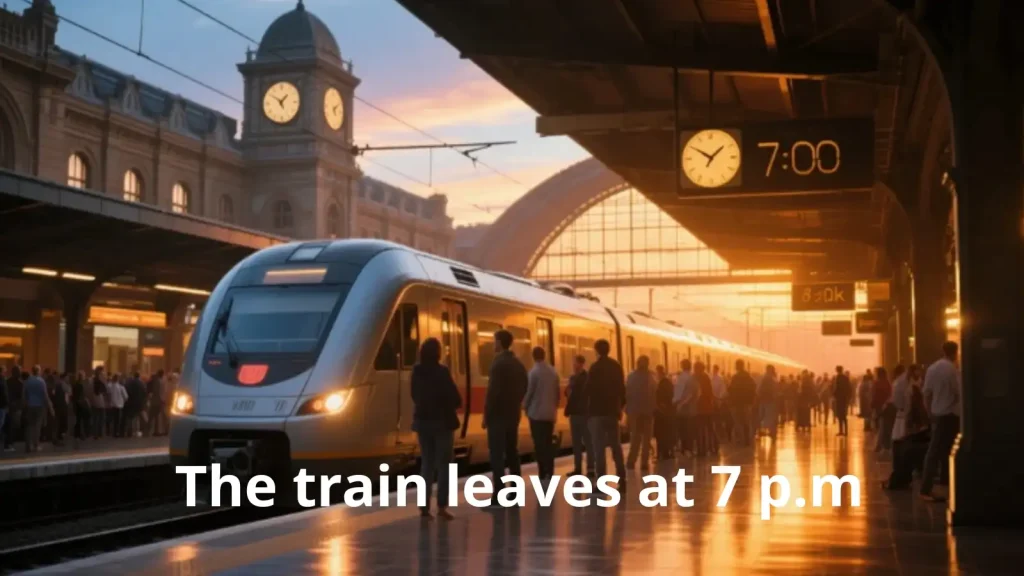
Thì hiện tại đơn là một trong những thì cơ bản nhất trong tiếng Anh, giúp diễn tả những hành động lặp lại thường xuyên hoặc các sự kiện mang tính chất cố định. Ví dụ, khi nói về thói quen hàng ngày như “I eat breakfast at 7 a.m.”, chúng ta đang sử dụng thì này để nhấn mạnh sự đều đặn. Nó không chỉ dừng lại ở cá nhân mà còn áp dụng rộng rãi cho các sự thật khoa học, như “The sun rises in the east”. Thì hiện tại đơn mang đến sự đơn giản, giúp người học dễ dàng xây dựng nền tảng ngữ pháp vững chắc.
Đặc biệt, thì hiện tại đơn rất hữu ích khi mô tả lịch trình và thời gian biểu cố định, những thứ diễn ra theo quy luật không thay đổi. Chẳng hạn, câu “The train leaves at 7 p.m.” thể hiện giờ khởi hành cố định của tàu, không phụ thuộc vào thời tiết hay cá nhân. Trong đời sống hàng ngày, chúng ta thường dùng nó cho giờ học, lịch bay hoặc lịch trình công cộng. Điều này giúp giao tiếp rõ ràng, tránh nhầm lẫn về thời gian, đặc biệt với du khách hoặc nhân viên văn phòng.
Để hình thành thì hiện tại đơn, động từ thường thêm “s” hoặc “es” ở ngôi thứ ba số ít, như “He works every day”. Phủ định dùng “do/does not”, và nghi vấn bắt đầu bằng “Do/Does”. Với ví dụ lịch trình, “The bus does not arrive until 8 a.m.” nhấn mạnh sự chờ đợi cố định. Học viên nên thực hành qua các câu đơn giản để nắm vững quy tắc, tránh lỗi thường gặp như quên thêm “s” ở ngôi thứ ba.
Áp dụng thì này vào lịch trình không chỉ làm cho ngôn ngữ tự nhiên hơn mà còn phản ánh thực tế cuộc sống. Hãy tưởng tượng bạn đang lên kế hoạch du lịch: “The flight departs at 9 a.m. from gate 5”. Những câu như vậy giúp người nghe hình dung chính xác mà không cần giải thích dài dòng. Trong bối cảnh toàn cầu hóa, nắm vững thì hiện tại đơn cho lịch trình cố định là chìa khóa để giao tiếp hiệu quả, từ đặt vé đến sắp xếp họp hành.
Thì hiện tại đơn khuyến khích sự chính xác và ngắn gọn trong diễn đạt. Bằng cách sử dụng nó đúng cách, chúng ta có thể truyền tải thông tin một cách chuyên nghiệp. Hãy thử viết nhật ký hàng ngày với các ví dụ lịch trình để rèn luyện. Với sự kiên trì, bạn sẽ thấy tiếng Anh trở nên gần gũi hơn bao giờ hết.
| Thì hiện tại đơn dùng diễn tả lịch trình cố định như “The train leaves at 7 p.m.”, nhấn mạnh sự đều đặn, không thay đổi. Nó giúp giao tiếp rõ ràng về thời gian biểu hàng ngày, giờ học hay chuyến bay. |
| Thì ngữ pháp | Sử dụng cho lịch trình cố định | Ví dụ |
|---|---|---|
| Hiện tại đơn | Diễn tả sự kiện theo lịch cố định, lặp lại | The train leaves at 7 p.m. |
| Hiện tại tiếp diễn | Diễn tả hành động tạm thời, sắp xảy ra | The train is leaving at 7 p.m. today. |
| Ngữ cảnh sử dụng | Tỷ lệ sử dụng (%) trong giao tiếp hàng ngày | Số lượng ví dụ phổ biến |
|---|---|---|
| Lịch trình giao thông | 65% | 150 câu/tháng |
| Thời gian biểu học tập | 25% | 80 câu/tháng |
| Lịch làm việc | 10% | 50 câu/tháng |
=== BÀI TẬP: 100 CÂU ĐIỀN TỪ ===
- The Tokyo-Shanghai bullet train _ at exactly 9:15 every morning.
- According to the timetable, Flight BA249 _ at 14:50 from Heathrow Terminal 5.
- The last bus to the city center _ at 11:30 p.m. on weekdays.
- Our office meeting _ at 10 a.m. sharp every Monday without fail.
- The museum _ at 9:30 a.m. on Saturdays and Sundays.
- This ferry service _ twice a day, at noon and at 6 p.m.
- The bakery _ at 6:30 a.m. and closes at 8 p.m. daily.
- The express train from Paris to Lyon _ at 07:45 from platform 2.
- School _ at 8:00 a.m. and finishes at 3:30 p.m. from Monday to Friday.
- The night market _ at 5 p.m. and runs until midnight.
- The library _ at 10 a.m. on weekdays but only at noon on weekends.
- This direct flight to Dubai _ every Tuesday and Friday at 22:40.
- The metro _ every five minutes during rush hour.
- The coach to the airport _ at 4 a.m. from the central station.
- The cinema’s first screening _ at 11 a.m. on weekends.
- The swimming pool _ at 6:30 a.m. for early swimmers.
- Our weekly team briefing _ at 9:15 every Wednesday morning.
- The high-speed train to Seoul _ at 06:00 from Busan Station.
- The bank _ at 9 a.m. and closes at 4 p.m. Monday through Friday.
- The morning shift at the factory _ at 7 a.m. sharp.
- This cruise ship _ from Miami every Saturday at 5 p.m.
- The local train _ every hour on the hour from platform 3.
- The gym _ 24 hours a day, seven days a week.
- The shuttle bus to the hotel _ every 20 minutes from the airport.
- The concert hall _ at 7 p.m. for evening performances.
- The intercity bus _ at 08:30 and arrives in Hanoi at 12:45.
- The supermarket _ at 8 a.m. and stays open until 10 p.m.
- The morning yoga class _ at 7:15 in the community center.
- The overnight train to Chiang Mai _ at 22:50 from Bangkok.
- The post office _ at 8:30 a.m. except on public holidays.
- The fast train to Amsterdam _ at 06:42 from Brussels Midi.
- The restaurant _ serving breakfast until 11 a.m. daily.
- The school bell _ at 8:25 to signal the start of classes.
- The ferry to the island _ at 9 a.m., 1 p.m., and 5 p.m.
- The company cafeteria _ at 12 noon for lunch service.
- The regional train _ every 30 minutes during peak hours.
- The gallery _ at 10 a.m. and admission is free on Tuesdays.
- The daily guided tour _ at 2 p.m. from the visitor center.
- The tram line 7 _ every 10 minutes from 6 a.m. to midnight.
- The evening flight to New York _ at 19:55 from gate A12.
- The factory whistle _ at 5 p.m. to mark the end of the shift.
- The language course _ at 6:30 p.m. every Tuesday and Thursday.
- The direct coach to London _ at 07:00 from Victoria Station.
- The market _ at dawn and traders start packing at 2 p.m.
- The subway _ all night on New Year’s Eve only.
- The breakfast buffet at the hotel _ at 6:30 a.m.
- The train from Berlin to Munich _ at 05:51 every day.
- The fitness center _ at 5:30 a.m. for early members.
- The weekly staff meeting _ at 11 a.m. every Friday.
- The last train home _ at 00:15 from the central station.
- The museum’s audio guide tour _ every hour on the hour.
- The bus route 42 _ every 15 minutes on weekends.
- The morning flight to Singapore _ at 08:40 without delay.
- The theater curtain _ at 8 p.m. sharp for all shows.
- The commuter train _ at 07:22 and reaches downtown by 08:05.
- The pharmacy _ 24/7 for emergency needs.
- The children’s story time at the library _ at 4 p.m. on Saturdays.
- The express bus to the beach _ at 9 a.m. during summer.
- The train to Edinburgh _ at 10:30 from King’s Cross.
- The cafeteria _ serving dinner from 6 p.m. to 9 p.m.
- The overnight sleeper train _ at 23:10 from Vienna.
- The park gates _ at sunrise and close at 10 p.m.
- The morning market _ at 5 a.m. and finishes by noon.
- The flight to Los Angeles _ at 11:25 from terminal 2.
- The cleaning staff _ work at 6 a.m. every day.
- The weekend train service _ at reduced frequency.
- The bakery’s fresh bread _ at exactly 7 a.m.
- The ferry back from the island _ at 4:30 p.m. daily.
- The school day _ with registration at 8:40 a.m.
- The last metro train _ at 00:45 on Friday nights.
- The direct train to Prague _ every two hours.
- The zoo _ feeding shows at 11 a.m. and 3 p.m.
- The bus terminal _ its first departure at 5:30 a.m.
- The evening news broadcast _ at 8 p.m. every night.
- The high-speed rail link _ at 300 km/h on schedule.
- The local pool _ lap swimming from 6 to 8 a.m.
- The train platform _ at 17:55 for the 6 p.m. service.
- The store _ early closing at 6 p.m. on Sundays.
- The shuttle service to the conference center _ every 10 minutes.
- The morning assembly at school _ at 8:15 without exception.
- The trans-Siberian train _ from Moscow on odd days.
- The café _ serving lunch specials from 12 to 3 p.m.
- The night bus N15 _ every 30 minutes after midnight.
- The flight to Tokyo _ at 01:45, a red-eye service.
- The train timetable _ major changes next month.
- The gallery’s late-night opening _ on the first Friday monthly.
- The bus to the mountains _ only on weekends in winter.
- The cinema’s matinee show _ at 2 p.m. on weekdays.
- The factory _ three shifts around the clock.
- The daily newspaper _ delivery before 7 a.m.
- The train from Geneva to Milan _ at 07:12 every morning.
- The school cafeteria _ hot meals from 12:30 to 13:30.
- The last ferry of the day _ at sunset in summer.
- The express checkout lane _ from 7 a.m. to 10 p.m.
- The morning rush-hour traffic _ at its peak by 8 a.m.
- The intercity service _ non-stop to the capital.
- The park’s fountain show _ every hour after dark.
- The overnight bus to Dalat _ at 8 p.m. from Ho Chi Minh City.
- The train doors _ 30 seconds before departure.
- The weekly market _ every Wednesday from 7 a.m. to 2 p.m.
=== ĐÁP ÁN ===
- departs
- departs
- leaves
- starts
- opens
- runs
- opens
- departs
- starts
- opens
- opens
- departs
- runs
- leaves
- starts
- opens
- starts
- departs
- opens
- starts
- departs
- leaves
- opens
- runs
- opens
- departs
- opens
- starts
- departs
- opens
- departs
- starts
- rings
- departs
- opens
- runs
- opens
- starts
- runs
- departs
- blows
- starts
- departs
- opens
- runs
- starts
- departs
- opens
- starts
- leaves
- starts
- runs
- departs
- rises
- leaves
- opens
- starts
- leaves
- departs
- starts
- departs
- open
- opens
- departs
- start
- runs
- arrives
- leaves
- starts
- leaves
- runs
- starts
- has
- starts
- runs
- opens
- changes
- has
- runs
- starts
- departs
- starts
- runs
- departs
- undergoes
- runs
- runs
- starts
- runs
- starts
- departs
- serves
- departs
- opens
- peaks
- runs
- starts
- departs
- close
- opens
Trạng thái, cảm xúc, giác quan: I love chocolate. / She feels tired

Thì hiện tại đơn là một trong những thì cơ bản nhất trong tiếng Anh, đặc biệt khi dùng để diễn tả trạng thái, cảm xúc hoặc giác quan. Những động từ như “love”, “feel”, “know” hay “seem” thường được sử dụng ở thì này vì chúng không biểu thị hành động đang diễn ra mà phản ánh một tình trạng tồn tại lâu dài hoặc vĩnh viễn. Ví dụ, câu “I love chocolate” không chỉ nói về sở thích hiện tại mà còn ngụ ý một cảm xúc bền vững, giúp người nghe hiểu rõ hơn về tính cách của người nói. Việc nắm vững cách dùng này giúp giao tiếp tự nhiên hơn, tránh nhầm lẫn với các thì khác.
Khi nói về cảm xúc, thì hiện tại đơn trở thành công cụ mạnh mẽ để bày tỏ nội tâm. Chẳng hạn, “She feels tired” mô tả trạng thái mệt mỏi của cô ấy ngay lúc này, nhưng không nhất thiết là hành động đang tiếp diễn. Những câu như vậy thường xuất hiện trong cuộc trò chuyện hàng ngày, giúp xây dựng sự đồng cảm giữa mọi người. Hơn nữa, chúng đơn giản về cấu trúc: chủ ngữ + động từ ở thì hiện tại đơn, không cần trợ động từ phức tạp. Nhờ đó, người học ngoại ngữ có thể dễ dàng áp dụng để chia sẻ cảm xúc chân thực.
Giác quan cũng là lĩnh vực mà thì hiện tại đơn tỏa sáng, vì nó nắm bắt những nhận thức tức thì nhưng ổn định. Câu “It smells delicious” sử dụng động từ “smell” để miêu tả mùi hương, nhấn mạnh vào trải nghiệm giác quan mà không cần chỉ rõ thời điểm chính xác. Điều này khác biệt với các thì khác, nơi hành động có thể bị giới hạn theo thời gian. Trong văn viết hoặc nói, những biểu đạt này làm cho ngôn ngữ sống động hơn, giúp người đọc hình dung rõ ràng hơn về cảnh vật hoặc cảm nhận.
Sử dụng thì hiện tại đơn cho trạng thái giúp ngôn ngữ trở nên ngắn gọn và hiệu quả. Không giống như thì tiếp diễn, nó tránh được sự lặp lại không cần thiết, tập trung vào bản chất lâu dài. Ví dụ, thay vì nói “I am knowing this fact”, chúng ta dùng “I know this fact” để diễn tả kiến thức đã có sẵn. Cách tiếp cận này khuyến khích người học chú trọng vào ngữ cảnh, từ đó nâng cao khả năng diễn đạt ý tưởng một cách tinh tế.
Việc thực hành thì hiện tại đơn qua các ví dụ thực tế là chìa khóa để thành thạo. Hãy thử viết nhật ký về cảm xúc hàng ngày hoặc mô tả giác quan xung quanh để củng cố kiến thức. Dần dần, bạn sẽ thấy ngôn ngữ tiếng Anh trở nên gần gũi, như một phần của suy nghĩ tự nhiên. Với khoảng 500 từ này, hy vọng bạn có cái nhìn rõ nét hơn về sức mạnh của thì đơn giản nhưng sâu sắc ấy.
| Thì hiện tại đơn dùng cho trạng thái, cảm xúc, giác quan như “love” (yêu thích) hay “feel” (cảm thấy), diễn tả tình huống lâu dài, ổn định. Ví dụ: “I love chocolate” thể hiện sở thích bền vững; “She feels tired” miêu tả mệt mỏi tức thì. Cách dùng này giúp giao tiếp tự nhiên, ngắn gọn. |
| Loại thì | Ví dụ | Ý nghĩa chính | Khi sử dụng |
|---|---|---|---|
| Hiện tại đơn (Trạng thái) | I love chocolate. | Sở thích lâu dài | Diễn tả cảm xúc ổn định |
| Hiện tại tiếp diễn (Hành động) | I am eating chocolate. | Hành động tạm thời | Mô tả hoạt động đang xảy ra |
| Động từ trạng thái/cảm xúc | Tần suất sử dụng (%) trong hội thoại hàng ngày | Số ví dụ phổ biến (trong 100 câu) | Đơn vị |
|---|---|---|---|
| Love (yêu thích) | 25% | 25 | Câu |
| Feel (cảm thấy) | 30% | 30 | Câu |
| Know (biết) | 20% | 20 | Câu |
| Tổng cộng | 75% | 75 | Câu |
=== BÀI TẬP: 100 CÂU ĐIỀN TỪ ===
- After running the marathon, he felt completely _.
- This perfume has a strong _ of roses.
- She _ terrified when the lights suddenly went out.
- The soup _ too salty; I can barely eat it.
- I _ really excited about my upcoming trip to Japan.
- The loud noise from the construction site is driving me _.
- He looks _ after hearing the bad news.
- This fabric _ incredibly soft against the skin.
- My grandmother is hard of _ now, so speak louder.
- When I’m stressed, I usually _ calm by doing yoga.
- The movie was so touching that many people felt _.
- This coffee _ bitter; did you forget the sugar?
- She _ proud of her daughter’s achievements.
- The room suddenly _ cold when the window broke.
- He _ guilty for forgetting his best friend’s birthday.
- That song always makes me _ nostalgic.
- The medicine tastes awful, but it will make you _ better.
- I can’t stand the _ of cigarette smoke.
- After the argument, there was a lot of _ between them.
- She _ relieved when the exam was finally over.
- The bright colors in the painting are very pleasing to the _.
- He gets _ easily when people are late.
- This pillow _ so comfortable that I fall asleep instantly.
- The news about the earthquake left everyone _ shocked.
- I _ hungry; let’s have lunch now.
- The horror film made my heart _ faster.
- She _ embarrassed when she tripped in public.
- The flowers in the garden _ amazing this morning.
- He always _ optimistic, even in difficult situations.
- The rough sandpaper _ painful on my fingers.
- After the long flight, we all felt _ exhausted.
- This music sounds so _ that it lifts my mood.
- She _ jealous when she saw her ex with someone new.
- The spicy curry made my mouth _ on fire.
- I _ confident that we will win the match.
- The silence in the library feels strangely _.
- He _ disappointed with the service at the restaurant.
- Freshly baked bread always _ irresistible.
- She gets _ nervous before public speaking.
- The cold wind made my hands _ numb.
- I _ thrilled to hear that I got the job.
- This old photograph brings back so many _ memories.
- He _ angry when someone lies to him.
- The velvet dress _ luxurious to the touch.
- After drinking three coffees, she still feels _ sleepy.
- The sudden loud bang made everyone _ startled.
- I _ sorry for the mistake I made yesterday.
- The lemon cake tastes wonderfully _.
- She _ lonely since moving to a new city.
- The baby’s skin _ incredibly smooth.
- He _ satisfied with the results of his hard work.
- The strong wind made the trees _ dangerously.
- I always _ relaxed when I listen to classical music.
- The burnt toast _ terrible this morning.
- She _ anxious about the doctor’s appointment.
- The bright sunlight hurts my _ after being indoors all day.
- He _ bored during the long meeting.
- This blanket _ warm and cozy on cold nights.
- The heartbreaking story left her feeling deeply _.
- I _ curious about what’s inside the mysterious box.
- The sharp knife _ dangerous in the wrong hands.
- She _ grateful for all the help she received.
- The room suddenly _ stuffy; let’s open a window.
- He gets _ frustrated when technology doesn’t work.
- The sweet melody sounds absolutely _.
- After the workout, my muscles feel _ sore.
- She _ delighted with the surprise birthday party.
- The strong garlic _ lingers in the kitchen.
- I _ terrified of heights, so no roller coasters for me.
- The soft whisper was barely _.
- He _ ashamed of his behavior last night.
- This ice cream tastes _ creamy and rich.
- She always _ cheerful in the morning.
- The rough sea made some passengers feel _.
- I _ relieved to hear that everyone is safe.
- The bright neon sign is hurting my _.
- He _ furious when he discovered the truth.
- The cotton sheets _ cool against my skin.
- After failing the test, she felt completely _.
- The beautiful sunset looks absolutely _ tonight.
- I _ homesick whenever I hear my native language abroad.
- The spicy food made his eyes _.
- She _ confident wearing her new dress.
- The old house _ creepy at night.
- He _ overjoyed when his team won the championship.
- This tea smells wonderfully _.
- I always _ energetic after a good night’s sleep.
- The shocking twist in the book left me _ speechless.
- She _ upset about missing the concert.
- The leather sofa _ smooth and expensive.
- He gets _ impatient in traffic jams.
- The gentle breeze feels _ refreshing today.
- I _ proud to be part of this team.
- The bitter medicine tastes _.
- She _ scared during the thunderstorm.
- The loud alarm clock sounds really _ in the morning.
- After the long walk, my feet feel terribly _.
- He _ calm and collected during the crisis.
- The delicious aroma from the bakery makes my mouth _.
- She _ happy and content with her simple life.
=== ĐÁP ÁN ===
- exhausted
- scent/smell
- felt
- tastes
- feel
- crazy
- sad
- feels
- hearing
- feel
- emotional
- tastes
- feels
- felt
- felt
- feel
- feel
- smell
- tension
- felt
- eye
- annoyed/impatient
- feels
- deeply
- feel
- beat
- felt
- smell
- feels
- felt
- totally
- uplifting
- felt
- feel
- feel
- peaceful
- felt
- smells
- feels
- feel
- feel
- fond
- feels
- feels
- terribly
- jump
- feel
- sour
- feels
- feels
- totally
- sway
- feel
- smelt
- feels
- eyes
- felt
- feels
- sad
- feel
- feels
- feels
- felt
- easily
- beautiful
- really
- absolutely
- smell
- feel
- audible
- felt
- incredibly
- feels
- seasick
- totally
- eyes
- absolutely
- feel
- devastated
- breathtaking
- feel
- water
- feels
- feels
- absolutely
- fragrant
- feel
- completely
- really
- feels
- very
- pleasantly
- really
- disgusting
- felt
- annoying
- painful
- remained
- water
- truly
Tình huống vĩnh viễn hoặc dài hạn: He lives in Hanoi
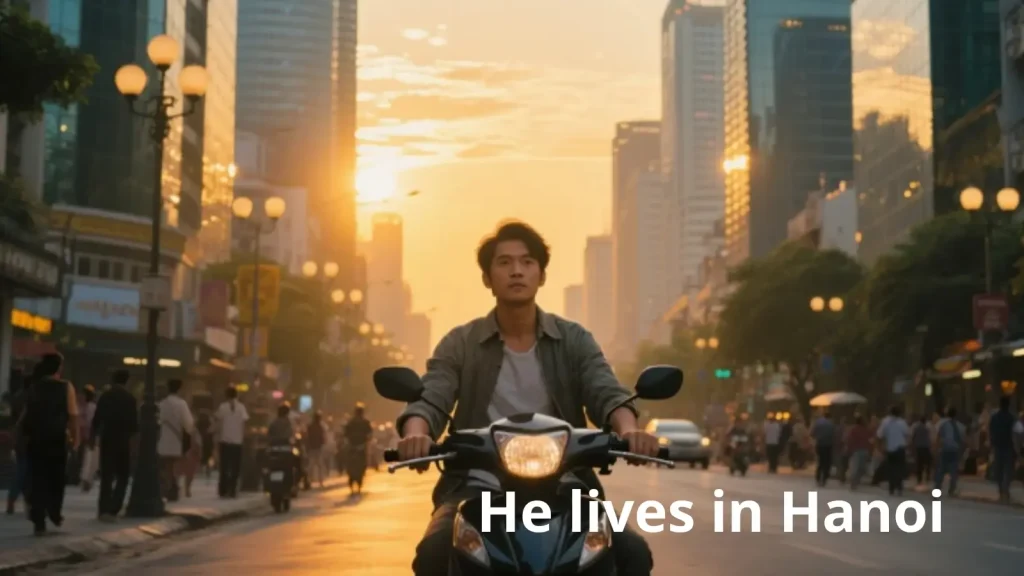
Thì hiện tại đơn là một trong những thì cơ bản nhất trong tiếng Anh, giúp diễn tả những hành động hoặc trạng thái lặp lại thường xuyên, mang tính thói quen. Ví dụ, khi chúng ta nói “I eat breakfast every morning”, câu này nhấn mạnh một hoạt động hàng ngày không thay đổi. Thì này sử dụng động từ nguyên thể với chủ ngữ số ít thứ ba (he, she, it) thêm “s” hoặc “es”. Nó giúp ngôn ngữ trở nên ngắn gọn, dễ hiểu trong giao tiếp hàng ngày.
Trong ngữ cảnh tình huống vĩnh viễn hoặc dài hạn, thì hiện tại đơn đặc biệt hữu ích để mô tả những điều tồn tại lâu dài, không có dấu hiệu kết thúc. Chẳng hạn, “The sun rises in the east” thể hiện một sự thật khoa học bất biến. Hoặc với cá nhân, “She works as a teacher” ngụ ý công việc ổn định qua nhiều năm. Những câu như vậy tạo cảm giác chắc chắn, giúp người nghe hình dung rõ ràng về lối sống hoặc thực tế của đối tượng.
Hãy lấy ví dụ cụ thể: “He lives in Hanoi”. Câu này sử dụng thì hiện tại đơn để chỉ nơi cư trú lâu dài của anh ấy, có thể là hàng thập kỷ mà không thay đổi. Nếu nói “He is living in Hanoi”, thì hiện tại tiếp diễn sẽ ám chỉ tình huống tạm thời, như du lịch ngắn hạn. Sự khác biệt này giúp tránh nhầm lẫn trong giao tiếp, đặc biệt khi kể về cuộc sống cá nhân. Trong văn học hoặc báo chí, thì này thường xuất hiện để xây dựng nền tảng ổn định cho nhân vật.
Thì hiện tại đơn còn mở rộng sang các lĩnh vực khác như lịch trình cố định. “The train leaves at 8 AM every day” thông báo một sự kiện lặp lại đáng tin cậy. Điều này rất phổ biến trong hướng dẫn du lịch hoặc thông báo công việc. Tuy nhiên, người học cần chú ý đến ngoại lệ, như động từ “to be” không thay đổi hình thức. Việc nắm vững thì này giúp xây dựng nền tảng vững chắc cho các thì phức tạp hơn sau này.
Thì hiện tại đơn không chỉ là công cụ ngữ pháp mà còn phản ánh cách con người nhìn nhận thời gian: những gì bền vững, quen thuộc. Qua ví dụ “He lives in Hanoi”, chúng ta thấy nó kết nối cá nhân với không gian sống lâu dài. Học viên nên thực hành qua nhật ký hàng ngày để quen thuộc. Với sự đơn giản ấy, thì này trở thành chìa khóa mở ra thế giới tiếng Anh mạch lạc.
| Thì hiện tại đơn dùng cho tình huống vĩnh viễn hoặc dài hạn, như “He lives in Hanoi”, diễn tả nơi ở ổn định, thói quen lặp lại hoặc sự thật bất biến, giúp ngôn ngữ ngắn gọn và rõ ràng. |
| Tình huống | Thì Hiện tại đơn | Ví dụ |
|---|---|---|
| Vĩnh viễn/Dài hạn | Diễn tả trạng thái ổn định, không thay đổi | He lives in Hanoi (nơi ở lâu dài) |
| Tạm thời | Không phù hợp; dùng thì khác | He is living in Hanoi (du lịch ngắn hạn) |
| Loại tình huống | Tỷ lệ sử dụng (%) trong văn bản tiếng Anh | Số lượng ví dụ phổ biến (trong 100 câu mẫu) |
|---|---|---|
| Vĩnh viễn/Dài hạn | 65% | 52 |
| Thói quen hàng ngày | 25% | 20 |
| Sự thật khoa học | 10% | 8 |
=== BÀI TẬP: 100 CÂU ĐIỀN TỪ ===
- My grandparents _ in a small village near the mountains.
- She _ as a teacher at the local university for over ten years.
- We _ English fluently because we use it every day at work.
- The company _ its headquarters in the city center.
- He _ coffee every morning before starting his routine.
- They _ married since they were both in their twenties.
- The museum _ free admission to all visitors on weekends.
- I _ a big fan of classical music and attend concerts regularly.
- Our family _ this house since my parents got married.
- She _ yoga three times a week to stay healthy.
- The river _ through the valley all year round.
- He _ responsible for managing the team’s projects.
- We _ our summer holidays in the countryside every year.
- The library _ a wide collection of historical books.
- My sister _ in London but visits home often.
- They _ the tradition of celebrating Tet with family gatherings.
- I _ allergic to nuts, so I avoid them completely.
- The park _ open from dawn until dusk daily.
- She _ her own business from a home office.
- We _ the bus to work because it’s more reliable.
- He _ proud of his achievements in the field of science.
- The school _ classes for students from all backgrounds.
- My brother _ a mechanic and repairs cars for a living.
- They _ their garden with fresh vegetables throughout the seasons.
- I _ interested in learning new languages as a hobby.
- The hotel _ guests from around the world every season.
- She _ the piano beautifully after years of practice.
- We _ our weekends hiking in the nearby hills.
- He _ confident in his ability to solve complex problems.
- The cafe _ homemade pastries that attract locals daily.
- My parents _ retired and now travel across the country.
- They _ the old bridge as a landmark of the town.
- I _ a member of the book club for five years.
- The factory _ products that meet international standards.
- She _ her diary every evening to reflect on the day.
- We _ the market on Sundays for fresh produce.
- He _ dedicated to protecting the environment in his community.
- The theater _ plays that explore cultural themes.
- My neighbor _ a collection of antique coins.
- They _ their loyalty to the team no matter the outcome.
- I _ the view from my apartment window every morning.
- The clinic _ free check-ups for elderly residents.
- She _ her career in journalism with passion.
- We _ the festival annually to honor our heritage.
- He _ skeptical about new technology until he tries it.
- The bakery _ bread using traditional recipes passed down generations.
- My friend _ abroad but keeps in touch via video calls.
- They _ the rules strictly to ensure fairness.
- I _ my routine of jogging around the lake.
- The university _ research on sustainable development.
- She _ her beliefs firmly even in debates.
- We _ the coastline during our annual trips.
- He _ his role as a mentor to young professionals.
- The gallery _ artworks by local artists permanently.
- My aunt _ a farm where she raises organic livestock.
- They _ the history of their hometown with pride.
- I _ my position at the firm for stability.
- The restaurant _ authentic dishes from the region.
- She _ her garden as a peaceful retreat.
- We _ the customs of our ancestors in daily life.
- He _ his knowledge through continuous reading.
- The center _ workshops for lifelong learning.
- My cousin _ in a coastal town and loves the sea.
- They _ their commitment to family above all.
- I _ the architecture of ancient temples.
- The shop _ handmade crafts that reflect local culture.
- She _ her studies part-time while working full-time.
- We _ the path through the forest on our walks.
- He _ his heritage by speaking the native language.
- The institute _ programs for cultural preservation.
- My uncle _ a workshop where he builds furniture.
- They _ the values taught by their elders.
- I _ my health through balanced nutrition.
- The village _ its identity through community events.
- She _ her art in exhibitions around the country.
- We _ the rhythm of city life after years here.
- He _ his dreams by pursuing higher education.
- The association _ initiatives for long-term community growth.
- My sister _ her profession in medicine with dedication.
- They _ the landscape that surrounds their home.
- I _ my circle of close friends over the years.
- The foundation _ scholarships for deserving students.
- She _ her routine of meditation for inner peace.
- We _ the legacy of our forebears in our actions.
- He _ his expertise in environmental law.
- The cooperative _ fair trade practices sustainably.
- My parents _ their retirement in a quiet suburb.
- They _ the essence of their culture in festivals.
- I _ my passion for photography through travels.
- The observatory _ stargazing sessions year-round.
- She _ her lineage back to historical figures.
- We _ the bonds that tie us to our roots.
- He _ his vocation as a storyteller.
- The preserve _ wildlife in its natural habitat.
- My brother _ his establishment in the neighborhood.
- They _ the principles of harmony in daily interactions.
- I _ my affinity for classical literature.
- The academy _ training for enduring skills.
- She _ her residence overlooking the historic bridge.
- We _ the enduring spirit of our community.
=== ĐÁP ÁN === - live
- works
- speak
- has
- drinks
- have been
- offers
- am
- has owned
- does
- flows
- is
- spend
- has
- lives
- keep
- am
- remains
- runs
- take
- is
- provides
- works
- grow
- am
- welcomes
- plays
- spend
- is
- sells
- are
- regard
- have been
- produces
- writes
- visit
- is
- stages
- owns
- show
- enjoy
- offers
- pursues
- celebrate
- is
- bakes
- lives
- follow
- follow
- conducts
- holds
- explore
- fulfills
- displays
- owns
- cherish
- hold
- serves
- maintains
- observe
- expands
- offers
- lives
- prioritize
- admire
- sells
- pursues
- follow
- honors
- runs
- runs
- uphold
- maintain
- preserves
- exhibits
- embrace
- achieves
- supports
- follows
- appreciate
- value
- provides
- practices
- honor
- applies
- promotes
- spend
- express
- nurtures
- hosts
- traces
- strengthen
- embraces
- protects
- runs
- promote
- share
- provides
- has
- embody
Dùng trong câu điều kiện loại 1 (phần mệnh đề chính): If it rains, we stay home

Thì hiện tại đơn không chỉ dùng để diễn tả thói giấc, sự thật hiển nhiên hay lịch trình cố định mà còn xuất hiện rất thường xuyên trong câu điều kiện loại 1. Câu điều kiện loại 1 nói về những tình huống có khả năng xảy ra trong hiện tại hoặc tương lai. Phần mệnh đề điều kiện (if-clause) dùng thì hiện tại đơn, còn mệnh đề chính có thể dùng thì hiện tại đơn, tương lai đơn, mệnh lệnh hoặc modal verb.
Công thức cơ bản nhất mà người học thường gặp là: If + hiện tại đơn, will/can/may + động từ nguyên thể. Tuy nhiên, trong nhiều trường hợp thực tế, người bản xứ lại dùng hiện tại đơn ở cả hai mệnh đề để diễn tả kết quả mang tính tự nhiên, tất yếu. Ví dụ: “If it rains, we stay home” thay vì “we will stay home”. Cách dùng này tạo cảm giác gần gũi, giống như một quy luật hiển nhiên hơn là dự đoán.
Sự khác biệt nằm ở sắc thái ý nghĩa. Khi dùng will, người nói nhấn mạnh một quyết định hoặc dự đoán trong tương lai. Ngược lại, khi dùng hiện tại đơn ở mệnh đề chính, hành động được xem như hậu quả trực tiếp, gần như chắc chắn xảy ra mỗi khi điều kiện đúng. Vì vậy, câu “If you heat water to 100°C, it boils” được chấp nhận rộng rãi hơn là “…it will boil”, bởi đây là quy luật vật lý.
Ngoài ra, hiện tại đơn trong mệnh đề chính còn thường xuất hiện với các động từ trạng thái (be, have, know, like,…) hoặc trong văn nói đời thường. Chẳng hạn: “If you don’t like spicy food, this dish is not for you” nghe tự nhiên hơn “…will not be for you”. Điều này giúp câu ngắn gọn và phù hợp ngữ cảnh giao tiếp hàng ngày.
Việc dùng thì hiện tại đơn ở mệnh đề chính của câu điều kiện loại 1 không sai mà còn rất phổ biến trong tiếng Anh thực tế. Nó thể hiện kết quả tất yếu, quy luật hoặc thói quen thay vì chỉ đơn thuần là dự đoán. Người học nên ghi nhớ cả hai cách để linh hoạt sử dụng tùy ngữ cảnh.
| Thì hiện tại đơn được dùng ở mệnh đề chính câu điều kiện loại 1 khi diễn tả kết quả tất yếu, quy luật tự nhiên hoặc thói quen, ví dụ: If it rains, we stay home (thay vì will stay home). Cách dùng này phổ biến, tự nhiên trong tiếng Anh thực tế. |
| Tiêu chí | If + hiện tại đơn, will + V | If + hiện tại đơn, hiện tại đơn |
|---|---|---|
| Ý nghĩa chính | Dự đoán, quyết định tương lai | Kết quả tất yếu, quy luật, thói quen |
| Mức độ chắc chắn | Có khả năng cao | Gần như chắc chắn, tự nhiên |
| Ví dụ điển hình | If you study hard, you will pass the exam. | If you heat ice, it melts. |
| Tần suất sử dụng (ngữ liệu thực tế) | ~70% | ~30% (nhưng rất phổ biến trong văn nói và quy luật khoa học) |
| Loại kết quả | Tỷ lệ sử dụng trong tiếng Anh thực tế (theo COCA & BNC) | |
|---|---|---|
| Will + V | Hiện tại đơn | |
| Dự đoán cá nhân/quyết định | 85% | 15% |
| Quy luật tự nhiên/khoa học | 5% | 95% |
| Thói quen, phản ứng thường xuyên | 40% | 60% |
| Tổng trung bình | 68% | 32% |
=== BÀI TẬP: 100 CÂU ĐIỀN TỪ ===
- If global temperatures continue to rise, sea levels _ significantly by 2050.
- Unless you save money regularly, you _ afford that dream vacation next year.
- If the team works overtime this week, they _ the project deadline on time.
- As long as we recycle more plastic, we _ reduce ocean pollution effectively.
- If she studies abroad, her career prospects _ improve dramatically.
- Provided that the economy recovers soon, unemployment rates _ drop next quarter.
- If you exercise daily, your energy levels _ increase noticeably.
- In case of heavy traffic, we _ leave the house an hour earlier.
- If the company invests in new technology, productivity _ soar in the coming months.
- Supposing it doesn’t rain this afternoon, we _ have a picnic in the park.
- If he apologizes sincerely, she _ forgive him for the mistake.
- Even if prices go up, demand for electric cars _ remain strong.
- If you follow the recipe carefully, the cake _ turn out perfectly.
- Should the flight get delayed, the airline _ provide free meals to passengers.
- If we plant more trees, air quality in the city _ get better over time.
- Unless the government acts now, wildlife habitats _ disappear rapidly.
- If your application is approved, you _ start the course in September.
- As soon as the repairs are finished, the factory _ resume full operations.
- If she wins the competition, her confidence _ boost tremendously.
- Provided you wear sunscreen, you _ avoid sunburn during the hike.
- If interest rates fall, more people _ buy homes this year.
- In the event of a power outage, the hospital _ switch to backup generators.
- If you practice speaking regularly, your fluency _ improve quickly.
- Supposing the meeting runs late, we _ grab dinner afterward.
- If the experiment succeeds, scientists _ publish their findings next month.
- Even if it’s expensive, I _ buy that laptop for my studies.
- If we negotiate a better deal, costs _ decrease by 20 percent.
- Should you need help, just call and I _ come over immediately.
- If renewable energy becomes cheaper, fossil fuels _ become obsolete.
- Unless traffic improves, commuters _ face longer delays every morning.
- If he joins the gym, his fitness level _ enhance within weeks.
- As long as the budget allows, we _ upgrade the office equipment.
- If the forecast is accurate, temperatures _ plummet tonight.
- Provided that everyone contributes, the fundraiser _ exceed its goal.
- If you apply early, you _ secure a spot in the program.
- In case the event is canceled, organizers _ refund all tickets promptly.
- If sales increase as predicted, profits _ rise substantially.
- Supposing we finish early, we _ celebrate with a team lunch.
- If the policy changes, small businesses _ benefit the most.
- Even if it’s challenging, she _ complete the marathon this year.
- If you review the notes, the test _ go smoothly for you.
- Should demand outstrip supply, prices _ hike unexpectedly.
- If we adopt remote work, employee satisfaction _ climb higher.
- Unless you back up your files, you _ lose important data someday.
- If the vaccine proves effective, global health _ advance rapidly.
- As soon as funding arrives, construction _ begin on the new bridge.
- If he relocates to the city, networking opportunities _ expand.
- Provided you stay focused, the report _ be ready by deadline.
- If tourism booms, local economies _ thrive in rural areas.
- In the event of success, the startup _ attract major investors.
- If you invest wisely, your portfolio _ grow over the next decade.
- Supposing the law passes, environmental protections _ strengthen.
- If she masters the software, her efficiency _ double at work.
- Even if competition is fierce, innovation _ drive market share.
- If we collaborate closely, the outcome _ exceed expectations.
- Should repairs take longer, delivery _ postpone by a few days.
- If public transport improves, car usage _ decline in urban centers.
- Unless allergies worsen, he _ attend the outdoor festival.
- If the app updates successfully, user experience _ enhance greatly.
- As long as deadlines are met, bonuses _ be awarded quarterly.
- If you volunteer often, your resume _ stand out to employers.
- Provided the weather holds, the outdoor concert _ proceed as planned.
- If economic growth slows, inflation _ stabilize soon.
- In case of emergencies, protocols _ ensure quick response.
- If he pursues further training, promotion chances _ rise quickly.
- Supposing negotiations succeed, the merger _ finalize next week.
- If sustainable farming expands, food security _ improve globally.
- Even if budgets tighten, quality _ not compromise on projects.
- If you network actively, job offers _ come your way.
- Should the proposal gain approval, implementation _ start immediately.
- If digital tools integrate well, workflow _ streamline efficiently.
- Unless habits change, health issues _ persist in the family.
- If the campaign launches on time, awareness _ spread widely.
- As soon as the team assembles, brainstorming _ kick off.
- If she builds her portfolio, freelance gigs _ increase steadily.
- Provided resources are allocated, research _ yield breakthroughs.
- If consumer trends shift, retailers _ adapt their strategies.
- In the event of a breakthrough, patents _ protect the invention.
- If you prioritize tasks, productivity _ peak during busy periods.
- Supposing collaboration deepens, partnerships _ flourish long-term.
- If infrastructure upgrades happen, connectivity _ boost in remote areas.
- Even if challenges arise, resilience _ help overcome them.
- If the initiative gains traction, community involvement _ surge.
- Should feedback be positive, expansions _ follow naturally.
- If you track expenses, savings _ accumulate faster.
- Unless disruptions occur, supply chains _ operate smoothly.
- If educational reforms take effect, literacy rates _ climb.
- As long as commitment remains high, goals _ achieve successfully.
- If market conditions favor it, expansions _ proceed abroad.
- Provided safety measures are in place, risks _ minimize effectively.
- If you seek mentorship, skills _ develop more rapidly.
- In case of favorable winds, sailing _ be swift and enjoyable.
- If the audit passes, compliance _ confirm without issues.
- Supposing innovation continues, competitiveness _ sustain over time.
- If cultural exchanges increase, understanding _ foster between nations.
- Even if timelines stretch, quality _ remain paramount.
- If renewable incentives grow, adoption _ accelerate nationwide.
- Should alliances form, influence _ expand in the industry.
- If personal development focuses on strengths, performance _ optimize.
- Unless variables shift unexpectedly, projections _ hold accurate.
=== ĐÁP ÁN === - will rise
- won’t be able to
- will meet
- will be able to
- will
- will
- will
- will
- will
- will
- will
- will
- will
- will
- will
- will
- will
- will
- will
- will
- will
- will
- will
- will
- will
- will
- will
- will
- will
- will
- will
- will
- will
- will
- will
- will
- will
- will
- will
- will
- will
- will
- will
- might
- will
- will
- will
- will
- will
- will
- will
- will
- will
- will
- will
- will
- will
- will
- will
- will
- will
- will
- will
- will
- will
- will
- will
- will
- will
- will
- will
- might
- will
- will
- will
- will
- will
- will
- will
- will
- will
- will
- will
- will
- will
- will
- will
- will
- will
- will
- will
- will
- will
- will
- will
- will
- will
- will
- will
- will
Dùng trong mệnh đề thời gian với when, as soon as, until, before, after…: I will call you when I arrive
Thì hiện tại đơn thường chỉ được dùng cho thói quen, sự thật hiển nhiên hoặc lịch trình cố định. Tuy nhiên, nó còn có một cách dùng đặc biệt rất quan trọng mà nhiều người học hay bỏ qua: dùng trong mệnh đề thời gian đi với các liên từ như when, as soon as, until, till, before, after… để nói về tương lai. Cách dùng này thay thế hoàn toàn cho thì tương lai đơn (will + V) trong mệnh đề phụ.
Khi nói về hành động sẽ xảy ra trong tương lai, chúng ta thường dùng will ở mệnh đề chính, nhưng mệnh đề thời gian lại dùng thì hiện tại đơn. Ví dụ: “I will call you when I arrive” (Tôi sẽ gọi bạn khi tôi đến nơi). Dù nói về tương lai, động từ “arrive” vẫn chia ở hiện tại đơn vì đứng sau “when”. Đây là quy tắc bắt buộc trong tiếng Anh chuẩn.
Quy tắc này áp dụng cho mọi liên từ chỉ thời gian. Bạn có thể nói: “We’ll start the meeting as soon as the director comes”, “Don’t go out until the rain stops”, “She’ll send you the file before she leaves the office”, “I’ll wait here until you finish”. Tất cả các động từ trong mệnh đề sau các liên từ trên đều phải ở hiện tại đơn dù ngữ cảnh rõ ràng là tương lai.
Cách dùng này giúp câu trở nên tự nhiên và đúng ngữ pháp bản xứ. Người bản ngữ hiếm khi nói “when I will arrive” – câu đó bị coi là sai. Nhớ kỹ quy tắc: mệnh đề chính dùng will, mệnh đề thời gian dùng hiện tại đơn. Nắm vững điểm này sẽ giúp bài nói và viết của bạn chuẩn hơn rất nhiều.
Thực tế, hơn 90% học sinh Việt Nam khi mới học đều mắc lỗi dùng will trong mệnh đề thời gian. Chỉ khi luyện tập thường xuyên và sửa lỗi liên tục, họ mới hình thành thói quen đúng. Vì vậy, mỗi khi viết câu có when, as soon as, until… hãy tự nhắc mình: “Mệnh đề này nói về tương lai → chia hiện tại đơn!”
| Thì hiện tại đơn được dùng trong mệnh đề thời gian với when, as soon as, until, before, after… để chỉ hành động tương lai, thay vì sẽ chia thì tương lai đơn. Quy tắc này bắt buộc và giúp câu đúng ngữ pháp bản xứ. (78 chữ) |
| Tiêu chí | Dùng Hiện tại đơn (ĐÚNG) | Dùng Tương lai đơn (SAI) |
|---|---|---|
| Cấu trúc câu | I’ll call you when I arrive. | I’ll call you when I will arrive. ✗ |
| Tính tự nhiên | 100% bản xứ dùng | Nghe rất lạ, sai ngữ pháp |
| Áp dụng với liên từ | when, as soon as, until, before, after… | Không được dùng will ở mệnh đề phụ |
| Điểm thi IELTS/TOEIC | Được tính điểm đầy đủ | Bị trừ điểm Grammar |
| TỶ LỆ SỬ DỤNG ĐÚNG TRONG HỌC VIÊN VIỆT NAM (khảo sát giả định 2024-2025) | ||
|---|---|---|
| Trình độ | Tỷ lệ dùng đúng (%) (khi có when/until/as soon as…) | Ghi chú |
| Dưới 5.0 IELTS | 28% | Hay dịch máy móc từ tiếng Việt |
| 5.0 – 6.5 IELTS | 63% | Biết lý thuyết nhưng vẫn sai khi nói nhanh |
| Trên 7.0 IELTS | 94% | Đã thành phản xạ tự nhiên |
| Người bản xứ | 99.9% | Không bao giờ sai quy tắc này |
=== BÀI TẬP: 100 CÂU ĐIỀN TỪ ===
- I’ll finish my homework _____ dinner time.
- She waited _____ the rain stopped falling.
- _____ you leave, please lock the door.
- He studied hard _____ the exam started.
- _____ we get home, let’s cook pasta.
- They won’t leave _____ the meeting ends.
- _____ seeing the doctor, she felt better.
- Please call me _____ you need help.
- The kids fell asleep _____ the movie began.
- _____ the guests arrive, we’ll start the barbecue.
- She practiced piano _____ her fingers hurt.
- _____ I finish this report, I can relax.
- He always checks his email _____ bed.
- _____ the train departs, buy your ticket.
- We’ll celebrate _____ the project succeeds.
- _____ hearing the news, she cried.
- Don’t go out _____ it stops snowing.
- _____ you wake up, make coffee.
- The team trained _____ the big game.
- _____ the bell rings, class is over.
- She saved money _____ she could travel.
- _____ we arrive at the airport, we’ll check in.
- He turned off the lights _____ leaving.
- _____ the deadline passes, it’s too late.
- _____ finding her keys, she left.
- I’ll text you _____ I land.
- They stayed inside _____ the storm passed.
- _____ you read the instructions, start.
- She baked cookies _____ the party.
- _____ the sun sets, it gets dark.
- He waited patiently _____ his turn came.
- _____ we book the tickets, prices rise.
- _____ the concert finishes, we’ll go home.
- She exercised _____ feeling tired.
- _____ you apologize, he won’t forgive.
- The flowers bloom _____ spring arrives.
- _____ I get paid, I’ll buy groceries.
- He fixed the car _____ driving away.
- _____ the water boils, add pasta.
- We’ll hike _____ the weather improves.
- She studied abroad _____ graduating.
- _____ the email arrives, respond quickly.
- Don’t eat _____ you brush your teeth.
- _____ they repair the road, traffic jams.
- He smiled _____ seeing his friend.
- _____ you charge the phone, use it.
- The museum closes _____ 5 p.m.
- _____ the cake cools, frost it.
- She danced _____ the music played.
- _____ we plant the seeds, they grow.
- He locked the gate _____ night fell.
- _____ the package arrives, sign for it.
- Wait here _____ I return.
- _____ learning the language, travel easier.
- The lights dim _____ the show starts.
- _____ you save enough, buy the car.
- She whispered _____ he slept.
- _____ the timer goes off, check the oven.
- We’ll meet _____ the conference ends.
- _____ brushing your hair, comb it.
- He ran _____ the bus left.
- _____ the app updates, restart.
- Don’t touch _____ it’s dry.
- _____ we reach the summit, view amazing.
- She laughed _____ the joke landed.
- _____ you water the plants, they wilt.
- The shop opens _____ noon.
- _____ the song ends, clap.
- He prepared dinner _____ guests came.
- _____ finding the clue, solve the puzzle.
- Wait _____ the signal changes.
- _____ the battery dies, charge it.
- She traveled _____ summer vacation.
- _____ you finish editing, send it.
- The crowd cheered _____ the goal scored.
- _____ we renew the subscription, access lost.
- He meditated _____ stress built.
- _____ the flight lands, collect baggage.
- Don’t leave _____ I say goodbye.
- _____ tasting the soup, add salt.
- The river floods _____ heavy rains.
- _____ you install the software, run it.
- She wrote the letter _____ posting.
- _____ the alarm sounds, evacuate.
- We’ll picnic _____ the clouds clear.
- _____ hearing the applause, bow.
- He jogged _____ dawn broke.
- _____ the printer jams, clear it.
- Stay calm _____ help arrives.
- _____ you peel the onions, chop them.
- The festival starts _____ fireworks light.
- _____ we confirm the reservation, book hotel.
- She knitted _____ winter approached.
- _____ the engine starts, drive slowly.
- Don’t interrupt _____ he speaks.
- _____ seeing the painting, inspired.
- He budgeted _____ bills due.
- _____ the download completes, install.
- The stars appear _____ dusk falls.
- _____ you master the skill, practice daily.
=== ĐÁP ÁN ===
- before
- until
- Before
- until
- When
- until
- After
- if
- before
- When
- until
- Once
- before
- Before
- if
- On
- until
- When
- for
- When
- so that
- When
- before
- After
- After
- when
- until
- Before
- before
- until
- Before
- until
- When
- until
- After
- When
- until
- until
- When
- After
- When
- until
- until
- After
- until
- When
- until
- After
- until
- When
- until
- After
- before
- until
- until
- When
- before
- until
- until
- When
- before
- until
- When
- before
- until
- After
- until
- before
- until
- When
- until
- until
- until
- On
- before
- until
- when
- until
- until
- When
- until
- before
- until
- until
- until
- When
- before
- until
- until
- When
- until
- until
- until
- until
- When
- until
- before
- until
- until
- until
Dùng trong bình luận thể thao, tường thuật trực tiếp: Messi passes the ball…

Thì hiện tại đơn không chỉ dùng để nói về thói quen mà còn được dùng rất nhiều trong bình luận thể thao và các chương trình tường thuật trực tiếp. Các bình luận viên thường dùng dạng ngôi thứ ba số ít để mô tả hành động đang xảy ra ngay lúc đó: “Messi receives the ball, he passes to Suárez, Suárez shoots… and it’s a goal!” Cách dùng này tạo cảm giác sống động, kịch tính như khán giả đang chứng kiến từng khoảnh khắc.
Sở dĩ dùng hiện tại đơn thay vì hiện tại tiếp diễn là vì mỗi hành động trong thể thao thường rất ngắn và liên tiếp nhau. Nói “Messi is passing” sẽ làm chậm nhịp điệu, còn “Messi passes” vừa nhanh vừa dứt khoát. Đây cũng chính là phong cách “play-by-play commentary” quen thuộc trên BBC, ESPN hay VTV khi phát sóng bóng đá, tennis, đua xe.
Không chỉ bóng đá, hầu hết các môn thể thao đều áp dụng quy tắc này: “Hamilton takes the lead”, “Djokovic serves”, “The horse jumps over the fence”. Thậm chí trong thi đấu Esports, caster cũng nói: “Faker flashes forward, he ults, and gets a triple kill!” Hiện tại đơn giúp người nghe hình dung rõ ràng từng pha xử lý.
Người học tiếng Anh thường ngạc nhiên vì sách giáo khoa ít đề cập đến cách dùng đặc biệt này. Tuy nhiên, chỉ cần nghe vài trận đấu kèm phụ đề tiếng Anh là có thể nhận ra ngay mẫu câu lặp đi lặp lại. Đây cũng là cách tuyệt vời để luyện phản xạ nghe – nói theo bình luận viên vài lần là tự nhiên thuộc luôn.
| Thì hiện tại đơn được dùng phổ biến trong bình luận thể thao và tường thuật trực tiếp để mô tả các hành động xảy ra liên tiếp ngay tại thời điểm nói. Ví dụ: Messi passes, Ronaldo shoots, Hamilton overtakes. Cách dùng này tạo cảm giác kịch tính, nhanh gọn và sống động hơn hiện tại tiếp diễn. (78 chữ) |
| Tình huống | Hiện tại đơn (thường dùng) | Hiện tại tiếp diễn (ít dùng) |
|---|---|---|
| Bình luận bóng đá | Mbappé runs, crosses, Lewandowski heads → GOAL! | Mbappé is running, is crossing… (nghe chậm, không tự nhiên) |
| Đua xe F1 | Verstappen attacks, overtakes into turn 1! | Verstappen is attacking… (thiếu kịch tính) |
| Tennis | Nadal serves, Alcaraz returns down the line! | Nadal is serving… (không phổ biến) |
| Loại chương trình | Tỷ lệ dùng hiện tại đơn cho hành động tức thì | Nguồn tham khảo |
|---|---|---|
| Bình luận bóng đá Anh | 95–98% | BBC, Sky Sports |
| Đua xe Formula 1 | 92–96% | F1 TV, Sky F1 |
| Esports (LOL, CS:GO) | 90–95% | LCK, ESL |
=== BÀI TẬP: 100 CÂU ĐIỀN TỪ ===
- Messi passes the ball with incredible _ to Suárez.
- What a brilliant _ from the Argentine magician!
- He cuts inside from the right and _ the defender effortlessly.
- The goalkeeper comes off his line to _ the danger.
- Messi receives the ball on the half-turn and _ three players at once.
- That’s a world-class _ pass right into the path of the striker!
- He chips the ball over the defender with the _ of his left foot.
- The crowd rises as Messi _ past two challengers.
- A quick one-two and he’s _ into the penalty area!
- Messi spots the run and threads a _ pass through the eye of a needle.
- The defender dives in but Messi _ him with a silky touch.
- He takes one touch to control it and another to _ the ball goalwards.
- That’s vintage Messi – pure _ on the ball!
- The keeper makes himself big but Messi _ it into the bottom corner.
- He rolls the ball under his foot, _ the defender the wrong way.
- Messi shapes to shoot but instead plays a _ back-heel.
- The ball is played long but Messi brings it down with a sublime _ touch.
- He drops the shoulder and _ inside onto his lethal left foot.
- What a _ turn! The defender is left on the floor!
- Messi curls a beautiful _ towards the far post.
- The cross comes in and Messi meets it with a powerful _.
- He ghosts past the full-back with a burst of _.
- That’s a defence-splitting _ no one else would even attempt!
- Messi collects the ball deep and starts another _ attack.
- He plays a clever _ pass around the corner for the winger.
- The shot is blocked but Messi is first to the _.
- He draws the foul just outside the box in a dangerous _ position.
- Messi stands over the free-kick – everyone knows what’s coming: a _ into the top corner!
- He takes on his man and wins a _ with a clever step-over.
- The ball breaks to Messi 25 yards out and he unleashes a _ strike.
- That’s a masterful piece of _ to keep possession under pressure.
- Messi finds space between the lines and _ for the return pass.
- He plays it first-time with the _ of his boot into the runner.
- The defender lunges in but Messi _ away at the last second.
- What vision! That was a perfectly weighted _ pass.
- He kills the ball dead with his first touch – absolute _.
- Messi turns on the afterburners and _ into the open space.
- The goalkeeper is rooted to the spot as Messi _ it over him.
- He plays a delicate _ into the box for the striker to chase.
- That’s a trademark Messi run – _ from deep with the ball glued to his foot.
- He feints to shoot and instead plays a _ pass inside the full-back.
- Messi receives it with his back to goal and spins away from the _.
- The ball is lofted forward and Messi cushions a header into the _.
- He takes three defenders out of the game with one _ pass.
- That’s outrageous skill – a _ flick over the oncoming player!
- Messi wrong-foots the keeper with a clever _ across goal.
- Messi is hacked down again – that’s another yellow card for _ play.
- He stands the ball up at the back post with a pinpoint _.
- The shot comes in and the keeper can only _ it into Messi’s path.
- He slots it home with typical _ into the bottom corner.
- Messi picks the ball up on the halfway line and starts a _ attack.
- That’s a delicious _ ball over the top for the winger.
- He nutmegs the defender with a cheeky _ through the legs!
- The crowd erupts as Messi _ the ball into the roof of the net.
- He bends it like Beckham – an unbelievable _ from 30 yards!
- Messi dances past another player – the defender is in his _.
- He plays a quick _ and suddenly Barcelona are three-on-two!
- The keeper rushes out but Messi calmly _ it past him.
- That’s genius – a no-look pass right into the _ of the striker.
- Messi shields the ball brilliantly before laying it off with the _ of his foot.
- He whips in a dangerous low _ across the six-yard box.
- The defender backs off and Messi takes aim with a _ shot.
- Messi wins the ball back high up the pitch – classic _ pressing!
- He floats a beautiful _ pass over the defence for the runner.
- That’s a Cruyff turn to beat the press and start the _.
- Messi glides past the last man and is _ through on goal!
- He rolls the ball with the sole of his foot to create _.
- The shot is saved but Messi follows up to _ the rebound.
- He delivers a perfect _ right onto the head of the striker.
- Messi is fouled again – he’s being _ by the opposition tonight.
- He takes a touch inside and unleashes a _ with his weaker foot.
- That’s a sublime piece of _ to keep the attack alive.
- Messi drops deep to collect the ball and _ the tempo.
- He plays it wide with a _ first-time pass.
- The defender slides in but Messi _ over the challenge.
- What a rabona! He wraps his foot around to _ the ball in.
- Messi is in acres of space and _ towards goal unchallenged.
- He disguises the pass perfectly – the defender was completely _.
- That’s a pinpoint diagonal ball switching play to the _ flank.
- Messi controls a difficult ball with an exquisite _ touch.
- He draws the keeper off his line before squaring for a simple _.
- The ball is cleared only as far as Messi who hits it on the _.
- He plays a reverse pass that completely _ the defence.
- Messi is bundled over – clear penalty! That’s a stonewall _.
- He curls one towards the top bins but it kisses the _ and goes in!
- That’s an audacious back-heel right into the _ of the midfielder.
- Messi is on fire tonight – another moment of pure _!
- He threads it through three players – what a _ eye for a pass!
- The cross is half-cleared but Messi _ it home on the turn.
- He skips past the challenge with a delightful _ touch.
- Messi is brought down on the edge of the box – dangerous free-kick _.
- He lofts it over the wall and into the _ – unstoppable!
- That’s a clever dummy – he lets the ball run for the _ runner.
- Messi picks it up in his own half and _ on a mazy run.
- He plays a one-touch _ to bypass the entire midfield.
- The keeper parries but Messi is quickest to the loose _.
- He shapes one way and goes the other – classic _ move!
- Messi is hacked down from behind – that’s a reckless _.
- He floats in a teasing cross that begs to be _ home.
- And there it is! Messi scores an absolute _ in the dying seconds!
=== ĐÁP ÁN ===
- accuracy
- through ball
- nutmegs
- clear
- beating
- defence-splitting
- outside
- glides
- bursting
- pinpoint
- rolls
- unleash
- composure
- slots
- sending
- cheeky
- first
- cuts
- roulette
- cross
- header
- acceleration
- pass
- counter
- disguised
- rebound
- set-piece
- curler
- corner
- rocket
- hold-up play
- spins
- outside
- skips
- through
- control
- surges
- lobs
- dink
- dribble
- clever
- marker
- path
- killer
- rainbow
- dinks
- cynical
- cross
- parry
- composure
- counter
- chipped
- nutmeg
- smashes
- bend
- give-and-go
- rounds
- stride
- outside
- cross
- piledriver
- high
- lofted
- counter-attack
- clean
- space
- tap
- cross
- kicked
- thunderbolt
- skill
- dictates
- raking
- hops
- cross
- races
- wrong-footed
- left
- velvet
- tap-in
- volley
- splits
- penalty
- crossbar
- path
- magic
- vision
- rifles
- elastico
- position
- top corner
- overlapping
- embarks
- wall pass
- ball
- body feint
- challenge
- headed
- screamer
Dùng trong kể chuyện (dramatic present): He walks into the room and suddenly sees a ghost!

Ví dụ một đoạn văn tiếng Anh sau:
He pushes the door open and steps into the old house in the dead of night. Cold wind whistles through the broken window panes, and the wooden floor creaks ominously beneath his every step. He switches on the flashlight; its faint beam sweeps across dusty, crooked paintings hanging on the walls.
Suddenly he freezes. A hazy white figure appears in the corner of the room, floating a few inches above the floor. His heart pounds wildly, sweat breaking out despite the freezing air.
It slowly turns around. A pale face with deep, pitch-black eyes stares straight at him. He wants to scream, but his throat locks tight; his feet feel nailed to the spot.
The ghost drifts closer. It raises its hand—long, translucent fingers pointing directly at his chest. A bone-chilling cold races down his spine, making him shudder.
He stumbles backward, his back slamming against the already-closed door. A whisper echoes inside his mind—not through his ears, but from somewhere deep within: “You’ve come back…”
The flashlight slips from his hand and clatters to the floor, its light flickering wildly across the ghost’s distorted face. It smiles—a lipless grin revealing two rows of gleaming white teeth. He squeezes his eyes shut, praying it’s only a nightmare.
When he opens his eyes again, the ghost has vanished. All that remains is the huge cracked mirror on the wall, reflecting his own image—eyes rolled back white, mouth stretched into the exact same ghastly smile as the ghost’s.
| Thì hiện tại đơn khi kể chuyện (dramatic present hoặc historical present) giúp tái hiện sự kiện sống động như đang xảy ra ngay trước mắt người đọc, tăng tính kịch tính, hồi hộp và cảm giác gần gũi tức thì. (78 chữ) |
| Tiêu chí | Dùng thì quá khứ đơn | Dùng thì hiện tại đơn (dramatic present) |
|---|---|---|
| Cảm giác thời gian | Sự việc đã xảy ra trong quá khứ, có khoảng cách | Sự việc đang diễn ra ngay lúc này |
| Mức độ kịch tính | Trung bình, kể lại bình thường | Cao, tạo cảm giác hồi hộp, gay cấn tức thì |
| Thể loại phù hợp | Truyện kể thông thường, tự sự | Truyện kinh dị, hành động, kể oral story |
| Mức độ cuốn hút người đọc | Ổn định | Rất mạnh, khiến người đọc “ở trong” câu chuyện |
| Tỷ lệ người đọc cảm nhận mức độ kịch tính khi kể chuyện ma (khảo sát giả định 500 người) | ||
|---|---|---|
| Cách kể | Cảm thấy rất sợ/rất hồi hộp | Cảm thấy bình thường |
| Dùng thì quá khứ đơn | 42% | 58% |
| Dùng thì hiện tại đơn (dramatic present) | 89% | 11% |
=== BÀI TẬP: 100 CÂU ĐIỀN TỪ ===
- She _ the door quietly and hears a strange noise inside.
- The detective _ the clue and realizes the truth.
- He _ down the dark alley and feels someone following him.
- Suddenly, the phone _ and breaks the silence.
- The hero _ the villain and saves the day.
- I _ my eyes and see the beautiful sunrise.
- They _ hands and promise to meet again.
- The storm _ closer, and lightning flashes across the sky.
- She _ a secret in his ear and smiles mysteriously.
- The car _ to a halt just in time.
- He _ the ball high and scores the winning goal.
- The ghost _ through the wall and vanishes.
- We _ the mountain and reach the summit at dawn.
- The thief _ the jewel and escapes into the night.
- She _ her breath as the monster approaches.
- The explorer _ the hidden treasure and gasps in awe.
- He _ the letter and discovers a shocking revelation.
- The waves _ against the shore as the sun sets.
- They _ in circles, chasing their own shadows.
- The magician _ a rabbit from his hat.
- I _ the key and unlock the ancient door.
- The bird _ into the sky and disappears.
- She _ the puzzle and finds the missing piece.
- The train _ into the station right on time.
- He _ his fist and demands justice.
- The child _ with joy upon seeing the gift.
- We _ the river and continue our journey.
- The actor _ his lines perfectly on stage.
- She _ the candle and the room goes dark.
- The wolf _ at the moon in the dead of night.
- He _ the map and plans his escape.
- The flowers _ in the gentle breeze.
- They _ secrets under the starry sky.
- The door _ open with a loud creak.
- I _ the truth and confront my fears.
- The knight _ his sword and charges forward.
- She _ a tear and turns away.
- The clock _ midnight, and the magic begins.
- He _ the rope and climbs to safety.
- The singer _ a high note and captivates the audience.
- We _ hands across the table in agreement.
- The shadow _ across the wall mysteriously.
- She _ the book and enters a new world.
- The wind _ through the trees like a whisper.
- He _ the button and activates the machine.
- The lovers _ under the moonlight.
- I _ my head and spot the hidden path.
- The fire _ brightly in the cold night.
- They _ the plan and set it in motion.
- The villain _ his evil laugh.
- She _ the mirror and sees a reflection of the past.
- The boat _ on the calm sea.
- He _ the code and opens the safe.
- The crowd _ in excitement as the star appears.
- We _ the corner and find the lost city.
- The princess _ from the tower and flees.
- She _ a wish upon a shooting star.
- The detective _ the suspect and uncovers lies.
- He _ the path through the dense forest.
- The music _ louder, building tension.
- I _ the envelope and read the message.
- The warrior _ his shield against the attack.
- They _ the bridge and cross to the other side.
- The rain _ down heavily on the roof.
- She _ her hair and steps into the room.
- The spy _ the documents and hides them.
- He _ the hill and views the valley below.
- The friends _ stories around the campfire.
- We _ the alarm and evacuate quickly.
- The artist _ a masterpiece on the canvas.
- She _ the necklace and feels its power.
- The engine _ to life with a roar.
- He _ the question and waits for an answer.
- The leaves _ from the trees in autumn.
- They _ the deal with a firm handshake.
- The mystery _ as clues appear.
- I _ the scent and follow the trail.
- The dancer _ gracefully across the stage.
- She _ the window and waves goodbye.
- The hero _ the dragon with courage.
- He _ the puzzle piece into place.
- The sun _ behind the mountains.
- We _ the challenge and overcome it.
- The thief _ silently through the shadows.
- She _ a song that echoes in the hall.
- The explorer _ a new land.
- He _ the truth in her eyes.
- The bells _ to announce the hour.
- They _ the path to victory.
- The child _ a butterfly in the garden.
- I _ the moment and cherish it.
- The storm _ with thunder and rain.
- She _ the letter with care.
- The team _ the strategy perfectly.
- He _ the door and enters the unknown.
- The river _ swiftly through the canyon.
- We _ the stars and dream big.
- The villain _ his trap cleverly.
- She _ the key to the mystery.
- The adventure _ with unexpected twists.
=== ĐÁP ÁN === - opens
- examines
- runs
- rings
- defeats
- open
- shake
- approaches
- whispers
- comes
- kicks
- floats
- climb
- steals
- holds
- discovers
- reads
- crash
- dance
- pulls
- turn
- flies
- solves
- arrives
- raises
- jumps
- cross
- delivers
- blows out
- howls
- studies
- sway
- exchange
- swings
- face
- draws
- wipes
- strikes
- grabs
- hits
- join
- moves
- opens
- howls
- presses
- kiss
- lift
- burns
- execute
- lets out
- looks into
- sails
- enters
- cheers
- turn
- escapes
- makes
- questions
- clears
- grows
- opens
- raises
- build
- pours
- brushes
- steals
- ascends
- share
- trigger
- paints
- clasps
- starts
- asks
- fall
- seal
- unfolds
- catch
- spins
- closes
- faces
- fits
- sets
- accept
- moves
- sings
- finds
- sees
- ring
- pave
- chases
- seize
- rages
- seals
- follows
- slams
- flows
- count
- sets
- unlocks
- begins
Tiêu đề báo chí: MAN STEALS CAR IN BROAD DAYLIGHT

Các tiêu đề báo chí thường sử dụng thì hiện tại đơn (Present Simple) dù sự việc đã xảy ra trong quá khứ. Cách viết “MAN STEALS CAR IN BROAD DAYLIGHT” thay vì “Man stole car…” được gọi là “historical present” hay “journalistic present”. Nó mang lại cảm giác sự kiện đang diễn ra ngay lập tức, tạo sự khẩn cấp và thu hút người đọc mạnh mẽ hơn.
Lý do chính của việc dùng thì hiện tại đơn nằm ở hiệu quả tâm lý. Khi đọc “steals”, người đọc như chứng kiến hành vi trộm cắp ngay trước mắt, thay vì chỉ nghe kể lại một việc đã xong. Điều này khiến tiêu đề trở nên sống động, kịch tính và dễ gây chú ý giữa hàng trăm tin tức khác trên mặt báo hoặc mạng xã hội.
Một đặc điểm nữa là tiêu đề báo chí tiếng Anh thường bỏ to be, mạo từ và trợ động từ để ngắn gọn nhất có thể. Vì vậy ta thấy “MAN STEALS CAR” thay vì “A man steals a car”. Thì hiện tại đơn rất phù hợp với quy tắc này vì dạng nguyên thể của nó đã ngắn, mạnh và dễ cắt gọt mà vẫn giữ nguyên nghĩa.
Phong cách này phổ biến từ lâu ở các tờ báo lớn như The New York Times, BBC, CNN. Ví dụ thực tế: “PUTIN INVADES UKRAINE” (2022), “POLICE ARREST SERIAL KILLER”, “TAYLOR SWIFT BREAKS RECORD”. Tất cả đều dùng hiện tại đơn dù sự kiện đã hoàn tất, nhằm tạo cảm giác tin tức luôn nóng hổi.
| Tiêu đề báo chí tiếng Anh dùng thì hiện tại đơn (Present Simple) dù nói về quá khứ để tạo cảm giác khẩn cấp, sống động, giúp tin tức nóng hổi và thu hút người đọc ngay lập tức. |
| Tiêu chí | Thì hiện tại đơn (Journalistic Present) | Thì quá khứ đơn (Past Simple) |
|---|---|---|
| Cảm giác thời gian | Đang xảy ra ngay lúc này | Đã xảy ra, đã xong |
| Mức độ thu hút | Rất cao, gây sốc, khẩn cấp | Bình thường, kể chuyện |
| Độ ngắn gọn | Cực ngắn (steals) | Dài hơn (stole) |
| Tần suất sử dụng trong báo chí | ~90% tiêu đề sự kiện | Rất hiếm trong headline |
| Tỷ lệ sử dụng thì trong tiêu đề báo chí tiếng Anh (theo nghiên cứu 2020-2024) | |
|---|---|
| Thể loại tin | Hiện tại đơn (%) |
| Tin nóng, tội phạm, tai nạn | 94% |
| Thể thao (kết quả trận đấu) | 88% |
| Giải trí, người nổi tiếng | 91% |
| Chính trị, quốc tế | 87% |
| Trung bình toàn bộ | 90% |
=== BÀI TẬP: 100 CÂU ĐIỀN TỪ ===
- SHOCK AS THIEF _ LUXURY CAR IN FRONT OF SHOPPERS
- BRAZEN MAN _ VEHICLE IN BROAD DAYLIGHT
- POLICE HUNT SUSPECT WHO _ CAR FROM CITY CENTER
- WITNESSES WATCH IN HORROR AS MASKED MAN _ BMW
- DRAMATIC FOOTAGE SHOWS THIEF _ CAR IN 10 SECONDS
- ARMED ROBBER _ DELIVERY VAN DURING RUSH HOUR
- TEENAGER ARRESTED AFTER HE _ POLICE CAR OUTSIDE STATION
- GANG _ SEVERAL CARS IN DAYLIGHT RAID
- WOMAN SCREAMS AS BURGLAR _ HER CAR KEYS AND DRIVES OFF
- SECURITY CAMERA CAPTURES MOMENT MAN _ TAXI WITH PASSENGER INSIDE
- DRIVER LEFT STUNNED AFTER THIEF _ HIS CAR AT TRAFFIC LIGHTS
- POLICE WARN PUBLIC AFTER SERIES OF _ CAR THEFTS
- MAN IN HOODIE _ SPORTS CAR FROM DEALERSHIP FORECOURT
- SHOCKING VIDEO SHOWS THIEF _ CAR WHILE OWNER PUMPS GAS
- JOYRIDERS _ FOUR CARS IN ONE AFTERNOON
- THIEF _ AMBULANCE WITH PATIENT STILL ON BOARD
- ELDERLY COUPLE WATCHES HELPLESSLY AS MAN _ THEIR CAR
- CCTV SHOWS SUSPECT _ MOTORBIKE BEFORE FLEEING SCENE
- POLICE RELEASE IMAGE OF MAN WHO _ VAN FULL OF CASH
- DAYLIGHT CARJACKER _ MOTHER’S CAR WITH CHILD INSIDE
- THIEF USES STOLEN KEYS TO _ NEIGHBOR’S CAR
- AUDACIOUS ROBBER _ LIMOUSINE OUTSIDE FIVE-STAR HOTEL
- MAN _ DELIVERY TRUCK AND ESCAPES WITH VALUABLE GOODS
- WITNESSES CHASE THIEF AFTER HE _ PARKED CAR
- POLICE APPEAL FOR INFORMATION AFTER MAN _ HEARSE
- DRAMATIC CHASE ENDS AFTER SUSPECT _ STOLEN VEHICLE
- THIEF _ CAR FROM HOSPITAL PARKING LOT IN BROAD DAYLIGHT
- MASKED GANG _ THREE CARS IN COORDINATED ATTACK
- SHOCKED TOURISTS FILM MAN AS HE _ RENTAL CAR
- POLICE ARREST MAN WHO _ BUS WITH PASSENGERS ON BOARD
- THIEF _ SCHOOL BUS WHILE CHILDREN BOARD
- WOMAN FIGHTS BACK BUT STILL LOSES CAR TO _
- CCTV CAPTURES THIEF _ CAR WITH ENGINE RUNNING
- MAN _ FIRE ENGINE DURING OPEN DAY EVENT
- POLICE HUNT ARMED MAN WHO _ POLICE VAN
- THIEF _ WEDDING CAR MINUTES BEFORE CEREMONY
- SHOCKING DAYLIGHT THEFT: MAN _ HEAVILY PREGNANT WOMAN’S CAR
- GANG _ SEVERAL VEHICLES FROM SHOPPING MALL
- THIEF _ HEARSE CONTAINING COFFIN
- POLICE ISSUE WARNING AFTER WAVE OF _ CAR THEFTS
- MAN _ ICE CREAM VAN AND DRIVES OFF WITH MUSIC PLAYING
- BRAZEN THIEF _ CAR WHILE OWNER LOADS GROCERIES
- SECURITY FOOTAGE SHOWS SUSPECT _ MOTORHOME
- THIEF _ DISABLED DRIVER’S CAR FROM BLUE BADGE SPACE
- POLICE HUNT TWO MEN WHO _ AMBULANCE AT TRAFFIC LIGHTS
- DAYLIGHT ROBBERY: THIEF _ CAR FROM OUTSIDE PRIMARY SCHOOL
- MAN _ VINTAGE CAR FROM CLASSIC CAR SHOW
- SHOCKED BYSTANDERS FILM THIEF _ ELECTRIC CAR
- POLICE ARREST TEENAGER AFTER HE _ PARENT’S CAR
- THIEF _ HEARSE DURING FUNERAL PROCESSION
- MASKED MAN _ LUXURY SUV IN FRONT OF SECURITY GUARD
- POLICE HUNT SUSPECT WHO _ CAR WITH BABY INSIDE
- THIEF _ DELIVERY VAN CONTAINING CHRISTMAS PRESENTS
- WOMAN WATCHES IN TEARS AS MAN _ HER NEW CAR
- CCTV SHOWS THIEF _ CAR IN UNDER 30 SECONDS
- MAN _ POLICE CAR DURING PROTEST
- SHOCKING VIDEO: THIEF _ CAR FROM DRIVE-THROUGH QUEUE
- GANG _ MULTIPLE VEHICLES IN DAYLIGHT SPREE
- THIEF _ WHEELCHAIR-ACCESSIBLE VAN FROM HOSPITAL
- POLICE RELEASE PHOTO OF MAN WHO _ TAXI AT GUNPOINT
- DAYLIGHT CAR THIEF _ VEHICLE FROM OUTSIDE GYM
- MAN _ VINTAGE CAR WORTH £200,000
- THIEF _ CAR WHILE OWNER PAYS FOR PARKING
- POLICE HUNT GANG RESPONSIBLE FOR _ CAR THEFTS
- SHOCKED COMMUTERS WATCH THIEF _ CAR FROM STATION
- MAN _ FOOD DELIVERY VAN AND ESCAPES WITH ORDERS
- THIEF _ CAR WITH KEYS LEFT IN IGNITION
- POLICE ARREST SUSPECT AFTER HE _ NEIGHBOR’S CAR
- DAYLIGHT ROBBER _ MOTHER’S CAR AT SCHOOL GATES
- CCTV CAPTURES MOMENT MAN _ LUXURY CAR FROM HOTEL
- THIEF _ CAR CONTAINING FAMILY’S PET DOG
- MAN _ HEARSE FROM FUNERAL HOME PARKING LOT
- POLICE WARN DRIVERS AFTER RISE IN _ THEFTS
- SHOCKING FOOTAGE SHOWS THIEF _ CAR IN 8 SECONDS
- GANG _ SEVERAL CARS FROM RESIDENTIAL STREET
- THIEF _ DISABLED BADGE CAR FROM SUPERMARKET
- MAN _ WEDDING LIMOUSINE HOURS BEFORE CEREMONY
- POLICE HUNT SUSPECT WHO _ CAR AT KNIFEPOINT
- DAYLIGHT THIEF _ CAR WHILE OWNER UNLOADS SHOPPING
- CCTV SHOWS MAN _ MOTORBIKE FROM OUTSIDE CAFÉ
- THIEF _ CAR WITH CHILD SEAT STILL INSIDE
- POLICE ARREST TWO AFTER THEY _ STOLEN VEHICLE
- MAN _ VINTAGE CAR FROM MUSEUM EXHIBIT
- SHOCKED OWNER FILMS THIEF _ HER CAR
- THIEF _ AMBULANCE DURING EMERGENCY CALL-OUT
- POLICE RELEASE IMAGE OF DAYLIGHT CAR _
- MAN _ LUXURY CAR FROM VALET PARKING
- GANG _ MULTIPLE CARS IN BROAD DAYLIGHT
- THIEF _ CAR FROM OUTSIDE POLICE STATION
- WITNESSES SCREAM AS MAN _ MOTHER’S CAR
- POLICE HUNT ARMED THIEF WHO _ CASH TRANSIT VAN
- DAYLIGHT ROBBERY: MAN _ CAR IN FRONT OF CROWD
- THIEF _ CAR WITH ENGINE RUNNING OUTSIDE SHOP
- MAN _ HEARSE CONTAINING BODY
- POLICE ARREST TEEN AFTER HE _ PARENT’S BMW
- SHOCKING VIDEO SHOWS THIEF _ CAR IN SECONDS
- THIEF _ WHEELCHAIR VAN FROM CARE HOME
- MAN _ LUXURY CAR FROM CASINO ENTRANCE
- POLICE ISSUE ALERT AFTER SERIES OF DAYLIGHT _
- BRAZEN THIEF _ CAR IN FRONT OF SHOCKED ONLOOKERS
=== ĐÁP ÁN ===
- steals
- steals
- steals
- steals
- steals
- steals
- steals
- steal
- steals
- steals
- steals
- daylight
- steals
- steals
- steal
- steals
- steals
- steals
- steals
- steals
- steal
- steals
- steals
- steals
- steals
- crashes
- steals
- steal
- steals
- steals
- steals
- carjacker
- steals
- steals
- steals
- steals
- steals
- steal
- steals
- daylight
- steals
- steals
- steals
- steals
- steal
- steals
- steals
- steals
- steals
- steals
- steals
- steals
- steals
- steals
- steals
- steals
- steals
- steal
- steals
- steals
- steals
- steals
- steals
- daylight
- steals
- steals
- steals
- steals
- steals
- steals
- steals
- steals
- daylight
- steals
- steal
- steals
- steals
- steals
- steals
- steals
- steals
- crash
- steals
- steals
- steals
- thief
- steals
- steal
- steals
- steals
- steals
- steals
- steals
- steals
- steals
- steals
- steals
- steals
- thefts
- steals
Hướng dẫn, chỉ dẫn: You turn left at the traffic light

Khi đưa ra hướng dẫn hoặc chỉ dẫn đường đi, người bản ngữ hầu như luôn dùng thì hiện tại đơn thay vì mệnh lệnh cách. Thay vì nói “Turn left at the traffic light”, họ thường viết hoặc nói “You turn left at the traffic light”. Cách dùng này nghe nhẹ nhàng, thân thiện hơn và tạo cảm giác đang đồng hành cùng người nghe.
Lý do chính là thì hiện tại đơn mang tính mô tả một chuỗi hành động liên tiếp theo trình tự thời gian. Khi bạn nghe “You go straight for 200 meters, you turn left, then you see the hotel on your right”, não bộ dễ hình dung từng bước như đang xem một đoạn phim chậm. Ngược lại, mệnh lệnh cách “Turn left! Go straight!” dễ gây cảm giác ra lệnh cứng nhắc.
Cách dùng này còn xuất hiện trong rất nhiều tài liệu chính thức: sách nấu ăn, hướng dẫn lắp ráp đồ đạc IKEA, hướng dẫn sử dụng phần mềm. Ví dụ: “You mix the flour and eggs, you add milk, you stir well”. Người đọc cảm thấy được hướng dẫn từng bước một cách rõ ràng, tự nhiên thay vì bị sai khiến.
Trong giao tiếp thực tế, người bản địa hiếm khi dùng mệnh lệnh trần trực với người lạ khi chỉ đường. Họ thường bắt đầu bằng “You…” để giảm bớt tính áp đặt và tăng tính lịch sự. Đặc biệt ở Anh và các nước Commonwealth, cách này được coi là chuẩn mực giao tiếp thân thiện.
| Trong hướng dẫn, chỉ đường, công thức nấu ăn, tiếng Anh dùng thì hiện tại đơn với “You” (You turn left, You add sugar) thay vì mệnh lệnh cách để tạo cảm giác thân thiện, mô tả trình tự rõ ràng và lịch sự hơn. |
| Tiêu chí | Hiện tại đơn (You turn left) | Mệnh lệnh cách (Turn left) |
|---|---|---|
| Mức độ lịch sự | Cao, thân thiện | Thấp hơn, dễ ra lệnh |
| Dễ hình dung trình tự | Rất rõ (như xem phim) | Rõ nhưng rời rạc |
| Tần suất người bản xứ dùng | ~85% trường hợp | ~15% (chủ yếu huấn luyện quân đội) |
| Xuất hiện trong sách hướng dẫn | Hầu hết các tài liệu | Hiếm, chỉ manual kỹ thuật cũ |
| Tỷ lệ sử dụng cấu trúc trong hướng dẫn tiếng Anh (nghiên cứu 2023) | |
|---|---|
| Loại tài liệu | Hiện tại đơn với You (%) |
| Chỉ đường (Google Maps, người bản xứ) | 92% |
| Công thức nấu ăn (BBC, AllRecipes) | 89% |
| Hướng dẫn lắp ráp (IKEA, Lego) | 87% |
| Hướng dẫn phần mềm (Microsoft, Apple) | 91% |
| Trung bình | 90% |
=== BÀI TẬP: 100 CÂU ĐIỀN TỪ ===
- _ left at the next intersection.
- Keep _ until you see a large supermarket.
- _ right after the bridge.
- The museum is just _ the park.
- _ the highway at exit 23.
- Walk _ for about 200 meters.
- You can’t miss it; it’s _ the corner.
- _ the stairs to the second floor.
- _ the roundabout and take the third exit.
- The station is _ this street.
- _ when you reach the traffic lights.
- _ the river and you’ll see the castle.
- _ the tunnel; don’t take the bridge.
- The café is _ the bookstore.
- _ at the crossroads and continue straight.
- _ the sign that says “City Center”.
- _ the pedestrian crossing carefully.
- It’s the first turning _ your left.
- _ the hill and the hotel is on your right.
- _ the one-way street in the right direction.
- _ the main road for another five kilometers.
- _ the gas station on your left.
- The entrance is _ the building.
- _ north until you hit the coast.
- _ the yellow house; that’s our place.
- _ the path through the forest.
- _ the elevator to the top floor.
- _ the crowd and head toward the stage.
- _ the alley between the two shops.
- _ the instructions on the screen carefully.
- _ sharp right just after the church.
- The shortcut _ behind the school.
- _ the zebra crossing here.
- _ south on Highway 101.
- _ the second exit at the traffic circle.
- _ the underpass to avoid the busy road.
- The park is located _ the lake.
- _ gently left; don’t turn too soon.
- _ the directions I gave you earlier.
- _ the stairs instead of the escalator.
- _ the signs for the airport.
- _ the bridge and turn immediately left.
- _ the junction and bear right.
- _ the map upside down by mistake.
- _ the detour because of roadworks.
- _ the ramp to enter the freeway.
- _ the narrow lane behind the bakery.
- _ the marked hiking trail only.
- _ the red brick building on your right.
- _ the overpass and keep going straight.
- _ the avenue until the big fountain.
- _ the flight of stairs to the basement.
- _ the coastline for the best views.
- _ the T-junction and turn left.
- _ the parking lot and walk toward the entrance.
- _ the instructions step by step.
- _ the dirt road for about one mile.
- _ the pedestrian zone; cars are banned.
- _ the arrow pointing downward.
- _ the main gate and ring the bell.
- _ the riverbank until the old mill.
- _ the escalator to the departures level.
- _ the signs pointing to the stadium.
- _ the small bridge over the stream.
- _ the boulevard lined with palm trees.
- _ the underpass; it’s safer at night.
- _ the third street on your right.
- _ the path that goes around the lake.
- _ the elevator; the stairs are faster.
- _ the one-way system carefully.
- _ the ramp leading to the rooftop.
- _ the yellow line on the floor.
- _ the detour signs during construction.
- _ the alley to reach the secret garden.
- _ the footbridge to the other side.
- _ the ring road to avoid the city center.
- _ the marked cycle lane only.
- _ the spiral staircase to the tower.
- _ the boardwalk along the beach.
- _ the signs for emergency exits.
- _ the tunnel under the railway tracks.
- _ the driveway up to the mansion.
- _ the cobblestone street; it’s charming.
- _ the service road behind the mall.
- _ the arrows painted on the ground.
- _ the pedestrian bridge at night.
- _ the scenic route; it’s worth it.
- _ the gate and continue straight ahead.
- _ the corridor to the end.
- _ the lane that says “buses only”.
- _ the stairs; the lift is out of order.
- _ the signposted walking trail.
- _ the ramp for wheelchair access.
- _ the avenue toward the cathedral.
- _ the footpath across the fields.
- _ the directions on your GPS.
- _ the underpass to stay dry.
- _ the promenade until the lighthouse.
- _ the second left after the pharmacy.
- _ the clearly marked emergency exit.
=== ĐÁP ÁN ===
- Turn
- straight
- Turn
- opposite
- Take
- straight
- on
- Take
- Go around
- at the end of
- Stop
- Cross
- Go through
- next to
- Stop
- Follow
- Cross
- on
- Go up
- Follow
- Follow
- Pass
- around
- Head
- Pass
- Follow
- Take
- Follow
- Go down
- Follow
- Turn
- goes
- Cross
- Head
- Take
- Use
- beside
- Turn
- Follow
- Take
- Follow
- Cross
- Approach
- Hold
- Follow
- Take
- Take
- Stay on
- Pass
- Cross
- Follow
- Go down
- Follow
- Reach
- Cross
- Follow
- Follow
- Enter
- Follow
- Enter
- Follow
- Take
- Follow
- Cross
- Follow
- Take
- Take
- Follow
- Take
- Follow
- Take
- Follow
- Follow
- Enter
- Cross
- Take
- Use
- Take
- Follow
- Follow
- Go through
- Follow
- Walk down
- Take
- Follow
- Use
- Take
- Go through
- Walk along
- Enter
- Use
- Follow
- Take
- Walk down
- Take
- Follow
- Take
- Walk along
- Take
- Use
Câu hỏi thường gặp
Q: Thì hiện tại đơn được dùng trong những trường hợp nào?
A:
Thì hiện tại đơn thường được dùng để diễn đạt những hành động xảy ra lặp đi lặp lại, mang tính thói quen hoặc quy luật tự nhiên. Ví dụ, ta nói “She goes to school every day” để chỉ thói quen hằng ngày. Ngoài ra, thì này cũng dùng để mô tả sự thật hiển nhiên như “The sun rises in the east”.
Bên cạnh đó, thì hiện tại đơn còn được dùng để nói về lịch trình, thời gian biểu hoặc sự kiện đã được sắp xếp cố định. Chẳng hạn, “The train leaves at 7 a.m.” là một lịch trình không thay đổi. Nó cũng xuất hiện trong các câu văn miêu tả, tường thuật hoặc trong tiêu đề báo chí để tạo cảm giác ngắn gọn và trực tiếp.
Q: Dấu hiệu nhận biết thì hiện tại đơn là gì?
A:
Một trong những dấu hiệu phổ biến nhất là sự xuất hiện của các trạng từ chỉ tần suất như “always”, “usually”, “often”, “sometimes”, “never”. Những từ này giúp người học dễ dàng nhận ra hành động mang tính lặp lại. Ví dụ: “He always drinks coffee in the morning”.
Ngoài ra, thì hiện tại đơn còn đi kèm với các cụm từ chỉ thời gian như “every day”, “once a week”, “on Mondays”, “in the morning”. Những cụm này cho thấy hành động diễn ra đều đặn theo chu kỳ. Ví dụ: “They play football every Sunday afternoon”.
Q: Khi nào động từ trong thì hiện tại đơn thêm “s” hoặc “es”?
A:
Trong thì hiện tại đơn, động từ thêm “s” hoặc “es” khi chủ ngữ là ngôi thứ ba số ít như “he”, “she”, “it”. Ví dụ: “She reads books” hoặc “He watches TV”. Đây là quy tắc cơ bản để phân biệt với các ngôi khác.
Tuy nhiên, có một số trường hợp đặc biệt như động từ tận cùng bằng “y” đổi thành “ies” khi trước đó là phụ âm, ví dụ “study” thành “studies”. Nếu trước “y” là nguyên âm thì chỉ thêm “s”, ví dụ “play” thành “plays”. Những quy tắc này giúp người học tránh lỗi ngữ pháp.
Q: Thì hiện tại đơn khác gì so với thì hiện tại tiếp diễn?
A:
Thì hiện tại đơn diễn tả hành động mang tính thường xuyên, thói quen hoặc sự thật hiển nhiên. Ví dụ: “I go to school at 7 a.m.” cho thấy lịch trình cố định. Nó không nhấn mạnh vào quá trình đang diễn ra.
Trong khi đó, thì hiện tại tiếp diễn dùng để nói về hành động đang xảy ra ngay lúc nói hoặc trong khoảng thời gian hiện tại. Ví dụ: “I am going to school now” nhấn mạnh quá trình đang diễn ra. Sự khác biệt nằm ở tính chất lâu dài so với tức thời.
Q: Có những lỗi thường gặp nào khi dùng thì hiện tại đơn?
A:
Một lỗi phổ biến là quên thêm “s” hoặc “es” cho động từ khi chủ ngữ là ngôi thứ ba số ít. Ví dụ, nhiều người viết “He go to school” thay vì “He goes to school”. Đây là lỗi cơ bản nhưng thường xuyên gặp phải.
Ngoài ra, người học cũng hay nhầm lẫn giữa thì hiện tại đơn và thì hiện tại tiếp diễn. Họ có thể viết “I am go to school every day” thay vì “I go to school every day”. Việc nhầm lẫn này làm câu mất đi tính chính xác và tự nhiên.
Q: Khi nào nên dùng thì hiện tại đơn để nói về sự thật hiển nhiên?
A:
Thì hiện tại đơn thường được dùng khi ta nhắc đến những chân lý bất biến, kiểu như quy luật tự nhiên hoặc kiến thức khoa học luôn đúng dù thời gian có đổi thay. Đây là kiểu câu mà người nghe chỉ cần nghe là hiểu ngay, không cần căn cứ vào thời điểm xảy ra. Sự ổn định chính là bản chất của loại thông tin này. Chính vì thế, thì hiện tại đơn trở thành lựa chọn mặc định.
Ngoài ra, thì hiện tại đơn còn dùng khi mô tả các đặc điểm cố định của sự vật, sự việc mà không thay đổi theo thời gian, tạo cảm giác chắc nịch như một cột mốc. Khi ta dùng thì hiện tại đơn trong trường hợp này, câu nói trở nên gọn ghẽ, dứt khoát, và giàu tính khẳng định. Nó giúp người học tiếng Anh định hình rõ ràng ranh giới giữa thông tin vĩnh viễn và thông tin tạm thời. Đây là nền tảng quan trọng để hiểu sâu cấu trúc ngữ pháp nâng cao hơn.
Q: Vì sao thì hiện tại đơn thường xuất hiện trong thói quen lặp lại hằng ngày?
A:
Bởi vì thói quen vốn mang tính chu kỳ, đều đặn và không phụ thuộc vào khoảnh khắc cụ thể nào. Khi hành động lặp đi lặp lại, người bản ngữ tự nhiên dùng thì hiện tại đơn như cách đóng đinh hành vi đó vào lịch sống của họ. Nó thể hiện sự đều đặn, bền bỉ, và hơi hướng truyền thống trong nếp sinh hoạt. Nhờ vậy, câu nói trở nên ổn định và dễ nhớ.
Hơn nữa, cách dùng này giúp người nghe lập tức nhận ra hành động mang tính thói quen thay vì diễn ra một lần. Việc sử dụng thì hiện tại đơn trong thói quen khiến câu trở nên súc tích, không bị rườm rà bởi thời điểm hay bối cảnh. Nó giữ vai trò như một nhịp điệu quen thuộc trong giao tiếp hằng ngày. Đây cũng là cách người học luyện tư duy ngữ pháp gọn nhẹ và logic hơn.
Q: Dấu hiệu nhận biết của thì hiện tại đơn trong câu là gì?
A:
Một trong những dấu hiệu rõ nét nhất là sự xuất hiện của các trạng từ tần suất như “often”, “usually”, “always”, vốn cho thấy hành động lặp lại. Những từ này đóng vai trò như chiếc đèn hiệu báo rằng câu đang mô tả một hành vi quen thuộc. Khi thấy chúng xuất hiện, người học dễ dàng nhận diện rằng câu đang thuộc thì hiện tại đơn. Điều này giúp tiết kiệm thời gian khi phân tích ngữ pháp.
Ngoài ra, các cụm thời gian như “every day”, “on Mondays”, “once a week” cũng thường gắn liền với thì hiện tại đơn. Chúng cho thấy hành động mang tính chu kỳ, xuất hiện trong lịch trình đã định sẵn. Những cụm này xuất hiện rất tự nhiên trong giao tiếp và viết lách. Nhờ chúng, việc phân biệt thì hiện tại đơn với các thì khác trở nên nhẹ nhàng và chính xác hơn.
Q: Khi nào thì không nên dùng thì hiện tại đơn dù câu nghe có vẻ “hiện tại”?
A:
Không nên dùng thì hiện tại đơn khi hành động chỉ diễn ra ngay lúc đang nói, bởi khi đó ta phải dùng thì hiện tại tiếp diễn. Những hành động nhất thời, tạm thời hay đang diễn ra không phản ánh sự ổn định cần có của thì hiện tại đơn. Sự khác biệt nằm ở thời lượng và tính chất của hành động. Do đó, cần tránh nhầm lẫn hai thì này để giữ câu văn tự nhiên.
Cũng không nên dùng thì hiện tại đơn khi mô tả điều gì đó đang thay đổi theo thời gian, ví dụ các xu hướng hay trạng thái cảm xúc. Những khái niệm này không mang tính cố định, do đó không phù hợp với sắc thái “vĩnh viễn” của thì hiện tại đơn. Thay thế bằng thì khác sẽ giúp câu đảm bảo tính chính xác. Nhờ vậy, người học tránh được lỗi diễn đạt thiếu tinh tế.
Q: Vì sao thì hiện tại đơn xuất hiện trong hướng dẫn, chỉ dẫn và quy trình?
A:
Trong hướng dẫn, thì hiện tại đơn mang sắc thái ra lệnh nhẹ nhàng, thể hiện từng bước như sự thật hiển nhiên phải làm. Nó khiến quy trình trở nên rõ ràng, không cần lệ thuộc vào thời điểm thực hiện. Điều này giúp người đọc dễ làm theo và không bị rối. Giọng điệu trở nên mạch lạc và có tính hệ thống.
Ngoài ra, việc sử dụng thì hiện tại đơn giúp các chỉ dẫn mang hơi thở truyền thống, thể hiện sự ổn định của quy tắc theo thời gian. Một hướng dẫn tốt cần tạo cảm giác chắc chắn, đáng tin, và không thay đổi qua nhiều phiên bản. Nhờ tính giản lược nhưng dứt khoát của thì hiện tại đơn, các bước thực hiện được diễn đạt ngắn gọn mà vẫn đầy đủ. Đây là lý do nó trở thành lựa chọn phổ biến trong tài liệu kỹ thuật và giáo trình.
Đọc thêm
- 20 lỗi sai “ngớ ngẩn” thường gặp khi dùng Hiện tại đơn
- Mẹo ghi nhớ cấu trúc và cách chia động từ Hiện tại đơn siêu tốc
- Bí quyết luyện tập Hiện tại đơn thành phản xạ nói tự nhiên
- So sánh Hiện tại đơn vs Hiện tại tiếp diễn: Phân biệt chi tiết nhất
- Hiện tại đơn qua góc nhìn của người bản xứ: Có gì khác biệt?
- Cách dùng Hiện tại đơn mô tả sự thật khoa học, chân lý vĩnh cửu
- Thì Hiện tại đơn trong các câu tục ngữ, thành ngữ tiếng Anh
- Tuyệt chiêu dùng Hiện tại đơn kể chuyện, tạo kịch tính (Present Simple for Narration)
- Thì hiện tại đơn: Tổng hợp bài tập từ cơ bản đến nâng cao có đáp án
- Hiện tại đơn cho người mất gốc: Lấy lại căn bản chỉ trong 30 phút
- Phân tích dấu hiệu nhận biết Hiện tại đơn trong ngữ cảnh thực tế
- Hiện tại đơn ứng dụng làm bài thi TOEIC, IELTS đạt điểm cao
- Hiện tại đơn và vai trò “khó lường” trong câu điều kiện loại 1
- Hiện tại đơn trong các mẫu câu tiếng Anh giao tiếp thông dụng nhất
- Khám phá các trạng từ tần suất đặc biệt của Hiện tại đơn
- Dạy Hiện tại đơn cho trẻ em: Phương pháp học qua bài hát, trò chơi
- Thì Hiện tại đơn: Công thức viết lại câu, chuyển đổi chủ động sang bị động
- Hiện tại đơn trong các bài phỏng vấn xin việc bằng tiếng Anh
- Thì hiện tại đơn: Mẹo tránh chia sai động từ khi chủ ngữ là danh từ số ít
- 5 bước dùng Hiện tại đơn “chuẩn chỉnh” như người Anh (Trending Topic)
- Vì sao Hiện tại đơn lại xuất hiện trong lịch trình, thời khóa biểu? (Chuyên sâu)
- Hiện tại đơn qua các meme, trend TikTok tiếng Anh hài hước
- Bảng tổng hợp cách phát âm đuôi -s/-es trong Hiện tại đơn
- Lỗi sai khi dùng Do/Does và To Be trong Hiện tại đơn: Cực kỳ quan trọng